

The Punisher's Co-Creator Wrote Two Of The Best Batman: The Animated Series Episodes
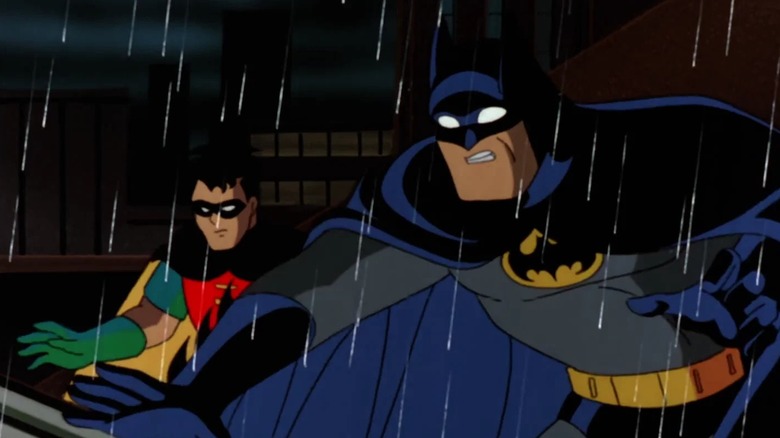
Famed comic writer Gerry Conway passed away this April — leaving behind a legacy that shaped Marvel and DC comics forever. During his run on "Amazing Spider-Man," he killed Gwen Stacy and co-created the Punisher. He also had a prolific run writing Batman comics.
Outside of comics, Conway was also a screenwriter, with credits on television programs from "Law & Order" to "The Transformers." His experiences converged when he wrote two episodes of "Batman: The Animated Series" — "Appointment in Crime Alley" and "Second Chance." ("Second Chance" was plotted by Paul Dini and Michael Reaves, but Conway wrote the teleplay.) Conway was one of several Batman comic writers who wrote for the show, including his Marvel/DC contemporaries Len Wein, Marv Wolfman, and Dennis O'Neil.
"Appointment in Crime Alley" follows an annual tradition for Batman (Kevin Conroy). He meets with Dr. Leslie Thompkins (Diana Muldaur), an old friend of his father's, to commemorate his parents' murder in Gotham City's Park Row neighborhood, aka "Crime Alley." But corrupt businessman Roland Daggett (Ed Asner) is plotting to firebomb Crime Alley so he can redevelop it. "Second Chance" features Batman tracking down Harvey Dent/Two-Face (Richard Moll), who was abducted while undergoing surgery to repair his scars.
Both episodes are "Batman: The Animated Series" at its best. Prolific series director Boyd Kirkland directed both "Appointment in Crime Alley" and "Second Chance," and he named them among his favorite "Batman" episodes he directed. Kirkland praised "Crime Alley" for its "gritty, introspective [look] at Batman," and "Second Chance" for its action sequences and themes on "the meaning of true friendship."
Gerry Conway's "Batman" episodes both display the emotional maturity and social conscience that he brought to superhero comics in the 1970s.
Appointment in Crime Alley is Batman at its most mature
"Appointment in Crime Alley" adapts Dennis O'Neil and Dick Giordano's "There Is No Hope In Crime Alley," published in 1975's Detective Comics #457. The comic was a short 12-page story; the episode adds the A-plot with Daggett to beef it up and add more action. That story strengthens the original comic's themes of urban decay and poverty driving crime.
"Batman: The Animated Series" modeled itself on film noir and "Appointment in Crime Alley" is one of the most noirish episodes. A big reason why? There's no super-villain. (The closest is an arsonist called Nitro working for Daggett.) Daggett is a much more realistic bad guy, one who justifies evil with profit and declares, "We cannot allow the underclass to hinder us from building a better tomorrow." This teaches kids about evil's banality... and its elusiveness. When Batman brings Daggett's henchmen in, Daggett denies any involvement in the bombings and walks away scott-free. He practically orders the attending police to arrest the fall guys like those cops, too, are his henchmen.
By focusing on the people living in Crime Alley, the episode offers a perspective that deepens every other "Batman" episode. When Batman fights crime in Gotham City every night, it's people like these he's doing it for. (The newest Batman revamp, the comic "Absolute Batman," goes even further and stars a Bruce Wayne who grew up in Crime Alley.)
The episode has a great hero moment where Batman saves a single mother and her young daughter from Daggett's thugs, a clear parallel to how Bruce long ago couldn't save his own parents in that same neighborhood. "Appointment in Crime Alley" is the best episode of the show in reminding us why Batman does what he does.
Gerry Conway recognized what separates Batman from the Punisher
"Second Chance" is exactly what Bruce Wayne wants to give his friend Harvey Dent by funding the plastic surgery to heal his bifurcated face. The episode uses the footage of Harvey's accident from the origin episode "Two-Face" as a flashback; after Batman remembers that terrible night, rain comes in, like tears the Dark Knight is too guarded to shed.
The episode's second act features Batman and Robin trying to track down Harvey's kidnapper. (One scene features some thugs capturing Robin and throwing him off a bridge, which might be Conway paying homage to how he had the Green Goblin kill Gwen Stacy in "Amazing Spider-Man" #121.) It turns out Two-Face's own bad side orchestrated the abduction; "Big Bad Harv" isn't keen on being locked inside Dent's mind again.
The episode ends with Two-Face back at Arkham Asylum, but hope endures. Bruce Wayne is there to comfort Harvey, who sadly smiles: "Good ol' Bruce. You're always there. You never give up on me." The setpieces in "Second Chance" are great but the emotion in Conway's script makes it top-tier.
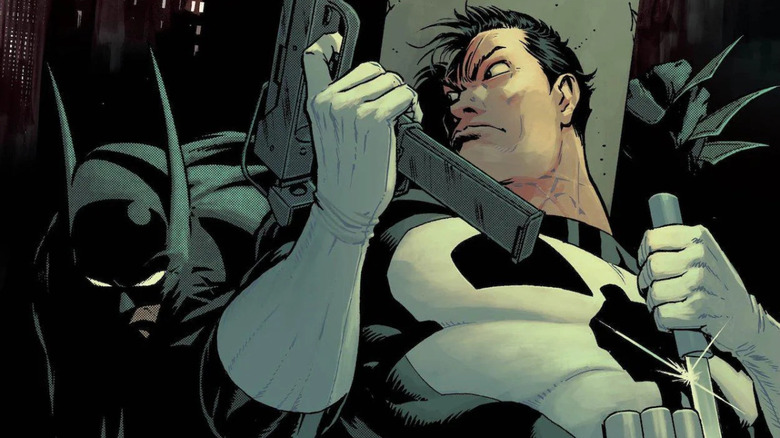
This is also an important part of Batman's character that "The Animated Series" never forgot; he believes in second chances. It's why he never kills, and it separates his war on crime from Conway's most famous co-creation. To the Punisher, all criminals are scum deserving of painful death. During Conway's run on "Detective Comics," he had Batman fight another vigilante, the Black Spider, who used lethal force like the Punisher. It's as if Conway knew if Batman ever met the Punisher, they'd clash.
Batman may be dark and moody, but he's still got too much humanity to write people off as too far gone, and stories like "Second Chance" show it.