

The Devil Wears Prada 2 Has One Thing In Common With The Most Controversial Star Wars Movie (Yes, Really)
This article contains spoilers for "The Devil Wears Prada 2."
It's no secret that "Star Wars: The Last Jedi" has become the most divisive movie in the history of that sci-fi franchise. Director Rian Johnson proudly attempted to evolve and mature the franchise with compelling character arcs and shocking revelations, whether it was the sudden killing of Supreme Leader Snoke at the hands of Kylo Ren or the fact that Rey's parents were nobody of importance.
But perhaps the most incendiary element of "The Last Jedi" came with the return of Luke Skywalker. After "The Force Awakens" ended with Rey tracking down the Jedi Master, who was living in seclusion for a mysterious reason, "The Last Jedi" revealed exactly why Skywalker had disappeared.
While attempting to train Ben Solo (the son of Han Solo and Leia Organa) and a new contingent of Jedi, Skywalker sensed a rising darkness in the young, already powerful Solo. Hoping to avoid a future where Ben followed the same path as Skywalker's father, Darth Vader, the Jedi Master briefly entertained the idea of killing his nephew. This was a far cry from the heroic return that a certain sect of vocal fans wanted from Luke Skywalker, and it was one of the sticking points in their criticism of the sequel, even if Russian bots had something to do with the movie's vocal opposition.
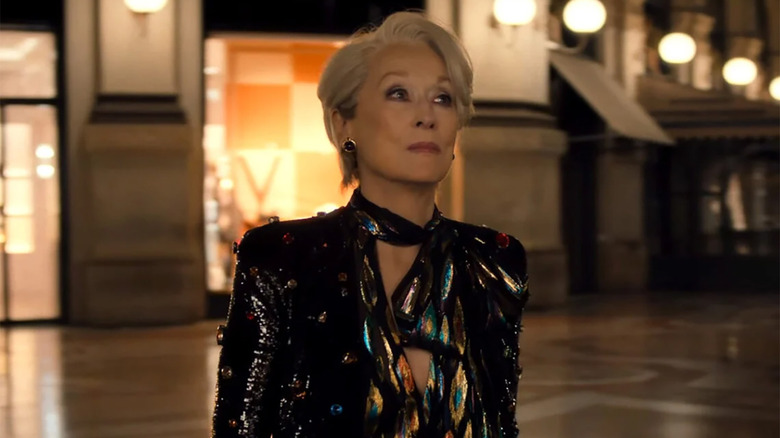
What does all this have to do with the recently released "The Devil Wears Prada 2," you might be asking? Well, this legacyquel gives one of the original film's main characters a surprising evolution — one that might turn off longtime fans of the 2006 film, especially those who loved the cold, calculated, and sharp-tongued oversight of Runaway editor-in-chief Miranda Priestly, played exquisitely by Meryl Streep.
When we return to the offices of Runway, the magazine isn't what it used to be. Like many once-thriving print publications, they've shifted their focus to online content, but it's a far cry from the groundbreaking work the fashion magazine was known for. Plus, Runway is the subject of a massive scandal, where a Runway story profiling a fashion brand failed to uncover that the brand used sweatshop labor.
Miranda Priestly isn't as devilish as she used to be
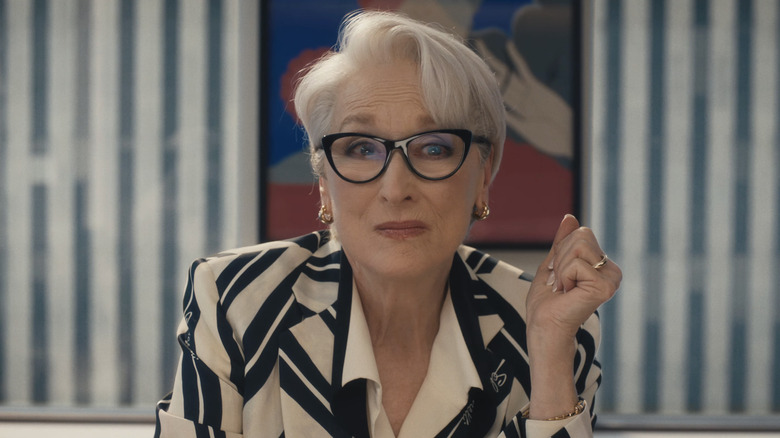
Needless to say, Miranda is in hot water, which is why Andrea "Andy" Sachs (Anne Hathaway), having just been laid off via text message during an awards gala honoring her achievement in journalism, is brought in by Runway chairman Irv Ravitz (Tibor Feldman) as the magazine's new features editor. Irv hopes that Andy can help steer them through this controversy and get Runway's reputation back on track.
As the trailers for "The Devil Wears Prada 2" have touted, Miranda still has some of her off-putting tendencies, starting with seemingly completely forgetting who Andy even is. But Miranda is far from the stern boss she used to be, because the dire state of journalism has worn her down. Furthermore, Irv has been courting Miranda for an even bigger job as Chief Content Officer of Elias-Clarke, the parent company of Runway (think of them as a proxy for the real-life Condé Nast, which owns Vogue, Vanity Fair, and more), and she's eager to follow Irv's directives in order to secure this cushy new gig.
Beyond this inciting incident that reunites Andy and Miranda, the Runway editor-in-chief has also been frequently softened and corrected in this modern age of more thoughtful, inclusive, and sensitive media coverage. During the various creative meetings Miranda oversees for Runway's content, she's frequently steered away from the certain phrasing of criticisms that are no longer politically correct, not just for the workplace but society at large.
All of this results in a Miranda that doesn't pack the same pitchfork and punch that made her such a delicious devil in the first movie. But that might be one of the best parts of "The Devil Wears Prada 2."
Miranda's evolution is exactly what a legacyquel should strive for
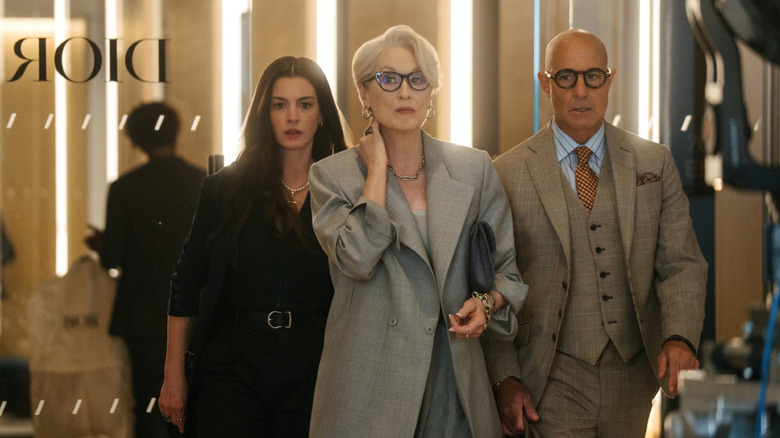
Admittedly, this change for Miranda took some getting used to as I watched "The Devil Wears Prada 2" unfold. It's strange to see Miranda kowtowing to her former assistant Emily (Emily Blunt), who now oversees Dior, since Miranda needs Dior's pivotal advertising money that helps Runway stay in business. But this is the delicate state of journalism (also depicted in Peacock's superb "The Paper"), where once-powerful editors are forced to concede advertising and content space to appease the clients who are necessary to keep the lights on.
It's also odd to see Miranda quickly and helpfully collaborating with Andy. Yes, she still has some witty barbs and sharp stares here and there, as well as being difficult and often unavailable for consultation. But Miranda also knows that Irv hired Andy, and she needs to let her at least attempt to make an impression, even if it's only so she can let Andy tank this new initiative by failing (which she doesn't).
There's a reason Miranda is still in power at Runway, despite the drastic change in the state of journalism and human resources: She knows how to evolve. She knows how to play ball. Let us not forget how she shined on her faux kindness for Jacqueline Follet (Miranda's counterpart as editor-in-chief at French Runway in the original "Devil Wears Prada"). Not unlike how Luke Skywalker closed himself off from the Force and went into isolation, Miranda merely has to put on a smile and hide her pursed lips more often simply to keep Runway surviving in the desolate media landscape.
At some point, Miranda has to stop playing nice, but she's still a changed woman
But at some point, Miranda realizes that she needs to stop playing nice, and along with Andy, she takes the initiative to stop appeasing new Elias-Clarke chairman Jay Ravitz (B.J. Novak as a tech bro who took over after the sudden death of his father). Jay's trying to sell off the entire company to billionaire Benji Barnes (Justin Theroux), who just so happens to be in a relationship with Emily, who will become the new editor-in-chief of Runway if the deal goes through. Instead, thanks to some ambitious phone calls from Andy, Miranda strikes a new deal that will keep Runway under her leadership with very little meddlesome oversight from their new owner. Miranda has won again. But has she really?
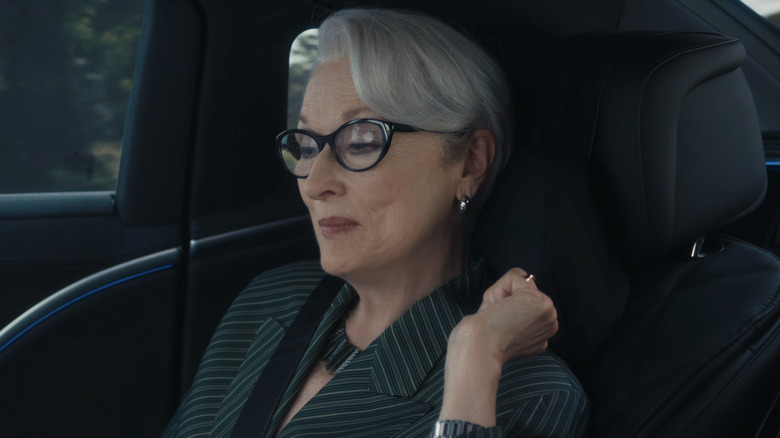
In the end, Miranda makes it known that she was well-aware of a secret, lucrative offer Andy had to write a tell-all book about Miranda. The woman who only previously briefly smirked only to herself from the back of her chauffeured town car in private acknowledgement of the skill of a young Andy Sachs reveals that she actually wants Andy to write this book. Again in the back of a town car, this time with Andy by her side, Miranda says he wants everyone to know about her impatience and impropriety, about her overbearing tendencies and inability to stop working. Miranda wants this because she wants everyone to know that this kind of success comes at a cost: being away from her family.
In "The Last Jedi," Luke accepted that his isolation from the Force was not a viable solution to his past mistake with Ben Solo. Instead, he emerged stronger than ever and became the spark that the Resistance needed to push back against the power of the First Order, though it required the sacrifice of his own life. In "The Devil Wears Prada 2," Miranda understands that always conceding to the powers that be is not the best way to keep her position at Runway. Though she somewhat ominously concedes that the professional relationship that she's rebuilt with Andy could all crumble away at the first sign of trouble, for now, she has found a balance between the shrewd businesswoman she used to be and the reluctantly collaborative woman she was forced to become, even if it meant sacrificing her personal life. The devil is in the details.