

Hokum's Director Keeps Returning To The Same Freaky Idea – And It Keeps Working
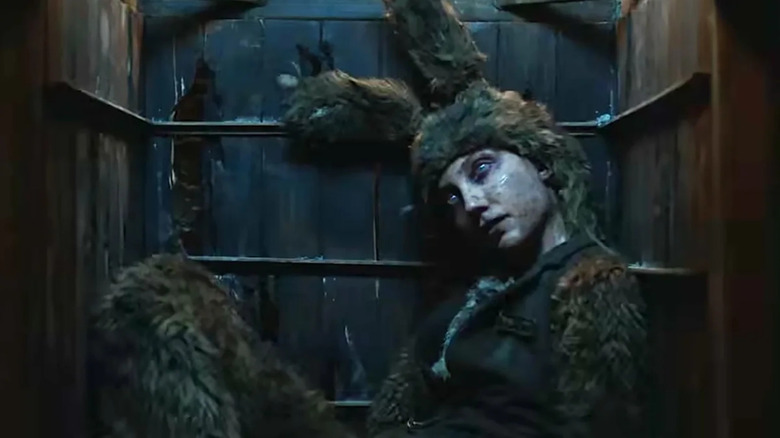
After the success of the ultra-buzzy "Caveat" and the menacing "Oddity," Irish filmmaker Damian McCarthy is three for three thanks to "Hokum." /Film's Ryan Scott called the film "very scary" in his review, and the terrifying imagery from the trailer quickly made the film one of the most highly anticipated genre releases of the year. McCarthy's films frequently incorporate elements of Irish folk horror and specialize in tense, atmospheric stories with minimal locations and eerie objects. But there's an element that has shown up time and again in his films that, from the outset, might be puzzling for the casual horror fan — rabbits.
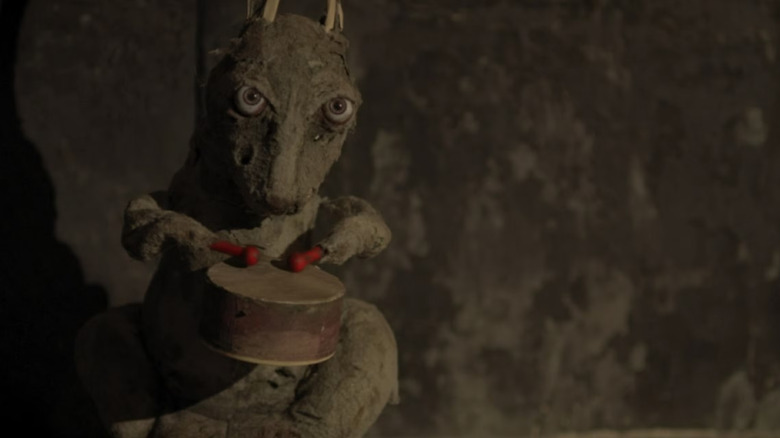
By and large, rabbits in film and literature tend to represent fertility, abundance, and new beginnings. They're prey animals, signifiers of the spring season, and often embody innocence and vulnerability. But rabbits are also frequently depicted as trickster gods, a juxtaposition from their usual symbolism. When it comes to McCarthy's filmography, however, rabbits are pure nightmare fuel. "Caveat" features the world's weirdest rabbit prop, a plush rabbit toy that drums whenever an evil spirit or hidden danger is nearby. Ornamental rabbits are scattered all throughout "Hokum," and while the bizarre children's TV show host is a donkey, most fans thought the terrifying face was a rabbit when the trailer first dropped, encouraged by what appeared to be a dead body in a rabbit costume.
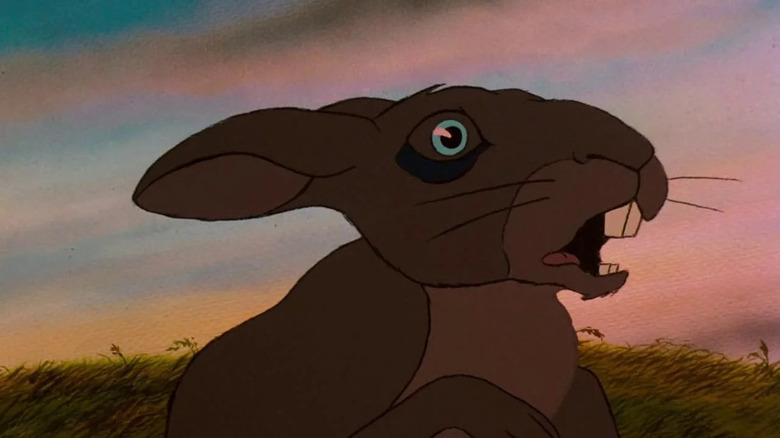
Horror fans have taken notice, and during an interview with filmmaker and content creator Nicolas Curcio, Damian McCarthy explained why rabbits keep popping up in his films. "It's probably 'Watership Down,'" he explained. "There's a terrifying hare in that I remember being frightened [by] when I was very, very small, so there's probably something in that that's continued." But McCarthy's rabbit-based kindertrauma isn't limited to the British animated film that has traumatized generations.
Damian McCarthy knows his creepy rabbit cinema history
One of the eeriest figures in Irish mythology is the Púca, the same figure that served as the basis for the popular streaming horror series, "Pooka!" The figure is a shapeshifting fairy associated with stories of Samhain/Halloween and is typically depicted as a black horse, a goat with glowing eyes, or, you guessed it, a rabbit. The Púca is more of a chaos figure than a malicious one, but Damian McCarthy learned about the figure during school, right around the same time he developed a love of "Alice in Wonderland." Lewis Carroll's seminal tale has been adapted countless times in various ways, but outside the animated Disney film, the White Rabbit frequently looks like someone tried to draw a sleep-paralysis demon from memory.
The White Rabbit in Jan Švankmajer's surrealist fantasy "Alice" looks like the face of every photo of a crying baby posing with the Easter Bunny, and the Emmy Award-winning made-for-TV "Alice in Wonderland" film with animatronics from Jim Henson's Creature Shop features a take on The March Hare that would send a child running for cover. So while the immediate image of a rabbit that likely comes to mind is a cute, fluffy bunny, there have been plenty of unsettling rabbits throughout cinema — frequently in all-ages fare.
In his discussion with Nicolas Curcio, McCarthy also flagged Frank in "Donnie Darko," the menacing figure in a rabbit costume who guides Donnie through a Tangent Universe. Speaking with Reactor, McCarthy said that once he knew "Hokum" would be mostly following one character in one location, "production design — every ornament and painting — everything in the room becomes vital then, and those are the things that are watching him."
Enter: haunting clocks, carvings of babies, and ornamental rabbits.
Damian McCarthy's rabbit motif should continue
While Damian McCarthy's film "Oddity" does not feature the rabbit motif, it is a film that follows a character who essentially "goes down the rabbit hole" to try to solve the mystery of her sister's murder. McCarthy's penchant for rabbits isn't an attempt to make an interconnected cinematic universe (that we know of), but it's a perfect avenue for him to solidify his signature style. In addition to the rabbits in "Hokum," the film also deals with psychedelics, consumed by both humans and a herd of goats. There's an inherent terror to hallucinogens because it becomes difficult to decipher if what you're seeing is real or just your mind playing tricks on you.
Which brings us back to the rabbit.
"Alice in Wonderland" is often associated with hallucinogenic drugs like LSD, with her journey through the looking glass into Wonderland read as an allegory for an intense drug trip. The caterpillar smokes a hookah, Alice drinks a mysterious liquid (not unlike the spiked milk in "Hokum"), and eats mushrooms. Not to mention, Jefferson Airplane popularized the theory in the mainstream with their classic hit "White Rabbit," which uses "Alice in Wonderland" imagery to tell a cautionary tale and pleads with listeners to "feed your head," aka "learn the truth of what's happening around you."
Perhaps McCarthy himself is the white rabbit, luring audiences down his rabbit hole and attempting to alter our brain chemistry with the sights he has to show us. Regardless, it's a motif that should continue throughout the rest of his career, because as he's proven, he's damn good at it.
Don't be late for a very important date. "Hokum" is now playing in theaters everywhere.