

Marvel Probably Won't Bring One Of The Best Daredevil: Born Again Comic Scenes To Live-Action
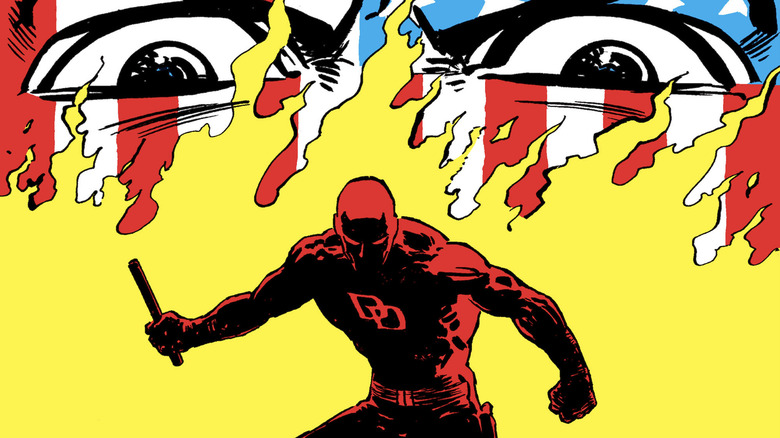
It bears repeating, but "Daredevil: Born Again" is not an adaptation of writer Frank Miller and artist David Mazzucchelli's famous 1986 "Daredevil" comic arc, "Born Again." Instead, the show adapts more modern "Daredevil" comics, in particular the late 2010s/early 2020s arc where Wilson Fisk/The Kingpin became mayor of New York City.
Mayor Fisk culminated in the 2021-2022 crossover comic "Devil's Reign" (by Chip Zdarsky and Marco Checchetto), where Fisk outlawed costumed vigilantes in New York City. In the comics, "Devil's Reign" featured the Avengers, X-Men, Spider-Man, etc. Fisk also deputized several super-villains as a new Thunderbolts team.
The Marvel Cinematic Universe "Devil's Reign," unfolding in "Born Again," is on a much smaller scale. Fisk's (Vincent D'Onofrio) anti-vigilante task force is comprised of ordinary cops. Besides Matt Murdock/Daredevil himself (Charlie Cox), the only superheroes who've shown up are the late White Tiger (Kamar de los Reyes), Punisher (Jon Bernthal), Swordsman (Tony Dalton), and soon Jessica Jones (Krysten Ritter). Tom Holland's Spider-Man is unable to appear on MCU Disney+ shows like "Daredevil: Born Again," and "Born Again" showrunner Dario Scardapane has indicated he wants to keep Daredevil in a "street-level" niche away from other Marvel heroes.
Ironically, that dividing line creates the conditions for a jaw-dropping scene in Miller and Mazzuchelli's "Born Again." In the final issue of the arc, #233, Daredevil is battling nationalistic mercenary Frank "Nuke" Simpson, who Fisk has hired to burn Hell's Kitchen to the ground.
Out of the blue, the "big three" Avengers — Captain America, Iron Man, and Thor — descend like gods coming down from Olympus. They put the battle to a swift end and remind Daredevil he's a small fish in a big pond. It's an impactful moment because reading "Born Again," you don't expect to see those three show up — nor should you in the televised "Born Again."
Daredevil: Born Again reminded The Man Without Fear he lives among gods
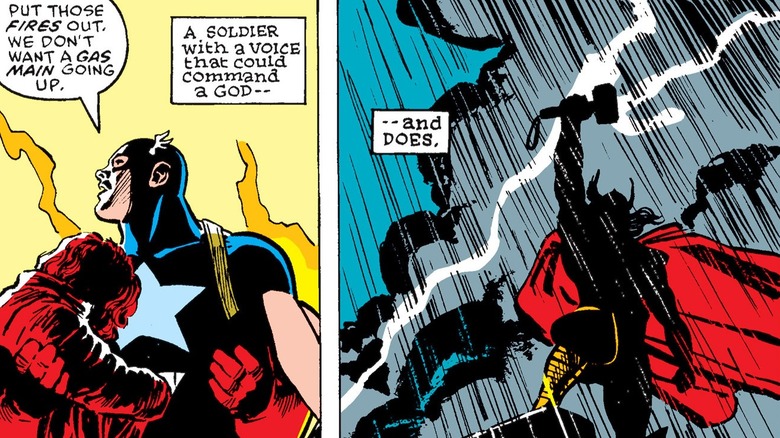
Daredevil may be The Man Without Fear, but he's still dwarfed by The Sentinel of Liberty, The Armored Avenger, and The God of Thunder. Reporter Ben Urich observes Captain America, saying his voice "could command a god — and does." Thor (kept entirely in shadow, as if he's too otherworldly for this book) raises his hammer to summon a storm that'll drown Nuke's fire.
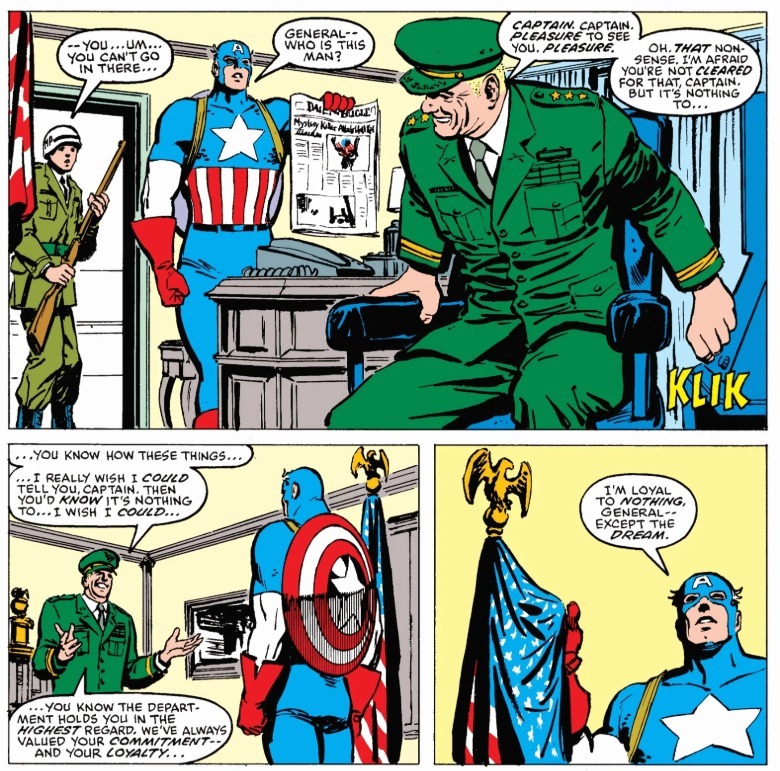
Somehow, that crack about Captain America's voice is not even the best line in the issue. Cap, disconcerted by Nuke's American Flag face tattoo, digs into his origin as a super soldier gone wrong. When a general tries to dissuade Cap's investigation by appealing to his loyalty, Cap counters he's loyal only to "the [American] Dream."
 Marvel Comics
(In 1986, Frank Miller also depicted a Superman who'd lost his way in "The Dark Knight Returns" by choosing loyalty to America over truth and justice. His writing of Cap stands in contrast to that.)
Netflix's original "Daredevil" TV series loosely adapted the "Born Again" comic in its third season, but made many changes. One of them? No Avengers cameos. Even if the timeline would've worked then to feature the trio who appeared in the comic, the logistics and cost of getting Chris Evans, Robert Downey Jr., and Chris Hemsworth for a single scene would've assuredly been (and likely still is) prohibitive.
Perhaps Daredevil could cameo in "Avengers: Doomsday" to recreate the scene on screen, but that would have the opposite impact as the scene in the "Born Again" comic. Matt would be stepping into the Avengers' world, not the other way around. The Avengers appearing in the climax of "Daredevil: Born Again" is something that can only happen in Marvel comics, where crossovers don't require movie star salaries.
Daredevil: Born Again is a superhero comic without much superheroics
What's the big deal about the Avengers appearing in the "Born Again" comic, you ask? Marvel superheroes crossing over into each others' books is nothing extraordinary. Well, it's a matter of tone. Frank Miller, who had drawn several "Daredevil" issues before taking over as writer of the book on issue #168, redefined the comic as less an adventure serial and more of a noir. It'd be a stretch to call Miller's "Daredevil" wholly realistic (he introduced evil ninja cult the Hand), but it's definitely grimmer than your typical Marvel comic.
"Daredevil" #191, the last issue of Miller's original run, is about Daredevil playing Russian roulette with his paralyzed nemesis, Bullseye. Matt, ever one to wallow in guilt, tells the story of how a boy tried to imitate DD's violent brand of justice by stealing a gun and shooting his bully — lighthearted stuff!
Miller returned to write "Daredevil" (but ceded pencilling to David Mazzucchelli) several issues later on the story that became "Born Again." Miller has defined Daredevil as a Catholic and "Born Again" carries heavy biblical themes — especially from the Book of Job, wherein a faithful man loses everything.
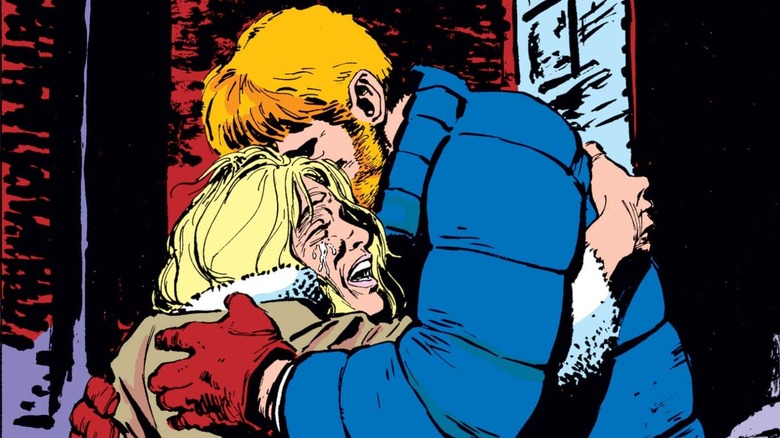
In the comic, Matt Murdock's ex-girlfriend Karen Page, who'd become an adult film star and drug addict, sells Daredevil's secret identity for a heroin fix. The info makes its way up the underworld to the Kingpin, who decides to destroy Matt's life. Matt is disbarred as an attorney, his apartment is bombed, and he spends several issues wandering around New York as a vagabond, presumed dead by his loved ones. He goes whole issues without wearing the costume. When Daredevil finally suits up again at end of issue #232 to fight Nuke, it completes the promise of the title "Born Again."