

A Marvel Comic Gave Daredevil His Own Version Of A Legendary Batman Story
We may receive a commission on purchases made from links.
In 1986, Frank Miller's "The Dark Knight Returns" plucked Batman out of the DC Universe's floating timeline the DC Universe and into the contemporary day. The book confronted the political issues of '80s America, from Ronald Reagan and the Cold War to fears of urban gang violence, and aged up Batman to account for that. Batman debuted in 1939's "Detective Comics" #27, so "The Dark Knight Returns" followed an over 50-years-old Bruce Wayne coming out of retirement. (Hence, "The Dark Knight Returns.")
"Dark Knight" has created a whole subgenre of stories about an aged superhero's final battle in a dark future. It's been the subject of sincere homage ("Old Man Logan," and in turn the 2017 film "Logan") and parody ("Darkwing Duck" episode "Time and Punishment"). Sometimes, the former goes so poorly it turns into the latter, e.g. "Spider-Man: Reign," which takes the "dark and gritty" tone and aesthetic so far it becomes a self-mockery. (In the dark future of "Spider-Man: Reign," Mary Jane dies from blood poisoning brought on by Peter Parker's radioactive semen. Yes, really.)
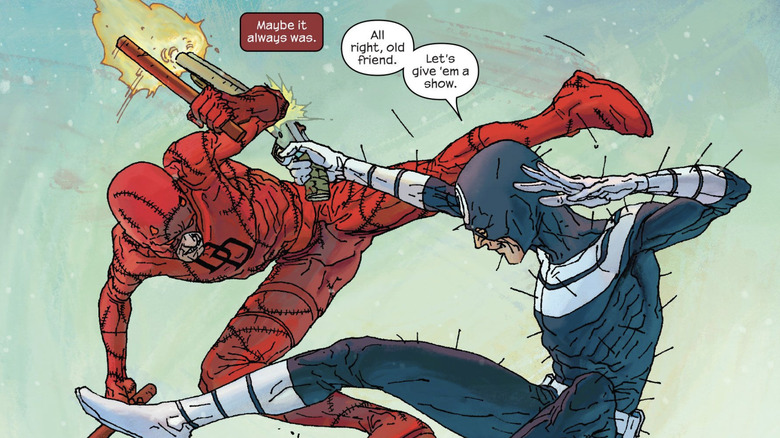
One of the most recent and effective examples was the 2025 three-issue mini-series "Daredevil: Cold Day in Hell." Writer Charles Soule (who wrote "Daredevil" from 2015 to 2018) teamed up with artist Steve McNiven to tell a possible ending to Matt Murdock's story. America has been devastated by an apparent nuclear war (evidenced by the ruined Brooklyn Bridge) and Daredevil has vanished because Matt Murdock has lost his radiation-bestowed enhanced senses. That is, until terrorists detonate a chemical bomb that restores Matt's powers, and he's drawn out for one last fight with Bullseye.
Again, plenty of superhero comics copy "Dark Knight Returns," but it feels appropriate this time because Frank Miller is also the most influential "Daredevil" writer ever. If you've ever wondered why Batman and Daredevil seem so similar, Miller's influential '80s comics are why.
"Daredevil: Cold Day in Hell" doesn't just draw on the story of "The Dark Knight Returns," either, but also on Miller's distinctive art.
Daredevil: Cold Day in Hell structures itself like The Dark Knight Returns
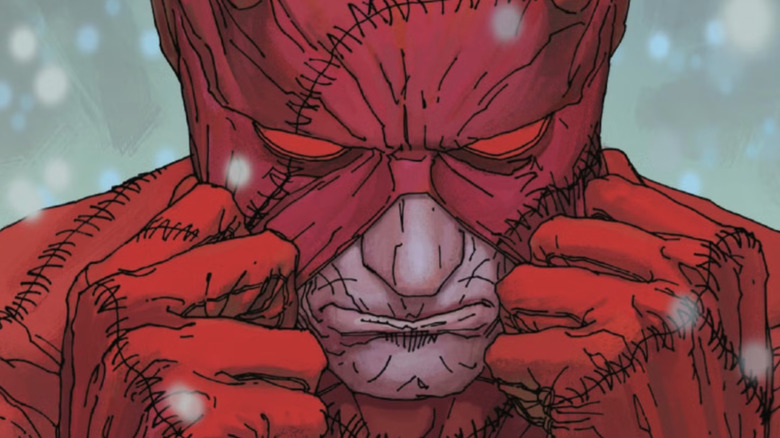
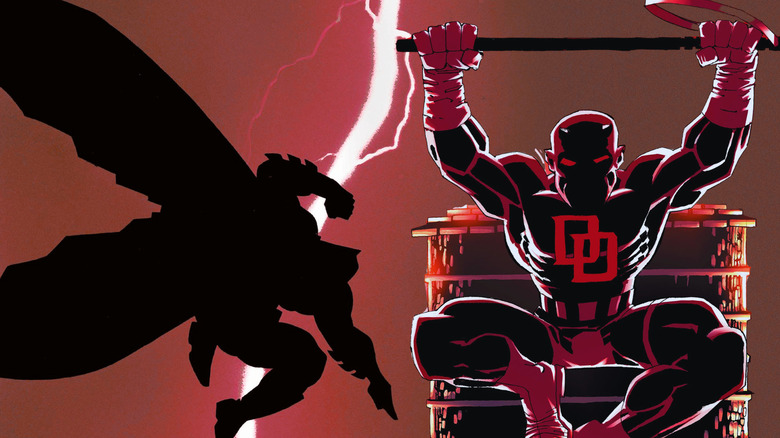
Steve McNiven's cover of "Cold Day in Hell" issue #3 shows a wounded Daredevil in a torn costume still standing defiant with anger boiling across his body. It evokes Miller's cover for "Dark Knight Returns" issue #2 showing a battered Batman in a similar position.
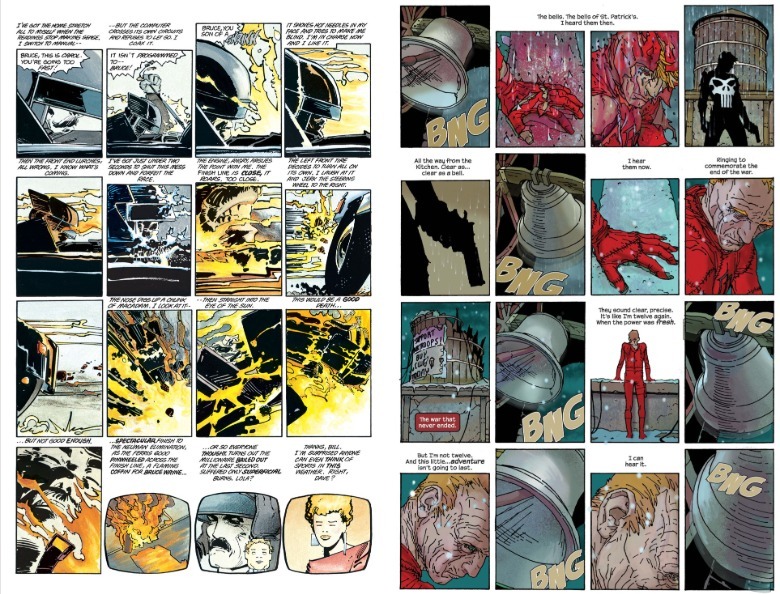
"The Dark Knight Returns" is distinguished for its 16 panel, 4x4 page layout. Not every page on the book follows it uniformly, but look attentively and you can still see pages drawn along that grid. In the back pages of "Cold Day in Hell" #1 (each issue includes script pages and sketches with comments from Charles Soule and Steve McNiven), McNiven describes the structure as "the Frank Miller 16 panel grid," and said he used it "as an overall structure to each page" as he drew the comic. Compare the results below:
 DC Comics/Marvel Comics
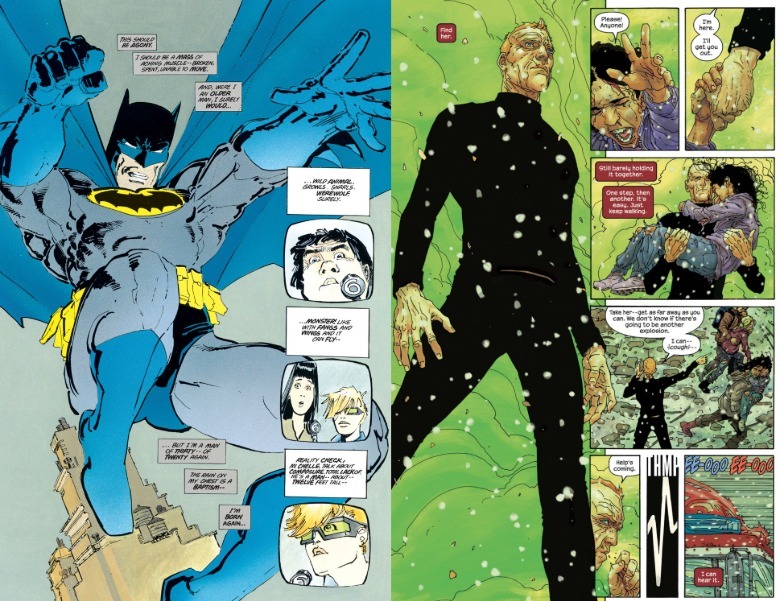
Both "Dark Knight Returns" and "Cold Day in Hell" know when to go big, though. Miller's famous splash page of Batman declaring he is "born again" with panels shoved to the right side of the page? McNiven composes a similar page in "Cold Day in Hell" for when Matt's powers kick back in.
 DC Comics/Marvel Comics
But while Miller drew Batman as a mountain of muscle, as if getting old only made him tougher, Daredevil in "Cold Day in Hell" looks thin, emphasizing Matt's fragility. Dressed in all black, he resembles a spindly stick figure — or, as the story notes, a priest. (Miller defined Daredevil as the Catholic superhero.)
How Cold Day in Hell concludes Daredevil's story
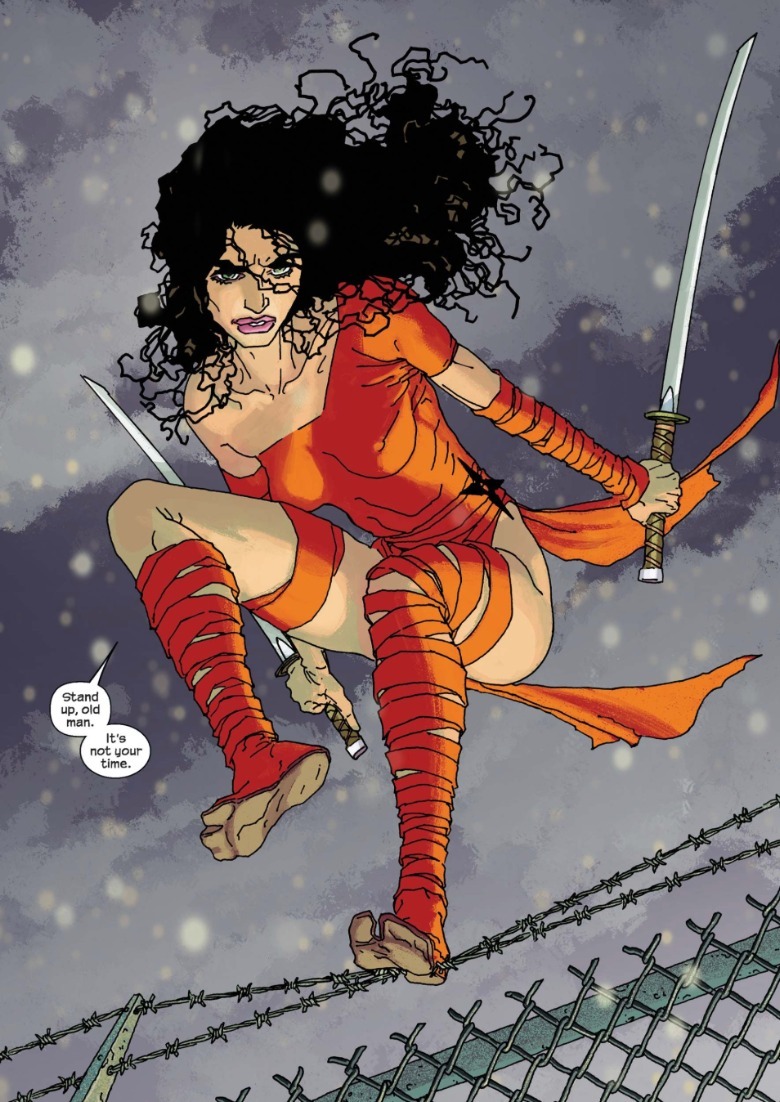
"Cold Day in Hell" reserves some time for Frank Miller's most famous "Daredevil" creation: Elektra Natchios, who shows up in issue #2 to tempt Matt. Elektra has apparently joined the Hand for eternal youth, and she looks like she stepped out of a Frank Miller comic.
 Marvel Comics
If Daredevil is Batman, then Elektra is Catwoman, but compare how "The Dark Knight Returns" used Selina Kyle. She's grown old and her looks have faded, another symbol of Batman's lost youth rather than the temptation of an eternal one.
You can make similar comparisons across both books' supporting characters. Bullseye is the Joker, of course, the evil spurred back to life when his nemesis returns. Bullseye also recovers a dead Captain America's shield and repaints it, turning the shield's colored rings into a bullseye symbol. This corruption of an American symbol is like how "The Dark Knight Returns" featured a Superman perverted by national rot.
Daredevil's nemesis the Kingpin is long dead; "Cold Day in Hell" opens with Matt visiting his grave. As the ghost haunting the hero, Kingpin is the counterpart to the dead Robin in "The Dark Knight Returns."
Both stories also feature Bruce and Matt carrying a particular phrase from beginning to end. For Batman, it's the idea of "a good death." He concludes that training the next generation of crimefighters will be a good life. Matt, his Catholicism lapsed, ponders the phrase "it's all part of God's plan," the go-to excuse for how bad life can get. By the end of the comic, Daredevil finally grasps his role in that plan.
Matt Murdock is a blind man, but his last chapter ends with a close-up of his eyes finally seeing.