

15 Best Mystery Movies Of All Time, Ranked
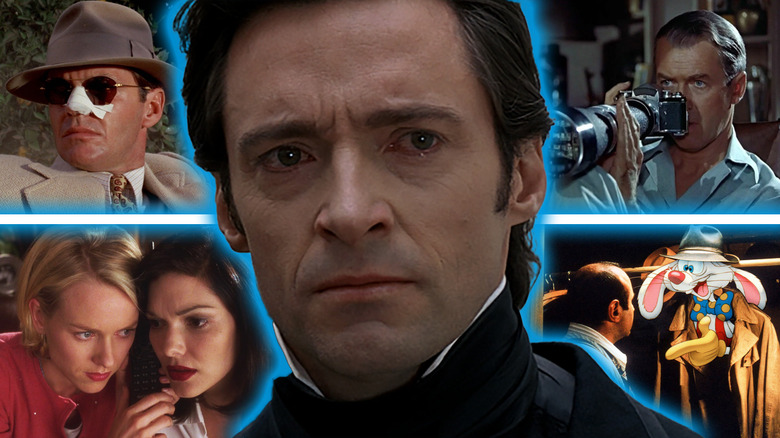
Different types of films may come to mind when faced with the term "mystery movie." You might jump straight to the classical, intrigue-filled whodunit filled with large ensembles of suspects. Maybe you go right for the brooding detective procedurals, as tortured men of the law pore over evidence and city streets searching for a suspect. Or maybe you go more abstract and think of psychological dilemmas in dense character portraits of extraordinary individuals begging to be solved.
The mystery genre as an overarching concept is incredibly inclusive, allowing a vast range of subgenres to incorporate these elements of intrigue and curiosity. There are dozens and dozens of films that could justifiably be considered a great mystery film, because the concept doesn't confine itself to one type of filmmaking — the desire to decode a question naturally lends itself to the very notion of storytelling.
Here are the 15 best mystery movies of all time, ranked.
15. Who Framed Roger Rabbit
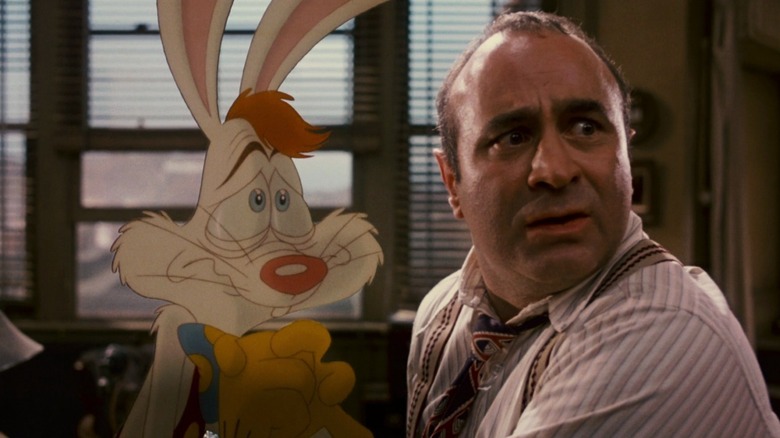
The only thing more impressive than the live-action/hand-drawn hybrid of "Who Framed Roger Rabbit" is its pastiche of film noir tropes. This technical marvel from Robert Zemeckis, one of the industry's foremost tech fetishists, is one of his most fully realized feats of experimental filmmaking engineering and is situated at the uber-specific intersection of zany cartoon anarchy and archetypal hard-boiled detective noir. Bob Hoskins stars as jaded L.A. detective Eddie Valiant, a man prejudiced against the already mistreated working class of "Toons" and who nonetheless gets roped into helping solve a disturbing case when it seems that star Roger Rabbit (Charles Fleischer) may have been framed for murder.
"Who Framed Roger Rabbit" elevated the live-action/animation hybrid to levels still untouched today. You can trust there will be no other movie with appearances from the likes of Mickey Mouse and Bugs Bunny that also features tommy gun-wielding weasels and a villainous Christopher Lloyd who violently executes toons by dropping them in acid. Such is the magic of what Zemeckis accomplished with this classic.
14. Seven
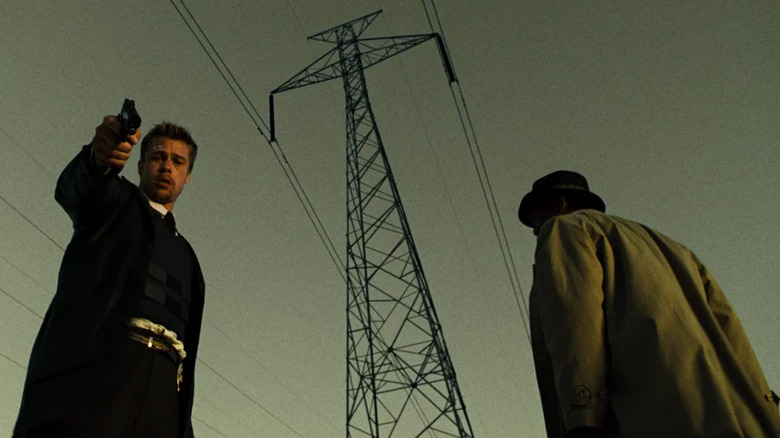
As a mystery movie, "Seven" may have the most hooky premise of all the movies on this list. Its premise is right there in its title: Mismatched homicide detectives David Mills (Brad Pitt) and William Somerset (Morgan Freeman) are set on the path of discovering the identity of a sadistic serial killer, whose victims run afoul of committing one of the seven deadly sins.
Fincher and company challenge the audience by turning this murder mystery into something suffocating and oppressive, sometimes almost apocalyptic. Indeed, the grime, filth, and suggested depravity of "Seven" can make it tough to stomach for a general audience — it's occasionally even referenced as a progenitor of the "torture porn" genre that would solidify with the likes of "Saw," a comparison that Fincher believes stains the legacy of his film.
But "Seven" highlights the two tragic, lived-in performances at its center and revels in the compelling unraveling of its central puzzle, which has a famously nasty, desolate conclusion. If you don't already know how "Seven" ends, let the film guide you through the rot to its grim final moments, and you'll understand why this procedural has stood the test of time in a way distinct from its peers.
13. The Blair Witch Project
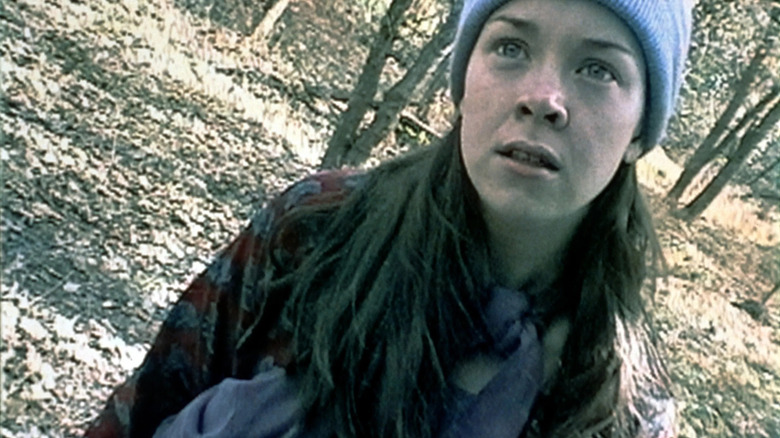
You might be quicker to describe "The Blair Witch Project" as a found footage horror movie before you'd call it a "mystery," but that doesn't mean the film doesn't rest on a bedrock of obscurity and secrecy. This landmark 1999 creeper, directed by Daniel Myrick and Eduardo Sánchez, follows a group of students shooting an amateur documentary in the dense woods of Maryland to uncover the truth about the Blair Witch urban legend. Naturally, the trio gets far more than they bargained for.
"The Blair Witch Project" was a pop culture phenomenon thanks to its approach to horror, and because its elements of mystery bled into real life. At a time when the internet was still a burgeoning communication channel for much of the world and a film like this could maintain its secrets, "The Blair Witch Project" was marketed as a real snuff documentary, with missing persons flyers made for the principal cast and an entire faux Blair Witch documentary that aired on the Sci-Fi Channel.
The movie itself remains withholding as well, with an ending that remains maddening and mysterious. The terror of "The Blair Witch Project" has always come from its uncertainty, and its concealment of its greatest terrors makes it as great a mystery as it is a horror film.
12. The Prestige
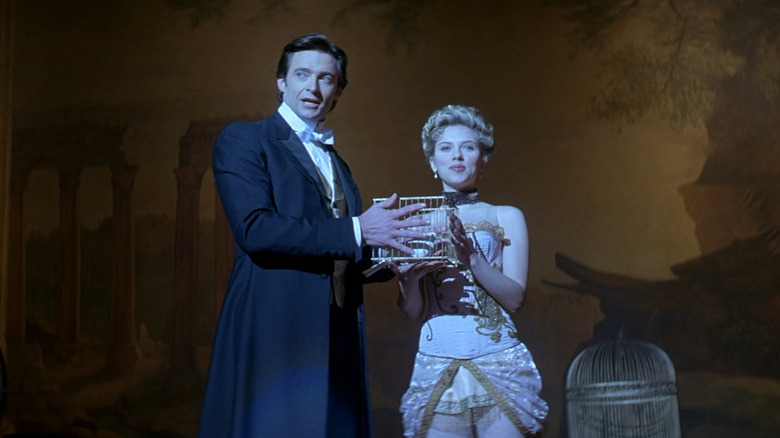
Christopher Nolan's "The Prestige" is a movie centered around one of the most immediate and gripping forms of mystery: the art of the magic trick. The plot of the film centers on the enigma of how to perform feats that seem to defy the laws of nature and physics.
Hugh Jackman stars as Robert Angier and Christian Bale plays Alfred Borden, two magicians circling each other's careers with reverence and malice ... until Borden performs the trick to end all tricks, The Transported Man, which Angier becomes obsessed with deciphering.
The mystery of "The Prestige" lies within these men's dynamic with each other as much as their own internal understanding of themselves. The film probes their willingness to make sacrifices to fuel their obsession, dedicating essential components of their very essence for a hopeful triumph over the other. It's a cutting, tragic dissection of a certain type of myopic hyper-focus and, despite its modest box-office returns, is quietly one of Nolan's best films.
11. The Big Sleep
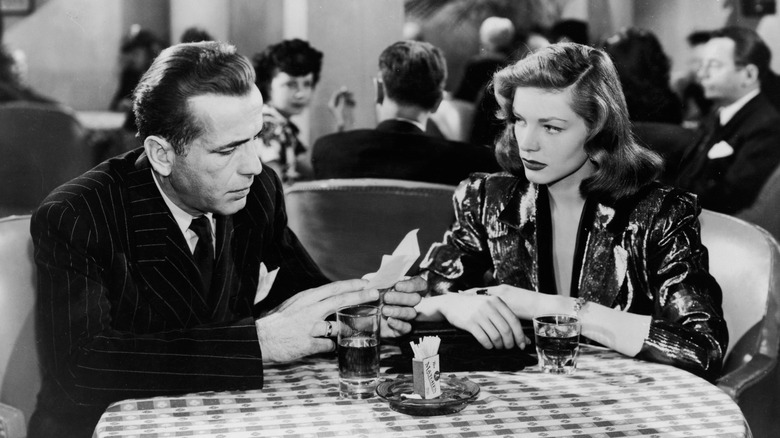
Here's a mystery so complex that no one behind the scenes of the film understood the story. This 1946 adaptation of the Raymond Chandler novel of the same name, directed by Howard Hawks and starring the famed on-screen duo of Humphrey Bogart and Lauren Bacall, is as electric and alluring as it is bewilderingly enigmatic.
That's also somewhat due to Hollywood bureaucracy. "The Big Sleep" was the subject of a whole smattering of interferences from Warner Bros., including delays that kept the film from releasing until two years after shooting, as well as Hays Code restrictions that further convoluted the plot by obfuscating objectionable elements necessary to drive it. Thus, this Philip Marlowe mystery is one in which viewers must put in extra effort to uncover the truth behind the film's central murder.
But really, the film's mystery largely serves as a central launching pad for the real appeal here: seeing the fiery, understated eroticism of Bogart and Bacall. Their collective star power is immeasurable, and as their velvety delivery shapes the hard-boiled and innuendo-laden dialogue alike, you'll know you're seeing one of the sexiest mysteries ever put to screen.
10. Body Double
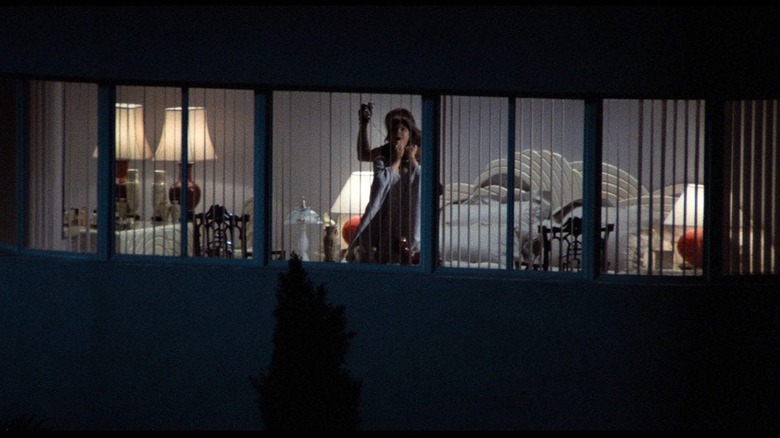
Here's the one for people who wish "Rear Window" and "Vertigo" were just a little bit trashier. That ethos defines a large chunk of Brian De Palma's career (even if he doesn't think it's fair). His clear obsession with the "Master of Suspense," Alfred Hitchcock, is matched only by his enthusiasm for tawdry, salacious spectacle. "Body Double" trades in similar themes of voyeurism and obsession, but plants them firmly in a lascivious 1980s context.
The film follows struggling actor Jake Scully (Craig Wasson), who finds himself housesitting for an affluent friend-of-a-friend in a luxurious Hollywood Hills art deco apartment, where he accidentally peeps on a murder across the way. This sends him reeling into the underbelly of Hollywood's porn filmmaking scene.
"Body Double" is one of De Palma's most overtly tongue-in-cheek and raunchy efforts, from the central murder weapon being an unmistakably phallic drill, to the composite of two different James Stewart characters that Wasson is playing, to the scene where Jake finds himself in a Frankie Goes To Hollywood music video. One of our leading practitioners of excess perfectly encapsulates 1980s Hollywood infused with a vulgar kind of indulgence, and boy, is it fun.
9. Zodiac
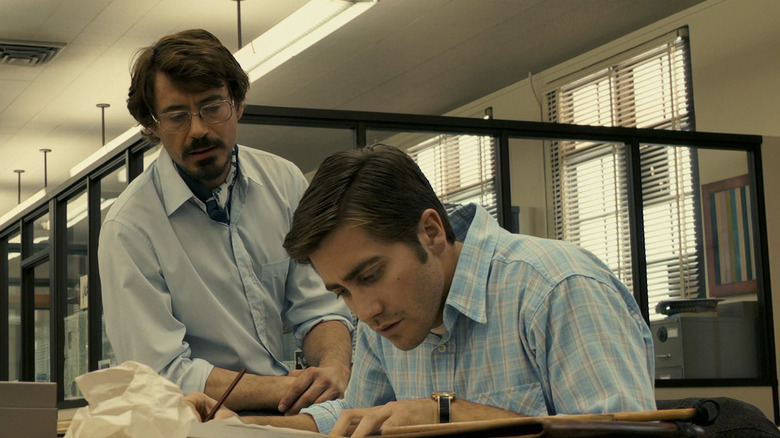
We still don't know who the real Zodiac killer actually was, so maybe it's not a surprise that there are no answers at the end of David Fincher's investigative procedural about the manic obsession that overcomes a group of journalists and investigators trying to uncover his identity. The mystery in "Zodiac" isn't there to be solved, but rather to underline the destructiveness that comes with devoting your life to an enigma.
Despite failing at the box office, "Zodiac" is arguably Fincher's best movie, striking in the way its James Vanderbilt-penned script stretches out into a decade-long saga and providing brutal insight into the reality of what it means to devote yourself to such a mystery. The ensemble cast, led by Jake Gyllenhaal, Mark Ruffalo, and Robert Downey Jr., perfectly augments Fincher's stylistic perfectionism, burrowing into the cold, detached mood of a world concealing an irresolvable evil. In the movie's perception of the personal sacrifice and futility of confronting the unknown, Fincher crafts a mystery that's still satisfying despite its inability to find resolution.
8. The Innocents
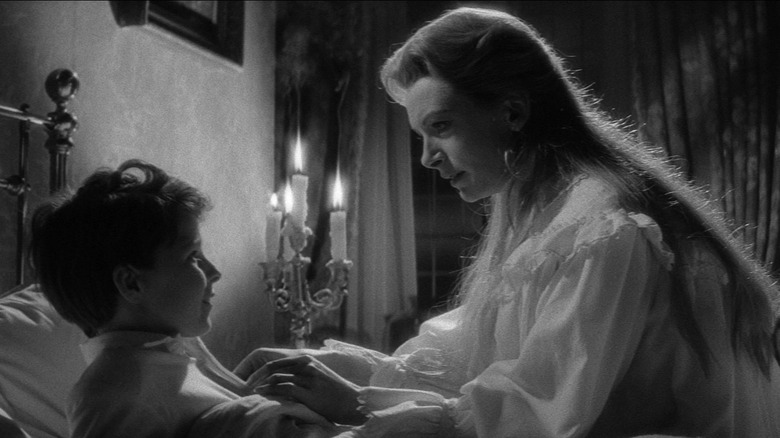
Director Jack Clayton's adaptation of Henry James's classic novella "The Turn of the Screw" is often cited as the greatest of numerous adaptations of the material. With a script by William Archibald that underwent extensive rewrites by author Truman Capote, "The Innocents" is a gothic horror melodrama of the highest order, centering its mystery on the subjective, possibly skewed point of view of Deborah Kerr as the sheltered and repressed Miss Giddens.
Miss Giddens' understanding of the world is shattered when she takes on a job as a governess at a large estate, watching over two young children who seem to know more than they're letting on about the appearances of two ghostly apparitions around the grounds. Clayton masterfully lays out this perturbing ghost story, keeping the audience on edge with the story's refusal to offer clear-cut answers. Between its intellectual capacity and eerie, ambiguous mood, "The Innocents" is still one of the scariest films ever made.
7. Cure
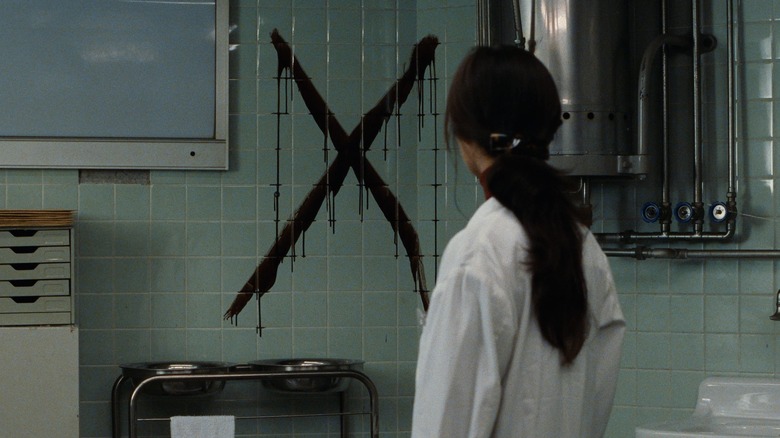
If there's anyone who knows how to make a thriller film that feels downright cursed, it's Kiyoshi Kurosawa. The Japanese director's career has spanned genres, but it's his uneasy horror films that resonate the most with their haunted, unsettling mood and atmosphere. His talent in the genre has never been more evident than with "Cure," a detective procedural defined by a sense of doom and malevolent fatalism.
"Cure" stars Koji Yakusho as Kenichi Takabe, a world-weary detective who is soon hot on the trail of a string of bizarre murders, seemingly committed by a lone killer who follows a depraved ritual that includes carving the letter X into the bodies of their victims. Things don't go great for Takabe, as he's led further and further toward the unnerving boundary between reality and supernatural malevolence, facing a killer whose dissociation from human connection begins to define the film's world. The suggestion of a cyclical, insurmountable evil that feels tied to the core of society is what makes "Cure" so frightening, so much so that it landed on our list of the scariest serial killer movies.
6. The Conversation
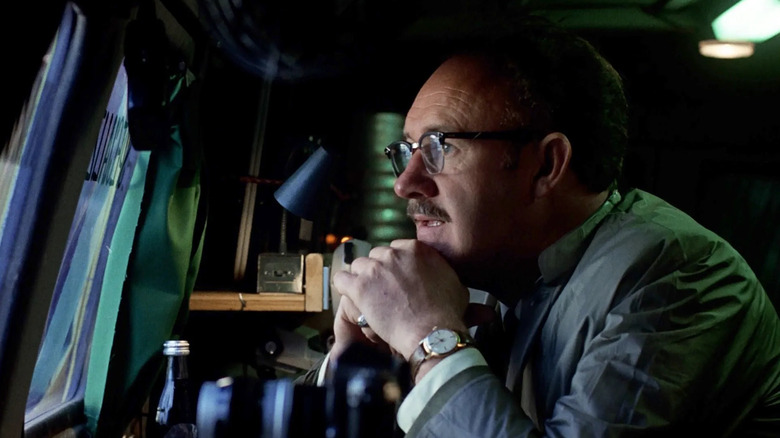
Francis Ford Coppola's immediate follow-up to "The Godfather" sees him transitioning from generational mobster epic to a tense, nervy, and achingly modern paranoid conspiracy thriller. Coppola turns an audiophilic obsession into a caustic treatise on an inescapable surveillance state — one where his protagonist gets ensnared in a confused perception and dangerous espionage.
Gene Hackman turns in one of his best performances as Harry Caul, a surveillance specialist who gets caught up in a conspiracy he has no business knowing about when he overhears that his target couple is potentially at risk of being murdered. More than anything else, Harry is the subject of a morose character portrait, one of a man divorced from the true realities of the people he spies on, burrowed so deeply inside himself that he's incapable of reckoning with the situation he finds himself in. Coppola has made a litany of masterpieces, but "The Conversation" may be his best film.
5. Chinatown
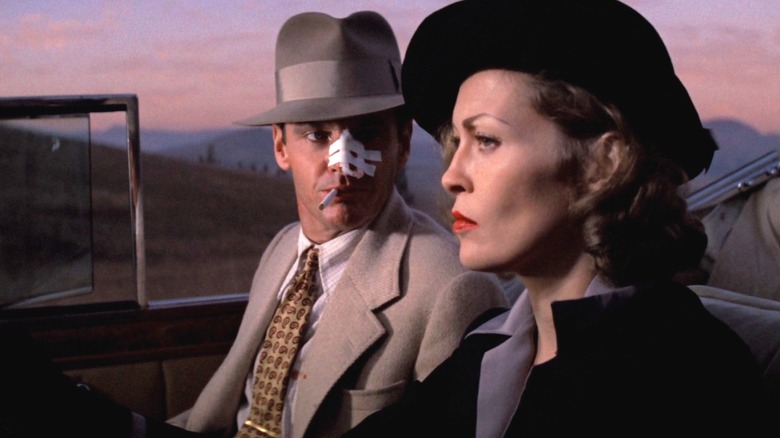
You'll likely never see a more captivating movie about corrupt forces making millions off of defrauding the public via their civil infrastructure than "Chinatown." You'll also probably never see one quite so despairingly bleak. Roman Polanski directs this Hollywood Golden Age noir pastiche that picks up the fatalistic baton those original pictures handed off, guiding the time period into a freshly cynical '70s America, whose institutions had laid themselves bare as being run by a venal cabal of amoral ogres. (Hey, maybe there's a reason "Chinatown" still feels so relevant today.)
Yes, the mystery of this film speaks to a seemingly eternal sense of fighting corruption in vain. Jack Nicholson stars as cynical detective Jake Gittes, who, when he's hired to follow a water department engineer who quickly turns up dead, finds himself ensnared in a web of municipal criminality involving the building of a controversial reservoir. He's faced with one unwinnable situation after another, all leading "Chinatown" to its famously nasty conclusion. Robert Towne's script is absolutely unforgiving toward its principal protagonists as they try to navigate the insurmountable obstacles of moneyed bureaucracy, and for their interest in this puzzle, the audience is left with a grim rebuke. Of the films on this list, this is one of the most ruthless.
4. Citizen Kane
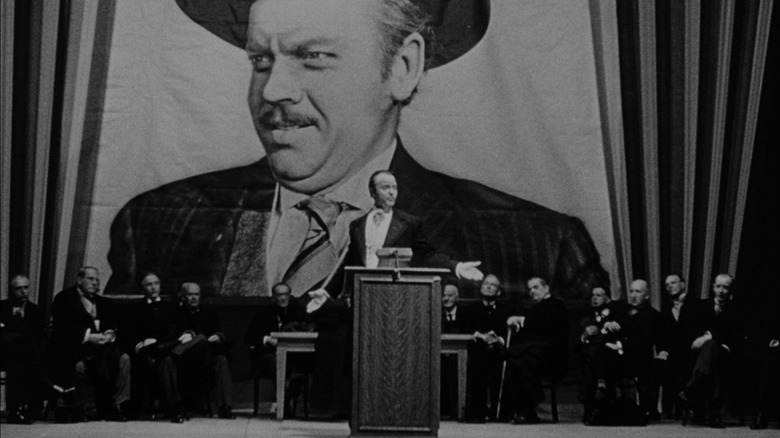
You either see the words "Citizen Kane" and feel deep admiration for its towering place within cinema history, or you're fed up with hearing about how totemic "Citizen Kane" is, even if it wasn't always seen that way. But here's the thing: To this day, it is a titanic force in American moviemaking. And you might not immediately think of it as one of the great movie mysteries, but it absolutely meets the definition.
"Citizen Kane" is, of course, a mystery about a man. Writer, director, and star Orson Welles inhabits the titular newspaper magnate Charles Foster Kane, who dies at the beginning of the film, uttering one final word: "Rosebud." That word seemingly becomes the skeleton key to unlocking the life of Kane, as reporter Jerry Thompson (William Alland) sets out to interview figures from Kane's past to uncover the truth behind that mysterious final utterance.
As we traverse the rocky history of Kane's toxic ascent to success and fame, "Citizen Kane" delivers some of the most influential and groundbreaking formal filmmaking techniques ever devised, single-handedly pushing the medium forward into new, unexplored terrain. There's no mystery in why we talk about "Citizen Kane" the way we do today.
3. Rear Window
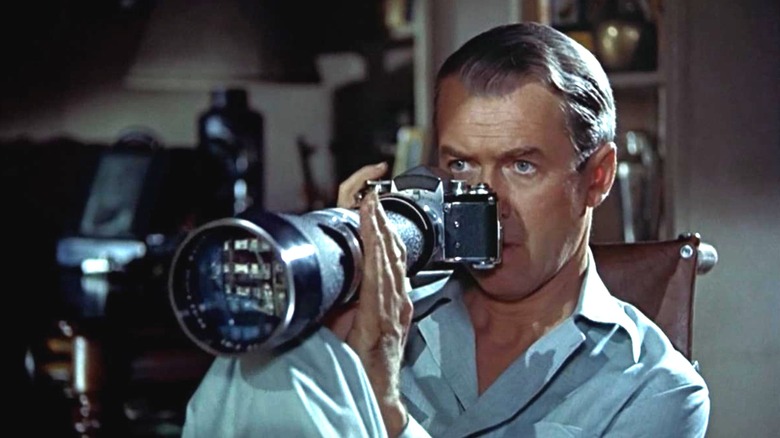
A contender for director Alfred Hitchcock's best film and one of the most famous films from Hollywood's Golden Age, the mystery of "Rear Window" retains unsettlingly modern anxieties. If you've ever felt adrift and unmoored from the boundless access into the lives of other people that the internet supplies, you feel a little bit like the injured and wheelchair-bound photojournalist L.B. "Jeff" Jefferies (James Stewart) in "Rear Window."
When not graced by the company of his girlfriend Lisa (Grace Kelly) or his nurse Stella (Thelma Ritter), Jeff's main source of distraction comes from sticking a pair of binoculars or a telephoto lens to his eyes and spying on his neighbors. Eventually, he sees what he thinks might be a murder cover-up, and becomes obsessed with solving the case.
Leaving the veracity of his inclinations aside, Hitchcock's main focus in this observant murder-mystery is the voyeuristic tendencies of human beings, and what it says about us that we can't help but peep into the lives of others. "Rear Window" is one of Hitchcock's most thrilling films, and a mystery that remains astonishingly modern and trenchant.
2. Eyes Wide Shut
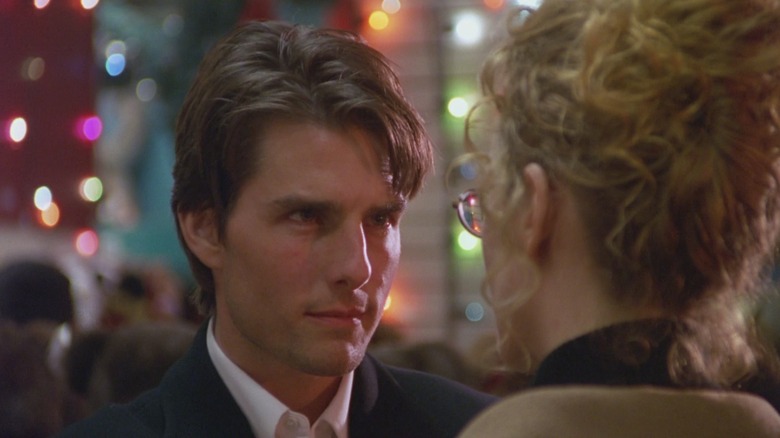
"Fidelio."
If you can immediately clock the meaning of that word, congratulations, you may know the password to a secret, aristocratic sex cult that dons elaborate masks as they engage in their hedonistic activities. Or you've simply seen "Eyes Wide Shut," in which Tom Cruise as Dr. Bill Harford learns this password and stumbles into the club himself, discovering a secret world that he feels is threatening his own.
The layered mysteries, secrets, and strangeness of "Eyes Wide Shut" are rich and obtuse, so much so that the film continues to reveal itself to viewers in new ways. Director Stanley Kubrick's final movie, which features two exceptional leading performances from Cruise and Nicole Kidman, is crafted with his typical sense of fastidiousness and intricacy, though it received lukewarm contemporary reception because of its icy nature. (Surprise, surprise, Kubrick is a little aloof.) Today, it stands tall as an astounding swan song, telling a story about the enigmas of desire and how an emasculated, jealous married man falls down a dark, dangerous rabbit hole because of his inability to reckon with a world — and a worldview — outside of his control.
1. Mulholland Drive
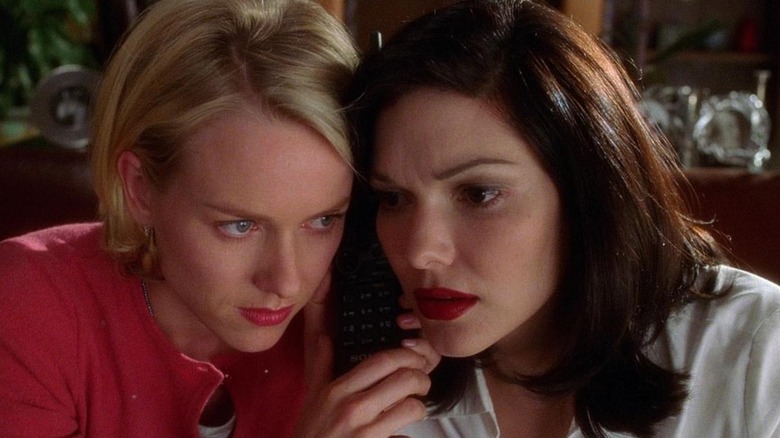
The surface-level mystery of David Lynch's "Mulholland Drive" belongs to Laura Harding's amnesiac actress who adopts the name Rita. Naomi Watts co-stars as Betty Elms, a new-to-Hollywood aspirant who begins to help Rita find out who she really is. Anyone who knows Lynch's filmography knows that this is just the tip of the iceberg of what the movie actually has on offer.
The real mystery of "Mulholland Drive" is the essence of the film itself. Operating in a dark, fairytale-like version of Hollywood, the film is filled with oblique detours and absurdist digressions that mark the typical Lynch movie, encouraging the viewer to lose themselves in a sensorial approach to storytelling that brushes aside conventional plot progression. Even then, Lynch never made a movie that he wanted the audience to "solve," although "Mulholland Drive" is the one movie he provided actual clues to unlock. But unlocking this film isn't about settling for easy answers. It's a matter of sinking into the film's esoteric world of nightmares and tragedy and recognizing how Lynch's enigmatic mystery perfectly reflects a dreamlike truth about the world.