

Paradise Season 2 Review: Sterling K. Brown Returns For A Messier, But More Emotional Odyssey
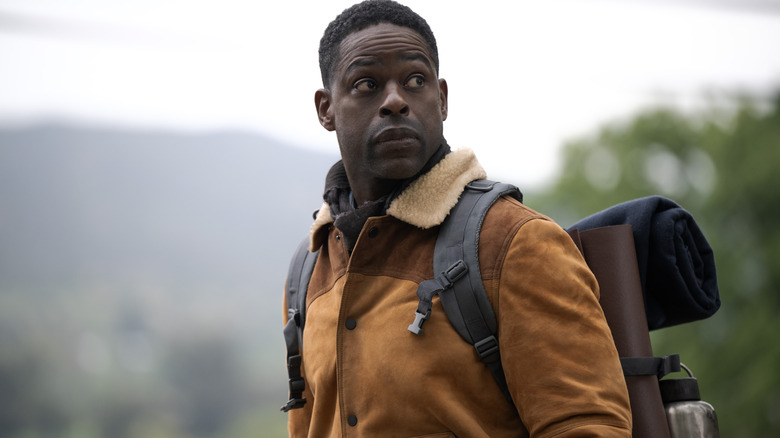
The apocalypse is all the rage these days, and it's not terribly difficult to figure out why. Climate catastrophes, the threat of nuclear wars, and rampant, self-serving corruption at our highest levels of government just hit differently in the year of our lord 2026. "Paradise" engaged with these topics with a blistering matter-of-factness that immediately set it apart from all the rest. But only a very select few — a "Fallout" here, a "28 Years Later" there — have done so from a more unique point of view. By now, we're all too aware of every reckless step we take to bring about our own destruction ... but how about what it takes to actually eke out a living in the aftermath?
This post post-apocalyptic approach is at the top of the list of concerns as "Paradise" returns for its second season, almost exactly a year after its early twist helped launch a word-of-mouth hit. Despite initially setting itself up as a straightforward murder-mystery surrounding the death of the President of the United States and the Secret Service agent who takes it upon himself to learn the truth, season 1 soon transformed into something else altogether. Jumping genres from that to a dystopian conspiracy thriller set in an underground doomsday bunker was daunting enough, but the finale then went and ended things on an even bolder note. With the President's murderer finally revealed, the season ends with Sterling K. Brown's Xavier Collins heading out into the surface world to find his wife — implicitly promising another major shakeup to the status quo.
"Paradise" season 2 delivers on its promise, though never as viewers might expect. Not surprisingly, removing our protagonist from the show's main setting instantly makes everything happening back at Paradise much more rote and mundane. The tradeoff, however, results in a classic road trip structure that frequently matches (and occasionally exceeds) what came before. It's to their credit that, this time around, creator Dan Fogelman and his writers appear less interested in crafting a tightly-wound mystery box and far more in eliciting one emotional response after another. While that makes for a somewhat messier and shaggier watch, this shift in priorities proves to be a winning combination. What we get instead is a meditative, thematically rich, and deeply emotional odyssey about finding hope at the end of the world.
At its best, Paradise season 2 channels Lost and, most intriguingly, A Quiet Place: Day One
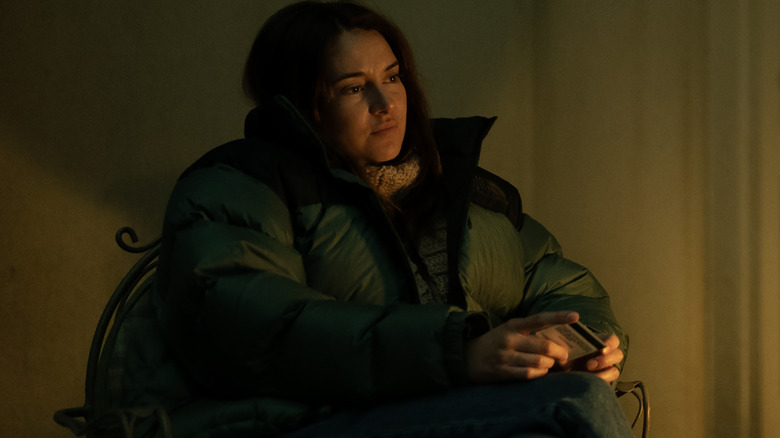
If one of the joys of "Paradise" came from watching the creative team dig their way out from under an intimidating twist, then it's fair to say that season 2 levels up by blazing a new trail entirely. There were endless possibilities to take this batch of episodes (of which critics received the first seven out of eight total to review). But, despite essentially a blank slate to work with, this next stage of the adventure finds a way to pick the most inspired fork in the road when it most counts.
That's best summed up by the addition of Shailene Woodley's Annie, a survivor from the surface whose backstory years before the worldwide cataclysm unfolds throughout a bravado premiere hour. Kicking off an entire season with a self-contained chamber piece featuring none of the characters we've met before is an impressive show of confidence — not to mention a rare sign of trust in modern attention spans — but it's the perfect opening salvo for the rest of the story that follows. In no time at all, we're fully on Annie's side and the hope she represents amid a dystopia that's otherwise turned on itself. Those accustomed to grittier genre efforts like "The Last of Us" will inevitably assume the worst of every scenario she finds herself in, like when a roving group of survivors led by Thomas Doherty's Link invade her sanctuary (Elvis' Graceland estate, no less) during a bigger mission. But "Paradise" weaponizes our cynicism against us to incredibly effective results, in a way that feels indebted to a similarly moving experience in the brilliant "A Quiet Place: Day One."
It helps that Woodley pitches her performance at just the right understated note, where the hardened but terrified Annie provides a poignant juxtaposition to Sterling K. Brown's one-man wrecking crew. We're not spilling state secrets to say that the two eventually cross paths, when Xavier crash-lands far from his intended destination of Atlanta, Georgia. But, by the time they do, the series takes every chance it gets to pit their competing worldviews against each other, typically in clever and unexpected ways. The organic use of flashbacks to fill in plot and character gaps does much of the heavy-lifting, oftentimes evoking "Lost" in how neatly the past tends to dovetail with the present. Still, viewers won't be prepared for where this journey takes them — and how it reverberates over the course of the season.
Paradise soars whenever Sterling K. Brown and Shailene Woodley are on-screen ... and stumbles when they're not
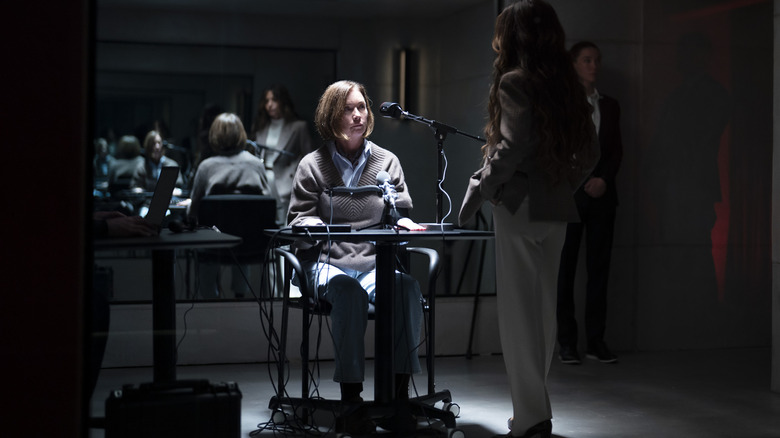
Despite everything going for it, "Paradise" wasn't a perfect season of television. Out of its ensemble of all the most important figures in Paradise, some proved more compelling than others. Julianne Nicholson's performance as Sinatra uncovered a beating heart of humanity to the tech-billionaire villain, primarily responsible for much of the corruption that plagues the underground city. Sarah Shahi brought a similar doggedness to a complicated character in therapist Gabriela Torabi, as did Krys Marshall as Secret Service agent (and the President's secret lover) Nicole Robinson. Outside of this tight circle, however, only President Cal Bradford (James Marsden) and agent Billy Pace (Jon Beavers) made notable impressions ... and neither survived the events of the story.
By its very structure, season 2 begins with one arm tied behind its back. In the absence of Sterling K. Brown's magnetic charisma to bring each disparate subplot together, these bunker holdovers mostly feel like vestigial organs. "Paradise" can't quite recreate the same espionage and conspiracy-thriller vibes in this setting as the first season did so efficiently, leaving most of these characters twisting in the wind. While Dan Fogelman and his writing team scramble to build suspense, the best they can do is cobble together a few loose plot threads. A half-formed mystery about the true origins of Paradise at least gives Sinatra and Torabi something to do beyond spinning their wheels, while a subplot about authorities disappearing innocents off the streets for minor acts of rebellion gestures vaguely at all-too-relevant current events. Neither amount to much more than thinly-sketched afterthoughts, unfortunately, leaving the finale with a formidable task ahead of it to bring everything together.
That's the thing about big swings, though — they increase the odds of big misses, too. One episode revolving around the sociopathic killer Jane Driscoll (Nicole Brydon Bloom) feels baffling from start to finish, a rare dud of an hour for a show that has otherwise avoided such major missteps. And although Marsden's President Cal is briefly brought back in flashbacks (as is Beavers' Billy Pace), this only highlights how much we miss such personalities. None of this is a complete deal-breaker, mind you. But it may leave you wishing for more consistency between the highs of Sterling K. Brown and Shailene Woodley's storylines and the lows of, well, most everyone else's.
Despite an uneven and bumpy ride, Paradise season 2 is well worth the watch
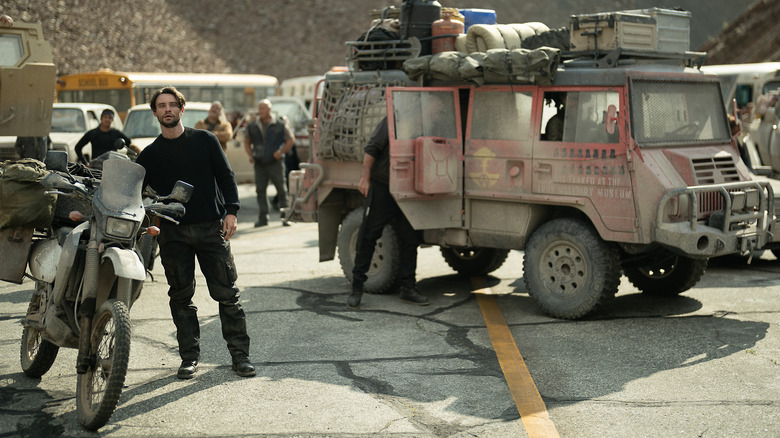
Despite these stumbles, "Paradise" earns plenty of goodwill in its attempt to evolve and expand the story beyond season 1's built-in narrative constraints. Dan Fogelman and his directors (made up of Glenn Ficarra, John Requa, Ken Olin, Liza Johnson, and Hanelle M. Culpepper) seem to have a bigger budget to stage a number of thrilling action sequences out on the surface, and they shoot each episode with the same style of handheld footage and extreme closeups that helped make this story feel so urgent and ground-level in the first place. Composer Siddhartha Khosla returns to build upon his memorable score filled with piano and strings, which serves as a constant emotional backdrop to the heartfelt drama unfolding on-screen.
Ultimately, "Paradise" has always been at its best when asking thought-provoking questions about this post-apocalypse setting and how we got here. As fascinating as this worst-case scenario is from a science fiction perspective, the novelty of it all only goes so far. When the events and characters and conflicts of each episode correspond directly to our real world, those are the moments season 2 lives up to the hype and turns into something genuinely special. As easy as it is to watch this series at a distant remove, almost as an intellectual exercise, viewers who put a little effort in will be rewarded. This is a season all about humanity's resilience as a group and our fragile mortality as individuals, about the passing of time and the passing down of our sins to become our children's burdens (to paraphrase one character from later in the season). The answers are never simple to come by, but the pursuit? That's worth everything.
More often than not, "Paradise" season 2 bears this out. Though occasionally a bumpy ride, the ambition and heart on display overall makes this an adventure you won't want to miss. And, if the latter half is any indication, this story may well be building towards one heck of a third season. Based on this trajectory, "Paradise" may be showing no signs of slowing down anytime soon.
/Film Rating: 7.5 out of 10
The first three episodes of "Paradise" season 2 premiere February 23, 2026 on Hulu.