

The X-Men Succeed At One Major Thing Few Superhero Teams Even Attempt
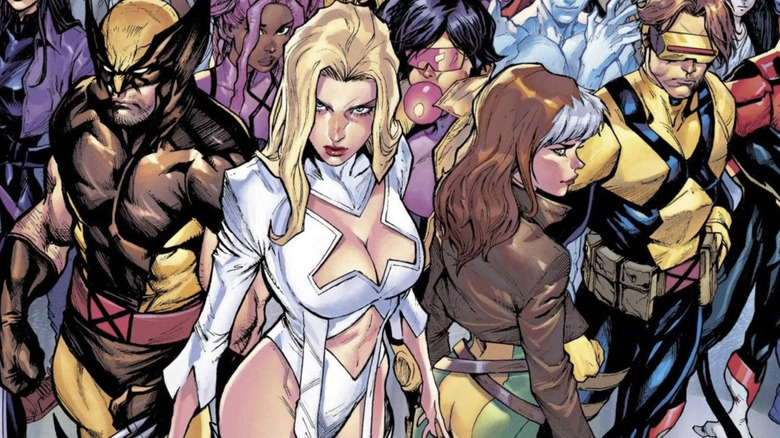
In superhero comics, it's common to see villains temporarily become heroes, or vice versa. The stories usually reset themselves to the status quo in the end, but in some cases, a villain fits so naturally as a hero that they stay that way.
Take the early "Avengers" comics, where founding members Iron Man, Thor, Giant Man, and Wasp were written out at issue #16. In their place stood "Cap's Kooky Quartet": Captain America leading reformed criminals Hawkeye, Quicksilver, and Scarlet Witch. None of them had been villains for long or enthusiastically; Hawkeye had been tricked into villainy by the Black Widow (who herself has now reformed), while Quicksilver and Scarlet Witch were only Magneto's lackeys under duress. To this day, all three are Avengers mainstays.
One superhero team especially stacked with ex-bad guys is the X-Men — and not just brief villains, but long-running foes who've turned over new leaves. Consider Rogue, one of the most famous X-Men members. If you only know the watered-down Rogue (Anna Paquin) from the "X-Men" movies, you wouldn't know she started as a villain.
Rogue debuted as a cruel and haughty villain and member of the Brotherhood of Evil Mutants in "Avengers Annual" #10, wherein she assaulted longtime hero Carol Danvers/Ms. Marvel and stole her powers. The white streaks in Rogue's hair even curled up into a demon horn-like shape:
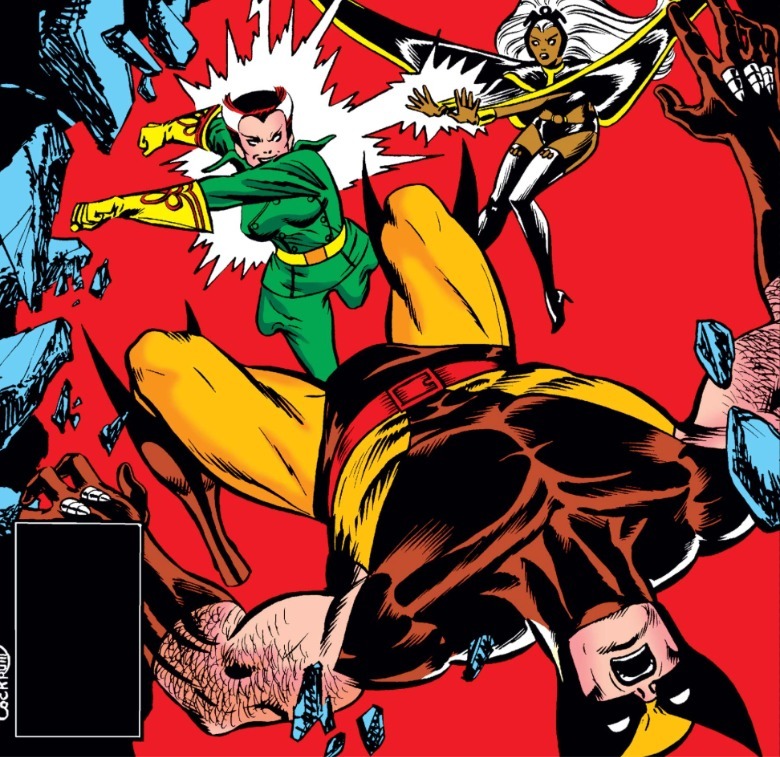 Marvel Comics
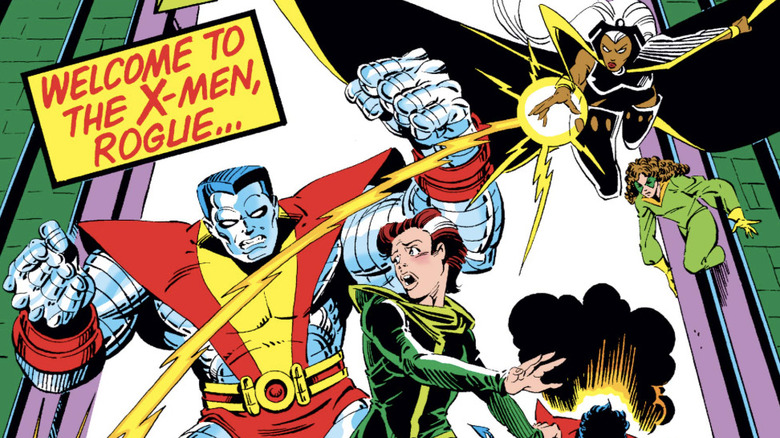
When Rogue tried to join her former enemies in Chris Claremont and Walt Simonson's "Uncanny X-Men" #171, the X-Men nearly mutinied against Professor X. Nowadays, though? Rogue is part of the family with no grudges.
And the trend doesn't end there. Magneto and Emma Frost spent decades battling the X-Men, but now they're both some of the team's leaders.
From Rogue to Magneto to Emma Frost, the X-Men welcome former villains
Remember Magneto's famous backstory, that he's a traumatized Holocaust survivor fighting to ensure mutants never face genocide? Chris Claremont came up with that, in "Uncanny X-Men" #150 (art by Dave Cockrum), not Stan Lee or Jack Kirby. It was a revolutionary idea to revise a tyrannical bad guy, and it paid off in "Uncanny X-Men" #200 (by Claremont and John Romita Jr.) when Professor X leaves Earth and leaves Magneto in charge of his school.
If it were up to Claremont, Professor X would've stayed gone as Magneto tried to redeem himself. In a Reddit AMA, Claremont explained: "[Xavier is] a noble, committed, wonderful human being. All we can do in the book is diminish him [...] but Magneto is fighting for something."
It didn't go that way, though, and Magneto tends to flip-flop between ally and enemy to the X-Men. Still, he's very rarely written as pure evil anymore, especially since many "X-Men" fans are more sympathetic to Magneto's perspective than Xavier's dream.
Similarly, Claremont and artist John Byrne introduced Emma Frost in "The Dark Phoenix Saga" as the White Queen of the evil Hellfire Club. In her debut, she kidnaps and tortures the X-Men. The founder of the Massachusetts Academy, a dark counterpart to Xavier's School, Emma put together a team called the Hellions to oppose the New Mutants.
In the 1990s, Emma reformed and starred in the book "Generation X." In 2001, Grant Morrison added her to the X-Men, remaking her into one of the team's mainstays and sparking her romance with Cyclops. Like Xavier, Emma is a teacher, which gets to why the X-Men take in and reform bad guys: Their mission is to teach evil mutants to be better.
The line between hero and villain is frequently blurred in X-Men comics
Superhero comics are often compared to soap operas, and "X-Men," filled with melodrama and convoluted retcons, fits that analogy the most. The way villains flip-flop into heroes is another soapy storytelling symptom, and the inverse is just as true.
The aforementioned "Dark Phoenix Saga" was all about founding X-Man Jean Grey going power-mad and ultimately destroying herself. (Of course, Jean came back and is still living down the Dark Phoenix's actions.) Claremont pulled the same trick in "Inferno," when Cyclops' rebound romantic interest and Jean's doppelgänger, Madelyne Pryor, became the evil Goblin Queen. If Claremont had continued writing "X-Men," he had plans for Wolverine to fall into darkness too.
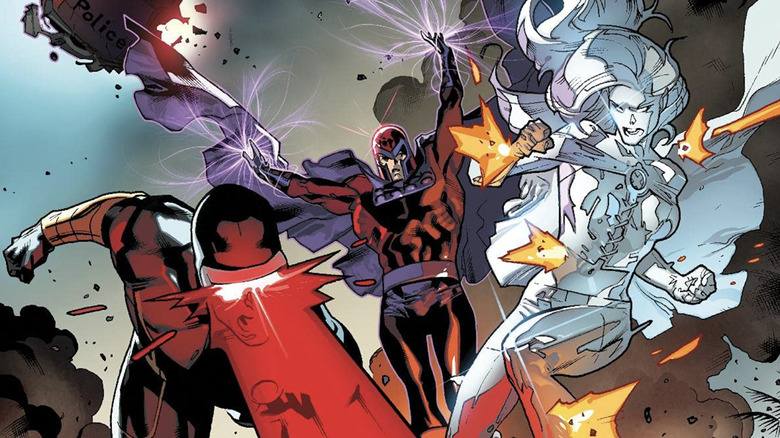
Following the "Avengers vs. X-Men" 2012 crossover, Cyclops was rewritten from the X-Men's boy scout leader into a more morally compromised character. In Brian Michael Bendis' 2013 "Uncanny X-Men" run, Cyclops became an underground revolutionary on the run from the law. Not coincidentally, Magneto, Emma Frost, and Magik (all reformed villains) stood by Cyclops' side.
If the line between hero and villain has been thin in "X-Men" since the Chris Claremont days, then in 2019, that line totally collapsed. In the relaunch book "House of X/Powers of X" (by Jonathan Hickman, Pepe Larraz, and R.B. Silva), Professor X and Magneto come together to found Krakoa, a new homeland for mutants.
But if Krakoa is going to be a land for mutants, that must mean all mutants. So, every mutant super-villain — even the big-hitters like Apocalypse, Mystique, and Mister Sinister — are pardoned and accepted as Krakoan citizens. At its best, the Krakoa era felt like "X-Men" comics reaching their full potential, and one reason for that is because the binaries of hero and villain were washed away.