

A Key Teen Titans Villain Was Created As An Evil Twist On X-Men's Kitty Pryde
We may receive a commission on purchases made from links.
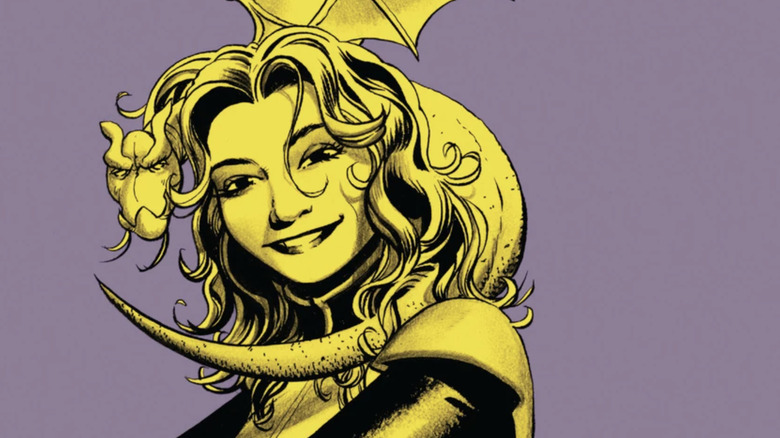
While Kitty Pryde may never have shown up in "X-Men: The Animated Series," she's a vital player in the original comics. Introduced by Chris Claremont and John Byrne in "Uncanny X-Men" #129, she's a 14-year old girl who can walk through walls. The X-Men are supposed to be a school for young mutants, and Claremont had been writing "X-Men" for over 30 issues, so it was time for new blood. As Jubilee later would in the animated series, Kitty offered a child's perspective for young readers.
Kitty endures as one of the most famous X-Men. She was Joss Whedon's inspiration for creating Buffy the Vampire Slayer, another teen girl who navigates the supernatural and mundane challenges of growing up. But before Buffy, Kitty also inspired a twisted parody at Marvel's distinguished competition: Terra from DC Comics' "The New Teen Titans."
Created by Marv Wolfman and George Pérez, Tara Markov/Terra is an outspoken young girl who can control the earth. She joins the Titans, fights to earn their trust, and adds some comic relief with her lack of manners — but it's all a set-up. She's working with Slade Wilson/Deathstroke to kill the Titans, and reveals her true allegiance in the famed storyline "The Judas Contract."
In a foreword to "The Judas Contract," Wolfman discussed how many comic book readers accused "New Teen Titans" of ripping off 'X-Men." (Even after Claremont himself said publicly that wasn't the case.) Wolfman, who said he "love[s] puncturing balloons," got an idea:
"I decided if some fans thought we were an 'X-Men' clone, then why not play with them a bit? The X-Men had just introduced a new member to their group, a young 14-year-old cute-as-a-button girl with incredible powers. I'd do the same."
Only the Titans' Kitty, Terra, would be a villain in disguise.
Teen Titans' Terra played with reader expectations
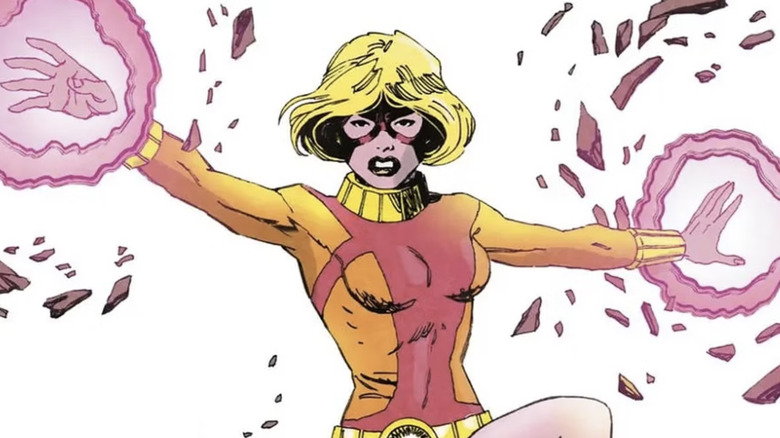
Terra debuts in "The New Teen Titans" #26, when Beast Boy/Garfield Logan stops her from destroying the Statue of Liberty. Terra is, supposedly, being forced to work for a group of terrorists. Once the Titans "rescue" her, she joins them. (In reality, this was all a set-up by Slade and Terra to place her on the team.)
As Wolfman writes in "The Judas Contract" foreword, comic storytelling convention would dictate that even though Terra debuted fighting the Titans, she must be a good girl deep down. Even after she reveals her allegiance to Slade, you'd assume she'd redeem herself in the end. In the 2003 "Teen Titans" cartoon, that's exactly what happened, with Terra (Ashley Johnson) turning on Slade (Ron Perlman) at the last minute and sacrificing herself to save the Titans and Jump City from an earthquake. When "Young Justice" adapted "The Judas Contract," Terra (Tara Strong) rejects Slade and gets to live as a hero.
In Marv Wolfman and George Pérez's original story, though, Terra is genuinely evil. As Wolfman writes in "The Judas Contract" foreword, it's wrong to even call Terra a traitor; she was never really the Titans' friend in the first place, so the correct term for her is spy. After Terra's self-inflicted demise, Beast Boy refuses to believe for a long time that Slade hadn't brainwashed her, but he eventually has to accept the truth of who Terra was.
Beast Boy and Terra's dynamic is a key way the story plays with reader expectations. Garfield has a crush on her, and as they're both comic relief that tease each other a lot. Except, it's not true romantic tension. Terra genuinely dislikes Beast Boy and her insults aren't good-natured, they're her failing to hold her tongue.
Further comparing Teen Titans' Terra and the X-Men
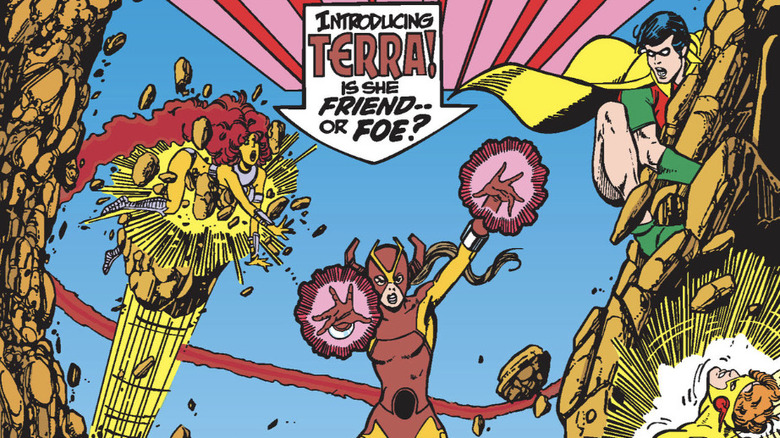
If we're to continue the Terra/Kitty Pryde comparison, then I see a parallel to Terra & Beast Boy and Kitty & Nightcrawler/Kurt Wagner. Nightcrawler and Beast Boy are both jokesters, both acrobatic, and both have oddly colored skin (Kurt's is blue, Garfield's is green).
When Kitty first joins the X-Men, she's unnerved by Nightcrawler because of his demonic appearance. But, she learns to appreciate the kind, good-humored man he is inside, and they become friends; Kitty affectionately calls Kurt "Fuzzy Elf." In religious satire "X-Men: God Loves, Man Kills" (by Chris Claremont and Brent Anderson), the intolerant Reverend William Stryker slanders Kurt as not even human, so Kitty leaps to his defense. Compare this to early in "The Judas Contract," when Terra nearly blows her cover by losing her temper at Gar's teasing/flirting and trying to kill him.
Though Kitty Pryde was who Marv Wolfman and George Pérez had in mind, Terra's shifting allegiances remind me of a different X-Men: Rogue. It's easy to forget now but Rogue started as a villain. She was part of Mystique's Brotherhood of Evil Mutants and, in her debut appearance "Avengers Annual" #10, she attacks and steals the powers of Carol Danvers/Ms. Marvel. In 1983's "Uncanny X-Men" #171, the X-Men almost revolted when Professor X offered a desperate Rogue sanctuary.
The storyline that Claremont played straight with Rogue — a villain joins the heroes and redeems themselves — is the one that Wolfman and Pérez so viciously subverted with Terra. If any X-Fans wonder how Rogue's story might've played out if she'd stayed evil, just read "New Teen Titans: The Judas Contract."