

Margot Robbie's 2025 Fantasy Box Office Flop On Netflix Deserves A Second Look
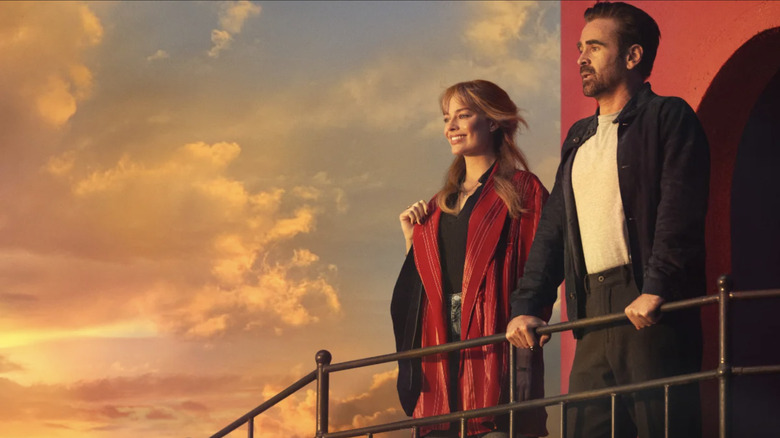
Movie audiences are often only willing to watch love stories in particular contexts. As a dash of spice thrown into a genre movie (action, horror, etc.) they're generally welcomed. As a feature of a gritty prestige drama, they're typically lauded. And within the confines of the romantic comedy (despite whichever side the emphasis is placed), they're appreciated. Yet the romantic fantasy film, especially if it happens to be particularly earnest, is often derided.
That wasn't always the case, of course. Filmmakers like Preston Sturges and especially Ernst Lubitsch made their careers on the backs of starry-eyed dramedies about swooning adult romance. Sadly, the rise of cynicism over the past half-century or so mixed with an increase of irony poisoning in all facets of pop culture has caused the romantic fantasy to become an especially unappreciated subgenre.
To be fair, a film within that subgenre doesn't deserve to be praised just for existing, and 2025's "A Big Bold Beautiful Journey," now streaming on Netflix, is not without its issues. The film flopped at the box office upon its release in September, and the general consensus was that it's very uneven. In his review for /Film, Witney Seibold described it as "not a terrible film, but ... not mature enough to understand the machinations of the human heart." Yet it's not a stupid movie, either. Instead, "A Big Bold Beautiful Journey" is a movie attempting to reconcile intellect with emotion, a theme which director Kogonada continually addresses in his films. While it may not succeed in its lofty goals, its earnest approach makes it worthy of a second look.
A Big Bold Beautiful Journey is less about new love, and more about characters discovering their capacity to love
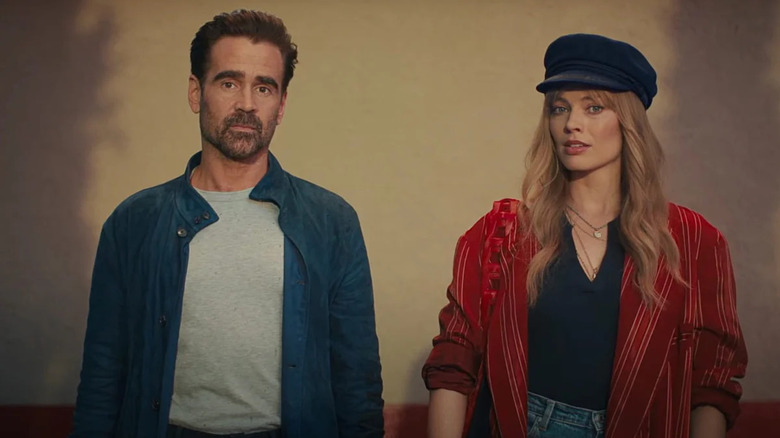
"A Big Bold Beautiful Journey" is a typical romantic fantasy movie in many respects, being about a lonely man, David (Colin Farrell), and a pessimistic woman, Sarah (Margot Robbie), who are directed toward each other by some unknown mystical force — it could be extraterrestrials, or some sort of magical car rental company with an omnipotent AI. Ultimately, the point of the film is to study these two people and their various issues with themselves and romantic relationships that they've had on their journey toward middle age. For sure, if you find yourself averse to magical realism, there's a lot to dislike in the film. Additionally, while there's an edgy quirkiness to its comedy (the F-bomb is dropped quite a bit), it can seem to grate against the awkward product placement, the presence of which is ironic at best, cynical at worst.
Yet the key to understanding and hopefully appreciating the film lies in understanding that this isn't a movie about a whirlwind, meet cute romance between two people who desperately want to bone each other. Instead, writer Seth Reiss and Kogonada use the film's fantasy element to let David and Sarah explore their pasts as a way of trying to understand themselves and the choices they've made which have led them to this point. Ultimately, this is a romance not of desire, but of acceptance, as David and Sarah share these truths and get to know each other in a way that few people can. The love story, then, is less about becoming swept up in another person and more about a mutual discovery that one's capacity (as well as desire) to love still exists.
Kogonada's film resonates with those of us who still haven't found what we're looking for
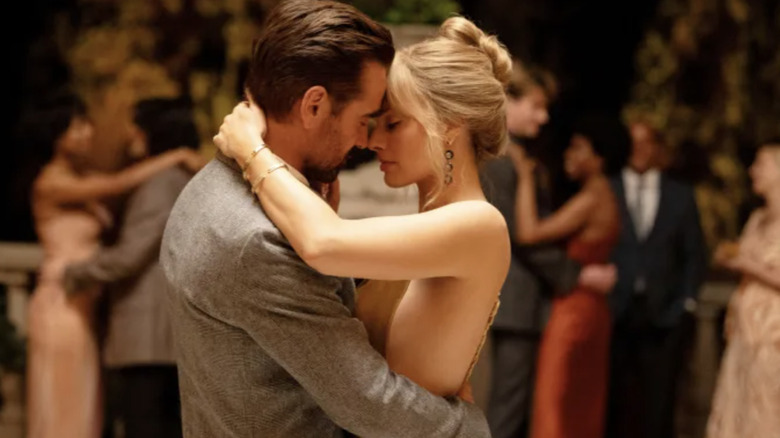
Anyone who's been in love before will tell you that a lot of the experience involves following your heart more than your head. While that's undeniably true, it can be tricky for those of us who are chronic overthinkers. "A Big Bold Beautiful Journey" is an attempt to square that circle, and uses its fantasy to effectively free David and Sarah from the burden of living their lives for just a moment so that they can examine them with a clear eye. After all, there's a reason why the magical device in the film is a glorified GPS. Although this is the first film that Kogonada did not both write and direct, there's a continuity of theme with "Columbus" and "After Yang" in the way that "Journey" is trying to balance intellect with emotion. "Columbus" saw characters find deep humanity within structures of concrete and steel, while "After Yang" posited that artificial beings may have as much of an effect on humans as other humans do.
While the movie can speak to anybody, it feels especially resonant for those of us Millennials who began our lives filled with promise and find ourselves stalled out for whatever reason. This film doesn't merely say that life itself is a big, bold beautiful journey, but instead gets its characters (and, by extension, its viewers) to try and understand themselves a bit better, leading to them loving themselves a little more so that they can then potentially share that love. It's rare to get a movie this unabashed and vulnerable these days, and while its surface issues may feel alienating at first, I'd recommend trying to open your heart to it, at least a little.