

Roger Ebert Didn't Mince Words About A Forgotten Audrey Hepburn Thriller
We may receive a commission on purchases made from links.
You've got to wonder what Roger Ebert would have made of the streaming age. He'd surely self-implode at the sight of something like Kevin Hart's "Lift" or the ultra-expensive Russo Brothers' disaster that was "The Electric State." Likewise, it's a shame we never got Ebert's take on the "365" Netflix trilogy that IMDb users consider one of the worst of all time. With these upsetting examples of moviemaking decline in mind, it's hard to imagine Ebert seeing an Audrey Hepburn film and "weeping for the cinema," but in 1979, that's exactly what happened.
Hepburn only made four movies after stepping back from showbusiness in 1967, and none managed to recapture the magic of her early projects. Though she might not have been able to match John Travolta, the king of 0% Rotten Tomatoes movies, the refulgent, effortlessly graceful star of such classics as "Roman Holiday" and "Breakfast at Tiffany's" certainly managed to add a few duds to her filmography. According to Ebert, "Bloodline" was the most egregious.
The film saw Hepburn re-team with her "Wait Until Dark" director Terrence Young, who, aside from overseeing 1962's "Dr. No" and making some of the all-time classic James Bond movies, also contributed some of the wildest moments to the banned Bond Laserdisc commentaries. The man without whom Sean Connery's 007 would surely have failed was also the man who tempted Hepburn out of retirement to make an absolute stinker of a movie. At least, that is, according to reviewers, who savaged "Bloodline" upon its 1979 release. Nobody seemed quite as disgusted as Ebert, however.
Bloodline was a misstep for Audrey Hepburn, and Roger Ebert didn't let it slide
In 1976, Audrey Hepburn made her big return to cinema, starring alongside Sean Connery in "Robin and Marian." Roger Ebert was impressed, writing that Connery and Hepburn "project as marvelously complex, fond, tender people; the passage of 20 years has given them grace and wisdom." It would be three years before Hepburn made another film, but this time Ebert was not as complimentary. In fact, he was as critical as he'd ever been, which is saying something considering he walked out of a controversial '80s historical movie that he claimed left him "depressed."
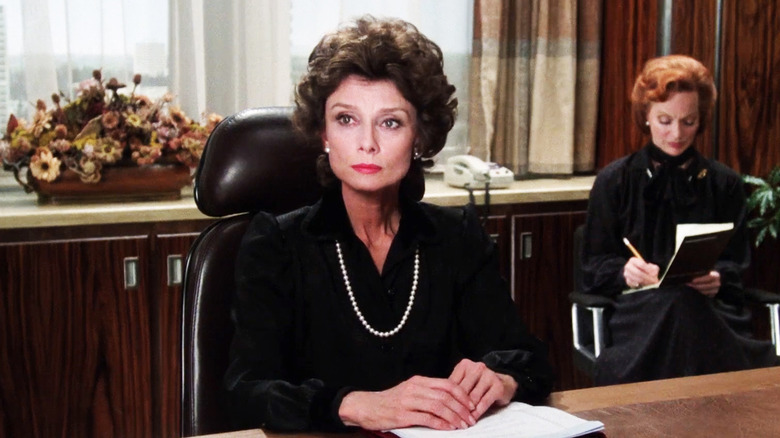
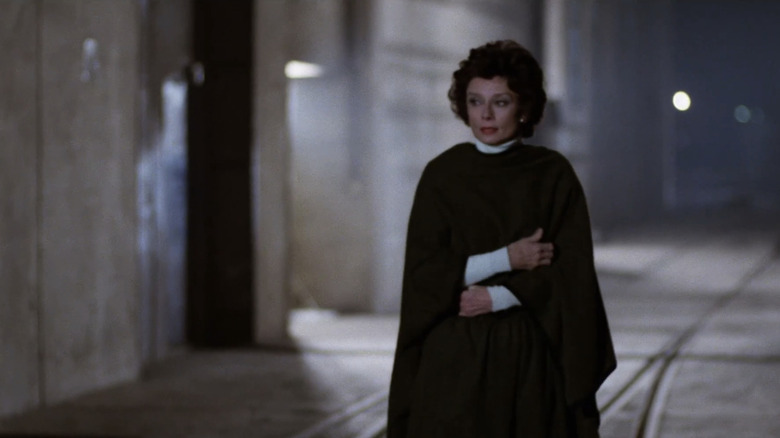
The only R-rated film Hepburn ever made, "Bloodline" was adapted by Laird Koenig from Sidney Sheldon's 1977 novel of the same name. It saw Hepburn portray Elizabeth Roffe, who inherits the billion-dollar Roffe & Sons Pharmaceuticals empire after her father's death. Soon, Inspector Max Hornungit (played by Gert Fröbe of "Goldfinger" fame) discovers that Sam's death was a murder, and everybody around Elizabeth becomes a suspect, including her new husband, Rhys Williams (Ben Gazzara). The heiress then becomes the target of a serial killer who has murdered several women across Europe, none of which was all that pleasing to Ebert.
In his review of the "Bloodline," collected in his 2000 book, "I Hated, Hated, Hated This Movie," Ebert declared the film to be "the worst movie of 1979." The most complimentary thing he had to say was that when Hepburn appeared on the screen for the first time, "the theater goes silent as everyone absorbs once again the fact of her extraordinary beauty." He then added, "And then the theater stays silent, as everyone absorbs the astonishing extent of the artistic stupidity wreaked upon her by the screenplay."
Everyone hated Bloodline, but Roger Ebert hated it most
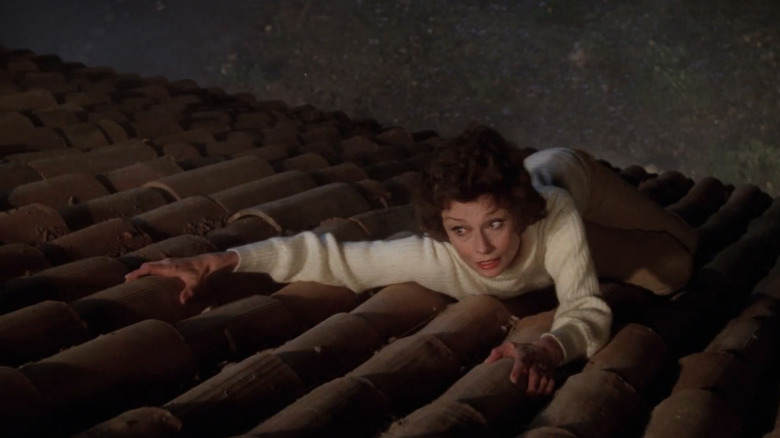
In his review of "Bloodline," Roger Ebert was relentlessly withering, decrying the way in which the film seemed obsessed with "the favorite fictional subject of the fast-fading seventies: the Woman in Danger." Ultimately, the critic summed up the movie as "reprehensible," in what was easily one of his most scathing reviews. "Bloodline" must have really touched a nerve in that respect, as Ebert also dismissed Chris Evans and Jason Statham's awful 2005 movie as "dreck," and wrote that he "detested every moronic minute of Hervé Palud's "Little Indian, Big City." But even after his written review of the film, he wasn't done disparaging Terrence Young's thriller.
When Ebert and Gene Siskel appraised the film for an episode of "Siskel & Ebert," they were similarly negative. Siskel lamented the "disgusting scenes of naked women being strangled" and dubbed the film "sleazy" and "trashy." But Ebert couldn't wait to take things ever further, jumping in after his colleagues' take to say that he was "totally appalled" with "Bloodline" and asking:
"Who did they think they were making the picture for? I mean Audrey Hepburn fans who've come to see the Wardrobe are going to be appalled by the violence. No violent movie fan would ever go to a movie like this, I hope [...] it's a toss-up as to which audience will hate the movie more."
In fairness, it wasn't just Ebert and Siskel that hated this movie. Vincent Canby of The New York Times viewed "Bloodline" as "often laughable" even while it had "no sense of humor." Gary Arnold of The Washington Post dubbed the movie "one of the most perfunctory murder mysteries ever committed to foolscap." But nobody had the same seething hatred of "Bloodline" as Ebert.