

12 Best Tim Burton Characters, Ranked
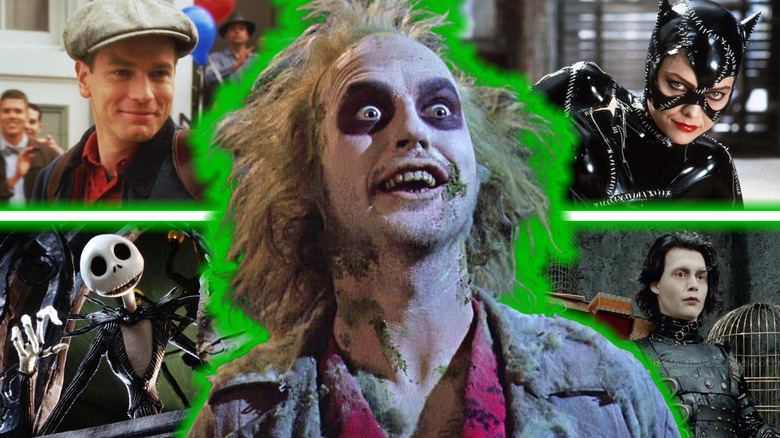
Tim Burton has a certain, let's say, style that has become very easy to identify over the past several decades. Depending on your sensibilities, his work may make you realize there's nothing wrong with being an outcast and that there's a certain kind of strength in following your own path in life. For others, his movies will immediately make you think of Hot Topic.
Still, there's no denying Burton has directed some truly incredible films over the years, many of which have introduced easily recognizable characters into the zeitgeist. However, Burton shouldn't just be known for his set design or penchant for working with composer Danny Elfman. He should also be known for bringing about fully realized characters you want to see more of. That includes his own original creations, along with the pre-existing entities Burton has put his stamp on.
Everyone's bound to have a specific character that resonated with them. But I'm looking at this list from a grander perspective, ranking the best Tim Burton characters based on who's had the greatest impact on pop culture and who best represents Burton's filmography as a whole.
12. Sally from The Nightmare Before Christmas
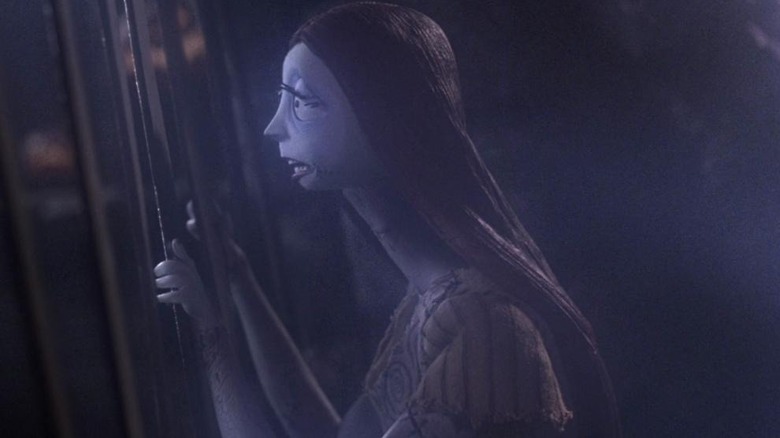
Before you get all pedantic on me, yes, I'm aware Tim Burton did not direct "The Nightmare Before Christmas" because he was too busy with other projects. That honor instead went to Henry Selick, but the myth persists that Burton was the director in large part due to the movie technically being called "Tim Burton's The Nightmare Before Christmas." Burton came up with the original poem the film's based on, and even though he wasn't the main creative force behind the project, a list of the best Tim Burton characters wouldn't feel complete without including some iconic ones from here.
Sally (Catherine O'Hara) is a wonderful encapsulation of how we should all feel an immense longing for more. She tends to be cooped up inside with Dr. Finkelstein (William Hickey), and she regularly makes a break for it, often disassembling and reassembling her appendages (something she can do as a ragdoll) to attain freedom. She yearns for adventure, but she's also the voice of reason, as she's the main one telling Jack Skellington (Chris Sarandon) that his plan to hijack Christmas may not end the way he hopes.
Sally exemplifies true existentialism. Finkelstein may have created her to be his servant, but she longs for more. She doesn't even necessarily want to do anything flashy like Jack; she's content sewing his Santa suit initially. But she proves a pivotal force in the end to save Santa Claus, proving none of us have to be defined by what our makers intended for us.
11. Ichabod Crane from Sleepy Hollow
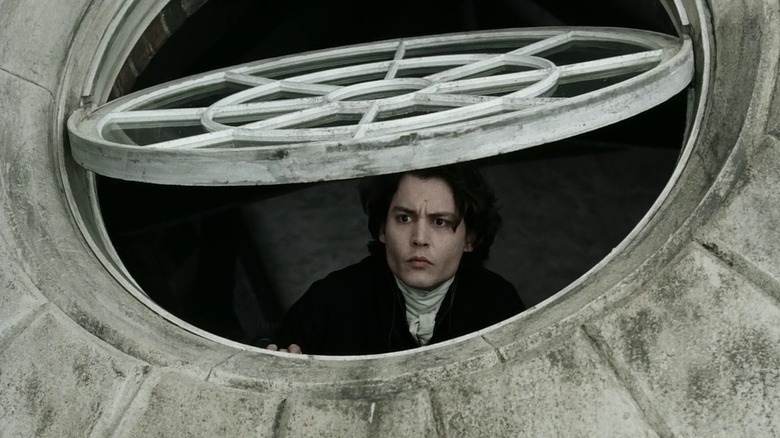
After Tim Burton's "Superman" movie was canceled, he found the script for "Sleepy Hollow," leading to one of the most fascinating Gothic horror films in recent memory. Frequent Burton collaborator Johnny Depp portrays New York constable Ichabod Crane, who's sent to a quiet village to investigate a string of decapitations. He's a man of science and reason; he believes there must be some sort of logical truth to the universe. But what makes him so compelling is how full of contradictions he is.
He may be a reasonable man, but Ichabod has a potent paranoia of spiders. One would assume that a man like him would understand that most spiders are perfectly harmless, but therein lies the fun. And that doesn't even get into the moment when Crane discovers the Headless Horseman (Ray Park and Rob Inch), shattering everything he thought he knew about the world with a supernatural threat now in the mix.
Ichabod Crane isn't exactly what you would call a macho hero. He can be a bit wimpy at times, but if anything, that just makes his acts of heroism all the more impressive. He's not the kind to rush into battle, but he'll still do it if someone he loves is in danger. He's a great showcase of how it's all right to be afraid as long as you don't allow it to overpower you.
10. Bela Lugosi from Ed Wood
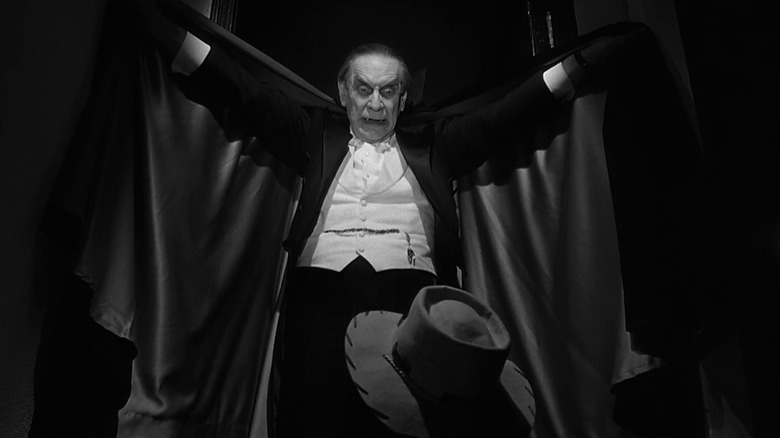
From "The Fabelmans" to "Chaplin," many movies pay tribute to the art of filmmaking, honing in on individuals who helped push the medium forward. And then there's "Ed Wood," Tim Burton's touching love letter to the eponymous director (played by Johnny Depp) who made such cult not-so-classics as "Plan 9 from Outer Space" and "Night of the Ghouls." Depp's performance helps carry the movie, but it's Martin Landau as horror icon Bela Lugosi who truly captures the film's larger themes.
Lugosi is, of course, best known for playing Dracula in a wide breadth of films. However, we don't get Lugosi in his prime in "Ed Wood." Instead, this is a Lugosi whose career peak is well behind him, as he battles addiction on top of everything else. He works closely with Ed Wood, and while it would be easy to mine this type of character for humor, which the movie does to an extent, it also gives him a quiet dignity that even though his later work isn't that revered, he still tried to make something of his talents.
Wood and Lugosi didn't exactly make high art together, but that's not really the point. The point is in their friendship and how they enjoyed working together making art, even if the public didn't think it was very good. Landau won an Oscar for his performance in "Ed Wood," and, despite having a tricky tightrope to walk, he nailed the role, making Lugosi the thing of legend he deserved.
9. Emily from Corpse Bride
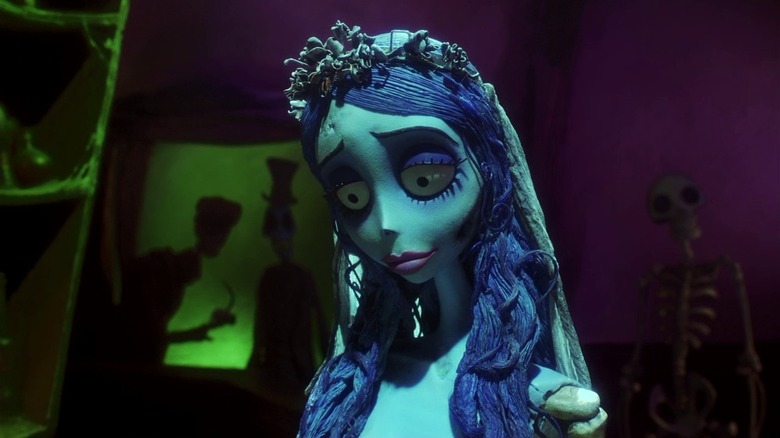
Tim Burton finally got a chance to direct his own macabre stop-motion movie with 2005's "Corpse Bridge." Inspired by Jewish folklore, the film follows meek Victor (Johnny Depp) as he's about to get betrothed to a woman he barely knows. While practicing his vows, Victor accidentally places the wedding ring onto the petrified hand of Emily (Helena Bonham-Carter), who was murdered long ago by her own beloved, and the ring brings her back to life. She promptly takes Victor to the underworld as they try to figure out how to make their relationship work, even though Victor's now much more onboard with marrying Victoria (Emily Watson).
Ironically enough, Emily is the beating heart of this film. She's not a vengeful spirit, and in fact, even though she was murdered, she still believes in true love and desperately wants her relationship with Victor to succeed. But that would come at the cost of denying Victoria a chance to be with Victor, and the two really do seem like they'd go well together. Emily makes the ultimate sacrifice by the end, allowing Victor to stay in the land of the living to be with Victoria.
Both Emily and Victor have character arcs in "Corpse Bride," but Emily's is arguably the more profound one. Victor needed to just learn not to run away from his problems. Emily needed to realize that her joy can't come at the misery of others, so even though it could haunt her, she had to relinquish the one thing she always wanted. It's a beautiful story, and not for nothing, but Emily just has a hauntingly Gothic design I appreciate being in a kids' movie.
8. Penguin from Batman Returns
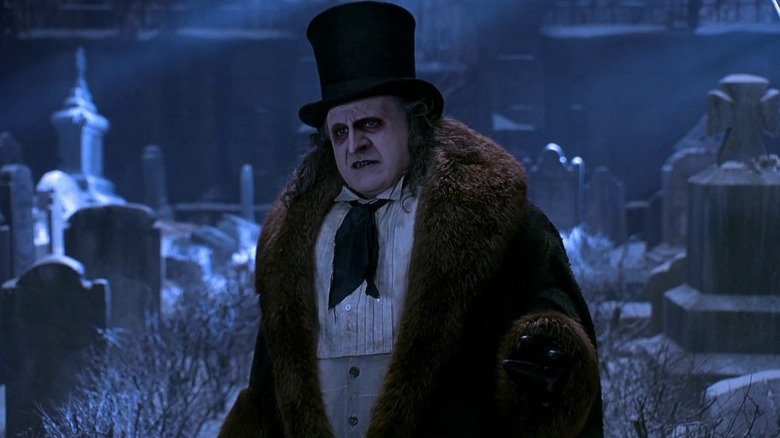
Penguin had a long history in comics and other media prior to 1992's "Batman Returns." It's a true testament to Danny DeVito's performance that he was able to put his own mark on the character, who also got a change in backstory during this outing. Normally, Oswald Cobblepot, aka Penguin, comes from wealthy parents. He's a well-to-do crime boss, but in "Batman Returns," he was abandoned as a child due to his appearance and forced to find his own path in life. Far from the polished Penguin we're used to seeing, he's far more of a monster, even going so far as to bite someone's nose.
DeVito's Penguin serves as a dark mirror to Michael Keaton's Batman. Whereas Bruce Wayne lost his parents via murder and pursued a path of justice and righteousness afterward, Penguin chose a different route. He didn't just lose his parents; they abandoned him. He could've had the kind of fabulous wealth Bruce enjoys, but he had to fight for everything he has until he blackmails Max Shreck (Christopher Walken) to get him back into high society.
DeVito thinks his interpretation of Penguin is better than Colin Farrell's in 2022's "The Batman," and it's tough to argue. Obviously, Farrell is fantastic, and there have been other great Penguin actors. But DeVito took a recognizable Batman villain and completely altered what he stands for thematically.
7. Lydia Deetz from Beetlejuice

For any teenager who felt like an outsider in the 1980s, Lydia Deetz (Winona Ryder) practically became a patron saint. She was the child no one understood as the Deetz family moved into the Maitland house, which was inhabited by the spirits of Adam (Alec Baldwin) and Barbara Maitland (Geena Davis). Lydia's parents didn't understand her, but the Maitlands, as ghosts, did, so Lydia found a family of apparitions who knew what it was like to have no one listen to you.
Given her fabulously goth fashion and macabre humor, it's easy to overlook how dark Lydia's arc becomes in the movie. She actively wants to die throughout "Beetlejuice" but comes to realize the world of the living needs her. And we get to see a more grown-up version of Lydia in the legacy sequel "Beetlejuice Beetlejuice," which sees her basically standing for everything young Lydia would've been against. /Film actually spoke with Ryder about this arc, and even she admitted never thinking Lydia would grow up to have children of her own or host a TV series. But that makes her journey in the sequel all the more interesting.
Lydia is perhaps the best portrayal of Tim Burton's trajectory in popular culture. He went from an outsider no one understood to someone whose aesthetic has been co-opted by the mainstream, same as Lydia. Have both Lydia and Burton sold out, or is there a way to maintain integrity while making truckloads of money in the process?
6. Catwoman from Batman Returns

Like Penguin, Catwoman has also gone through various iterations over the years. Selina Kyle has a fabulous legacy that sometimes sees her as more of a common crook and other times as a conflicted anti-hero who has a romantic entanglement with Batman. But all these other versions must bow down to the supremacy that is Michelle Pfeiffer's take on the character in "Batman Returns."
Pfeiffer's Selina begins as a timid secretary who gets pushed out a window by her boss, Max Shreck (Christopher Walken), but she survives and assumes the persona of Catwoman. No longer meek, she's now fully in charge of her own destiny and seeks vengeance against Max while coming into her own sexuality. At the beginning, Selina represents the boxes society tends to put women in: They should be seen and not heard, so Selina refuses to make much of a fuss over anything. Later, she takes up all the space she wants, arguably outshining Batman in his own movie.
Batman eventually tells Selina, "We're the same... split right down the center." They both share immense trauma, which has resulted in dual personas, but Batman is more interested in justice over personal squabbles, while Catwoman is all about her personal desires and vendettas. Catwoman knows what she wants and won't stop until she gets it, serving as an icon for women for decades to come and setting the standard for all future Catwoman interpretations.
5. Pee-wee Herman from Pee-wee's Big Adventure
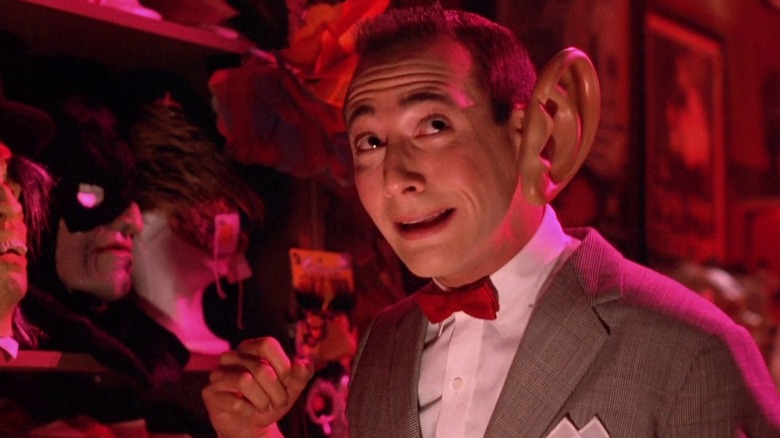
"Pee-wee's Big Adventure" was the first feature-length movie Tim Burton directed, based on a character Paul Reubens created for a stage show. The film may not have stemmed from Burton's mind, but Pee-wee still encapsulates everything one tends to find in a typical Burton protagonist.
Pee-wee Herman is an outcast. He embodies genuine childlike wonder, and the driving force of the movie is him just trying to get his bicycle back. Along the way, he meets all sorts of oddballs and threats, and he faces every challenge with gusto. In a way, Pee-wee is a showcase of how just because everyone gets older, that doesn't mean you have to grow up all the way. In fact, maintaining a certain level of silliness is probably necessary to make sense of an increasingly chaotic world, especially when a trucker named Large Marge (Alice Nunn) could transform into a claymation demon at any moment.
Pee-wee isn't dark and brooding like some of the other best Burton characters, but his joy and whimsy make him an outsider all the same. Reubens has sadly passed away, but his legacy lives on with a character that's simultaneously different yet fits in perfectly with the rest of Burton's filmography.
4. Jack Skellington from The Nightmare Before Christmas
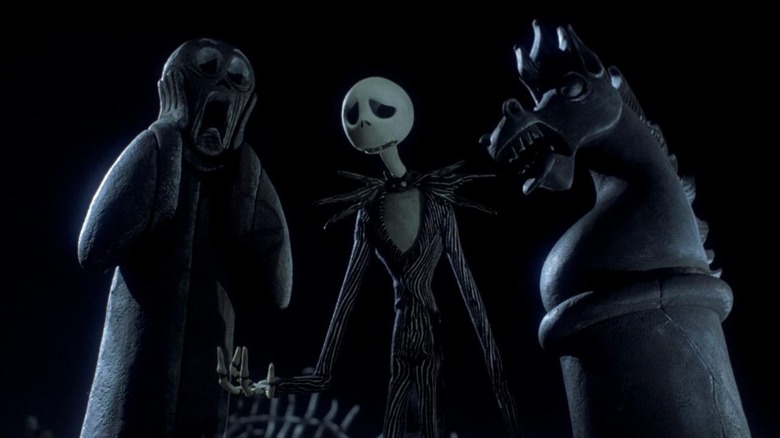
Jack Skellington is a great metaphor for maintaining optimism even in a state of failure. He begins "The Nightmare Before Christmas" as the Pumpkin King, who puts on one successful Halloween after the next, yet he's become bored with doing the same thing repeatedly despite being good at it. Thus, he seeks a new challenge, and after stumbling upon Christmastown, he decides to assume the position of Santa Claus and carry out Christmas all over the globe.
Jack was partially inspired by Ed Wood, and it's easy to see the similarities after watching Tim Burton's biopic about the maligned filmmaker. Wood just wanted to make movies, and even though they weren't very good, he persevered. Jack wasn't good at making Christmas, and he wound up getting shot out of the sky due to his efforts. But the song "Poor Jack" brings his arc full circle. He licks his wounds and gets right back up to save Santa. He may have failed at giving everyone a good Christmas, but the important thing is that he tried. He got out of his comfort zone, and even though it didn't work out like he planned, he at least can say he made an effort.
Too many people are afraid to try something new out of fear of failure. Jack should inspire us all to take risks. Even if we fail, we can fall back on what we know we do well and take pride in getting out there.
3. Betelgeuse from Beetlejuice
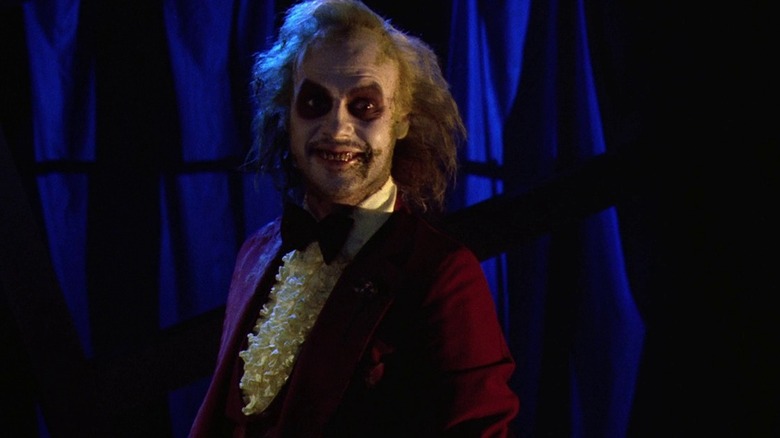
Despite being the eponymous character, Betelgeuse (Michael Keaton) doesn't have much in the way of growth in "Beetlejuice." He's a purely chaotic demon who's solely interested in his own amusement. I've written a lot about the depth of various characters on this list and how they represent things we can learn from. There's really nothing to learn from Betelgeuse, especially when it comes to his more criminal acts, but he's such a singular entity in any movie, Tim Burton-directed or otherwise.
Betelgeuse is basically Bugs Bunny, i.e. he just does things that tickle his fancy. That leaves a lot of room open for interpretation across different mediums, as Betelgeuse has become a cartoon character and a figurehead within a Broadway musical. Other characters can deal with things like arcs and learning lessons, but the Ghost with the Most is there to have a good time and save his own skin. He's funny, and you're not going to see me complain if we ever get "Beetlejuice 3."
2. Edward Bloom from Big Fish
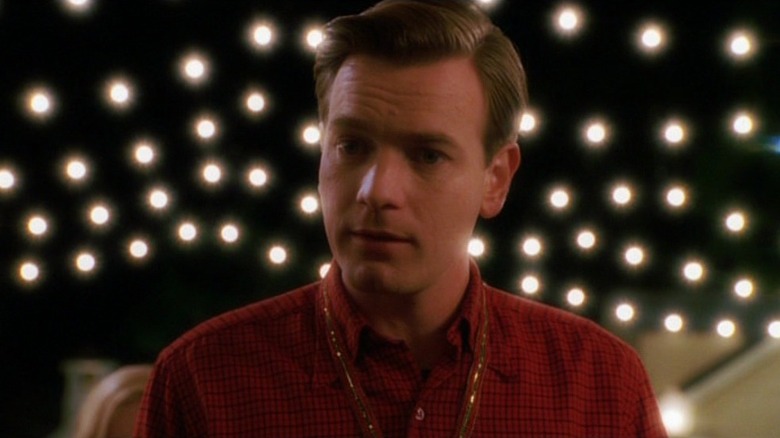
"Big Fish" exists as Tim Burton's grand declaration on the importance of storytelling in all its forms. The film follows Will Bloom (Billy Crudup) as he tries to reconcile with his father before his death after a lifetime of hearing his grandiose, fantastical stories that Will knows can't be true. Much of the film is told in flashbacks where we see his father, Edward Bloom (Ewan McGregor) carrying out all of these marvelous tales.
By the end of the film, Will develops a newfound appreciation for his father. Much of what he said was true, even if he embellished certain details. But perhaps the most important part of any story isn't how much it's true but what it made you feel. Edward Bloom was always willing to pursue a new challenge and didn't let his own fears get in the way. He was a dreamer in the truest sense of the word, and those stories will live on beyond him.
Will eventually passes down his father's stories, and that's the greatest gift anyone can offer. Everyone dies someday, but hopefully, we've lived a good life filled with legends worth remembering. Bloom is an analog for Burton in that way, as he's left plenty of films for us to remember him by.
1. Edward Scissorhands from Edward Scissorhands
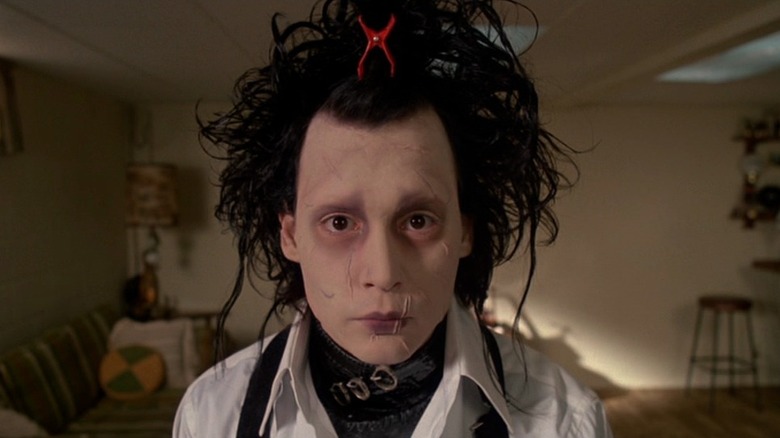
Edward Scissorhands (Johnny Depp) is the greatest character ever put in a Tim Burton movie because he is everything Burton's films are trying to be about. It's easy to view Edward as a stand-in for Burton himself. He's a quiet outsider with a frightening appearance yet sweet demeanor. He's able to express himself through his art (hair and topiaries). All he longs for is connection, but it forever seems out of his grasp.
Edward doesn't just represent the director. He symbolizes anyone who has ever felt like they never belonged. The film represents this visually, juxtaposing his dark, Gothic aesthetic with the bright, sunny nature of suburbia. He immediately stands out until others in the neighborhood realize how his scissor-hands can benefit them personally. But while people like him for a time, they soon turn on him, forcing him back into isolation.
"Edward Scissorhands" is a tale of isolation and self-acceptance. There's loneliness in being different but also a kind of beauty that Edward himself represents better than any other Burton character. He's the epitome of everything the filmmaker wants to express throughout his career and remains relatable to most people at least once in their lives.