

IMAX Just Proved That It's More Important To The Box Office Than Ever Before

At a time when nothing seems certain at the box office, one thing cannot be argued: IMAX is more important than it's ever been. The company, which offers a large-screen, premium experience to moviegoers, has been around for decades but has become an increasingly crucial piece of the puzzle for big movies in recent years. To that end, IMAX just had its biggest year ever — and it's only expected to get bigger in 2026 and beyond.
In a press release, IMAX revealed that it took in a record $1.28 billion globally at the box office in 2025. $449 million of that came from domestic ticket sales, up 14% from the previous record set in 2023. For context, the domestic box office failed to cross the $9 billion mark in 2025, totaling $8.87 billion. That means IMAX accounted for 5% of overall ticket sales, despite having just 1% of the total screen count globally. Rich Gelfond, CEO of IMAX, had this to say in a statement:
"2025 was truly a transformational year for IMAX in which we leveled up our performance across our business — capturing a greater share of total box office with a wider variety of releases across an expanding global footprint. We see no signs of slowing down given a very promising slate ahead and the consistency of our market share gains, as filmmakers, studios, and audiences worldwide continue to gravitate toward the IMAX Experience."
IMAX's success was a bright spot in an otherwise rough year. The 2025 summer box office didn't meet expectations, superhero movies continued to show signs of wear as the Marvel Cinematic Universe fell further from grace, and theaters suffered multiple dry spells while waiting for some much-needed peaks, which became fewer and further between.
IMAX and premium format screens are the future of moviegoing
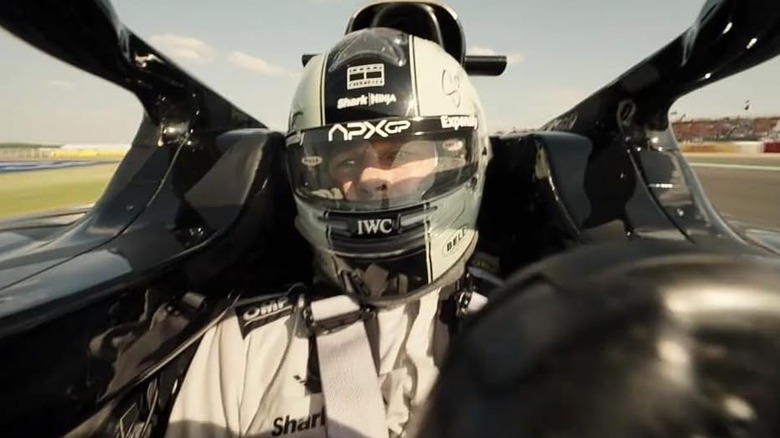
The top movies for IMAX in 2025 were the massive $2 billion Chinese animated hit "Ne Zha 2" ($166.7 million), "Avatar: Fire and Ash" ($112 million), "F1" ($97.6 million), "Demon Slayer: Infinity Castle" ($95.9 million), and "Mission: Impossible — The Final Reckoning" ($75.8 million). In the case of "F1," that represents nearly 16% of its total box office, which is hugely significant. Similarly, "The Final Reckoning" earned nearly 13% of its money from IMAX screens.
IMAX is now estimating that 2026 revenue will climb to $1.4 billion, driven by tentpoles like "The Mandalorian and Grogu," Greta Gerwig's "Narnia," "Dune: Part Three," and "Michael," among others.
In the end, almost all of 2025's biggest movies benefited greatly from IMAX, save for "Jurassic World Rebirth," which had to forgo an IMAX release for scheduling reasons. The company has roughly 1,800 screens around the world, and those screens are highly-coveted, with studios booking spots well in advance. Universal even began selling tickets for IMAX screenings of Christopher Nolan's "The Odyssey" a full year ahead of time.
What these numbers demonstrate is that audiences are willing to pay more for a premium experience when they do choose to go to the movies. Part of the problem is that IMAX is a scarce resource. That, however, has opened the door for premium format competitors such as Dolby Cinema to swoop in. Overall, premium format screens are rapidly becoming key to the future of the cinematic experience, with IMAX clearly leading the charge in that department. Audiences seek these screens out for the right film, be it an anime feature or a big-budget blockbuster from a beloved director. Because of this, IMAX has carved out its place in the rapidly evolving future of the movie business.