

10 Movies You Didn't Realize Were Based On Comic Books
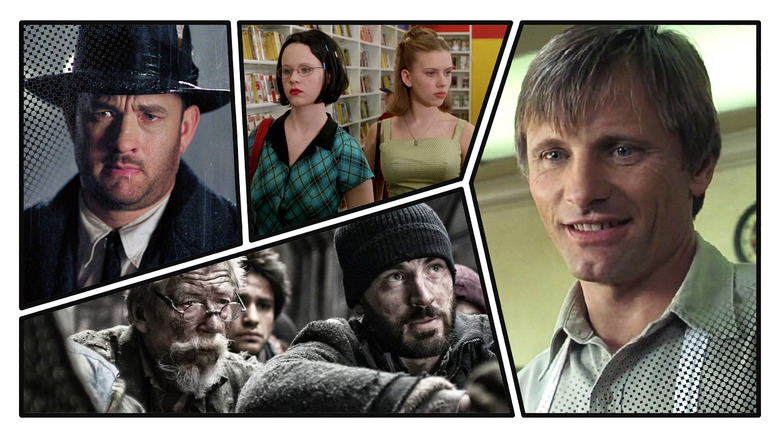
This should go without saying but not every comic book movie is set within the superhero genre. As an enduring, international literature format, comics have told stories in virtually every major genre. And like their blockbuster counterparts, comics from these varying genres have also been adapted into television and film projects over the years. But unlike stories featuring costumed heroes and villains, many viewers might not be aware that these movies are also comic book adaptations.
Whether it's critically acclaimed crime dramas or box office-busting animated movies, comic book movies have a larger presence in cinemas than DC or Marvel superheroes. This isn't a recent trend either, with obscure comic book adaptations connecting with audiences for decades. And yet, for as successful as these movies are, many don't know about their comic-paneled source material. Here are 10 movies that you didn't realize were based on comic books and graphic novels.
Timecop
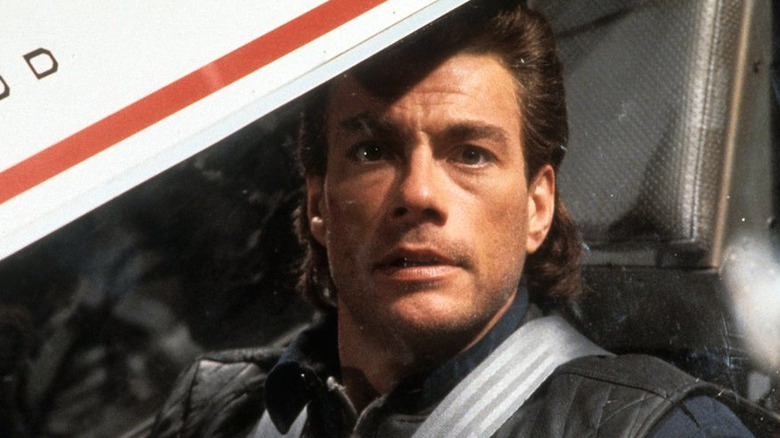
By the mid '90s, Jean-Claude Van Damme was the heir apparent to the action hero legacies of Arnold Schwarzenegger and Sylvester Stallone. One of Van Damme's best movies of the era was 1994's "Timecop," with Van Damme starring as Time Enforcement Commission agent Max Walker. Traveling through history, Walker prevents alterations to the timeline by time travelers looking to exploit it through their knowledge of the future. This puts him on a collision course with corrupt Senator Aaron McComb (Ron Silver) who oversees the handling of the TEC.
"Timecop" is based on a sci-fi story included in a 1992 anthology comic published by Dark Horse Comics by Mike Richardson and Mark Verheiden, and drawn by Ron Randall. Richardson and Verheiden went on to write the movie's screenplay, while one of its production companies was Dark Horse Entertainment. The comic and movie spawned a spin-off series, also titled "Timecop," which became one of the best live-action comic book TV shows of the '90s despite its brief length. One of Van Damme's greatest roles, "Timecop" owes its neo-noir sci-fi origins to Dark Horse Comics.
Ghost World
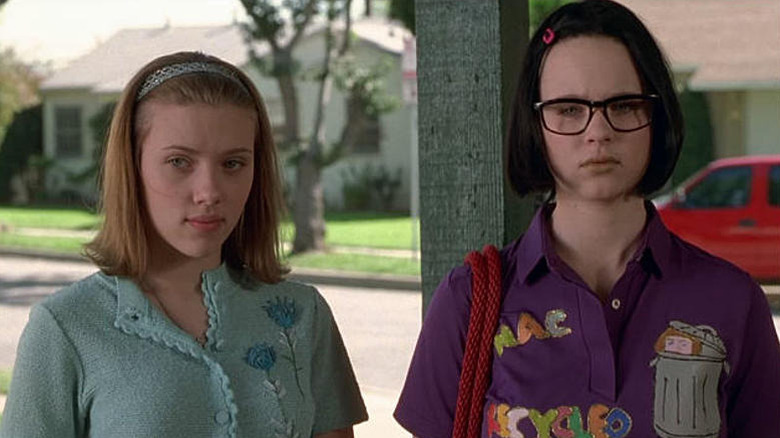
Indie comic book creator Daniel Clowes teamed up with filmmaker Terry Zwigoff to adapt his '90s comic book series "Ghost World" into a movie in 2001. Directed by Zwigoff, with Zwigoff and Clowes writing the screenplay, the movie follows best friends Enid (Thora Birch) and Rebecca (Scarlett Johansson) the summer after they graduate from high school. Aimlessly without any plans for their respective futures, the two teenagers initially begin picking on Seymour (Steve Buscemi), a middle-aged loner. As a complicated and problematic relationship forms between Seymour and Enid, she and Rebecca begin to grow apart.
"Ghost World" is a coming-of-age dramedy comparing teenage ennui with middle-aged malaise, personified by Enid and Seymour's perspectives. The movie evokes a subtly color-saturated cinematography to reflect its comic book origins, though the story itself deviates from the source material. What remains is the quirky dynamic between Enid and Rebecca, social misfits who beautifully complement each other, at least at first. A gentle reimagining of the comic book story, "Ghost World" is a dark coming-of-age story in the vein of 2003's "Thirteen," offering a more morally and emotionally complex look at teenage life.
From Hell
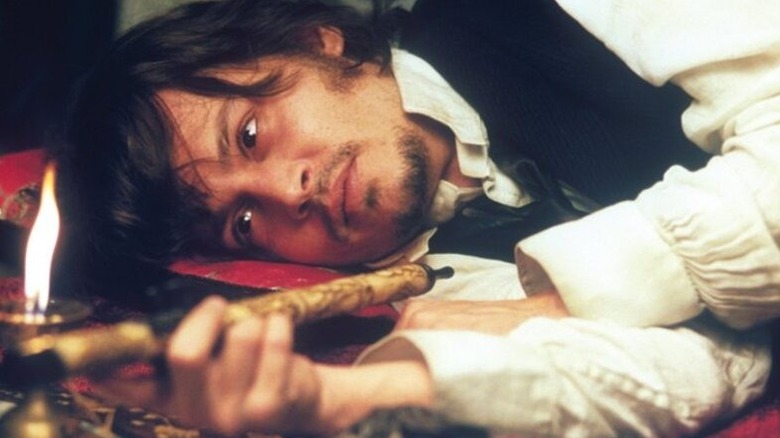
The infamous legacy of Jack the Ripper was explored by legendary comic book creator Alan Moore and Eddie Campbell in their comic book series "From Hell." The comic was loosely adapted into a movie of the same name in 2001, recounting its tale of Jack the Ripper hunting sex workers in the streets of London in 1888. Leading the investigation is Scotland Yard inspector Frederick Abberline (Johnny Depp), striking up a relationship with local sex work Mary Kelly (Heather Graham). However, Abberline discovers that the murderer is well-connected with the London aristocracy, putting himself and Mary in danger.
Moore and Campbell's story reveals the identity of Jack the Ripper relatively early on, more interested in exploring the serial killer's metaphysical motivations. In contrast, the movie version of "From Hell" plays like a much more conventional murder mystery with plenty of Victorian atmosphere. Moore has been vocal about not being a fan of adaptations of his work and "From Hell" is a prime example of his stories not being done justice in their multimedia translations. But given how much "From Hell" diverges from its source material, it's easy to see why many might not immediately associate it with its comic book origins.
Road to Perdition
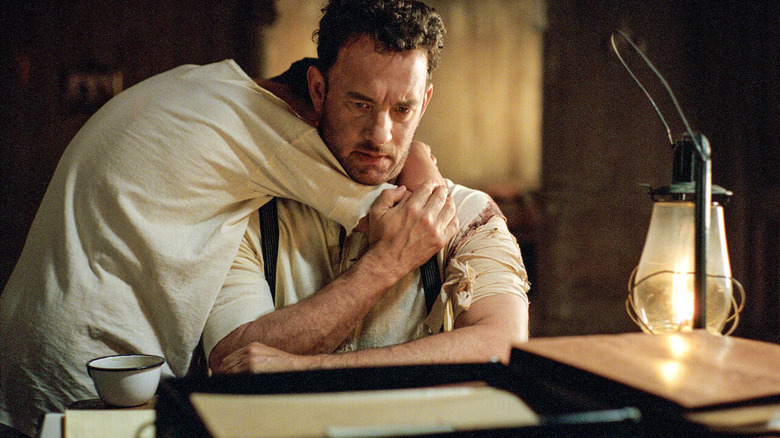
The first volume of Max Allan Collins and Richard Piers Rayner's DC Comics crime saga "Road to Perdition" was adapted into a movie in 2002. Set in 1931, Irish Mob enforcer Michael Sullivan (Tom Hanks) is double-crossed by Connor Rooney (Daniel Craig), the son of Sullivan's mob boss John Rooney (Paul Newman). With his wife and youngest son killed by Connor, Michael and his remaining son Michael Jr. (Tyler Hoechlin) seek revenge against Connor. This places them at odds with Rooney's entire outfit, leading Connor to hire notorious freelance hitman Harlen Maguire (Jude Law) to hunt and kill the Sullivans.
"Road to Perdition" is a masterclass in casting against type, and not just in placing Hanks in the role of a hardened killer. Craig and Law both do well outside of their usual roles, with Craig as the sniveling, underhanded Connor and Law as the unhinged and sickly Maguire. The movie emphasizes the themes of fathers and sons, not just between the Sullivans, but also the Rooneys, informing the bloody lengths fathers will go in the name of family. A tale where virtually every action is followed by violent consequence, "Road to Perdition" is an overlooked period piece crime classic.
A History of Violence
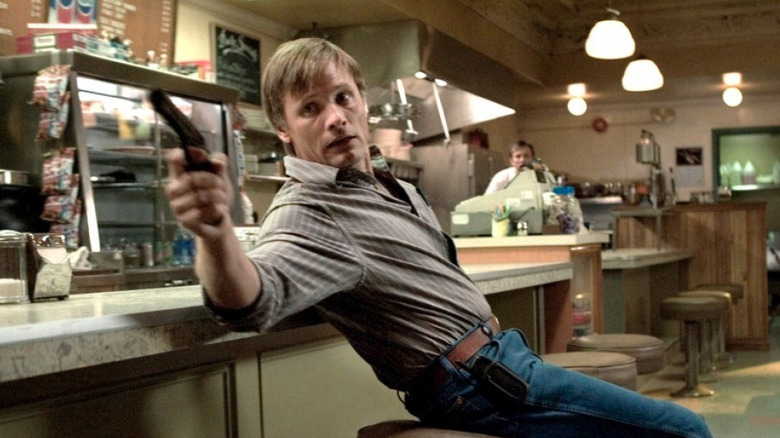
The 1997 DC Comics graphic novel "A History of Violence" by John Wagner and Vince Locke was adapted by prolific filmmaker David Cronenberg in 2005. The movie centers on unassuming Midwest diner owner and family man Tom Stall (Viggo Mortensen), who kills two violent criminals trying to rob his restaurant with shocking efficiency. This places unwanted attention on the Stall family, with Tom stalked by a visiting mobster claiming Tom was previously a mob enforcer under a different name. This creates mounting tension for the Stalls as uncertainty over Tom's ominous past threatens to consume their home.
"A History of Violence" is a darkly quixotic blend of physical carnage and sex against the backdrop of domesticity. Mortensen and Maria Bello wonderfully capture a couple at a crossroads as bloody secrets are revealed while William Hurt delivers a brief but effective performance as someone from Tom's past. The movie version offers more familial tension and conflict than the comic book source material, which forms the emotional core of Cronenberg's adaptation. The start of a line of collaborations between Mortensen and Cronenberg, "A History of Violence" features both venturing outside of their usual comfort zone.
The Losers (2010)
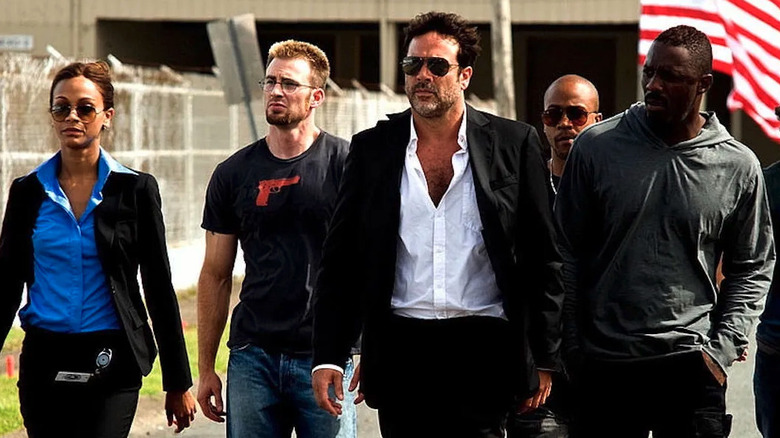
The 2003 action thriller comic book series "The Losers" by Andy Diggle and Jock was turned into an action comedy in 2010. The movie follows a squad of special forces soldiers who are betrayed by a shadowy government official, known simply as Max (Jason Patric), while on a black-ops mission in Bolivia. The group is given the chance to get their revenge on Max and return to the United States by a mysterious woman named Aisha (Zoë Saldaña). This culminates in a fiery showdown in Los Angeles, with the fate of the entire city hanging in the balance of Max's plot.
So much of the appeal to "The Losers" is the rapport between its ensemble cast, particularly a comedically offbeat Chris Evans and Patrick chewing the villainous scenery. These elements help set the movie apart from any number of squad-based action stories, along with its emphasis on humor. This tonal change also distinguishes the adaptation from its source material, with the comic much grimmer and prominent geopolitical commentary. An awesome action movie that never got a sequel, "The Losers" is a vastly underrated bullet-ridden flick.
Snowpiercer
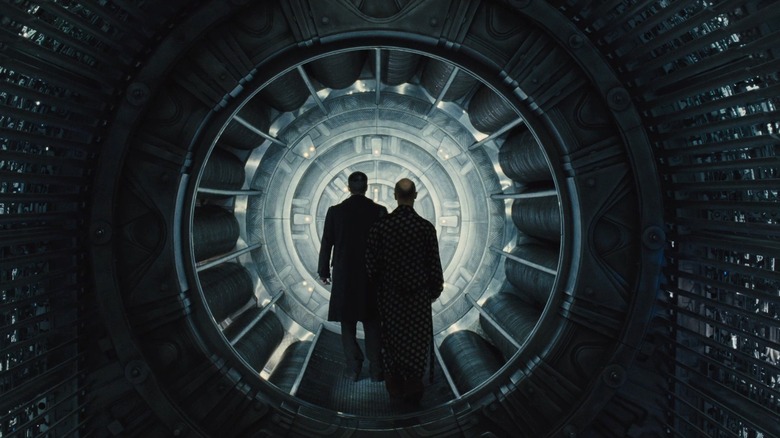
South Korean filmmaker Bong Joon Ho's first major Hollywood movie production was 2013's "Snowpiercer," an adaptation of the French comic book series by Jacques Lob, Benjamin Legrand, and Jean-Marc Rochette. Set in a dystopian future where the Earth has completely frozen over, the film reveals that the surviving remnants of humanity shelter on bullet trains traversing the planet to keep from similarly freezing. After enduring years of brutal oppression from the wealthier figures in the forward train cars, the impoverished masses rebel, led by Curtis Everett (Chris Evans). Curtis leads this motley resistance towards the front of the train to confront its enigmatic leader.
"Snowpiercer" leans into common elements throughout Bong Joon Ho's work, including a juxtaposition of brutal violence with dark humor and growing wealth divide. Narratively, the movie is one extended jailbreak from an uncaring old world order sadistically victimizing the huddled masses. Compared to the comic book source material, the movie diverges significantly plot-wise, largely just retaining the initial premise. Repurposed to better fit Bong's creative strengths, the "Snowpiercer" movie is more of a concisely told and sharply pointed social odyssey.
Extraction
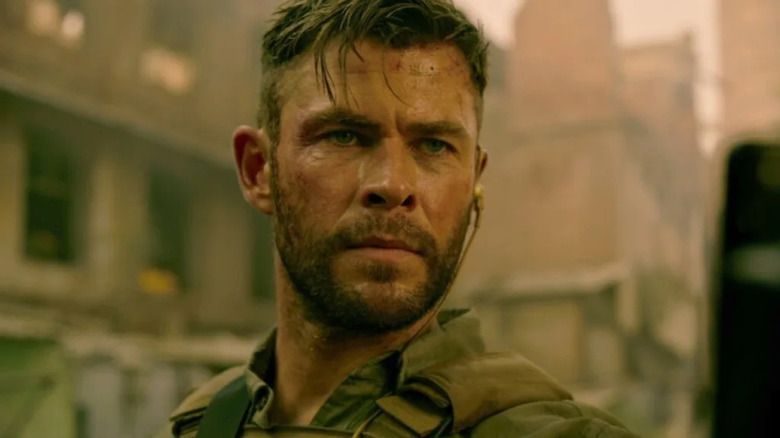
In between directing Marvel Cinematic Universe epics, the Russo brothers produced the 2020 Netflix original action movie "Extraction." Joe Russo wrote the movie's screenplay from a story by him, Anthony Russo, and comic book creator Ande Parks. After developing the story with the Russos years before the movie, Parks wrote the 2014 graphic novel "Ciudad," illustrated by Fernando León González. Originally published by Oni Press, the comic book introduces mercenary Tyler Rake as he's tasked with rescuing a kidnapped woman in Paraguay.
While the movie "Extraction" retains the protagonist Tyler Rake, with Chris Hemsworth replacing Dwayne Johnson in the role, it shifts the action to Bangladesh. The breakneck pacing and graphic violence from the comic book source material are also retained for the movie and its 2023 sequel. Additionally, the movies provide a bit more backstory for Rake while "Extraction 2" is an original story featuring the returning mercenary. With an "Extraction" television series currently in development at Netflix, it'll be interesting to see if other elements from the comic book are incorporated into it.
The Bad Guys
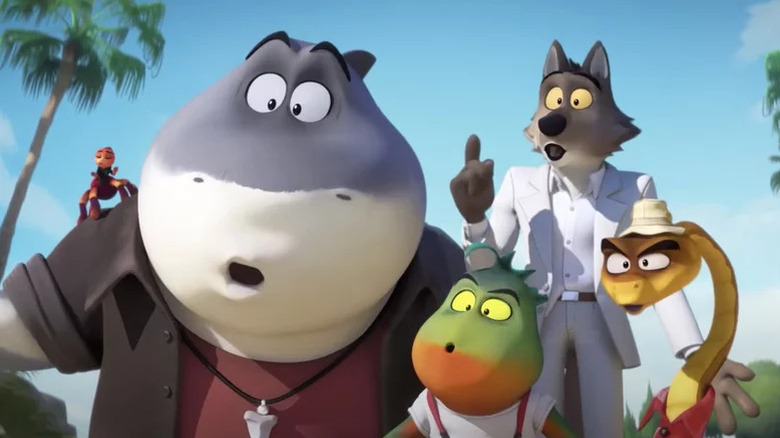
When it premiered in 2022, critics largely agreed that "The Bad Guys" was a breezy, kid-friendly caper, with these qualities propelling it to box office success. The animated movie is actually based on a line of children's graphic novels by Australian author Aaron Blabey which began in 2015. Both versions of the story revolve around a group of anthropomorphic animals with notorious reputations linked to daring criminal activity. Both stories involve the gang seeking redemption in their own way, with the movie blowing up the stakes into an entire heist adventure.
"The Bad Guys" books are largely slapstick gags about characters trying to overcome prejudices associated with their species. The movies feature the characters as moderately successful crooks pulling off big scores before discovering the value in good deeds. That difference helps heighten the spectacle around the adaptation, pitting the team against deceptive villains in stunning locales. A heist movie translation of Blabey's children's books, "The Bad Guys" retains the thematic focus while upping the ante.
The Killer (2023)
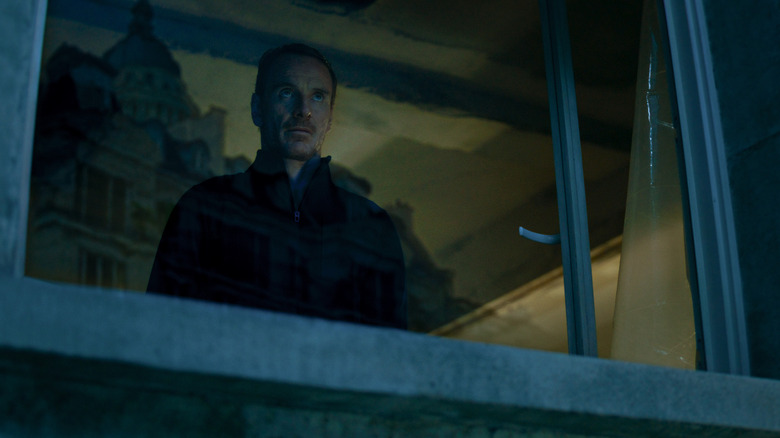
Not to be confused with the 1989 Hong Kong action movie of the same name directed by John Woo, 2023's "The Killer" is based on a much different source. Instead, the Netflix original movie is based on the French comic book by Matz and Luc Jacamon that started in 1998. Michael Fassbender stars as an unnamed contract killer who botches an assassination attempt in Paris at the start of the film. Returning to the Dominican Republic, the killer finds his home and those around him targeted by assassins hired by his client, leading him down a bloody path to protect himself.
In various stages of development for over a decade, director David Fincher plays the hits with "The Killer," leaning into his dark thriller strengths. Fincher focuses on a very specific adventure for the story's nameless protagonist, while the comic book spans years of its lead hitman's life. In addition to focusing more on the antihero's personal life, the comic book also is more sharply pointed in its geopolitical commentary. What Fincher brings is a laser-pointed focus and dark humor to the proceedings, making "The Killer" a tautly offbeat adaptation.