

10 Best Westerns Of The 1970s, Ranked
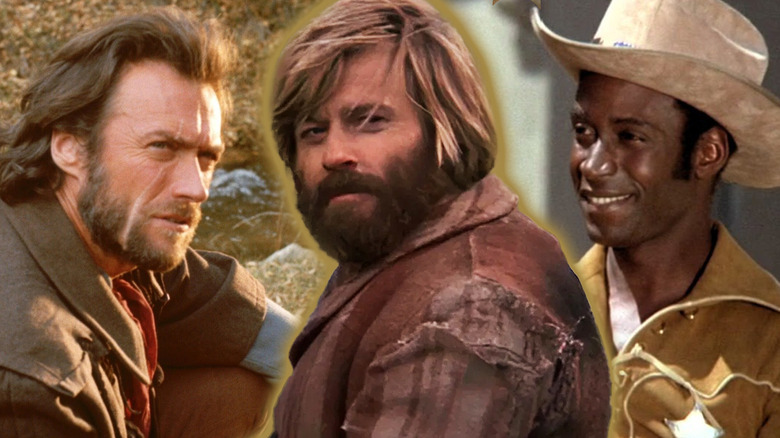
After dominating cinemas and television for much of the '50s and '60s, the Western genre began to decline throughout the 1970s. The classic archetypes of good guy cowboys battling against clear antagonists without much moral ambiguity had long come to an end. The actors that popularized the genre during its cinematic heyday began aging out, or dying out, marking the end of an era. At a time when cinematic storytelling was growing more sophisticated and nuanced, the simpler, more rustic archetypes and tropes steadily lost cultural relevance.
Yet Westerns endured, with the '70s producing several absolute gems.
What the '70s brought to Westerns was a postmodern perspective, subverting the usual expectations of the genre to great effect. Revisionist films told stories from unorthodox perspectives, often featuring more morally conflicted antiheroes as their protagonists. And with the Westerns tropes well-established in the contemporary public consciousness, they were ripe for outright and effective parody. Here are the best Westerns of the 1970s, ranked and ready for you to revisit or experience for the first time.
10. Duck, You Sucker!
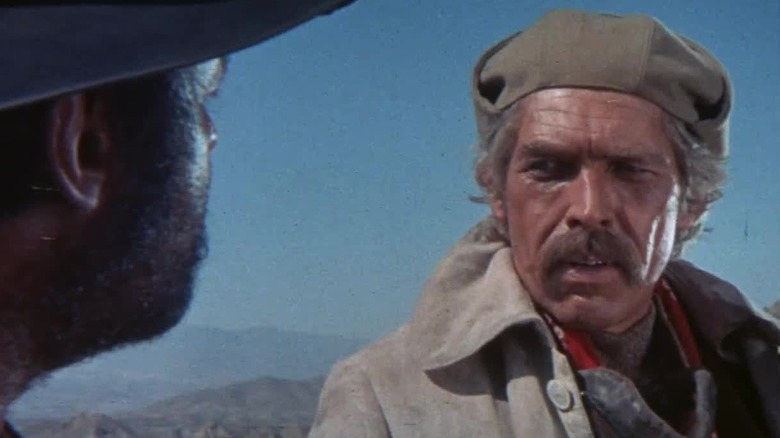
After redefining the genre in the '60s and making a movie star out of Clint Eastwood, Italian filmmaker Sergio Leone returned to Westerns with "Duck, You Sucker!" The imaginatively titled 1971 movie is set during the Mexican Revolution, with local bandit Juan Miranda (Rod Steiger) teaming up with Irish explosives expert John H. Mallory (James Coburn). Initially out to rob a major bank, the duo inadvertently free political prisoners and are named heroes by the revolutionaries. When Juan suffers grave personal losses from the Mexican army, he becomes fueled by revenge, joined by John, who has his own motivations for fighting.
Though "Duck, You Sucker!" isn't ranked as highly as Sergio Leone's other Westerns, it's still a solidly crafted film. James Coburn is as cool as ever and his rapport with Rod Steiger carries much of the movie. While Leone had always infused his Westerns with a quirky sense of humor, the comedy is more prominently pronounced in this film, without compromising the action or emotional stakes. The last Western Leone ever directed, powered by a strong cast and score by Ennio Morricone, "Duck, You Sucker!" is an overlooked gem.
9. The Ballad of Cable Hogue
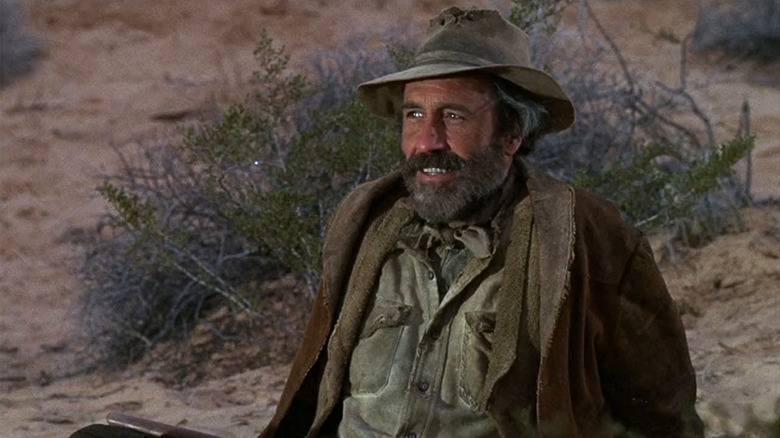
Filmmaker Sam Peckinpah is best known for his brutally action-packed work, most clearly illustrated by the gruesome finale to 1969's "The Wild Bunch." That blood-soaked reputation made Peckinpah's subsequent 1970 movie, "The Ballad of Cable Hogue," all the more surprising in its restraint and humor. The movie stars Jason Robards as its title character, a drifter who discovers a watery wellspring in the desert located between two frontier towns. This leads to Cable's screwball efforts to stake a claim in the valuable piece of land, despite being ridiculed over its importance and his unkempt appearance.
Nobody expected a Western comedy from Sam Peckinpah with a surprising amount of genuine sentimentality, but he knocked it out of the park with "The Ballad of Cable Hogue." In depicting the twilight of the Wild West, Peckinpah moves at a deliberate pace and gently captures the end of an archetypal era. Anchoring the movie is Robards' performance, capturing both the humor and the gruff vulnerability of Cable Hogue and his big boon. Working against expectations, Peckinpah delivered his most under-appreciated Western from his influential career with the postmodern "The Ballad of Cable Hogue."
8. The Shootist
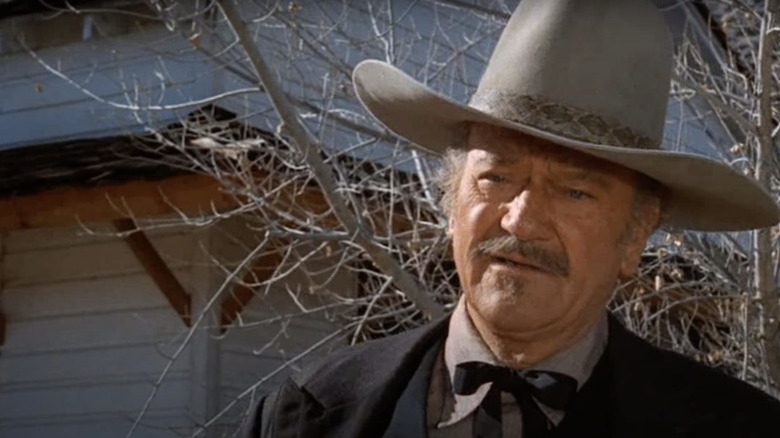
For generations, John Wayne epitomized the image of the silver screen cowboy, starring in a long line of successful Westerns. As the '70s progressed, marking a decline in the genre's popularity and Wayne's own health, he had one last Western to star in with 1976's "The Shootist." Wayne stars as legendary gunfighter J.B. Books, who is diagnosed with terminal cancer and given weeks to live, relocating to Carson City for his final days. As Books reconciles with his legacy, including facing gunslingers looking to immortalize themselves by killing him, he befriends widow Bond Rogers (Lauren Bacall) and her son Gillom (Ron Howard).
Adapting Glendon Swarthout's novel to the big screen presented John Wayne with constant behind-the-scenes battles while making "The Shootist." Like his character, Wayne was quietly suffering from cancer during production and clashed with director Don Siegel over how his character should be portrayed, particularly in the movie's climactic shootout. This provides a more meditative and wistful performance from Wayne, bidding farewell to the archetype and genre that made him Hollywood royalty. The '70s were full of requiems to Westerns, but few did it better than "The Shootist," giving John Wayne one of his best roles in his final film appearance.
7. Two Mules for Sister Sara
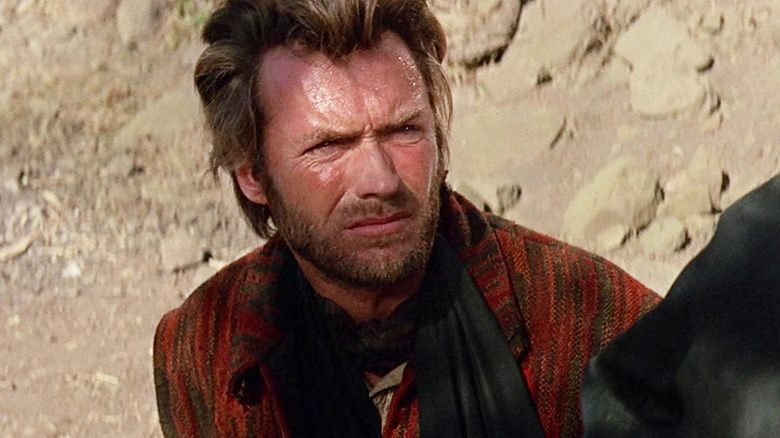
Before completely turning the crime thriller genre on its head with "Dirty Harry," Clint Eastwood and director Don Siegel collaborated on the 1970 Western "Two Mules for Sister Sara." Eastwood stars as Hogan, a former Union American Civil War soldier who rescues a woman who appears to be a nun. Introducing herself as Sister Sara (Shirley MacLaine), the nun convinces Hogan to help her assist Mexican freedom fighters battling against French occupation forces. The duo target a French garrison storing a large treasury, learning to work together along the way.
In contrast to many other Eastwood Westerns, "Two Mules for Sister Sara" was actually filmed on-location in Mexico due to a casting condition prior to MacLaine filling the titular role. That gives the early '70s Western a distinctly authentic and more grounded feel that other productions filmed around Hollywood backlots and California ranches. Eastwood also gets more to do in the movie, in terms of acting range, than he had with the spaghetti Westerns that made him a star. A charming little Western with plenty of explosive action, "Two Mules for Sister Sara" offers its own mismatched romance story to the genre.
6. McCabe & Mrs. Miller
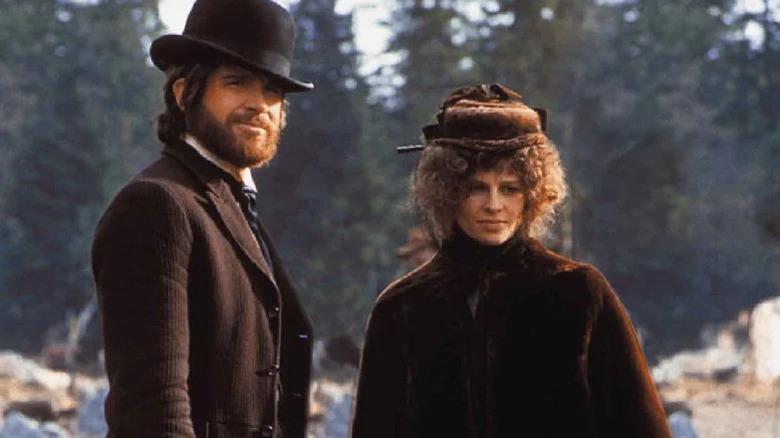
Filmmaker Robert Altman built an entire filmmaking career subverting common tropes in whatever genre he was ostensibly working in at the time. This is particularly true of 1971's "McCabe & Mrs. Miller," based on the 1959 novel "McCabe" by Edmund Naughton. Warren Beatty stars as John McCabe, a drifter who arrives in a Washington mining town in 1902, where he sets up a brothel and gambling hall. McCabe enters a complicated partnership with Constance Miller (Julie Christie), but the duo are confronted by a vicious mining company who wants their business interests by money or murder.
Everyone is delightfully defying expectations in "McCabe & Mrs. Miller," from Beatty's McCabe being something of a coward and Christie's Miller prone to her own vices. Altman and company present a Western frontier town without clear heroes, just people trying to survive and make a dollar, often through questionable means. There's a vibrancy to his counter-culture portrait of the genre's twilight, powered by Beatty's mumbling protagonist. A revisionist Western that everyone should watch at least once, "McCabe & Mrs. Miller" perfectly encapsulates the against-expectations spirit that Altman brought to most of his projects.
5. High Plains Drifter
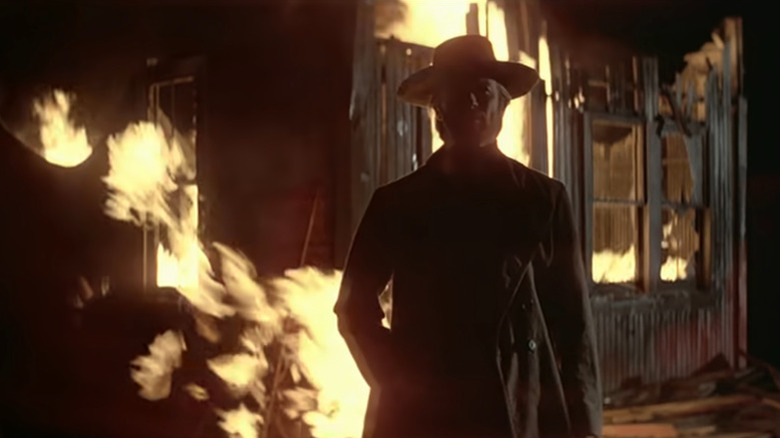
After becoming a worldwide superstar acting in television and movie Westerns, the first Western that Clint Eastwood directed himself was 1973's "High Plains Drifter." The film opens with a nameless gunslinger (Eastwood) arriving in the remote mining town of Lago, where he immediately and violently asserts himself as the community's best chance at protection. The stranger dreams of a U.S. Marshal murdered in town by a trio of outlaws and the townsfolk impassively observing the killing. As the outlaws return to the town in his waking hours, the stranger hints at his mysterious background while he pursues his revenge against the gunmen and conniving community.
"High Plains Drifter" is arguably the most brutal movie on this list and a heck of a Western directorial debut for Eastwood. Incensed by the film's unflattering depiction of frontierspeople, John Wayne wrote Clint Eastwood an angry letter over "High Plains Drifter," but the time for morally unambiguous Westerns had long passed. All due respect to Wayne, but you're not a Western fan if you haven't seen Eastwood's '70s masterpiece, a revisionist film with supernatural flourishes. A grim exploration of the evils of complicity faced by ghostly vengeance, "High Plains Drifter" proved Eastwood was just as adept at helming Westerns as he was starring in them.
4. Jeremiah Johnson
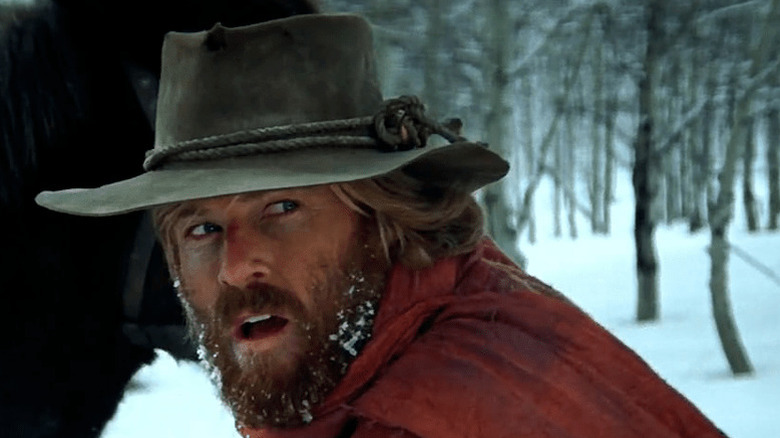
One of the greatest creative collaborations in Hollywood was between filmmakers Sydney Pollack and Robert Redford. This enduring partnership included 1972's "Jeremiah Johnson," loosely based on the historical exploits of 19th century mountain man John Jeremiah Johnson, with Redford playing the title character. After serving in the Mexican-American War, Johnson relocates to the Rocky Mountains where he endures the harsh and isolated conditions while supporting himself as a trapper. As Johnson builds a home for himself, he forms friendships and feuds with local indigenous tribes, exacerbated by the increasing presence of settlers ignorant of their customs.
After Redford's passing, "Jeremiah Johnson" was one of his movies recommended by James Gunn to watch, and for good reason. Carrying much of the film given its solitary protagonist premise, Redford captures a lot of Johnson's humanity often without saying a single word. When Johnson does begin to build some semblance of a family, this inevitably gives way to tragedy and revenge, providing much of the story's merciless conflict. An intimate look at life on the unconquered frontier, "Jeremiah Johnson" presented audiences with a raw look at Redford's acting talents.
3. Pat Garrett and Billy the Kid
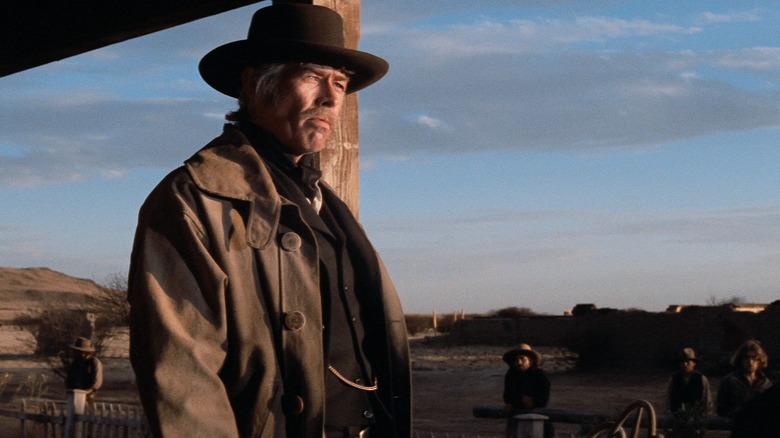
After directing gentler meditations on the genre with "The Ballad of Cable Hogue" and "Junior Bonner," filmmaker Sam Peckinpah directed a more conventional Western with "Pat Garrett and Billy the Kid." The movie revolves around the complicated friendship between new sheriff Pat Garrett (James Coburn) and outlaw Billy the Kid (Kris Kristofferson). After Garrett is elected sheriff, he and Billy become at odds, which escalates when Billy escapes after Garrett arrests him. Garrett leads a posse to bring Billy in, with their conflicts growing bloodier as the manhunt continues cross-country.
The best way to watch "Pat Garrett and Billy the Kid" is the director's cut that was released on home video in 1988. Martin Scorsese singled out this version as a prime example of a superior director's cut and, of course, he's right. The director's cut illustrates the end of the Wild West by paralleling it with the violent end of Garrett and Billy's friendship. Peckinpah's last Western masterpiece, "Pat Garrett and Billy the Kid" is a requiem to a freewheeling frontier as it gives way to civilization.
2. Blazing Saddles
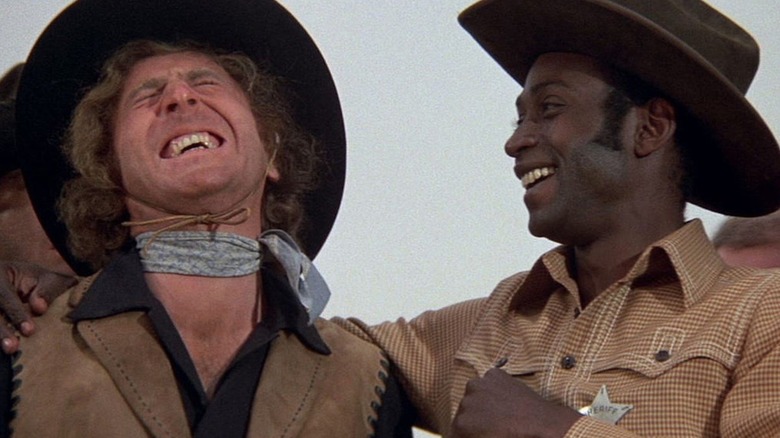
The Western genre is so ripe for outright parody, but no other movie has done it better than 1974's "Blazing Saddles," directed and co-written by Mel Brooks. The movie has corrupt attorney general Hedley Lamarr (Harvey Korman) target the frontier town of Rock Ridge as the railroad is built in the region. To disrupt the locals, Lamarr appoints a Black man named Bart (Cleavon Little) as the sheriff to the town, knowing that it'll offend the racist community. With help of drunken gunfighter Jim (Gene Wilder), Bart begins to win over the town and thwart Lamarr's plans.
Even over 50 years later, "Blazing Saddles" still has bite with its ribald and gleefully politically incorrect humor. From constantly breaking the fourth wall to over-the-top jokes about sex and race, the movie pushes boundaries as often as it delivers laughs. Brooks sends up familiar Western tropes with his comedy, with many of the film's gags fueled by cultural prejudices on the frontier. One of the best Mel Brooks movies ever made, "Blazing Saddles" remains a daring watch, but no less hilarious.
1. The Outlaw Josey Wales
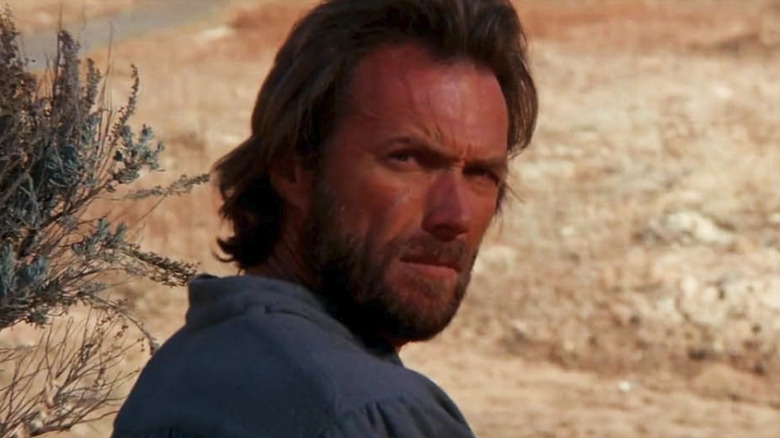
Clint Eastwood's directorial expertise grew considerably over the '70s, including his work directing Westerns, with his best movie of the decade being 1976's "The Outlaw Josey Wales." Eastwood also stars as the titular outlaw, a gunfighter who joined the Confederacy as a bushwacker to avenge the death of his family. After the war, Wales remains a wanted man with a huge bounty on his head and is pursued by the Union officer who murdered his family, Captain Terrill (Bill McKinney). Relocating to Texas, Wales takes care of a surrogate family of refugees before facing Terrill and his bloodthirsty bounty hunters for a final showdown.
"The Outlaw Josey Wales" was an intensely personal project every step of the way, with Clint Eastwood fighting for the movie's ending and even firing its initial screenwriter. The hard work and behind-the-scenes clashes paid off, with the 1976 film standing among Eastwood's best movies of any decade. The story is a revisionist Western with a sense of heart under its gruff exterior as Wales evolves from something blinded by revenge to caring about his found family. Looking back, Clint Eastwood felt "The Outlaw Josey Wales" was a career high point, and considering its violent look at a Wild West in transition, his stance isn't without merit.