

Lee Pace And His Foundation Co-Stars' Fascinating Approach To Making Each Clone Unique
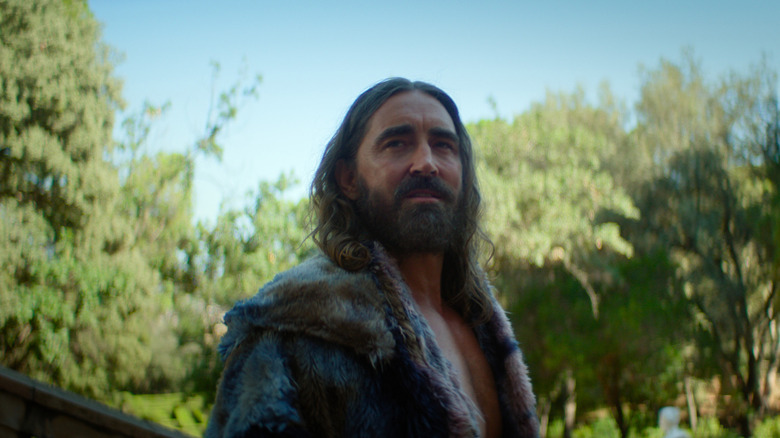
One of the most striking things about Apple TV's small screen adaptation of Isaac Asimov's "Foundation" book series is the trio of leaders at the top of the galactic org chart. The three Cleon clones, played by Cassian Bilton (Brother Dawn), Lee Pace (Brother Day), and Terry Mann (Brother Dusk), are a defining part of the imperial drama as the Galactic Empire crumbles. Though they are literally bred from the same stock (they're all copies of the same dude), Pace told Wired that the similarities don't come from their shared DNA. It comes from their imperial culture. Here's what he said:
"In the very first season, we created this idea that they sit around dinner and they have the same movements — that that's a cultural thing among these three people. We had these technical ways of making their shared consciousness visual and actable in. We just practiced it. We came up with this little dance that we would do with those dinner table scenes."
Setting the imperial table in season 1 paved the way for the drama to come once the Cleon gang started feeling the pressure not to conform. As a result, they began to come apart at the seams. In Pace's words:
"In the second season, we did something different with it. We created this idea of one who's not going to follow the rules, who's just going to do it differently, whether the other brothers like it or not."
That clearly accelerated in season 3 as Brother Dawn helped the Second Foundation, Brother Day escaped the palace (leading to the reveal of the true protagonist of "Foundation"), and Brother Dusk turned into Brother Darkness, wiping out the genetic dynasty in the process.
The Cleon clones aren't just copies - they're family
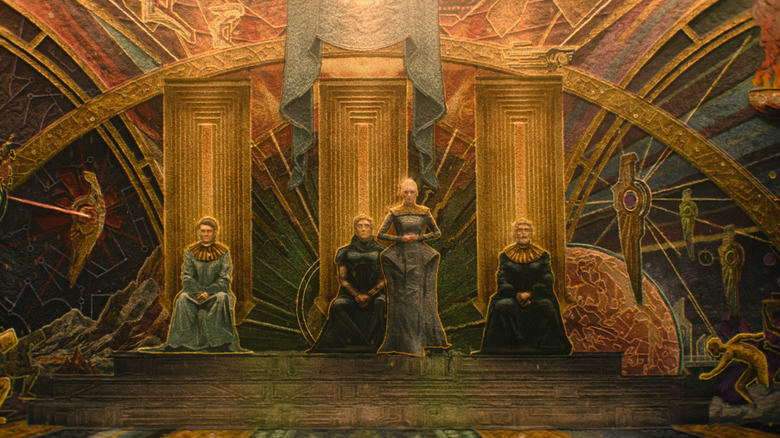
The concept that clones aren't identical in behavior is what gives this trio its pizzazz. Rather than act identically because they share DNA, they are trained in imperial culture in the galactic court on Trantor. This is actually much more believable than an explanation that "they copy each other because they're copies of the same person." History is riddled with royal children who behaved similarly thanks to their upbringing, not their shared ancestry. Giving each Cleon clone an individual persona was a lot of fun for the actors, too. As Pace explained:
"I love working with Terry [Mann] and Cassian [Bilton] and Laura [Birn, who plays the robot Demerzel]. It's such a unique concept that [writer and producer David S. Goyer] had with these cloned emperors that are all living together as family [...] I think it's a completely original idea, and in line with the questions that Asimov asks in 'Foundation' and his other work."
As already mentioned, that family comes off the rails in season 3. But as Pace noted in the interview, by that point, the group has covered 300 years of continual rule — so, overall, I think we can call it a successful mission. Nice job, guys. It ended in flames and death, but it was a slow dumpster fire worthy of "Foundation," a story inspired by the decline and fall of the Roman Empire.
Emperor Cleon is different in the Foundation books
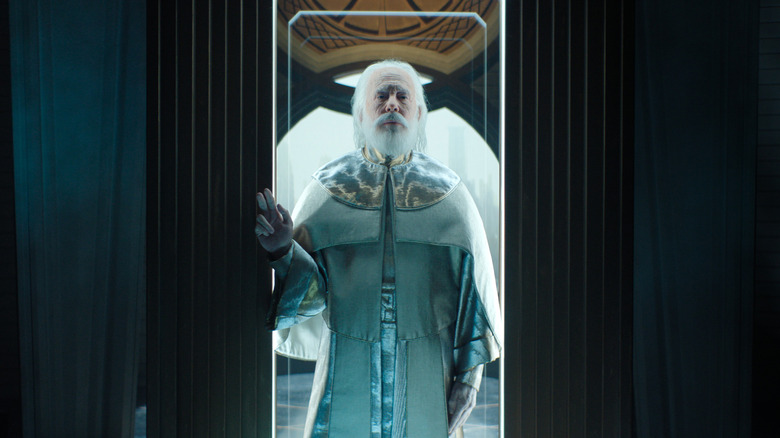
The last thing we'll point out here is that the uniqueness of the Cleon clones is even more pronounced, considering the fact that there is no such connection in Asimov's source material. Sure, there's an Emperor Cleon I, but he's never cloned. He's around early in the narrative (in the prequels), but he ultimately shuffles off this mortal coil, never to influence the proceedings again.
By extending the character through a cloning cycle, David S. Goyer (who served as the original showrunner on "Foundation" before leaving after season 3) and company created a recurring character that doesn't just help tell the story of the fall of the Galactic Empire; he also personally witnesses it through a panoply of different iterations of his cloned self.
Now that the cloning has come to an unexpected end with the conclusion of season 3, what's next? The question doesn't come from a lack of source material. In fact, it's due to having too much of it. Co-showrunners/executive producers Ian Goldberg and David Kob, who have taken over in the wake of Goyer's departure, have already said they're excited to carry the torch forward, adding (in an official statement):
"We look forward to continuing the epic, emotional storytelling that defined the first three seasons of the show, and to be working alongside some of the most talented, passionate creative partners in the business."
The new creatives are ready. Now, we just need to know which part of Asimov's sprawling "Foundation" universe they'll tackle next. We have some ideas for where "Foundation" season 4 could go, but only time will tell for sure.
"Foundation" is currently streaming on Apple TV.