

15 Best Spaghetti Westerns Of All Time, Ranked
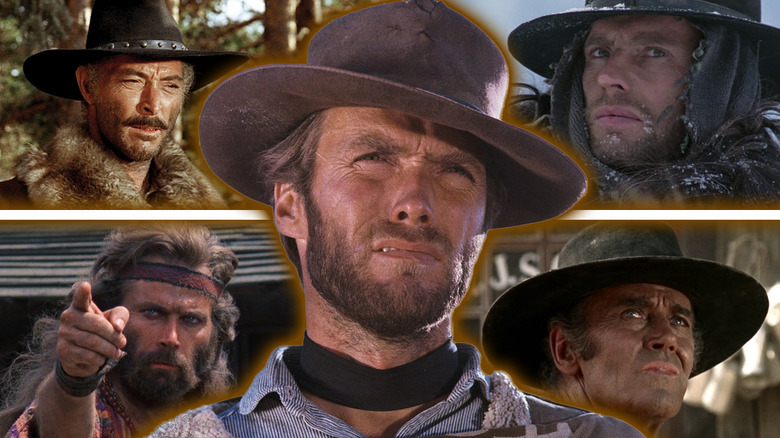
The western genre (for lack of a better word) is an American creation, but a handful of other countries dabbled in the genre over the years as well. The most notable, of course, is Italy, which produced hundreds of so-called "spaghetti westerns" through the 1960s and 1970s. But what exactly is a spaghetti western?
The long explanation can be found here, but the shorter answer is that while American westerns tend to mythologize "the west" and the cowboys who called it home, Spaghetti westerns are more prone to tearing down those archetypes and dissolving the line between good guys and bad guys. They're westerns made by Italians, frequently shot in Spain, typically set in the southwestern United States, and usually home to grim, dusty landscapes filled with cruelty and violence.
We've previously ranked the 35 best westerns of all time, but spaghetti westerns deserve their own time in the spotlight. This list below could have easily been twice as long, but you'll have to settle for a look at the 15 best spaghetti westerns, ranked.
And God Said to Cain
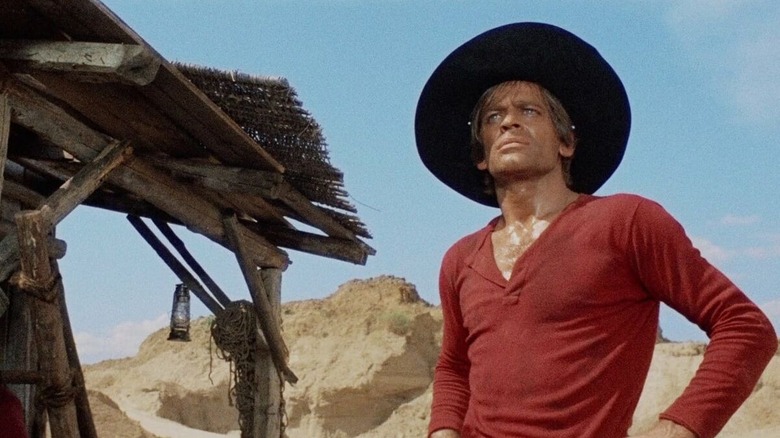
We're kicking off our ranked list with something of an atypical spaghetti western. To be sure, "And God Said to Cain" is a fantastic example of the subgenre, but it's also run through with elements that would feel more at home in a slice of gothic horror or even a slasher. Klaus Kinski plays Gary Hamilton — please, take a moment to picture Kinski as a guy named Gary — who's released from prison after serving ten years for a crime he didn't commit. Now that he's free, he has only one thing on his mind.
The film unfolds over a single night as Gary leaves prison, heads back to the place he once called home, and then waits for a massive windstorm due to hit the area overnight. As nature unleashes its fury, so does Gary, and soon the men who wronged him are paying the ultimate price. Director Antonio Margheriti is best known for his horror films ("Castle of Blood," "Long Hair of Death"), and he brings some of that atmosphere here. Kinski, usually in the role of villain or troublemaker, acquits himself well as a determined and vengeful protagonist.
A Pistol for Ringo
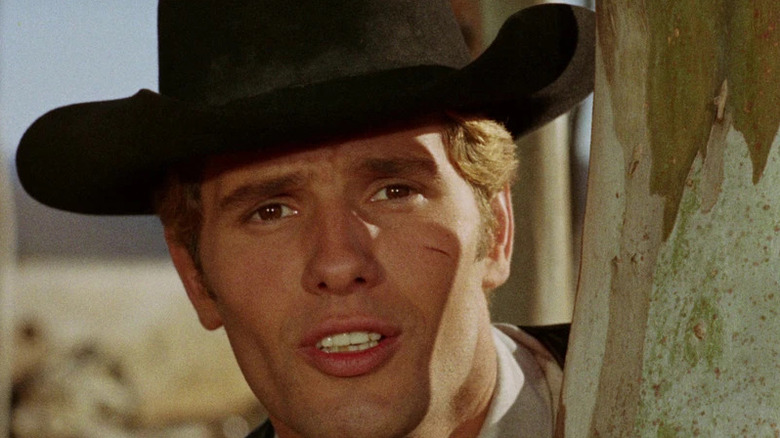
Duccio Tessari's "A Pistol for Ringo" is again a bit atypical, but this time it's because the film is also a borderline comedy. People are murdered with abandon and tragedy abounds, but the laughs keep coming courtesy of our hero, Ringo, played by a totally game and acrobatically gifted Giuliano Gemma. Like "A Fistful of Dollars" before it (and many others after it), the film riffs on Akira Kurosawa's "Yojimbo," as Ringo worms his way between two factions, plays both sides, and walks away a richer man than when he started.
Ringo just loves gunning men down, and when a group of bandits rob a bank and take a rich man's estate hostage, he sees an opportunity to satisfy both his bloodlust and his greed. There's a near "Looney Tunes" sensibility to the character as Ringo is a real stinker always gumming up the works for those around him as he bounces in and out of trouble. Quips are plentiful, Ennio Morricone music stingers abound, and it's even the rare western set at Christmas time. This is a great chaser to the far more serious and brutal films on this list.
The Mercenary
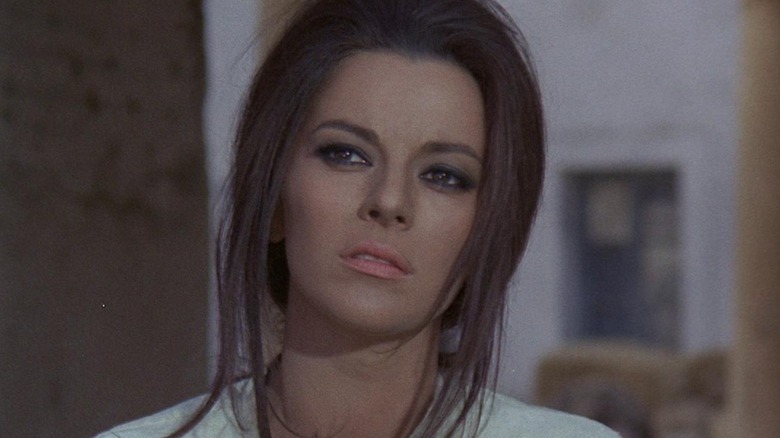
The Mexican revolution offers opportunities for heroism and righteousness, but neither Paco nor Kowalski are in it purely for the glory. Paco (Tony Musante) finds the fight to be a thrilling turn of events against authority, while Kowalski (Franco Nero, who ranks pretty high on our list of the best western actors) is in it solely for the financial profits. The pair work well together, but everything from their motivations to the woman they're both drawn towards threatens to tear them apart.
"The Mercenary" is the first of three Sergio Corbucci films to make this list, and while it lacks the weight of the two below, it still delivers a film loaded with action, visual thrills, and a lot of genre fun. Nero and Musante have great chemistry with their counterbalanced characters, but even they're outshined by a third wheel in the form of Jack Palance as Curly (named for his unforgettable perm). He's having a mustache-twirling good time as an otherwise one-note villain, and together all three make for a charismatically charged blast.
Keoma
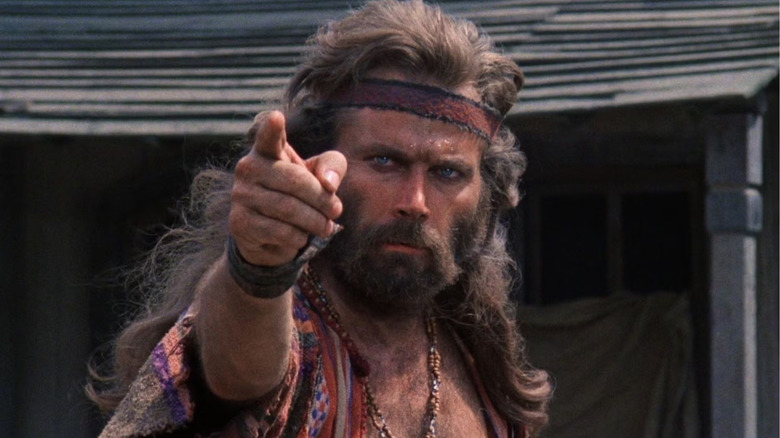
Franco Nero is "Keoma," a half-white/half-Native American man who returns home after fighting for the Union to discover a town overrun and controlled by ex-Confederate mercenaries. That's bad enough, but his father's three sons — ruthless to him as children — are working with the thugs and still see Keoma as an intruder in their lives. As family reunions go, this one's going to have a pretty high body count.
Director Enzo G. Castellari is a genre vet who brings his stylish flourishes to the western with great success. Slow-motion deaths, flashbacks that embed themselves in near seamless fashion, and a soundtrack featuring vocals exploring the current troubles facing our hero (like in a musical) all help the film feel a bit unique. It's also pretty heavy on action, period, with plenty of entertaining shootouts, brawls, and stunt set pieces. The film arrived well into the subgenre's twilight years after spaghetti westerns had already gone out of fashion, but its success showed that the right combination of talent, imagination, and determination could raise it from the dead.
A Fistful of Dynamite
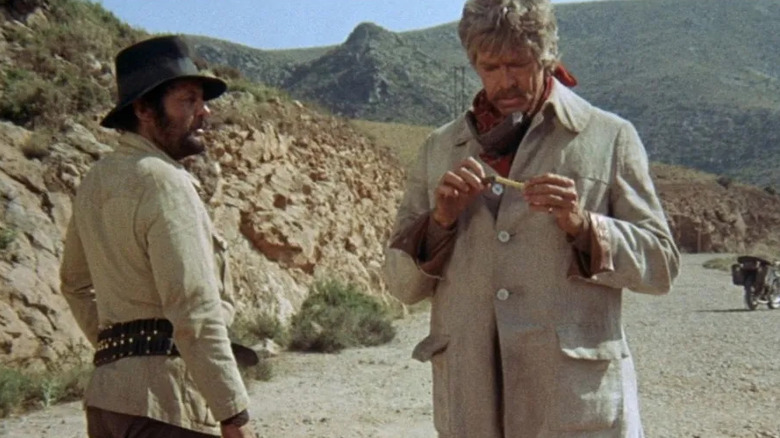
Sergio Leone's first film, "The Colossus of Rhodes," is easily his least discussed movie, but "A Fistful of Dynamite" (aka "Duck, You Sucker") isn't that far behind. His final western, and second to last film overall, eschews the subgenre's usual setup even as it unfolds in the familiar setting of the Mexican revolution. (This sub-category of spaghetti westerns is sometimes called Zapata westerns.) Instead of traditional gunfighters, we're introduced to a playfully cruel bandit (Rod Steiger) and a rogue IRA bomber (James Coburn) who reluctantly join forces to rob a bank — only to end up heroes of the revolution instead.
The pair are at odds throughout, and both Steiger and Coburn go big with personality and energy, making for a fun time consistent with Leone's intended theme of atypical friendships under difficult circumstances. The two couldn't be more different, at least until the world changes them for the (arguable) better, and they make for a fascinating pair. The revolutionary backdrop still touches on the uncertainty of living in a world contrasted by fascists and socialists, but the adventure — and some truly epic explosions — remains the focus.
Cemetery Without Crosses
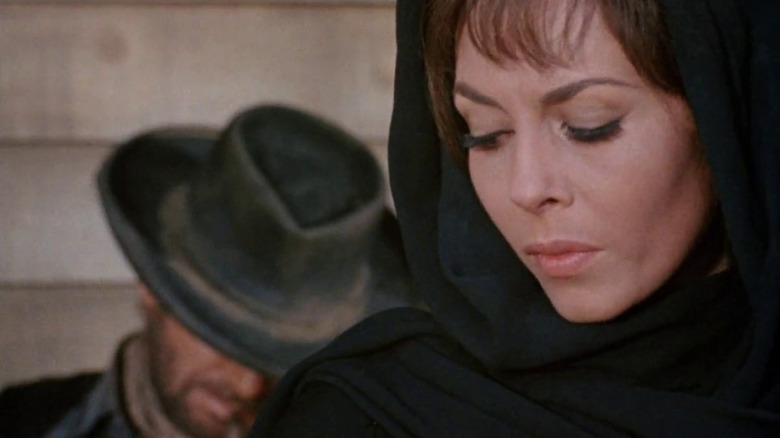
All of the spaghetti western subgenre's usual tropes are evident in "Cemetery Without Crosses," but the film still manages to stand apart from the crowd. The big reason for that is arguably the unusual presence of a French actor/director as its main driving force, but Robert Hossein succeeds at delivering a uniquely compelling film while still respecting the themes and filmmakers who call the subgenre home. Heck, he even got the legendary Sergio Leone to direct one of the film's many standout sequences.
Manuel (Hossein) is visited by an ex-lover asking for help in seeking revenge for the murder of her husband, and unable to say no to her, he walks into a violent maelstrom of misguided justice and mad choices. Beautifully shot and run through with commentary on the pointlessly cyclical nature of vengeance, the film is a sad look at the brutally entwined nature of love and hate. Hossein's use of long, dialogue-free stretches lets expression, emotion, and intention speak volumes. Oh, and that theme song is a banger!
A Bullet for the General
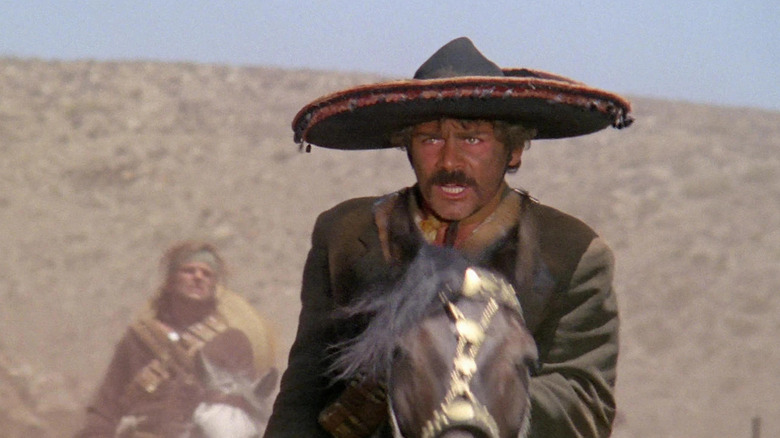
While spaghetti westerns often feature a lone central figure, some of the genre's best shape their tales around unlikely duos — sometimes working together, usually at odds with each other. "A Bullet for the General" sits high in the saddle of the second camp as a Mexican revolutionary called El Chuncho (Gian Maria Volonte) forms a friendship with a helpful American named Bill (Lou Castel).
Bill is allowed to join the revolutionary bandits after helping them take a passenger train in search of money and weapons to help further the cause. El Chuncho believes in that cause, but he's more interested in the wealth and notoriety that come with the gig. Their journey together sees him rethinking his own motivations, though, especially as Bill's own true goal comes to light. This is a beautifully shot and frequently exciting western exploring the reasons behind our actions, and it all builds to a fantastic finale highlighted by Volonte's fantastically rich performance as Chuncho's conscience crawls its way to the surface.
A Fistful of Dollars
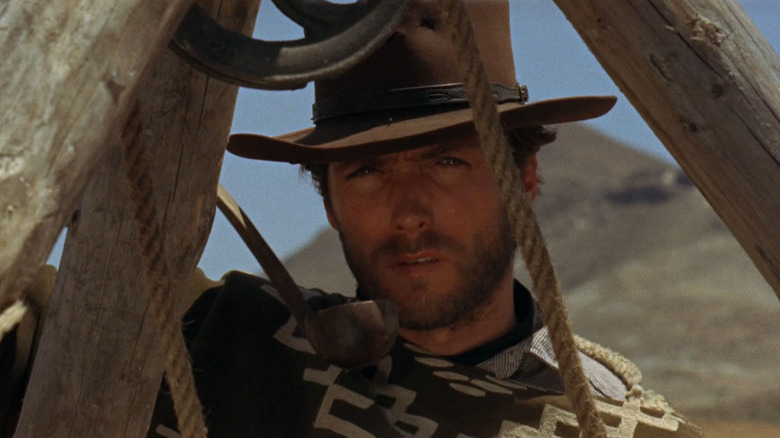
Sergio Leone's first spaghetti western rips off "Yojimbo" — and paid an out-of-court settlement for not securing the rights first — with style to spare, and he set the tone for the whole subgenre in the process. "A Fistful of Dollars" introduces Clint Eastwood's man with no name as a stranger who arrives in a dusty town, sizes up the situation between two competing families, and then plays both of them to a violent and rewarding end.
The film may be the least of Leone's Dollar Trilogy westerns, but it's still one of the best spaghetti westerns and arguably among the most influential films of the 1960s. Eastwood's Joe — yes, technically the man with no name is listed by one in the credits — is at his most talkative here as he manipulates everyone around him to his benefit (and that's even after Eastwood himself helped rewrite away some of the chatter). The low budget leaves it feeling small at times, but Leone, Eastwood, and one of Ennio Morricone's most iconic film scores all combine to make the action and drama feel all-encompassing.
Django
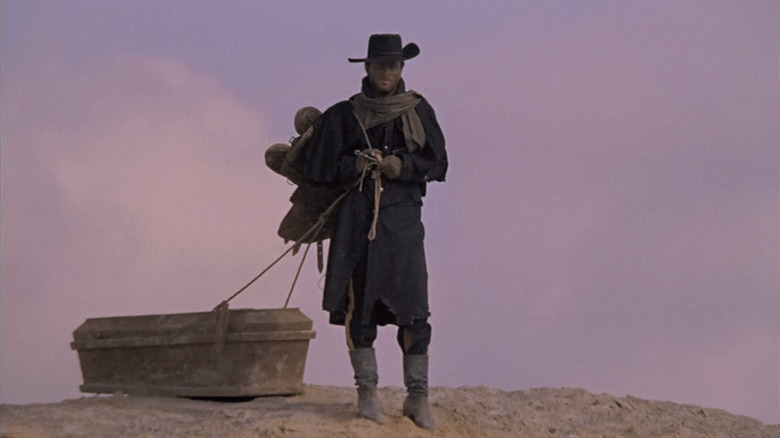
Sergio Corbucci's second film to make our list contains some of the more iconic images in all of the spaghetti western subgenre and served as inspiration for a Quentin Tarantino movie. Franco Nero is "Django," a man dressed in the ragged uniform of a Union soldier who drags a coffin wherever he goes — and where he's going is through lots and lots of mud. (Side note, this was arguably the muddiest film in existence until 2015's "Hard to Be a God.") The contents of the coffin will only be revealed in a blaze of gunfire.
While the movie kicks off like yet another "Yojimbo" riff, Corbucci and friends actually take the film in a different direction. Django finds himself aligned most directly with some Mexican revolutionaries over their powerful counterpart, a group of red-hooded racists. Django's ultimate motives aren't born out of loyalty, though, leading to triumph, deception, and a bone-breaking tragedy — though, not necessarily in that order. Dozens of in-name-only sequels followed alongside one official follow-up, but none can touch the original.
The Big Gundown
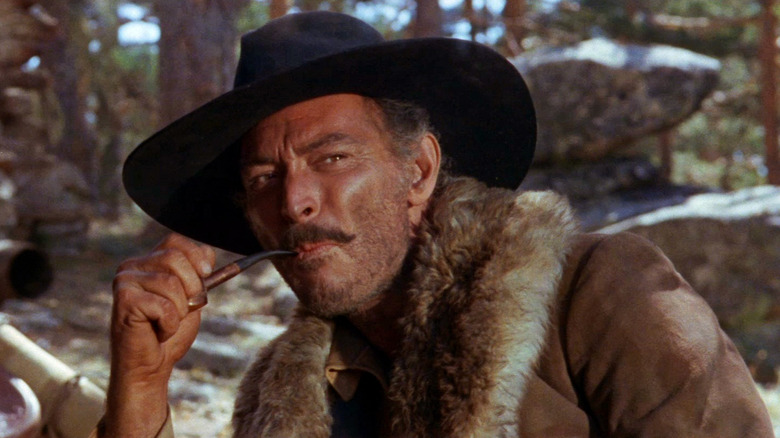
The idea of "one last job" is both a siren's call to film protagonists and often the worst decision of their lives, and that trope once again finds a home in Sergio Sollima's "The Big Gundown." John Corbett (Lee Van Cleef) has spent his life hunting down wanted men, but before he can retire, he needs to catch one last villain — the vile, child-killing Cuchillo (Tomas Milian). The job proves far tougher than John expected, but the truth of the hunt is far more surprising.
Van Cleef never really found leading man roles outside of the western genre, and it's a shame as he absolutely owns the screen in these films. (Quentin Tarantino regrets not having the chance to work with him too.) Here he's tasked with pursuing a wily prey accused of a truly heinous crime, and Van Cleef portrays a man fueled equally by anger and justice, at least, until new details emerge. Milian is every bit as compelling and finds fun along the way which achieves the unlikely by making Cuchillo a charismatically engaging presence. Add in beautiful cinematography, exciting gun fights, a commentary on class and societal abuse, and another stellar Ennio Morricone score, and you have one of the great spaghetti westerns.
Face to Face
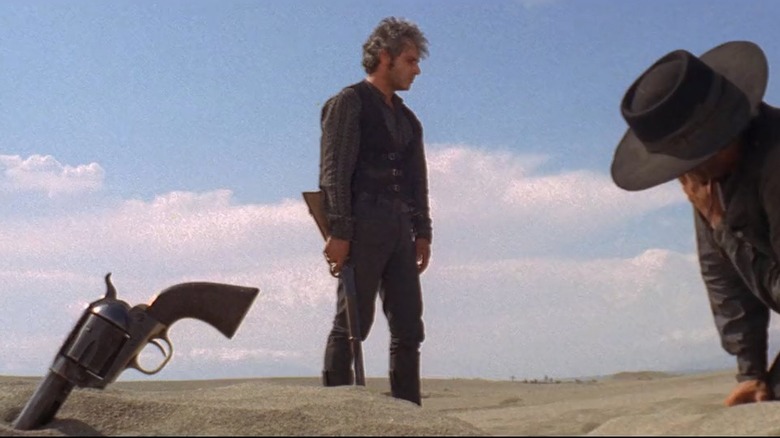
Two men, one educated and morally sound and the other a bandit with no compunction when it comes to taking lives, become unlikely compatriots in the brilliant and thrilling "Face to Face." Gian Maria Volonte is Brad, a professor in poor health who heads west and decides on a whim to join a group of outlaws led by Solomon (the always great Tomas Milian), but as their friendship grows, each man begins to see the appeal of the other's opposing viewpoint.
Brad finds purpose and thrills in the violence and his increasing sway over the bandits, while Solomon begins to see and respect life as something worth saving and respecting. Sergio Sollima's film couches a terrific dual character piece in an exciting and highly satisfying spaghetti western, and the two leads do terrific work with characters growing in diametrically opposed directions. Honor and justice, bound together with violence, and it's all set to one hell of a score by Ennio Morricone.
The Good, the Bad and the Ugly
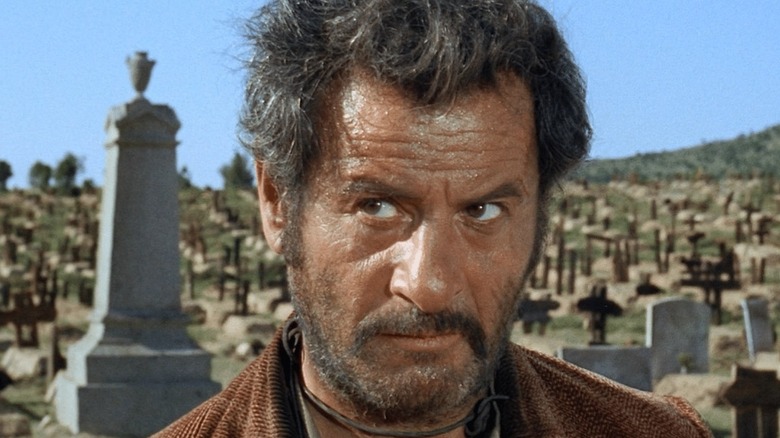
While the film sitting at the top spot below is Sergio Leone's true epic, 1966's "The Good, the Bad and the Ugly" remains as big and bold a western as you're likely to find. Just as he went from one lead in his first western to two in his second, his third hits the screen with three equally grand and bigger than life lead characters. Clint Eastwood is the good-ish, Lee Van Cleef is the bad, and Eli Wallach is the ugly comic relief (who had a fairly dangerous time on set).
The film unfolds during the Civil War as these three men cross paths in search of the same destination — a hidden fortune in gold coins. All three lead lives of violence, and the necessity of such things is a core theme running throughout even as its wartime setting makes it clear that violence is too often a waste of too many lives. Leone once again imbues the west with character, mythos, and harsh truths, this time in service of a treasure hunt guaranteed to end poorly for some. The end standoff is another masterclass in closeups and editing, and Ennio Morricone's score is, of course, an all-timer.
For a Few Dollars More
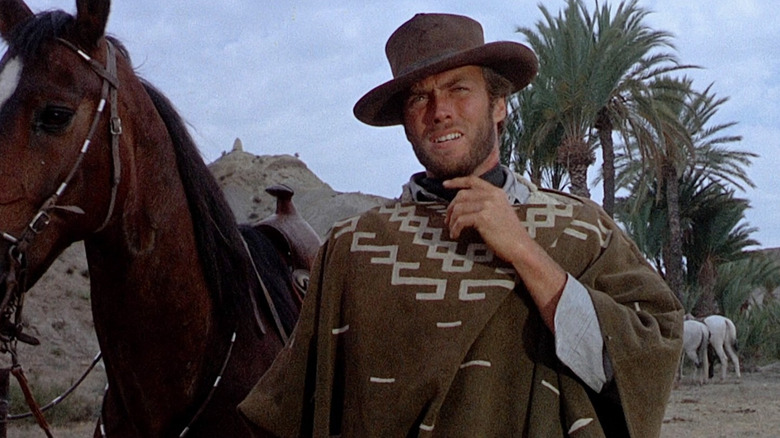
Two bounty hunters enter a saloon, and the unlikeliest and most unstable of partnerships is born. Manco (Clint Eastwood) and the Colonel (Lee Van Cleef) are bounty hunters who work alone, but when they discover that they're both on the tail of the same group of bandits — led by an ice-cold villain named El Indio (Gian Maria Volonte) — they decide to tentatively join forces to bring the men in.
Leone, Eastwood, Van Cleef, Volonte, all set to the unforgettable music of Ennio Morricone? (This would be the composer's final pairing with Eastwood as Morricone remained loyal to Leone.) "For a Few Dollars More" is a masterpiece and arguably a progenitor of what would become the mismatched cop genre. (The scene where they first cross paths and proceed to shoot each other's hats may as well be among the earliest meet-cutes, too.) It sees Leone once again crafting a film where every lead character is equally charismatic and engaging regardless of their position on the moral spectrum, the pacing is breezy and engaging, and his eye and his hand have only grown more assured since the prior year's "A Fistful of Dollars."
The Great Silence
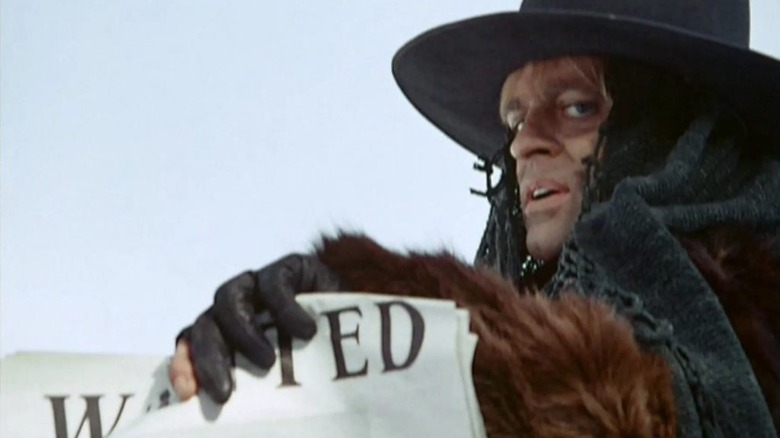
As mentioned at the top, spaghetti westerns are typically far grimmer than their American counterparts. Even by that standard, though, "The Great Silence" is as bleak as they get, while also being beautiful, powerful, and unforgettable. Sergio Corbucci's masterwork is also the rare snow-set western, a direct inspiration for one of the great winter movies, Quentin Tarantino's "The Hateful Eight," and a genre tale rich in political allegory and grief.
A mute gunman (Jean-Louis Trintignant) helps everyday folk by killing bad people in need of dying, but he might have met his match in the form of a maniacal bounty hunter named Loco (Klaus Kinski). The two move through the increasingly maroon-colored snow one body at a time until their inevitable duel, and Corbucci imbues it all with the weight of a world where hope and fairness are routinely smothered by rich and powerful people uninterested in sharing their money or their control with the masses. The corrupt draw of capitalism will be the end of us all, but only the luckiest among us will meet our end against a snowy backdrop and scored by Ennio Morricone.
Once Upon a Time in the West
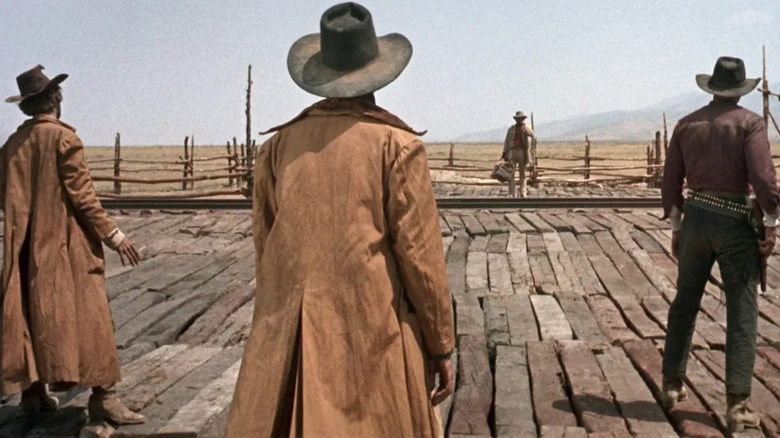
Sergio Leone only directed seven feature films, which we've ranked here, and four of them are on this list. That's fairly incredible, and the spots are all well-earned, but his penultimate western was always going to be number one with a bullet. "Once Upon a Time in the West" is the first western he made after retiring from making westerns, and it's an epic in every sense of the word from its cinematography and Ennio Morricone score to its performances and narrative power.
At almost three hours in length, the film takes its time and gives each character all the room in the world to breathe. The story unfolds with that same patience, and it grows to include greed, vengeance, love, cruelty, and political corruption in a weighty concoction that earns it a spot on the same high shelf as the likes of "Chinatown." Henry Fonda is the vilest of villains, Jason Robards is a criminal more by default than desire, and Charles Bronson — in a role that Clint Eastwood turned down — gives a star-making performance that burst open the door for him to leading roles.