

12 Terrifying Home Invasion Movies That Will Leave You Scared
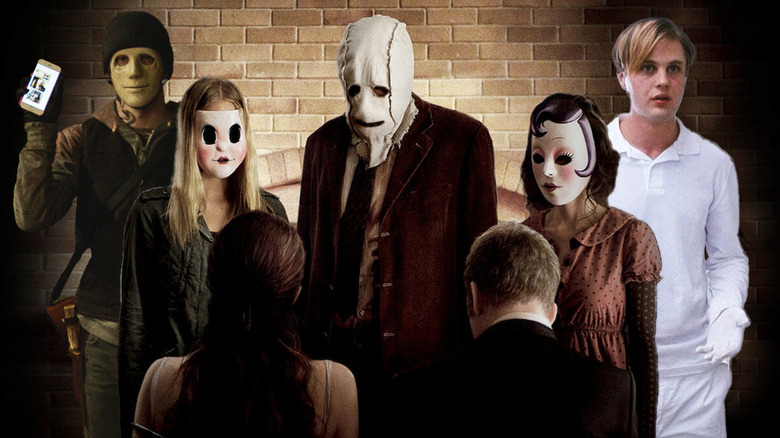
Home invasion movies tend to be pretty simple. A malevolent person breaks into someone's home and either terrorizes or kills them. It's one of the foundational tropes of horror, and despite its relative simplicity, it's also one of the most horrifying subgenres. It doesn't take a genius to figure out why that is. While movies about monsters or aliens or ghosts can be genuinely spine-tingling, they're often missing one thing — a sense of realism. Home invasion movies scare us so much because the possibility of something like that happening to us seems much higher than a monster attack. "What if it happened to you?" These films seem to ask.
For some moviegoers, that sense of verisimilitude makes the home invasion movie an immediate no-go. But for those of us who crave the feeling of tension and dread they provoke, there's nothing better. If you're the kind of person who likes to spend the night alone with the lights off, watching many people's most terrifying nightmares come true (no judgment), this list is for you. If you enjoy the thrill of waiting for something terrible to happen (on screen, that is), this is a safe space.
Keep reading to discover 12 home invasion movies that will deliver the frights you desire.
Hush

Director Mike Flanagan is probably best known for his Netflix horror series, but dedicated horror fans will know him from his previous cinematic output. Flagan has directed eight movies, three of which were released in 2016. Of those, our favorite is "Hush," which fits perfectly on this list. As with many of his projects, "Hush" stars Flanagan's wife, Kate Siegel. She plays Maddie, a deaf woman without the ability to speak. After publishing a successful novel, interestingly called "Midnight Mass," Maddie left the city and now lives alone in the woods. A deranged killer comes to her home one night, taunting her and threatening to come in. He mistakenly believes she's an easy target because she can't hear, but she proves him wrong.
"Hush" is one of the most straightforward movies on this list, but in Flanagan's capable hands, it's incredibly effective. Siegel is excellent in the lead role, especially considering she has no spoken dialogue and hardly any co-stars. Flanagan uses sound design to show the viewer what Maddie does and doesn't hear, creating an interesting auditory experience alongside a visual one. "Hush" features some great moments of suspense, including the scenes where we can see or hear the killer, and she can't. Lean, punchy, and to the point, "Hush" is an exemplary entry in the home invasion genre.
Funny Games
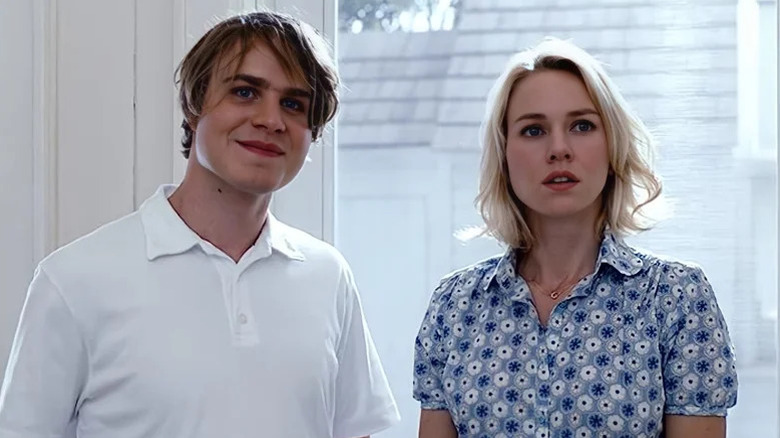
Michael Haneke directed two different "Funny Games," and they're almost identical. Haneke has said he remade the 1997 film, set in Austria, with an all-American cast because he wanted more people to see it and get the message across. The message is far from subtle, so it's pretty safe to say he achieved that goal with his shot-for-shot remake.
Both films follow a wealthy family, George (Ulrich Mühe/Tim Roth), Anna/Ann (Susanne Lothar/Naomi Watts), and son Georgie (Stefan Clapczynski/Devon Gearhart). While vacationing at their lake house, they are visited by two men, Paul (Arno Frisch/Michael Pitt) and Peter (Frank Giering/Brady Corbet). Paul and Peter's strange behavior soon turns violent, as they torture the family with excruciating games.
The film indicts the viewer in its own violence, so if you're looking for an easygoing watch, this probably isn't it. Haneke makes you feel complicit in this horrific violence, as if he's blaming you for wanting to watch the film in the first place. "Funny Games" is also extremely self-aware, which helps make the viewer feel like they're a part of what transpires. Paul breaks the fourth wall several times, addressing the audience and making them feel like participants in these crimes. The film suggests — or rather accuses — that moviegoers have become too desensitized to violence, and Haneke actually withholds explicit violence and sex from the viewer, causing us to question why we want it so much.
The Strangers
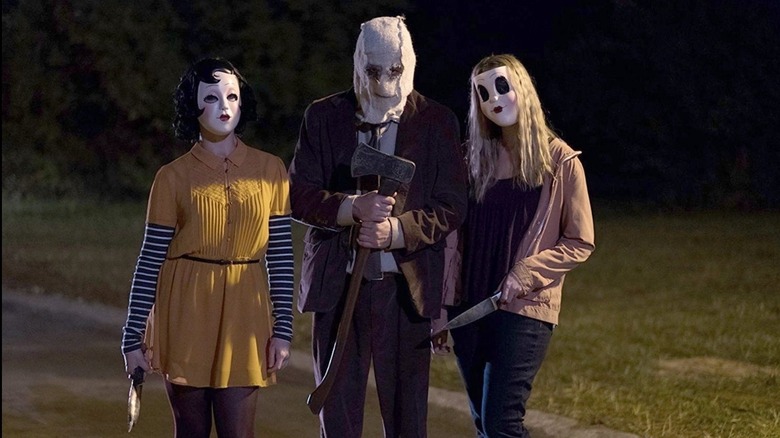
The go-to home invasion movie of the 2000s, "The Strangers" has achieved a surprising amount of longevity. The film was a sleeper hit at the box office and gained a cult following in the years since its release. It also spawned three sequels/reboots, at least one of which is worth revisiting. The premise of "The Strangers," which is based on several true stories, is uncomplicated. Kristen (Liv Tyler) and James (Scott Speedman), who are going through a difficult period in their relationship, come to stay at James' family's isolated summer vacation home. For seemingly no reason at all, they are stalked by a group of strangers in masks, who break into the house and torment them.
"The Strangers" prioritizes atmosphere over character, and its imagery is both chilling and memorable. The white masks the intruders wear are deeply unsettling, and their presence has an unnerving effect on every frame. Writer and director Bryan Bertino builds suspense using a few simple tricks, like shadows, doors ajar, moved objects, and enigmatic shots of dark corners and hallways. The moments when one of the strangers is behind Kristen without her noticing create a striking image. "The Strangers" is terrifying because it seems possible that this could happen to you, due to the randomness of the attacks. Killers with no motive seem scarier than those with clear intentions.
Inside
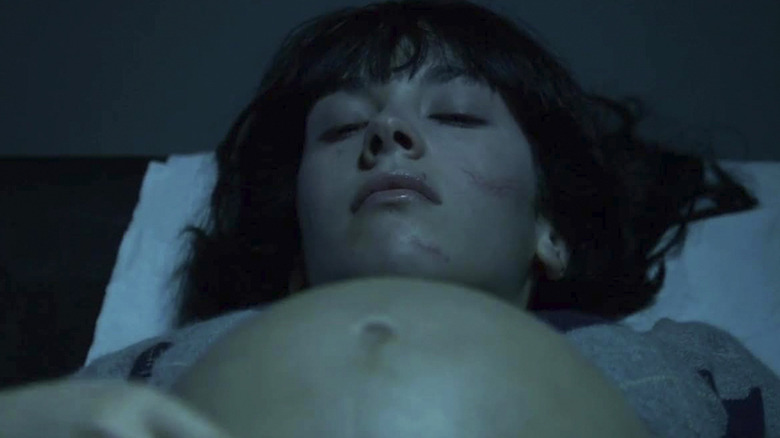
If you're not familiar with the New French Extremity movement, here's what you need to know: these movies are often gory, brutal, and graphic when it comes to both sex and violence. The 2007 film "Inside" falls into this category, which means it's not for the faint of heart. Directed by Julien Maury and Alexandre Bustillo, the film follows Sarah (Alysson Paradis), a pregnant woman who recently lost her husband. Sarah is past her due date and depressed, spending her time alone and waiting to have the baby. She's visited by a strange woman (Béatrice Dalle), who forces herself into Sarah's house. It becomes clear that this disturbed woman wants Sarah's baby for herself.
"Inside" is one of the most disturbing, harrowing films we've ever seen, so it might not be the best movie to watch if you're a highly sensitive person. But if you can stomach the brutality, you're in for a stomach-churning, pulse-pounding ride. It's difficult to watch Sarah be attacked because she's so vulnerable, both due to her pregnancy and the recent death of her husband. The tension is relentless, and the gore and violence never let up. It's a film that feels like it has evil in it, and the nihilism prevents you from feeling good at any point. Watch it if you dare, but don't blame us if you need to lie face down on the floor for several hours afterward.
Black Christmas
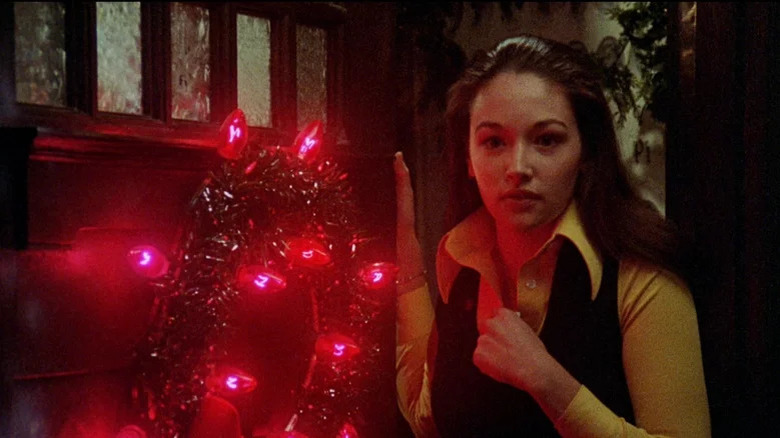
"Black Christmas" is a slasher classic and one of the rare horror movies that feels appropriate to watch in both October and December. Directed by Bob Clark, who also directed another holiday classic, "A Christmas Story," the film follows a group of sorority sisters preparing to go home for Christmas break. Inspired by the urban legend "the babysitter and the man upstairs," used in many horror films, the villain of "Black Christmas" taunts the girls with threatening phone calls. They've heard from him before, and they call him "The Moaner" because of the obscene noises he makes. What's initially dismissed as a prank call becomes more serious as the sorority sisters begin to disappear, one by one.
We won't spell out how "Black Christmas" is a home invasion film, but you can probably figure it out for yourself. The first film to use the "call is coming from inside the house" trope seen in films like "When a Stranger Calls" and "Scream," the movie is also credited with being one of the very first slashers, predating — and inspiring — classics like "Halloween." It also established a classic horror technique, showing us the POV of the killer and giving us the knowledge of what the villain is going to do before his unsuspecting victims see him. Though "Black Christmas" never achieved the same popularity as other early slashers, like "Halloween" and "Texas Chain Saw Massacre," it's just as important a film, and just as fun, too.
When a Stranger Calls
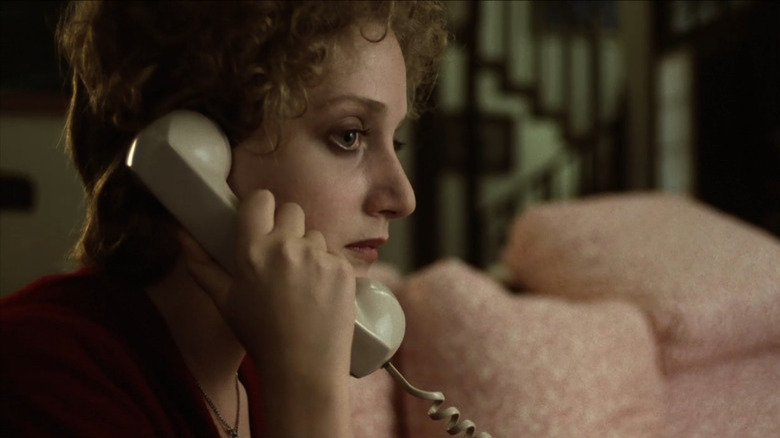
The 1979 film "When a Stranger Calls" achieves its chilling effect not through gore, violence, or intense action, but through suspense and atmosphere. One of the earliest babysitter horror movies, "When a Stranger Calls" follows Jill Johnson (Carol Kane), a young woman babysitting for the Mandrakis family. While the children are asleep, Jill receives a phone call from a stranger who asks her, "Have you checked the children?" What follows is a 23-minute opening sequence often considered one of the scariest openings in horror history. Even if you haven't seen the film, you probably know the line "We've traced the call — it's coming from inside the house." Wes Craven paid homage to the sequence with his famous opening scene in "Scream."
Director Fred Walton is a master of building suspense, and the premise is frighteningly realistic. But many forget about the middle part of the film, which takes place several years later, and follows the killer, Duncan (Tony Beckley), as he attempts to readjust to civilian life. This portion of the film is often criticized for its lack of tension, especially in comparison to the excellent first act. However, there's something to be said for this part of the movie, which explores the psychology of the killer and how he functions in the world. This aspect of the story demonstrates that "When a Stranger Calls" is a psychological thriller rather than a slasher, as the horror lies in the threat Duncan represents more so than his violent acts.
Them (2006)
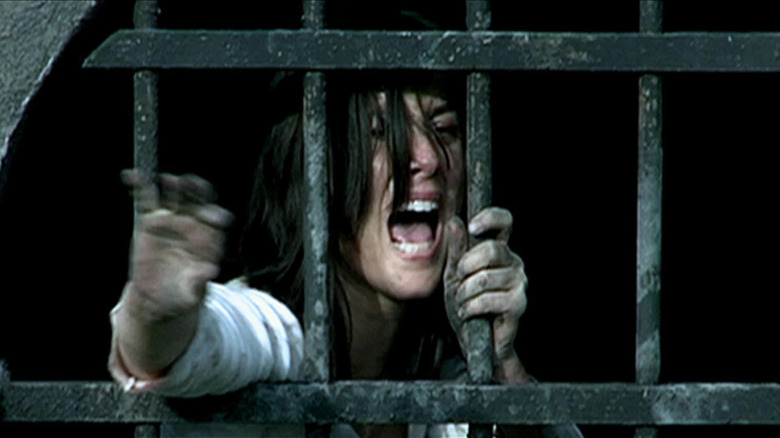
"Them" has a very similar premise to "The Strangers," though it's a French film set in Bucharest. Clémentine (Olivia Bonamy) and Lucas (Michaël Cohen) live in an idyllic country house, but one very scary evening ruins their sense of tranquility. As in "The Strangers," a series of odd events leads them to believe they are not alone in their house. Their car moves. The TV is on, and the tap is running. What follows is an extremely tense 70 minutes, wherein suspense reigns supreme over gore or violence. Stripped-down and sharp, "Them" presents a realistic premise and characters who act rationally (a rarity in horror films), making it a satisfying watch.
Our protagonists seem like nice people who are easy to root for, which means the film gets us on their side right away. They're committed to surviving and protecting one another, which gives the movie a gratifying emotional anchor. If home invasion movies are your jam, you'll likely be on board from the unsettling opening scene, in which a mother and daughter meet a violent demise. Though it's sometimes included under the banner of New French Extremity, it lacks the brutality and violence of those films and is better suited to moviegoers looking for atmospheric horror.
Sleep Tight
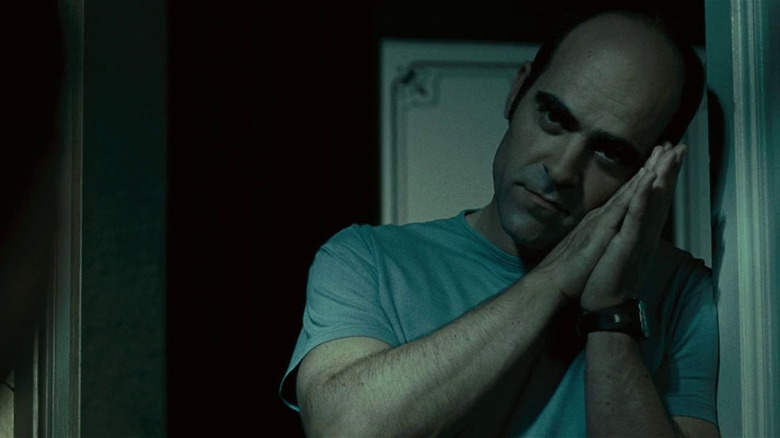
Jaume Balagueró knows how to make an apartment building seem like the scariest place on earth. The co-director of the terrifying found footage movie "REC" returned to apartment-based horror in 2011 with his psychological thriller "Sleep Tight." The movie follows César (Luis Tosar), the concierge of an apartment complex. César is not able to experience happiness, no matter what he does, so he gets his kicks from tormenting everyone around him. He becomes obsessed with one of his tenants, Clara (Marta Etura), whose upbeat attitude he despises. His routine of sneaking into her room every night is disrupted by the arrival of Clara's boyfriend (Alberto San Juan) and a nosy neighbor (Iris Almeida).
César doesn't initially seem like a monster, and that's what makes him such a disturbing character. He begins the film by telling us how unhappy he is and contemplates suicide, as he cares for his sick mother. The extent of his monstrosity slowly becomes apparent, culminating in a truly harrowing finale.
Though "Sleep Tight" can stand on its own, it also references filmmaking greats, most notably Alfred Hitchcock — César has a Norman Bates way about him — and Pedro Almodóvar, especially his film "Talk to Her." Balagueró uses Hitchcock's signature voyeuristic style to put us in César's shoes, a deeply uncomfortable but powerful way to maintain the sense of dread that permeates the film.
Panic Room
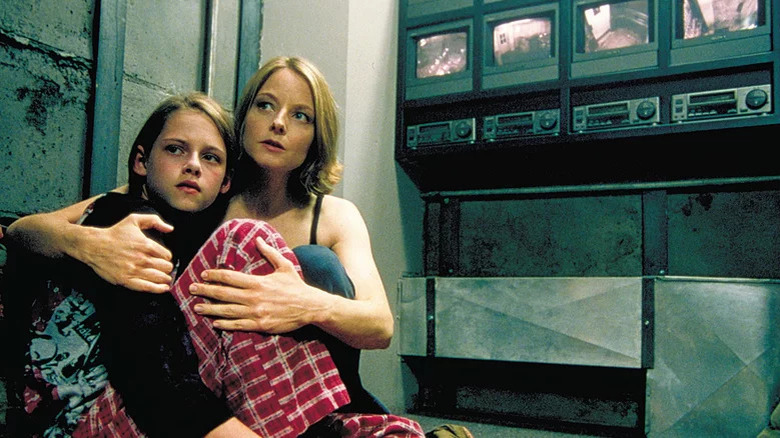
"Panic Room" probably won't terrify you, but it does a pretty impeccable job of ratcheting up the tension and creating a palpable sense of claustrophobia. One of David Fincher's least discussed films, "Panic Room" features an excellent cast led by the director's famously meticulous hand. The movie follows the newly divorced Meg (Jodie Foster) and her daughter Sarah (Kristen Stewart), who have recently moved into a New York City brownstone. Their home is invaded by three burglars, Burnham (Forest Whitaker), Raoul (Dwight Yoakam), and Junior (Jared Leto). Meg and Sarah hide in the house's panic room, created by the previous owner for this exact purpose. This turns out to be the wrong move, as what the burglars are after is hidden in that room.
Fincher uses this simple premise, a single location, and a small cast as a way to stretch his wings creatively. He counteracts the static location with a roving camera that seems to speed up the pace. The camera acts as an omniscient observer, moving throughout the house through door locks and air vents until we know every square inch of the space. The performances make a huge impact. Meg could have been another vulnerable woman in peril, but in Foster's hands, she becomes a powerful mother figure who doesn't back down from her aggressors. Stewart's performance gives Sarah a real personality and sense of individuality, elevating her above the stock kid character she might have been otherwise. Though it's not Fincher's best, it's still pretty great.
Kidnapped
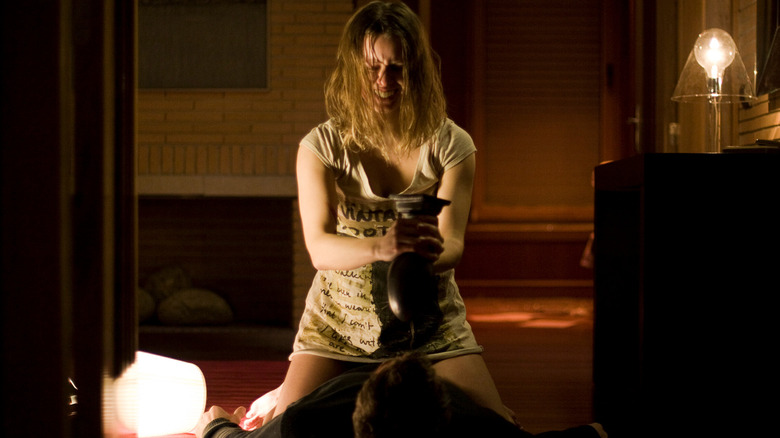
The premise of "Kidnapped" isn't new, but Miguel Ángel Vivas directs it in such a way that it stands out from his contemporaries. Jaime (Fernando Cayo), Marta (Ana Wagener), and their teen daughter Isa (Manuela Vellés) have just moved into a new home. Their first day there, the family is terrorized by a group of masked intruders. What begins as an average day in their lives turns into a fight for survival, echoing some of the random acts of violence we saw in "Funny Games."
Several elements work in concert to make this film a worthy entry into the home invasion movie canon. The performances from the three actors who play the family are spot-on, and they quickly create a sense of familiarity and intimacy that pulls us into their world. Vivas's most interesting choice lies in the way the film was shot. Rather than use quick cuts often found in action and horror movies, the film is composed of only a dozen or so long takes, similar to Hitchcock's experimental masterpiece "Rope." In some cases, long takes are used only as a stylistic choice or to illustrate a filmmaker's prowess. In "Kidnapped," the long takes serve a substantive purpose, adding to the film's sense of realism and depicting the events as if in real-time.
Vacancy
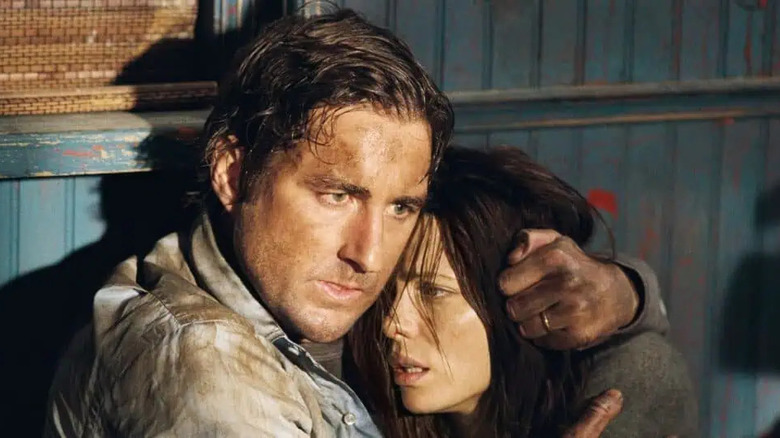
"Vacancy" belongs somewhere on the cinematic spectrum between "Psycho" and "The Strangers," using Hitchcockian suspense-building for a plot reminiscent of your average slasher. Kate Beckinsale and Luke Wilson play Amy and David Fox, a couple on the brink of divorce. Their car breaks down on a mountain road, and despite the help of a friendly mechanic (Ethan Embry), they can't go any further. Amy and David check into a nearby hotel. They begin hearing weird noises, but Mason (Frank Whaley), the manager, tells them they're his only guests. They pop a mysterious VCR into the TV and realize they're about to become unwilling stars in a snuff film if they don't find a way to escape.
Director Nimród Antal achieves maximum suspense by milking the basic premise and confined location for all its worth. Using simple effects like a knock at the door or an encroaching shadow, "Vacancy" becomes a pressure cooker of tension. The writing and the acting elevate an overused trope — a couple going through a hard time faces a life-or-death situation — into a compelling emotional arc. Beckinsale and Wilson, perhaps an unlikely duo, manage to embody both the couple's deep disconnection and their eventual reunification without belaboring the point. Both characters also have their wits about them enough to act rationally, a (sometimes annoying) rarity in the slasher genre.
Us

Jordan Peele's "Us" is full of big questions and jaw-dropping twists, all of which make it a thought-provoking horror film. But while we love the movie's big narrative swings, the scariest part of "Us" comes well before the finale, and represents one of the greatest home invasion sequences in recent memory.
We follow Addy Wilson (Lupita Nyong'o), who returns with her family, husband Gabe (Winston Duke), daughter Zora, and son Jason (Shahadi Wright Joseph), to the beach town where she grew up. Haunted by events from her past, Addy is convinced something bad will happen to them. Her fears come true when a mysterious family of four appears in their driveway. Motionless and mute, they immediately put the Wilsons on edge. Gabe tries to scare them away, and they suddenly spring forward and enter the house, and the Wilsons realize each person looks exactly like them.
The intruders are both inexplicable and unpredictable, which frightens the Wilsons — especially Addy — more than anything else. Though it's fairly early in the movie, Peele has already built up the tension, leaving us anxiously waiting for the next shoe to drop. And drop it does, in the form of a home invasion that's anything but typical. While "Us" is significantly denser than "Get Out," this sequence gives us the gratifying sense of visceral terror that horror lovers look for.