

Netflix Buying Warner Bros. Is Bad News For Movie Fans — But Paramount Would've Been Worse
[Update: Paramount has now launched a hostile takeover bid for Warner Bros. Discovery. The rest of this article has been left as it was originally published.]
For the last couple of months, movie lovers have been lamenting the seemingly inevitable sale of Warner Bros. Discovery to Paramount Skydance, a move that would create a media monopoly unlike anything we've ever seen, and, of course, result in massive layoffs. Today, those same movie lovers are lamenting the actual sale of Warner Bros. Discovery to Netflix, a move that will accomplish all of the aforementioned, and, perhaps, kill film exhibition as we know it altogether. This is ridiculous and utterly heartbreaking, but I think, on the creative side, it is a slightly better outcome than the Paramount Skydance option.
For some absurd reason, Netflix has dubbed this acquisition as "Project Noble," which only serves to remind humanity that CEOs are dreadful egomaniacs who desperately need to convince you of their visionary business acumen. There's obviously nothing noble about the job losses that are about to come, nor is there anything noble about how poorly WBD chief David Zaslav did his job to allow this crown jewel of a studio to be swallowed whole by a streamer that is hellbent on killing the exhibition business (which is on the ropes but hardly down for the count). Indeed, WB, after getting off to a rough start in 2025, wound up stringing together a series of hits ("A Minecraft Movie," "Sinners," "Final Destination Bloodlines," "Superman" and "Weapons") that reminded people why the moviegoing experience is so special.
The deal hasn't passed regulatory muster yet, and there are unsubstantiated reports that Paramount may launch a hostile takeover bid for WBD, but if it does, Netflix is expected to reduce the already-too-brief theatrical window to possibly two weeks, which will almost certainly discourage potential ticket buyers from visiting their local multiplex. It's dire. So, how could the Paramount Skydance possibly have been worse?
David Ellison could've given Donald Trump the keys to the most prestigious studio in Hollywood
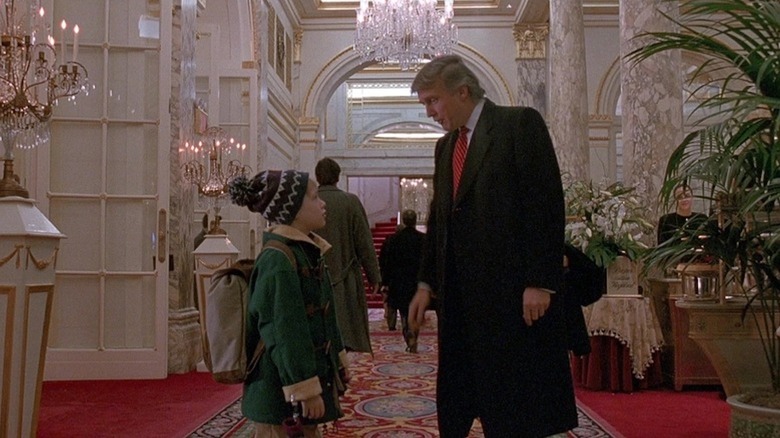
David Ellison, son of billionaire Oracle co-founder Larry Ellison, is Paramount Skydance's CEO. The family is deeply enmeshed in conservative politics, which wasn't disqualifying until President Donald Trump essentially greenlit the dead and quite unwanted "Rush Hour 4" at Paramount for his director pal Brett Ratner. Ratner's career ground to a halt in 2017 when several women, including Olivia Munn and Natasha Henstridge, accused him of sexual assault. Elliot Page also revealed that Ratner harassed and outed him on the "X-Men: The Last Stand" set. This led Ratner to ingratiate himself with the Trumps, resulting in Amazon's as-yet-unreleased "Melania" documentary.
When "Rush Hour 4" was announced last week (one day after Trump said it should happen), most people assumed that it was a favor to the president, who could cause regulatory headaches for Paramount Skydance's potential WBD purchase. As we've seen with institutions like CBS News (a Paramount Skydance Company), Northwestern University, and Columbia University choosing to settle unserious lawsuits with the Trump administration, if you give this man an inch, you're ceding him thousands of miles of concessions. Imagine this guy having David Ellison over a barrel at WB. He could've ordered the firing of production heads Michael De Luca and Pam Abdy on a whim and installed his son Baron to make sequels to "Gone with the Wind," "Citizen Kane," and, his personal favorite film, "Bloodsport." Meanwhile, movies that upset him politically (like, say, "One Battle After Another") could've run the risk of being buried. The potential for irreversible cultural vandalism would've been unthinkable.
Worst of all, Paramount Skydance was willing to tap Saudi Arabian funds to bolster its cash proposal. That would've been a disaster on a moral and creative scale.
Saudi Arabia must never get a financial stake in a major studio
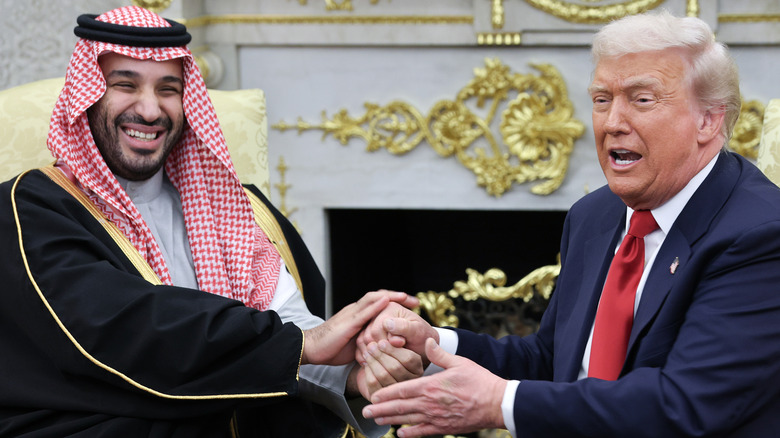
Saudi Arabian crown prince Mohammed bin Salman initially presented himself as a force of moderation in the conservative Muslim country, but that went out the window when he ordered the brutal execution of dissident Washington Post journalist Jamal Khashoggi in 2018. At this point, no person of conscience should've been doing business with the country, but the Trump family saw an opportunity for a windfall, which prompted a media reckoning last November when the White House feted bin Salman during a lavish visit.
Ellison has been equally eager to do business deals with Saudi Arabia, which, in the case of his WBD bid, would've come with troubling strings attached. As we saw at last October's Riyadh Comedy Festival, the Saudi royal family places firm restrictions on what artists can say about the country. They're also massively anti-LGBTQ+, so, if they happened to have a major stake in a Hollywood studio, there's little doubt they'd exert their influence on movies featuring characters from that community.
Perhaps Ellison, whose daughter, Megan (the head of Annapurna Pictures) is bisexual, would push back on this. More likely, he'd knuckle under because billionaires don't become billionaires by having principles. Under no circumstances can Hollywood allow Saudi Arabia to have a financial stake in a major studio.
It's ludicrous that we have to consider these things, but we live in a bizarro world. Again, Netflix is just a smidge more preferable (though its reported interest in using the WB library as an "AI supercharger" is brain-breakingly awful), but the motion picture industry has never been in worse shape than it is today. And it didn't have to be this way.