

American Gigolo Inspired A Key Scene In Guillermo Del Toro's Frankenstein
We may receive a commission on purchases made from links.
It's folly to claim there's only one central theme in a text as mythic as "Frankenstein," but the most tempting simplification is that it's a story about parenthood. Author Mary Shelley's baby daughter, Clara, died days after being born in 1815. Shelley's grief spun a tale of conquering death.
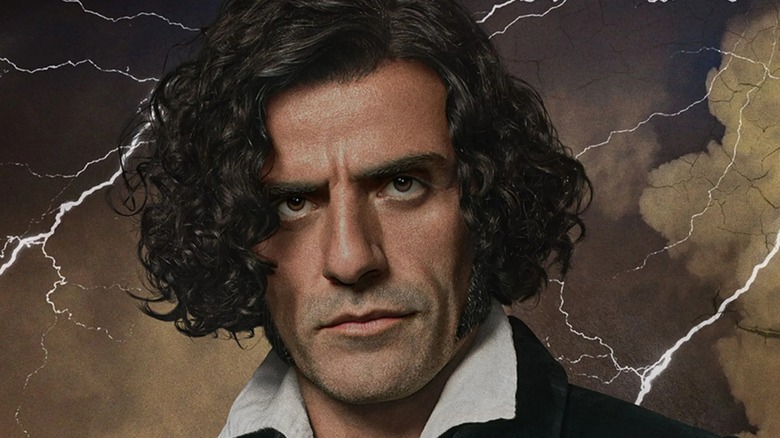
Victor Frankenstein builds a new life, literally, but abandons his creation at his "birth" because of his frightening appearance. The Creature enters into the world unloved, rejected like no child should be, and comes to desire revenge on his creator for beginning his cursed life. As the Creature (Jacob Elordi) tells his father (Oscar Isaac) in Guillermo del Toro's new "Frankenstein" film: "I demand a single grace from you. If you are not to award me love then I will indulge in rage."
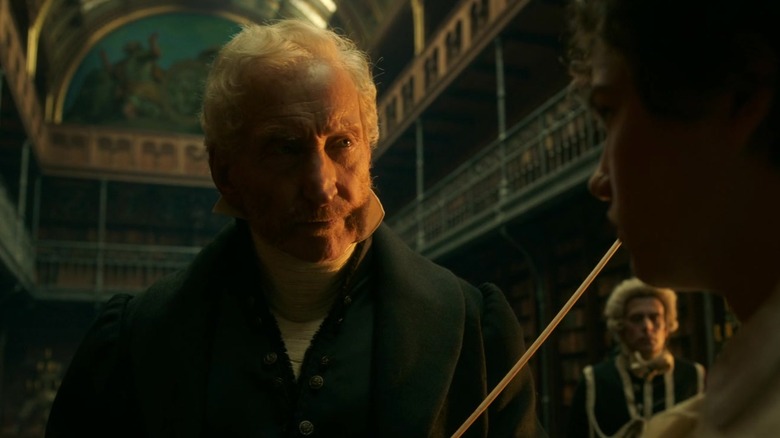
Now, del Toro's "Frankenstein" softens the "Monster" to hammer in that the one deserving of that description is Victor Frankenstein. Yet the movie remains focused on parenthood. Unlike the novel, it looks back a generation. Victor's own father, Baron Leopold Frankenstein (Charles Dance), is a cold man who demands greatness from his son but shows him no love. One scene shows that Leopold strikes Victor with a stick whenever the boy falters in his medical studies.
In the making-of book "Frankenstein: Written and Directed by Guillermo del Toro," del Toro said he only showed Baron Frankenstein's physical abuse once due to some wisdom from Paul Schrader's "American Gigolo." An early two-minute montage shows male escort Julian Kay (Richard Gere) getting dressed, laying outfits out and singing along to "The Love I Saw in You Was Just a Mirage." Pull off one moment (Julian getting dressed, or Baron Frankenstein striking his son) right and it tells you there have been many similar moments in a character's life.
Guillermo del Toro wrote Frankenstein with Charles Dance in mind
In the novel, Victor's father Alphonse is not a distant taskmaster but a loving family man who wants his son to be happy; Victor's self-destruction is his own making. As the Creature murders more and more of Victor's family, Alphonse dies of grief. In the 2004 Hallmark "Frankenstein" miniseries (featuring del Toro star Luke Goss as the Creature), Victor's brokenhearted father disowns his son for bringing the cloud of death into their home.
In the del Toro "Frankenstein," Victor's eager thirst for knowledge as a boy is replaced with his father's strict schooling in surgery. For Frankenstein's father, del Toro only ever envisioned Charles Dance:
"I thought the minute Charles Dance walks into the room, you know where Victor is coming from. There's no one more formidable in the history of the cinema. Charles Dance is like Odin, like Saturn."
Indeed, Dance's most famous role is another terrible father: Tywin Lannister from "Game of Thrones." Compare Leopold's brutal lessons to Tywin reminiscing on teaching his son Jamie to read in spite of his dyslexia: "[Jaime] hated me for it, for a time... for a long time, but he learned."
Tywin's defining dynamic is with his youngest son Tyrion, a dwarf, who Tywin despises for his appearance and the shame it brings their noble family. Tyrion has been compared to Frankenstein's Monster, and boy does that fit: an eloquent and deformed man who wants to be loved, but is hated, and so lets himself become the monster people imagine he is when they see his face. (The show softened Tyrion from the original books but that's a topic for another time.)
Like Tywin, Leopold Frankenstein's cruel legacy-building only sows seeds that lead his family to ruin once he's gone.
Guillermo del Toro once more explores fathers and sons in Frankenstein
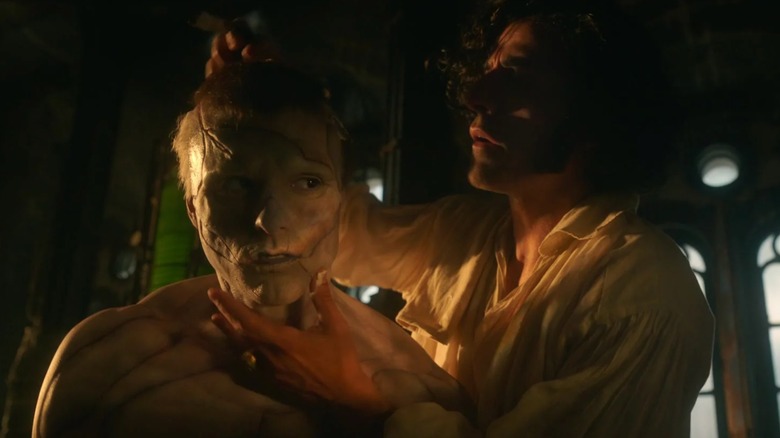
Unlike the "Frankenstein" novel, Isaac's Victor doesn't abandon the Creature on sight. Instead, the high of success wears off as the responsibility of fatherhood sets in. Victor doesn't teach his infantile-in-spirit son so much as demand he understand and speak more than one word, "Victor." Victor eventually beats the Creature with a metal rod; del Toro's only-show-it-once method pays off, because it's obvious that Victor is fathering the way he was taught to. (Unlike young Victor, the Creature takes the weapon from his father and breaks it.)
Shelley wrote Victor fleeing his son as fear and revulsion. In his "Frankenstein" making-of book, del Toro said he instead clocked it as an act narcissism:
"When you look at megalomaniacs, they have no notion of a future that benefits anyone but them. I thought, 'Victor's like that. And like his father, he's going to be disappointed in his son. He looks at the monster and thinks: Why isn't he pretty? Why isn't he smart? Why does he say only one word? What happens with narcissistic parents is the children are accessories."
There is another way, though. Unlike the novel, the Creature finds the loving father he needed in a friendly blind man, who teaches him how to read, to speak, how to love and be loved. (In this part, del Toro cast David Bradley, who in del Toro's "Pinocchio" voiced Geppetto, the father of an artificial boy like the Creature.) The ending of "Frankenstein" is also one of reconciliation. As Victor lays dying, he asks his son: "While you are alive, what recourse do you have but to live?", accepting the Creature's existence is not an extension of his own.
"Frankenstein" is streaming on Netflix.