

Rings Of Power Season 3 Shows Why Canon Is Not Important In Lord Of The Rings
Keep it secret, keep it safe ... from spoilers. This article discusses major plot details from "The Lord of the Rings: The Rings of Power" up through to Season 3, Episode 6.
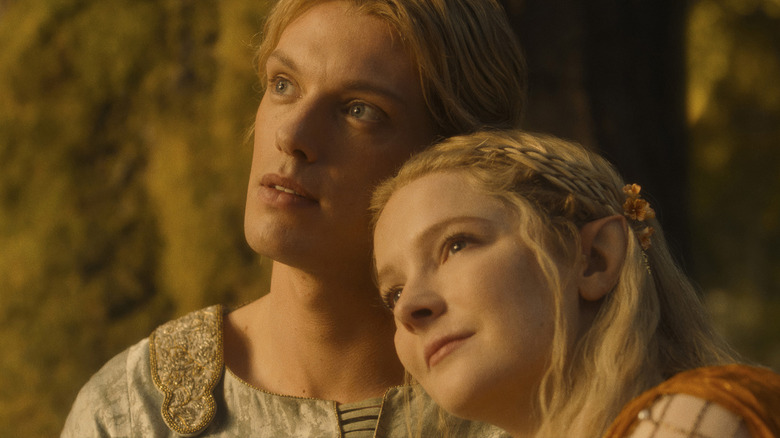
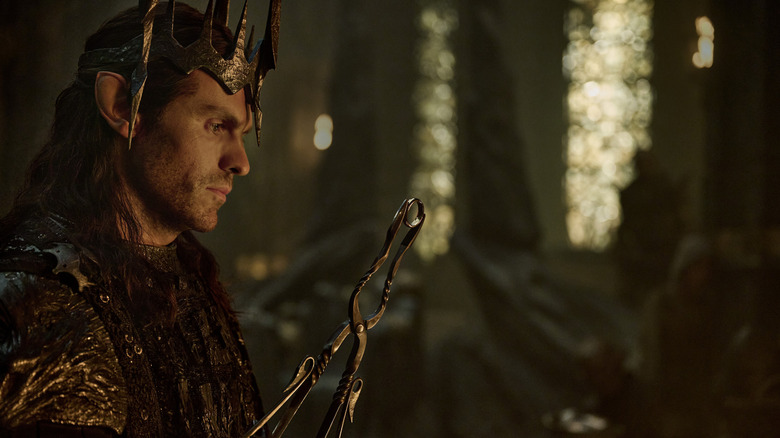
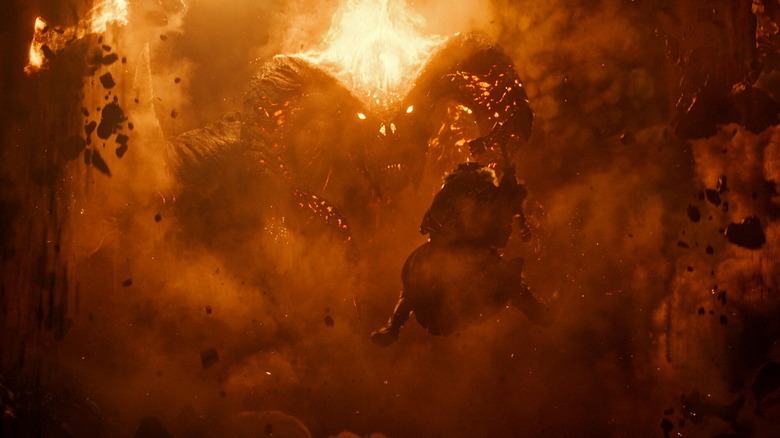
As an adaptation, "The Rings of Power" is possibly the most polarizing thing to come out of J.R.R. Tolkien's Legendarium in decades. From characters created specifically for the series to its portrayal of fan-favorites like Galadriel (Morfydd Clark), and its tweaks to Tolkien's Middle-earth lore, the show is full of creative elements that have proven controversial. That hasn't changed over time, either, as "The Rings of Power" Season 3 is now adding a love triangle, a new origin story for the Nazgûl, and a meeting between Sauron (Charlie Vickers) and a Balrog (Simon Pegg) to the pile (via IGN). Suffice it to say, these alternations have angered some fans who feel the series is deviating from the canon and, as such, Tolkien's intent.
Now, canon is one of the biggest battlefronts of the internet fandom wars, which (as ridiculous as they are) themselves have only grown as big franchises continue to dominate the entertainment landscape. As a result, lots of online conversations now center on how, say, a "Star Wars" TV series deviates from books written in the 1990s or how a movie like this year's "Resident Evil" fits into the larger property's timeline. But whenit comes to "The Rings of Power," it's even sillier since the show has to please fans of both Tolkien's books and Peter Jackson's "Lord of the Rings" movies alike (even though Jackson's films themselves make substantial modifications to their source material).
Here's the thing, though: Ultimately, canon is not important, especially when it comes to "Lord of the Rings."
If Tolkien didn't care about canon, why should you?
Middle-earth has a vast and detailed history spanning thousands of years. And yet, J.R.R. Tolkien technically only published two stories in his lifetime: "The Hobbit" and "The Lord of the Rings." So, when it comes to the proper "canon" of Middle-earth, that's really all there is to it. Sure, Tolkien's appendices introduce concepts such as the tale of Númenor, for example. But all the First Age stuff like the War of Wrath and the Silmarils, Morgoth and Sauron's history, and the larger saga of Arda all came from, essentially, scribbles and notes by Tolkien that were only published posthumously.
Moreover, another thing that makes Middle-earth's mythology so unique is that Tolkien's notes are full of inconsistencies and retcons. Indeed, there are many issues that Tolkien was able to fully make up his mind about, like the origin of the orcs and whether they are inherently and absolutely evil or not. Likewise, Tolkien struggled with whether to keep his original idea of Middle-earth having been a flat world that eventually turned into a spherical planet (after the fall of Númenor), and he never settled on an answer.
It wasn't just that, either. Much like George Lucas has changed the original "Star Wars" trilogy with every new re-release, Tolkien went back and forth on his writing about Middle-earth throughout his lifetime. In the end, he made tons of revisions big and small to the reprints of his "Lord of the Rings" books.
We shouldn't get hung up on canon in general
If J.R.R. Tolkien himself never got around to delivering a complete and finished version of his "canon," then why should fans fight about it? If we should take one thing away from the professor's work, it's that he thought his own fictional universe was malleable, and nothing was set in stone until the last minute. He and George Lucas are far from the only creatives to take this approach, either. For that matter, something as worlds apart as "The Simpsons" is constantly tweaking its own "canon" (with one exception).
This is not to say that we should simply discard everything that has come before and hit the reset button with every new entry in a franchise. Consistency is important, but it's equally vital not to let new ideas be limited by what came before. "The Rings of Power" may be adding things that Tolkien never wrote, but it's giving us Sauron clashing with a Balrog, and isn't that idea just too cool to pass up? More than any other property, "Lord of the Rings" doesn't have an expanded universe that's set in stone, anyway. Rather, it's always morphed to incorporate fresh ideas to some degree, so why stop now?
"The Rings of Power" has many issues, especially when it comes to its pacing. That said, it's always done a good job of reinterpreting its source material in a way that captures the essence of Tolkien's ideals while integrating exciting concepts we haven't seen in this franchise before. Stream in on Prime Video, and see for yourself.