

How Blade Runner 2099 Took Inspiration From Denis Villeneuve's Legacy Sequel [Exclusive]
It's impossible enough to have to live in the shadow of an unabashed classic of cinema, so just imagine dealing with two of them. There aren't many who would have a bad word to say about Ridley Scott's original "Blade Runner (well, except for those unfortunate critics who dismissed it upon release), but Denis Villeneuve's highly-acclaimed sequel "Blade Runner 2049" ain't too shabby, either. Now, Prime Video's "Blade Runner 2099" series has the added responsibility of picking up the story where its beloved predecessors left off ... along with all the pressure that comes with that.
For showrunner Silka Luisa, this could've required one of two different approaches: stay suffocatingly faithful to the look and feel and tone of the two films or purposefully set off in the opposite direction. Well, in this case, how about a secret third option instead? During a recent press junket for "Blade Runner 2099," I spoke with Luisa over Zoom about where this show fits in next to its movie kin and how it finds its own niche amid a much wider world:
"I knew we were definitely going to have an opportunity to lay our own track, because — it's right in the title, the fact that you're so many years past 2049, it gives you enough space to really carve out your own identity."
Impressively, Luisa looked to Villeneuve's 2017 movie to figure out the ideal way to do just that. "What was so fantastic about what Denis did with '2049' was, he didn't just rehash what Ridley had done," the showrunner told me. "He really created his own take on 'Blade Runner' that is very much his aesthetic. But it still felt like an evolution of Ridley's conversation." In effect, the key was to thread that very tricky needle for "2099."
For Blade Runner 2099 showrunner Silka Luisa, Denis Villeneuve's legacy sequel found the perfect balance
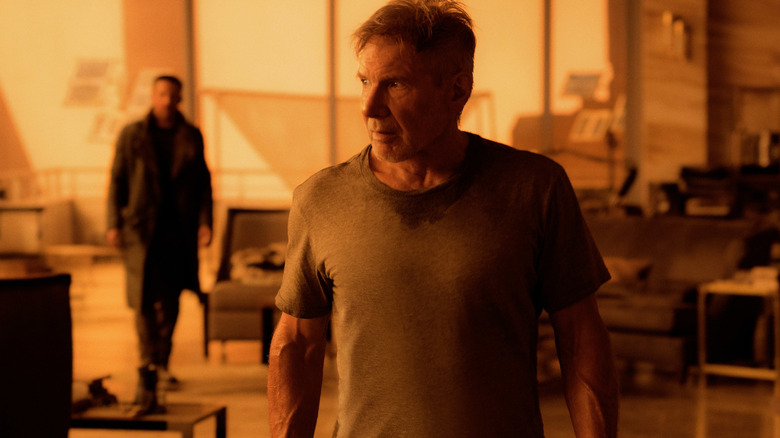
When it comes to the recent trend of legacy sequels that have dominated the last decade or so of franchise filmmaking, it can certainly feel like we can count the worthwhile ones on just one or two hands. Fortunately, for Silka Luisa and her creative team on "Blade Runner 2099," Denis Villeneuve's "Blade Runner 2049" is basically the poster child for legacy sequels done right. Rather than simply retread all the same ground as before (looking at you, "Star Wars: Episode VII — The Force Awakens"), "Blade Runner 2049" moved the story forward and took some seriously big risks along the way.
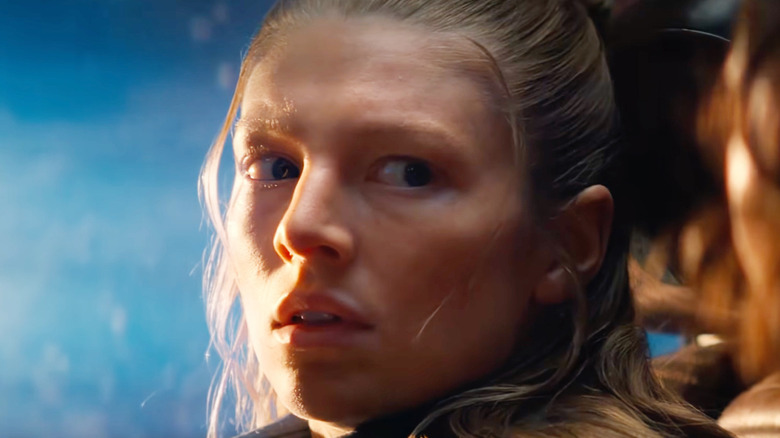
According to Luisa, this gave her all the permission she needed to follow in its footsteps and take things in bold new directions with her show. "That freed us up in a lot of different ways, because it meant we weren't just beholden to repeating the same thing over and over again," she explains. One massive wrinkle in the Prime Video series is the fact "Blade Runner 2099" takes place after a Replicant uprising has shaken up the status quo, putting humans at the bottom of the food chain for once. It's a strange dynamic that our two main characters Olwen (the Replicant Blade Runner played by Michelle Yeoh) and Cora (the human posing as a Replicant played by Hunter Schafer) are forced to navigate throughout the season.
As fans tune in, they can rest assured in the knowledge that the series is taking its cues from one of the most ambitious and boundary-pushing legacy sequels of them all. You could do a lot worse than that. All eight episodes of "Blade Runner 2099" are now on Prime Video.