

Guillermo Del Toro's Frankenstein Director's Cut Totally Changes The Movie With One Scene
We may receive a commission on purchases made from links.
The Criterion release of Guillermo del Toro's "Frankenstein" includes a new "Reborn Cut" that reinserts eight minutes of footage.
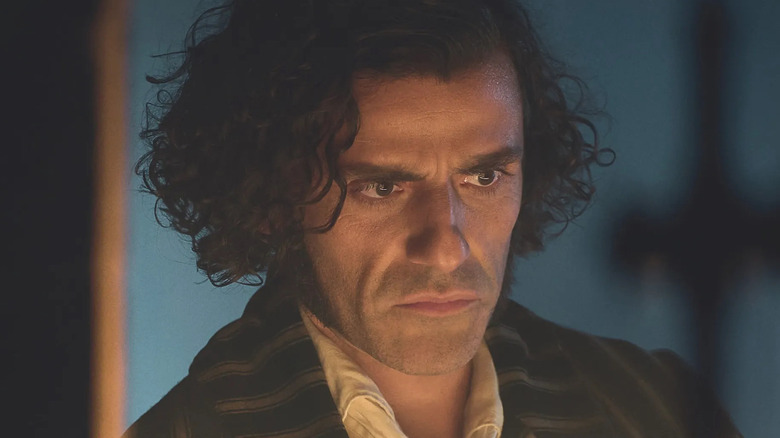
Now, how much can eight minutes really change a movie, especially one that's already 150 minutes long? Quite a lot, it turns out. "Frankenstein: The Reborn Cut" completely recontextualizes Victor Frankenstein (Oscar Isaac) by featuring a young Victor (Christian Convery) secretly murdering his abusive father, Baron Leopold Frankenstein (Charles Dance).
In both versions, Victor comes to suspect Leopold let his mother Claire (Mia Goth) die in childbirth. This suspicion doesn't come to much in the theatrical cut; Victor confronts his father about it, who answers no one can conquer death, and Victor counters that he will. That night, Victor dreams of a "Dark Angel" promising him that craved knowledge. Victor's story of his childhood still ends with his father's death, but by seemingly natural causes.
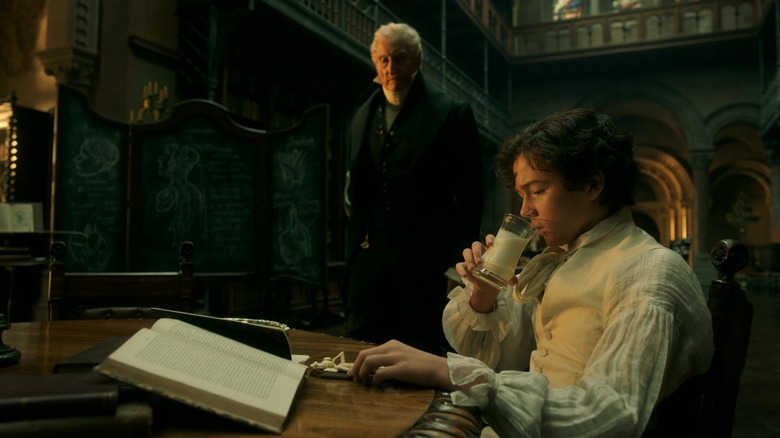
The "Reborn Cut" includes additional dialogue; Victor says, to secure the Dark Angel's deal and protect his little brother William from "the Beast," he decided to kill his father. Victor mixes a poison recipe from Leopold's own medical library and drops it in his father's ear as he sleeps, like Claudius killing Hamlet's father.
Victor Frankenstein of the theatrical cut already showed an Oedipus complex, or a boy who sexually desires his mother and wants to kill his father. Goth plays Victor's mother and his coveted Elizabeth Harlander, and Victor's drink of choice is milk. Victor literally killing his father in the "Reborn Cut" completes the character's psychology. It also deepens his character in the rest of the movie as he becomes a father himself to the Creature (Jacob Elordi), whose violent revenge against Victor for abusing him now even more closely mirrors Victor and Leopold.
The Frankenstein 'Reborn Cut' reveals that Victor killed his father
Nothing of this sort happens in Mary Shelley's "Frankenstein" book. Victor's childhood was already one of the biggest changes from the "Frankenstein" novel, where he says that "no youth could have passed more happily than mine." Victor's father dies at the end of the novel in grief from the Creature killing all of his and Victor's loved ones.
In del Toro's movie, Victor adores his mother, but his father is cold, concerned only that Victor carries on his legacy as a master surgeon — he strikes Victor with a cane when he fails in his studies. Del Toro refashions Frankenstein Sr. like his villain Captain Vidal (Sergi López) in "Pan's Labyrinth." Both men only see their wives as brood mares and dislike the child she already has. Both men's wives die in childbirth, and with the suggestion Vidal/Leopold allowed that because he only cared about the child's life.
Leopold's abuse infects how Victor treats his creation. Victor tries to rear the Creature, but it goes horribly wrong because he's echoing his father's parenting. In his arrogance, Victor also doesn't conceive of his creation as a child. Take his anger when the Creature cuts his hand grabbing a razor blade — is that parental concern or anger that the monster damaged his [Victor's] artistic work of surgically sculpting the Creature's body?
In another scene, the Creature recoils when Victor gets angry at him for not speaking, and Victor reacts in exasperated disbelief: "I'm not going to hurt you. I made you." It seems like he genuinely wants to be different from his father but doesn't know how to be, which is even more gutting in the "Reborn Cut" since we know that Victor hated his father enough to kill him.
Does the Reborn Cut make Frankenstein worse or better?
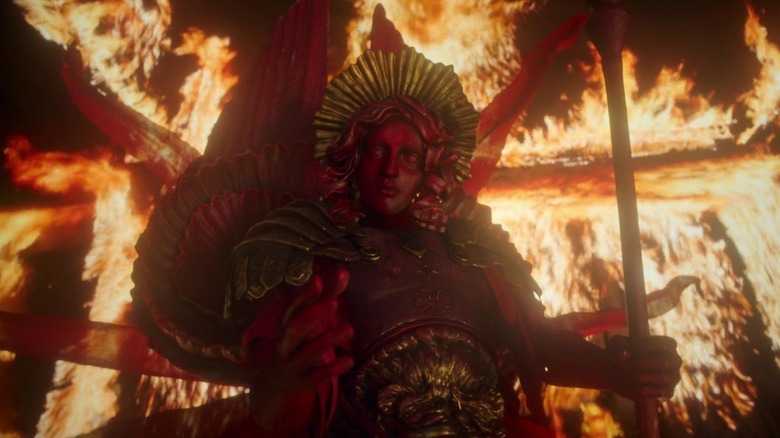
If Leopold's death felt abrupt in the "Frankenstein" theatrical cut, now we know why. Victor making an explicit Faustian deal with the "Dark Angel" also makes Victor's later rage against it for supposedly betraying him more coherent, and that deal essentially extracting Victor's soul fits the Angel's Satanic visage.
The theatrical cut, though, reveals Victor as the villain more gradually. The Creature initially attacks like a "monster" but then the movie tells his side. Victor being a murderer undercuts the bait and switch; poisoning your own father, even an abusive one, as a child is an undeniable sign of a bad seed.
The sequence of events still flows either way. In both versions, Victor recounting his deal with the Dark Angel cuts to the Creature breaking free from the ice. In the theatrical cut, Victor asks "but how [will I conquer death]?" The Creature shows he found the answer. In the "Reborn Cut," Victor says he realized he had to kill his father as the Creature is coming to kill Victor, his father.
In a "Frankenstein" audio commentary, del Toro reveals he cut the sequence on the advice of his longtime pal, James Cameron. Victor killing his father doesn't just make him less sympathetic, Cameron argued, it weakens his character: "If Victor kills his father [...] he has completed his task. He avenged his mother. Why would he then embark on the quest for immortality?"
Leopold's last scene in the theatrical cut, Victor grabbing his father's cane and boasting he'll surpass him, emphasizes that quest will be Victor's revenge. I'm split on if the "Reborn Cut" is superior, but Victor killing his father is a clarifying change which makes the story and themes of "Frankenstein" hang together a little better.