

5 Best Western Movies Where The Main Character Dies
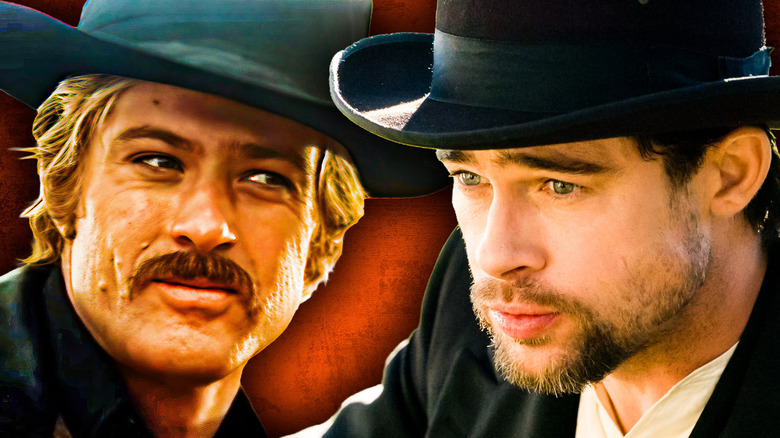
A common description for a happy ending, that being a hero "riding off into the sunset," comes from Western films. The sunset both bathes the hero in an angelic light and signals a conclusion without being melancholy. Just as the sun will rise again before long, it also suggests the hero will go on to have further adventures and/or a long and happy life, even if the movie never actually receives a sequel.
But not all Westerns end like that, especially more modern ones that aim to revise the Western film formula that Old Hollywood perfected. Many of those revisionist Westerns look to explore the consequences of the genre's inherent violence. There's easy romanticism to be found in gunslinging outlaws, who have been idolized as freedom seekers refusing to let unfair laws dictate their lives. But many other Western movies make a point that lives spent on crime and killing almost never come with happy, sunset-lit endings. Even for Westerns about heroic lawmen, sacrificial deaths are not out of the question. And of the Western films across the decades that end with their hero (or antihero) lead perishing, these are the very best.
(Needless to say, spoilers ahead.)
5. Shane
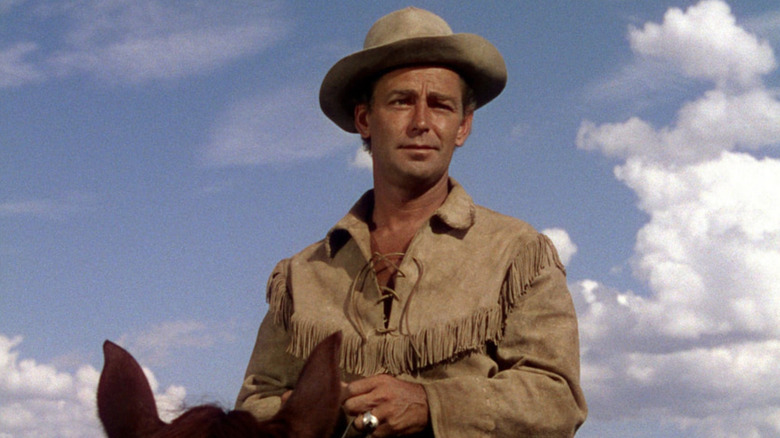
Named for its gunslinging hero played by Alan Ladd, the 1953 film "Shane" is often ranked as one of the greatest Westerns of all time. It's a mature and solemn Western movie from an era before we started getting harsher deconstructionist Westerns, and it helped set the blueprint for those later films.
"Shane" is set in 1880s Wyoming and inspired by the history of the Johnson County War. Ladd's Shane is a cowboy drifter who settles on a small farm owned by the Starrett family. Young Joey Starrett (Brandon deWilde) looks up to Shane, who tries to steer him away from violence until the very end. The movie ends with Shane taking up his gun again and killing a ruthless land baron and his hired killers. A wounded Shane then rides out of the valley. The final shots, concealed in darkness, show Shane perfectly still, almost slumped over on his horse, as he rides through a graveyard.
Now, Shane's fate is deliberately uncertain, but ever since I first saw the movie, I interpreted those last shots as symbolizing death. Why else have Shane ride through a graveyard of all things? Note even how it mirrors that typical "hero rides off into the sunset" ending mentioned previously. Except, in this film, Shane's final ride is into the dark of night.
"Shane" has become the model for similarly ambiguous Western endings. Compare Spike Spiegel falling over unconscious, maybe dead, in the untidy ending of the anime space Western "Cowboy Bebop." The 2017 superhero film "Logan" also takes a lot from "Shane," down to featuring characters watching the movie and having Laura (Dafne Keen) recite Shane's last words over Logan's (Hugh Jackman) grave.
4. The Great Silence
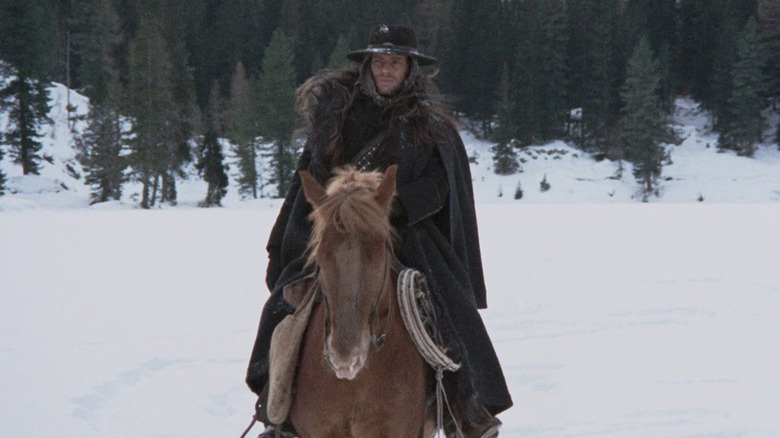
Sergio Corbucci's Spaghetti Western "The Great Silence" is one of the darkest Western films ever made, a reputation cemented by its brutal ending. Set in late 1898 Utah during a huge blizzard, "The Great Silence" follows a nonspeaking gunslinger, known only as "Silence" (Jean-Louis Trintignant). He's hired to kill a sadistic bounty hunter, Loco (Klaus Kinski), by a woman who Loco widowed, Pauline (Vonetta McGee).
This set-up sounds like typical Western storytelling, right? But the snowbound setting is not the only thing that sets "The Great Silence" apart from your typical Western. Like in many other Westerns, the film comes down to a gunslinging duel between the hero and the "black hat," with the hero always pulling off the lucky shot that brings the bad guy down. Not there, though: Loco wins the gunfight, killing Silence. Pauline then tries grabbing Silence's gun to avenge him only to be killed herself, followed by a whole saloon of people.
"The Great Silence" is a prophetic title because it's hard to have any other stunned reaction after seeing an ending like that. The bad guys, particularly a bad guy as ruthless as Loco, getting such a clean victory doesn't subvert storytelling convention as much as riddle it with bullets.
"The Great Silence" was an influence on Quentin Tarantino's 2015 Western claustrophobia-thriller "The Hateful Eight." Both films are set in a blizzard-afflicted mountain range and end with a cabin full of dead bodies.
3. Butch Cassidy and the Sundance Kid
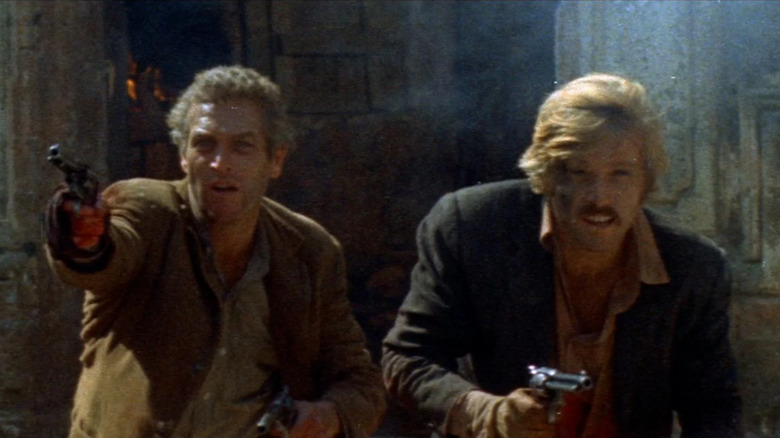
No two actors have ever had better chemistry than Paul Newman and Robert Redford in "Butch Cassidy and the Sundance Kid," starring the two as the eponymous outlaws of Old West legend. But history says that duo likely met their end in November 1908 during a shootout with the Bolivian army. That's how the movie ends: Butch and Sundance are wounded and are only two men against an entire army, but they rush out to face their fate. The film notably ends on a freeze frame of the duo running side-by-side, guns in hand, as the sound of gunfire plays over the still image.
The original ending for "Butch Cassidy and the Sundance Kid" actually showed them dying, but it thankfully wasn't used. The freeze frame is a perfect conclusion. We've just spent two hours seeing these guys trick their way out of trouble, and there's just enough plausible deniability that maybe they escaped this time, too.
Plus, "Butch Cassidy and the Sundance Kid" is a fairly lighthearted film overall. The ending preserves that: We don't get a mood-spoiling ending of our charismatic gunslinger heroes being gunned down, à la "Bonnie and Clyde." Instead, we get a reminder this final shot wasn't the end of their story, for they ascended into immortal legends. After all, you just watched a movie called "Butch Cassidy and the Sundance Kid," didn't you?
2. The Wild Bunch
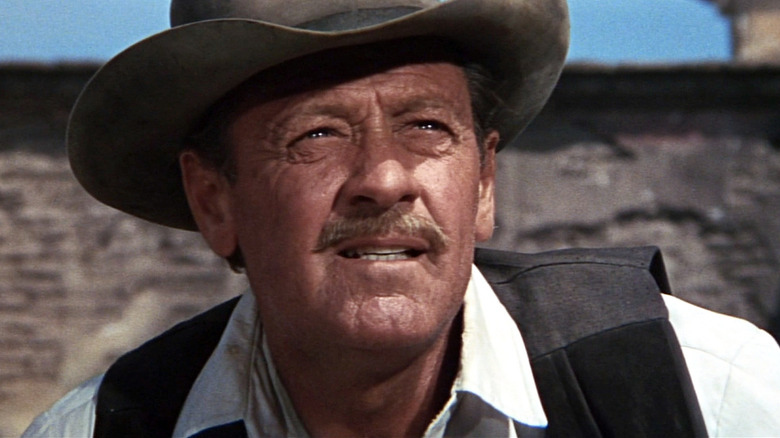
Some people would argue that Sam Peckinpah's "The Wild Bunch" killed the Western itself, at least for a time. That's almost by design, because it's very much about the end of the Wild West. (Note the movie is set in 1913, much later than most other Westerns.)
The titular bunch are four survivors of an outlaw gang led by over-the-hill Pike Bishop (William Holden). The others are Dutch Engstrom (Ernest Borgnine), the Gorch brothers Lyle and Tector (Warren Oates and Ben Johnson), and Angel (Jaime Sánchez). Chased by bounty hunters and confronted with vanishing opportunities, they head to Mexico and sell their services to General Mapache (Emilio Fernández). A former member of the gang, Deke Thornton (Robert Ryan), accompanies hired agents of the railroad in tracking them so as to commute his own prison sentence.
When Angel incurs Mapache's wrath, the other four forsake their reward to rescue him. There's a wide shot of them marching in lockstep together, and that's purposefully the only time in the film they look heroic. But despite the noble sentiment, the entire Wild Bunch meet bloody ends in a climactic shoot-out. Said sequence features a turreted, bullet-spraying machine gun, the kind of weapon that creates gore on an industrial level unseen in Westerns where the only guns are simple revolvers and rifles.
The one survivor is Deke, who arrives to find Pike and everyone else already dead. Another film might lambast him as a traitor, but "The Wild Bunch" concludes by showing his loneliness and suggesting he'll throw himself back into a new struggle (the Mexican Revolution) because violence is what he's best at doing.
1. The Assassination of Jesse James by The Coward Robert Ford
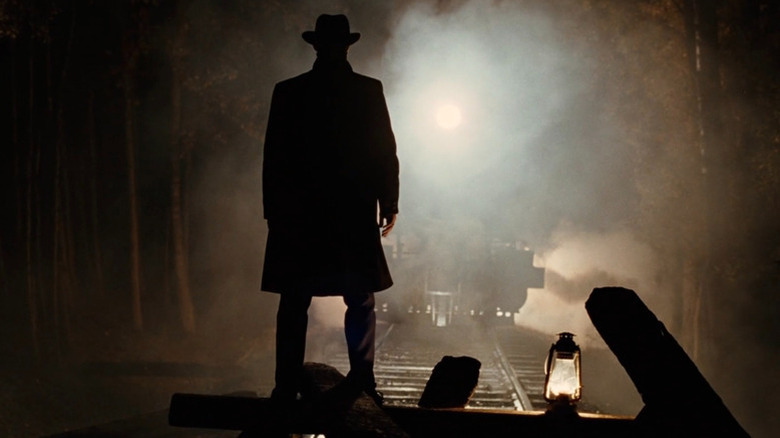
Andrew Dominik's 2007 Western "The Assassination of Jesse James by The Coward Robert Ford" has a mouthful of a title, but it invites you to consider: Which of the two named characters is the movie's lead? Legendary outlaw Jesse James (Brad Pitt)? Or the naive Robert Ford (Casey Affleck), who indeed ended James' life with a rather cowardly shot in the back of the head?
The film runs almost three hours long (and Dominik claims there's an even better and longer "Assassination of Jesse James" cut), so there's plenty of focus on both men. Robert is the POV character from the beginning, but in the first stretch of the movie, Jesse naturally swallows up your attention. He's also a surly, violent criminal, hardly the kind deserving of a fabled heroic reputation. You're not heartbroken when Robert betrays and kills him, but then the film continues into essentially an extended epilogue, where Robert lives in shame rather than with the "applause" he expected.
There's a pivotal scene of Robert, standing in a bar, hearing a folk singer playing "The Ballad of Jesse James," a song that survives to this day. (I first heard it covered by the English rock band The Pogues on their 1985 album "Rum Sodomy & the Lash.") The ballad portrays Jesse as a hero, someone who stole to feed the poor like Robin Hood did, and it lambasts Robert Ford as a "dirty little coward that shot Mr. Howard" (referring to James' alias of Thomas Howard).
Robert himself is murdered at the movie's end by another fame seeker, Edward O'Kelley (Michael Copeman). It's a fitting, cynical, and broadly true to history closing note that underlines how the legends of the Wild West became remembered as those legends.