

Harrison Ford Starred Alongside James Caan In This '60s Western We Don't Talk About Anymore
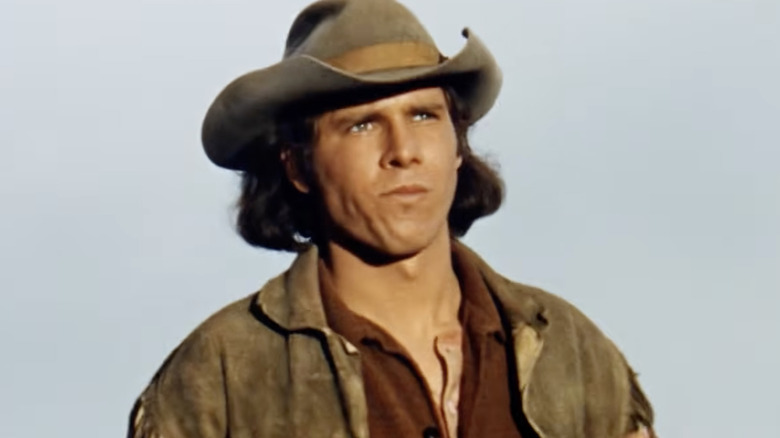
Only deep-cut Western fans may know about William Hale's 1968 film "Journey to Shiloh," which stars James Caan and Harrison Ford. The movie was scripted by Gene L. Coon, who had previously written many episodes of "Wagon Train" and was still working on "Star Trek: The Original Series" at the time. Coon had also written Western movies like "The Raiders," so one can bet that "Journey to Shiloh" is a corker. Similarly, Hale had directed episodes of "The Virginian," only adding to the movie's imprimatur.
"Journey to Shiloh" is a bleak adventure film about seven Confederate soldiers, known as the Concho County Comanches, who journey from Texas to Shiloh, Tennessee, in the hopes of joining a battle set to break out there. They're led by the stalwart Buck (Caan), and he has a bear of a time keeping his team alive on the road, including Ford's Willie Bill Bearden. Indeed, it's not hard to recognize that the movie is an allegory for the Vietnam War. Its leads are pretty much doomed from the start and quickly start dying as they travel into the figurative Heart of Darkness. (Except, instead of the Nùng River, it's the Antebellum South during the U.S. Civil War.)
It's no accident that Westerns were, at least in cinematic form, drawing to a close by the late '60s as well. The genre's heyday was kind of waning, and the more celebrated Westerns from that period tended to be the stylish so-called Spaghetti Western films from Italy. Westerns thrived on TV for a bit longer, but "Journey to Shiloh" revealed that even this all-American genre was feeling the bleak pinch of then-current events. It's a movie about death and loss, and it makes no attempt to romanticize the Confederacy. It's simply about how war eats everything.
Journey to Shiloh marked a turning point for Ford and Caan
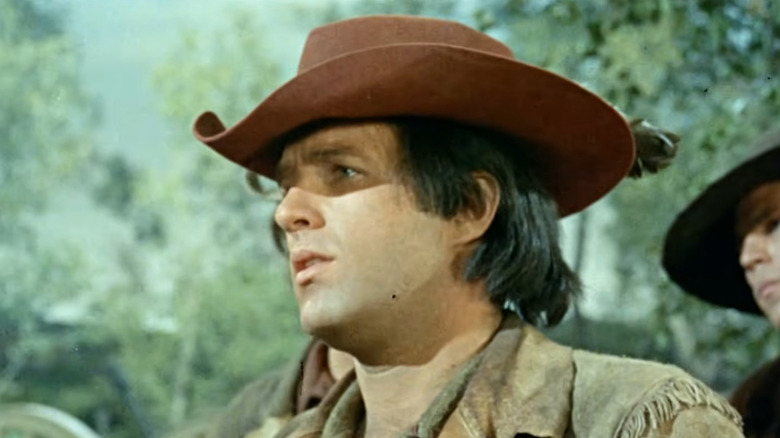
"Journey to Shiloh" is based on the 1960 novel of the same name by Will Henry, although it was likely Gene L. Coon who really played up the story's antiwar and, more specifically, anti-Vietnam War subtext. Coon, after all, wrote all-time great "Star Trek: The Original Series" episodes like "A Taste of Armageddon" (which involves a simulated nuclear war), "Arena" (itself focusing on a forced fight), and "Let That Be Your Last Battlefield" (a story about apocalyptic racism). Clearly, the screenwriter had a lock to unpack, politically.
While we may not talk about it much, "Journey to Shiloh" was also significant for being Harrison Ford's second credited movie role. He had previously appeared in the 1967 Western film "A Time for Killing" and even popped up on "The Virginian." The blockbuster legend has never ventured too far from the Western arena since then, having gone on to play multiple roles on "Gunsmoke" and co-star in oaters as different as the TV Western movie "Dynasty" and the feature film "Cowboys & Aliens." More recently, he led Taylor Sheridan's neo-Western "Yellowstone" prequel series "1923" to boot.
James Caan, meanwhile, had a few years head start on Ford, having first appeared in Billy Wilder's 1963 comedy "Irma la Douce" in an uncredited role. "Journey to Shiloh" was one of three movies that he appeared in in 1968 (along with "Submarine X-1" and the sci-fi film "Countdown"), and he soon entered a fruitful working relationship with Francis Ford Coppola, starting on 1969's "The Rain People" He ultimately collaborated with many other notable directors besides, including Sam Peckinpah, Norman Jewison, Michael Mann, and Ford's own trusted colleague Steven Spielberg. "Journey to Shiloh" was just a stop along the way in his early career.