

This 2000s War Movie With A Pricey Budget Was Dead On Arrival At The Box Office
We may receive a commission on purchases made from links.
Hollywood has had major success adapting real-life feats of wartime heroism. Clint Eastwood might wish that more people saw his underrated World War II movie "Letters from Iwo Jima," but the reviews were absolutely stellar. More recently, Sam Mendes' used his grandfather's stories about his World War I service to make the excellent "1917," and even Sam Elliott's most difficult production, the war movie "We Were Soldiers," debuted to solid reviews. But not every war film based on true events has fared quite as well. Take 2005's "The Great Raid," which told the story of how the lives of 500 American prisoners of war were saved while boring critics something fierce. It also lost a heck of a lot of money in the process.
Director John Dahl is best known for his cult 1990s hits "Red Rock West" and "The Last Seduction." He's since gone on to enjoy a prolific TV directing career. But before pivoting to the small screen, he oversaw his first war movie with "The Great Raid." The film chronicles the real-life efforts of a group of Army Rangers to rescue American soldiers from a Japanese POW camp in early 1945. It remains one of the most effective rescue attempts in U.S. military history. Unfortunately, Dahl's film wasn't quite as successful, making back a fraction of its budget and earning mixed reviews (if we're being charitable). That said, one of the soldiers featured prominently in the film, Captain Robert Prince, gave "The Great Raid" his seal of approval. So, if the man who led the real-life operation was pleased with Dahl's interpretation, what did audiences and critics have against the movie?
The Great Raid told a thrilling war story but failed to make any money
"The Great Raid" is based on the books "The Great Raid on Cabanatuan: Rescuing the Doomed Ghosts of Bataan and Corregidor" by William B. Breuer and "Ghost Soldiers: The Forgotten Epic Story of World War II's Most Dramatic Mission" by Hampton Sides. Both focus on the Raid at Cabanatuan, which took place in early 1945 and saw 110 Army Rangers (with assistance from Filipino guerrillas) set out to rescue a group of 500 American soldiers who were being held in a Japanese POW camp on the island of Luzon, Philippines.
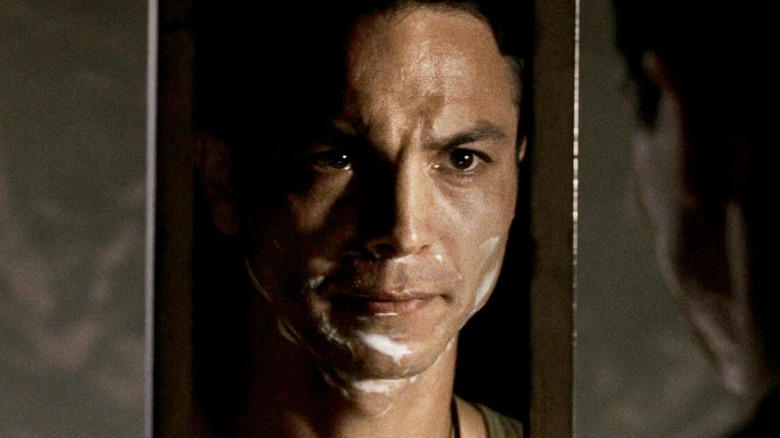
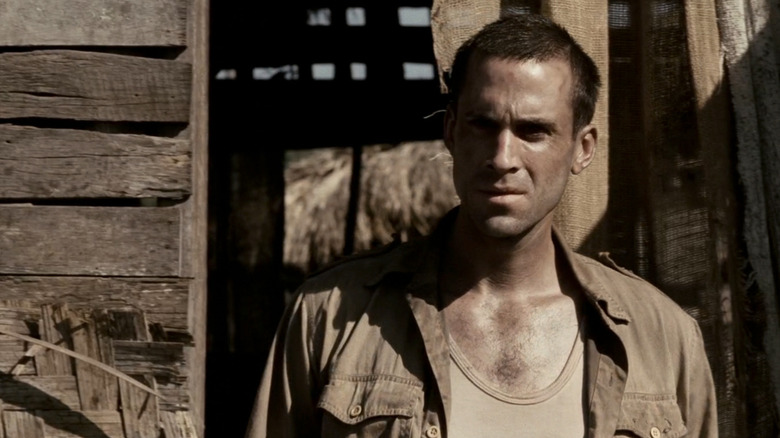
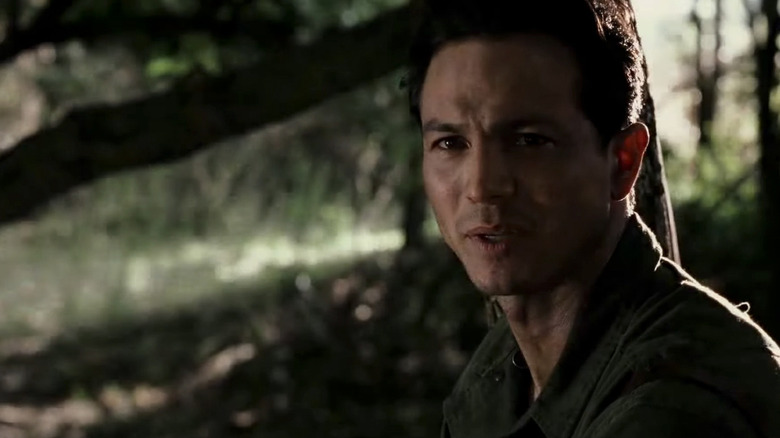
"The Great Raid" showcases how Lieutenant Colonel Henry Mucci (Benjamin Bratt) enlists Captain Robert Prince (James Franco) to lead the 6th Ranger Battalion on this daring mission. With Prince leading the charge, the rangers must go 30 miles behind enemy lines to save their fellow soldiers, who've been held captive for three years and face execution at the hands of the Japanese. Joseph Fiennes plays Major Daniel Gibson, the captives' malaria-stricken senior officer whose partner, Nurse Margaret Utinsky (Connie Nielsen), is trying to help by smuggling medicine into the camp. But Utinsky's efforts are discovered, and she's imprisoned just as the rangers formulate their plan and prepare to pull off one of the most dangerous missions of World War II.
As thrilling as that sounds, "The Great Raid" was, in the estimation of many a critic, a drag of a war movie that could nonetheless conceivably be given another chance in the age of the dreaded streaming movie. One thing it can't do, however, is make back its budget. The film only managed to gross $10.8 million at the box office against a budget as high as $80 million, making it a major financial failure.
Critics mostly thought The Great Raid was a great bore
"The Great Raid" isn't as bad as, say, the John Wayne-led disaster that is "The Green Berets" (a film that Roger Ebert once described as "cruel and dishonest"). But so far as war movies based on true stories go, it's hardly a triumph.
At the time of writing, the film has a 39% critic score on Rotten Tomatoes based on 119 reviews. Marc Savlov of the Austin Chronicle blamed "enough chatty exposition to sink the Bismarck" for undermining a movie that otherwise had "the makings of a fine, moving, epic war film." Other reviewers similarly lamented the movie's plodding pace and uncanny ability to make a thrilling rescue mission feel underwhelming.
That said, while The Washington Post's Stephen Hunter admitted that "one might have wished for a better movie," he also found the film to be "a riveting, even inspirational account of an American feat of arms about which few know but about which many more should." What's more, Robert Prince, the man who led the rescue operation, was — according to Seattle PI — pleased with the film. According to the outlet, Prince thought "The Great Raid" captured the spirit and significance of his mission. It might have helped that he wisely pushed back against John Dahl's attempts to, as Seattle PI put it, "turn him into a John Wayne." As the former Ranger told the outlet, "Let's set something straight. We all worked together. I had no bigger impact than Colonel Mucci."
At least, then, Dahl can rest assured that the man who was actually there at the real-life raid liked his film well enough. Otherwise, "The Great Raid" has been mostly forgotten, although it's available to rent from the usual digital platforms.