

Clint Eastwood Wishes More People Had Seen His Underrated World War II Movie
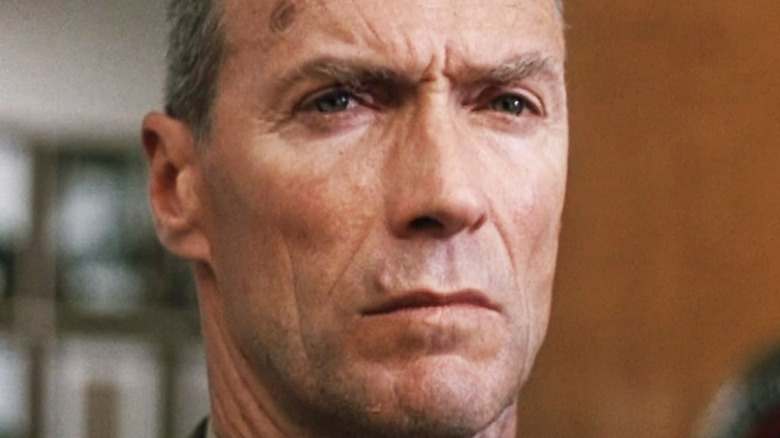
In 2006, Clint Eastwood oversaw one of the most ambitious war movie projects ever, directing "Flags of Our Fathers" and "Letters from Iwo Jima" back-to-back to dramatize two different perspectives on the Battle of Iwo Jima. But while the former made $33.6 million at the domestic box office, the latter made less than half of that. For Eastwood, that was a real shame, as he'd wanted American audiences to see war from a different cultural perspective.
The Battle of Iwo Jima took place in February and March of 1945 and saw Allied forces storm the island of Iwo Jima, clashing with the Imperial Japanese Army before ultimately overcoming their opponents and raising an American flag on the island. It was a bloody conflict that ended after almost 7,000 US Marines and 18,000 Japanese soldiers had lost their lives. "Flags of our Fathers" depicted the battle from the perspective of the Marine Corps and Navy soldiers, while "Letters from Iwo Jima" showed the Japanese perspective.
Eastwood has made no secret of his conservative leanings over the years, but in 2006 he actually managed to make two films that were critical of war. That's more than can be said for his less than accurate 2014 effort "American Sniper," which faced criticism for its simplistic depiction of the Iraq war and jingoistic undertone. But Eastwood intended for "Letters from Iwo Jima" in particular to make audiences uncomfortable, and ultimately earned praise for his willingness to depict the the horrors of war, and for delivering an intimate portrait of the Japanese soldiers involved. Despite all this, however, "Letters from Iwo Jima" only made $13.7 million in the United States, earning most of its $68 million gross overseas and becoming much more commercially successful in Japan.
Clint Eastwood was disappointed in Americans for not seeing Letters from Iwo Jima
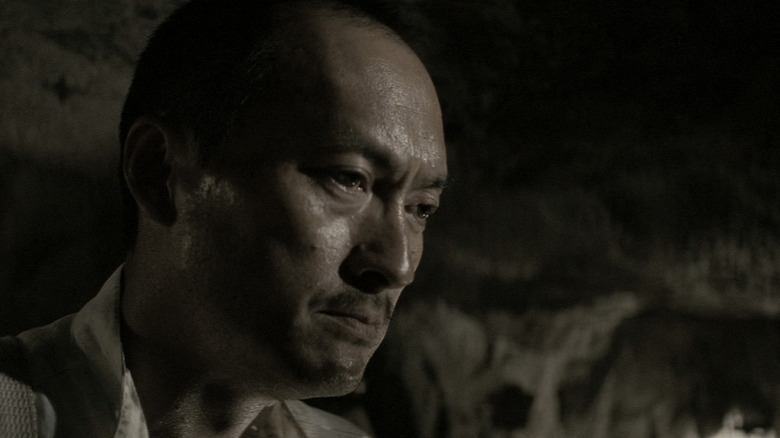
"Letters from Iwo Jima" might just be Clint Eastwood's best war movie, and easily one of the best true-story war movies. General Tadamichi Kuribayashi (Ken Watanabe) and his soldiers' resilience in the face of certain defeat makes for a truly moving story that never once falls into the all-too common trap of depicting non-Western forces as inherently bad. In that way, it encapsulates the central idea that guided Eastwood in making "Flags of Our Fathers" and "Letters from Iwo Jima:" that war is simply traumatic and ultimately bad for everybody involved.
Sadly, Western audiences didn't turn out for "Letters" in the same way they did for "Flags," and it seems Eastwood never really got over that. Back in 2011 he spoke to GQ while promoting his J. Edgar Hoover biopic "J. Edgar" and was asked which of his films he'd like to encourage audiences to see. Eastwood pointed to "Letters from Iwo Jima" and the less-than-ideal box office turnout stateside. "We made [it] for just $12 million," he recalled. "In Japan it did sensationally. But I wish more people had seen it here — just for the understanding of how war affects other societies."
The director pointed to what he dubbed "a constant heroism in being sent someplace and told you're never coming back," which is, as Eastwood describes it, how Japanese soldiers were sent off to war. "You couldn't sell that to too many Americans," he continued, before speaking to the popularity of comic book movies and the Marvel Cinematic Universe at the time. "I had no delusions that the film was going to be any more successful than it was. But I would just love audiences to embrace more things than just comics."