

You Can See Everything Review: A Mystifying Masterwork Of Mind-Melting Manipulation
Take Elizabeth Holmes — one of the world's most famous fraudsters, currently serving 11 years in prison after being convicted of wire fraud and conspiracy for her part in the deceptive creation of the supposed medical testing marvel Edison from Theranos — and Nathan Fielder — a deceptive comedian known for manipulating and tricking small business owners and many more with his meta documentary style TV shows like "Nathan for You" and HBO's original series "The Rehearsal," each packed with awkward, uncomfortable humor that brings about insightful social commentary — and you have a brilliant match of manipulators that makes for one of the most riveting movies of 2026.
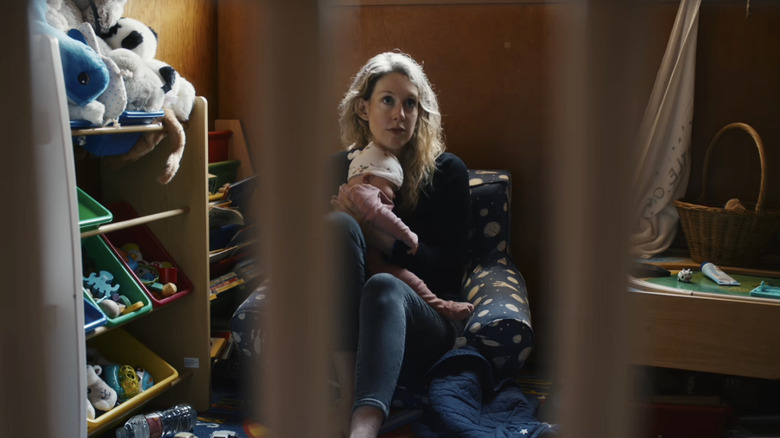
Lance Oppenheim (fresh off Robert Pattinson's dark, unsettling "Primetime") and Nathan Fielder both direct "You Can See Everything," a new documentary that showcases the private life of Elizabeth Holmes for 34 days before she is carted off to federal prison. Living in a somewhat modest beach house in San Diego with her boyfriend Billy Evans, a hotel heir and entrepreneur, and their two children, the couple is adamant that the filmmakers "can see everything," as they apparently have nothing to hide. That includes their development of what is basically Theranos 2.0, as Holmes is still dedicated to following through on the promises she made that landed her in prison.
Of course, everyone is immediately skeptical that the documentary is merely a ploy for Holmes to reframe her narrative and relaunch Theranos. Fielder himself engages with Holmes on this very topic, wondering out loud if she invited filmmakers like him and Oppenheim to make the doc because their lack of science knowledge might keep them from prying too deeply into the presumed deception that everyone believes is taking place again. He also hilariously creeps behind the camera from a distance, observing through windows. But very quickly it becomes clear that this is a documentary that only Nathan Fielder could make.
You Can See Everything might be long, but it's endlessly compelling
Amusingly, Nathan Fielder points out to Holmes and Evans that it's rather funny that he created and starred in a TV show about business scams, and now he's making this documentary about someone accused of creating one of the biggest business scams of all time. Throughout the film, Fielder poses equally funny and honest observations and questions, helping to make the movie's 174-minute runtime truly feel like a breeze. But it's what Fielder and Oppenheim observe of their subjects during these 34 days that keep the movie endlessly compelling, fully earning that nearly three-hour commitment.
One of the touch points of "You Can See Everything" comes when Fielder tries to understand why Holmes doesn't believe that she committed a crime, and it basically comes down to semantics. Holmes says that she and her former business partner and lover Ramesh "Sunny" Balwani said that Theranos' proposed Edison device could run hundreds of blood tests from just a few drops of blood, and it fully has the capability to do so, but it's the chemistry behind these tests that needs to catch up in order to make it viable, which is why investigations showed it could perform only a small number of tests and relied mostly on conventional lab machines.
In her mind, Holmes and Balwani apparently delivered what they said they would, and it's science that needs to catch up. She believes that she made it clear in her phrasing that the device was capable of this, but that the limitations outside of their purview made it so that the device could operate correctly, and everyone else simply misunderstood. Evans backs up her claims by explaining that her mind just works differently from everyone else's. Sounds like nonsense, right? Well, not so fast.
It's not clear who is manipulating who in this movie
To explain how this conversation made Fielder feel while they were having it, he puts on "Who's on First?," the famous comedy sketch from Abbott & Costello (also responsible for one of the greatest horror comedies ever). Though Fielder touts this as one of the most famous comedy bits of all time, both Holmes and Evans are unfamiliar. If you're like them, the gist is that a reporter played by Lou Costello is trying to learn the names of the players on a baseball team, and the manager played by Bud Abbott keeps trying to tell him that "Who" is the name of the player on first base, "What" is the name of the player on second, and "I Don't Know" is the player on third. The confusion comes when Costello thinks Abbott isn't telling him the names.
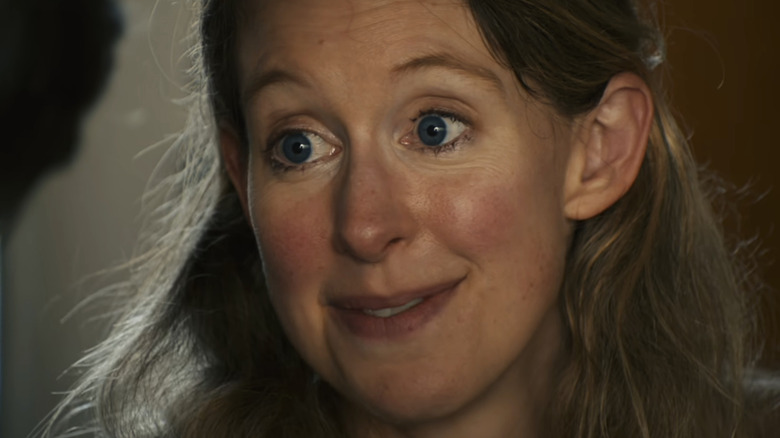
Strangely, Holmes doesn't really grasp the comedy of the bit, or at least she claims not to. Yes, this could all be part of her master manipulation to keep playing clueless, so she can appear to be innocent in her convicted deception. But she genuinely does seem like maybe she doesn't understand the concept, implying that maybe her mind does have some kind of logical disconnect, and Evans believes it's good that she doesn't understand, because it further proves that observation.
However, this is just the tip of the iceberg of revelations that will make you question whether or not Elizabeth Holmes is maybe less of a brilliant manipulator and more of an unfortunate bystander taken advantage of by scheming businessmen merely trying to ride her coattails to increase their fortune (more on that in a moment), especially when you take in the full breadth of how deceptive and controlling Billy Evans becomes throughout the movie. Even if you think you know the full story, you really don't.
Billy Evans is a chilling subject in You Can See Everything
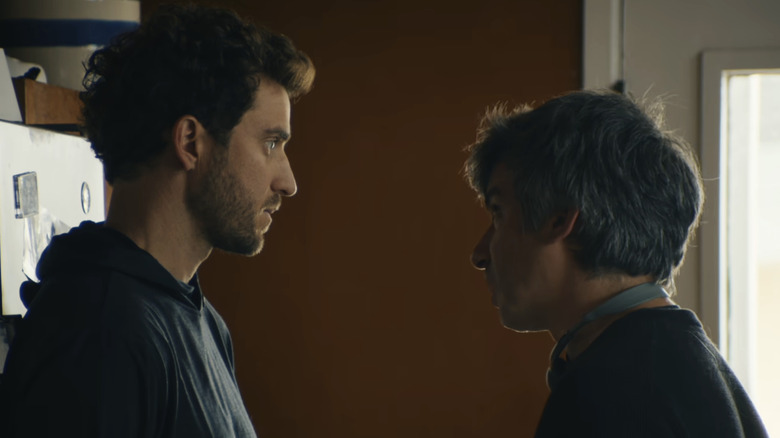
Without spoiling any of the shocking revelations that come in the back half of "You Can See Everything," let's just say that Billy Evans might be the most heinous villain of 2026. It begins when Holmes is answering questions from Fielder while whisking some eggs for breakfast, and without saying anything, Evans walks over and takes the bowl and fork she's using to whisk them himself. Fielder, never shy about an awkward question, flat out asks why he did that. The exchange that follows is the kind you observe in a relationship where the man just takes control while the woman quietly backs away. It's only the beginning of far more manipulative and deceitful actions that Evans takes later in the movie.
The darkness of Evans truly comes through once Holmes is sent off to prison. Believe it or not, that happens about halfway through the movie. So how does a documentary about Elizabeth Holmes continue without its subject easily accessible? The answer to that lies in "The Dropout," the Hulu series that dramatized the life of Elizabeth Holmes and the Theranos scandal. However, the magnitude of the show's presence in the movie would require some major spoilers, and when "The Dropout" becomes even more prominent in this documentary beyond merely watching it alongside Holmes and Evans (which Fielder does, at least for as long as Holmes can stomach it), let's just say the film takes a sharp turn into territory that will feel very familiar to fans of "The Rehearsal." This is also where Evans becomes much more scary as a person. But there's an additional fascinating layer of intrigue that only becomes clear in the movie's mystifying final act.
You Can See Everything is thoroughly satisfying, even for those unfamiliar with Elizabeth Holmes
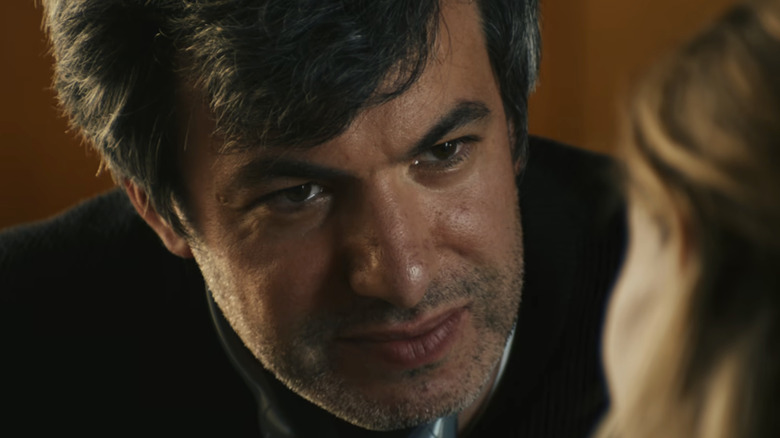
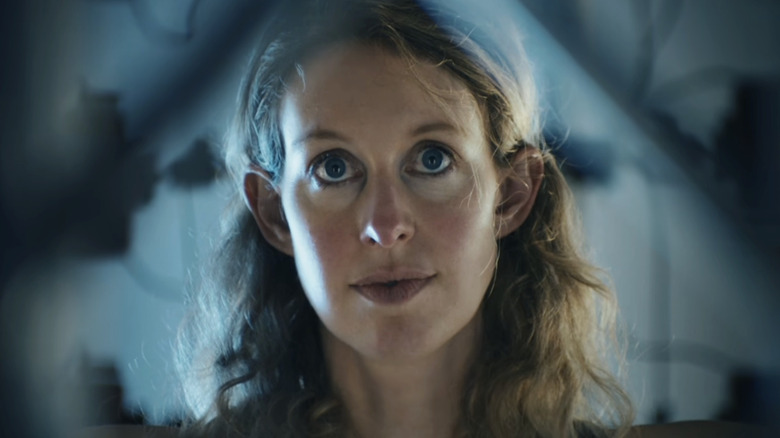
To say "You Can See Everything" is a revelation just might be underselling it. And I'm saying this as someone who only ever had more than a mild, passing interest in the story of Elizabeth Holmes. My knowledge of the situation was fairly limited, and I hadn't even watched Hulu's series "The Dropout" to understand more, albeit through the lens of Hollywood. But this documentary is one of the most engaging, confounding, mesmerizing, and mind-blowing films that I've ever seen. You'll be glued to the screen as you watch Holmes and Evans and their unsettlingly unblinking facial expressions in extreme close-ups, as the camera tries to help us understand if we're being told the truth. The same can be said for its observation of Fielder throughout.
In fact, Nathan Fielder's presence in this documentary is maybe one of the most brilliant creative decisions made, and as the filmmakers have revealed in Q&A sessions leading up to the film's premiere, it came about gradually and naturally. It's maybe the only thing that could have made the highly publicized story of Holmes interesting again. But "You Can See Everything" also brings with it Fielder's baggage, which will make you question how much of his side of the story that ends up unfolding is real, especially when it comes to the film's conclusion. That's really more of a feature than a bug though. Don't go into this movie expecting to have answers to any questions you might have about either Holmes or Fielder, because you'll just end up coming out with more questions. But somehow, that's actually incredibly satisfying.
/Film Rating: 10 out of 10
"You Can See Everything" opens in theaters on October 16, 2026.