

Running Man: Glen Powell Knows Why His Stephen King Adaptation Barely Impacted The Box Office
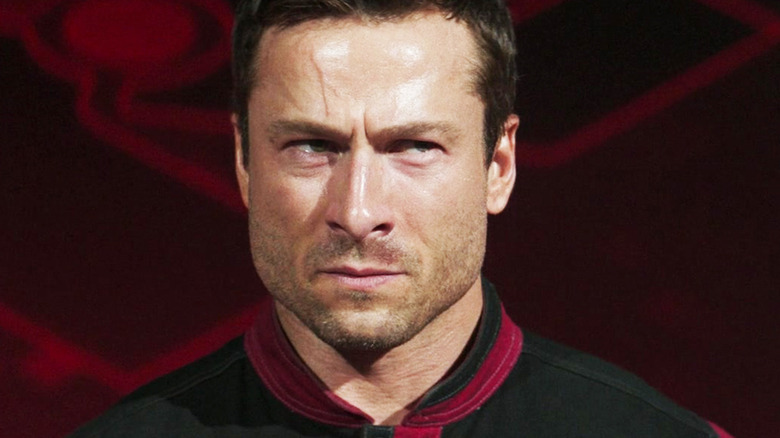
2025's "The Running Man" did not fare well at the box office, and according to star Glen Powell, it was all due to mass layoffs at Paramount Pictures just prior to the film's release.
On paper, "The Running Man" seemed like a pretty safe bet. Leading man Glen Powell's star was on the rise after having appeared in hits such as "Top Gun: Maverick," "Twisters," and his frisky fun rom-com "Anyone But You." It wasn't clear that audiences saw those movies solely for Powell, but thankfully "The Running Man" also had the benefit of Hollywood's favorite thing: familiar IP. The film was, of course, based on Stephen King's 1982 novel of the same name, which inspired the 1987 Arnold Schwarzenegger movie adaptation. Throw in director Edgar Wright and you've got a pretty good shot at box office success.
Sadly, upon hitting theaters on November 14, 2025, Wright's "The Running Man" promptly flopped. The movie made $69.5 million on a $110 million budget, which isn't the biggest disaster in the history of Hollywood, but considering studios typically have to make well over double the budget just to break even, it ain't great.
So, what went wrong? Well, there's almost certainly more than one answer to that question: some combination of audiences being disinterested in 40-year-old IP, perhaps Powell's still-burgeoning star power, and box office competition. But according to Powell, it all came down to Paramount having laid off its marketing department.
Glen Powell blames Paramount layoffs for The Running Man's box office troubles
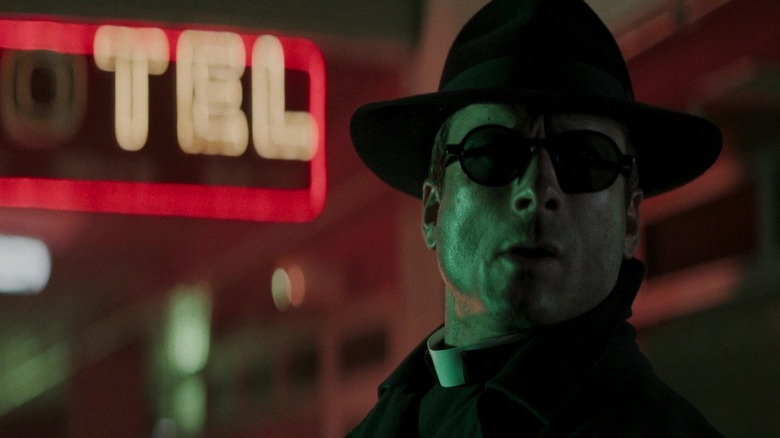
Glen Powell's charm couldn't keep "The Running Man" from stumbling, and audiences ended up with a kind of cool adaptation of Stephen King's novel that they weren't really asking for in the first place. But if you ask Powell himself, he has a specific reason why the film didn't work out financially.
In an Esquire profile, the actor was asked about "The Running Man" and its box office misfortune. "They let go of an entire marketing department a month before our movie came out in the middle of a merger," he said. Paramount did indeed carry out mass layoffs in October 2025, ahead of the November 14, 2025 release of "The Running Man." As The New York Times reported back in October, the company had begun laying off more than 2,000 employees following its merger with Skydance — which now officially oversees both Warner Bros. and Paramount following the even more recent merger. Deadline also reported at the time that executives in "production, marketing, music, and more" were affected by the October cuts.
So, it seems there may be some truth to Powell's claims about Paramount's marketing of "The Running Man," and it's certainly a neat way of distracting from any other possible failings. But at the end of the day, the marketing, or lack thereof, is just one small part of a bigger picture that involves all sorts of factors.
The Running Man had bigger problems than marketing
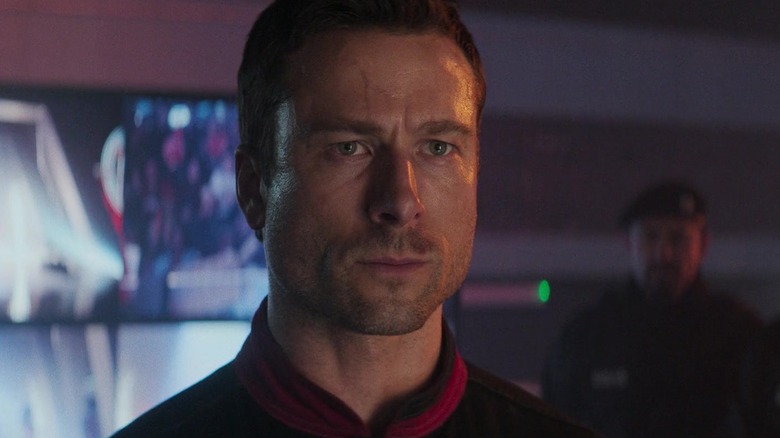
While marketing may have had something to do with "The Running Man" stumbling at the box office, there was so much more that went into it. For one thing, the film earned a 63% critic score on Rotten Tomatoes, which wasn't terrible but also wasn't going to convince anyone to rush out and see the movie. Similarly, word of mouth just wasn't what it could have been, and this is all happening within a larger framework of rising costs and streaming services cutting into box office profits. These days, a $110 million feature really has to be seen as an event movie to make any decent profit, and "The Running Man" just didn't have that feeling.
Elsewhere, Edgar Wright addressed his film's box office woes. The director spoke to Empire (via Female First) and played down the significance of the commercial performance. "It's a weird thing that happens with all films, where their box office is treated like football results," he said. "I'm proud of the movie. There's a lot to talk about, and there is a life beyond the opening weekend."
Meanwhile, the writer of the 1987 "The Running Man," Steven E. de Souza, told The Hollywood Reporter that he had read the script for Wright's version but hadn't seen the movie. "On paper, they got the ending working," he said, before alluding to reviews that claimed the film bungled the ending. "Even the reviews that love it say it stumbles at the end. It seems to me that this time around, something went wrong between the page and the stage again." Hey, at least Stephen King liked the ending of Wright's "The Running Man."