

31 Years Ago Today: Brad Pitt Released A Crime Thriller That Changed Cinema Forever
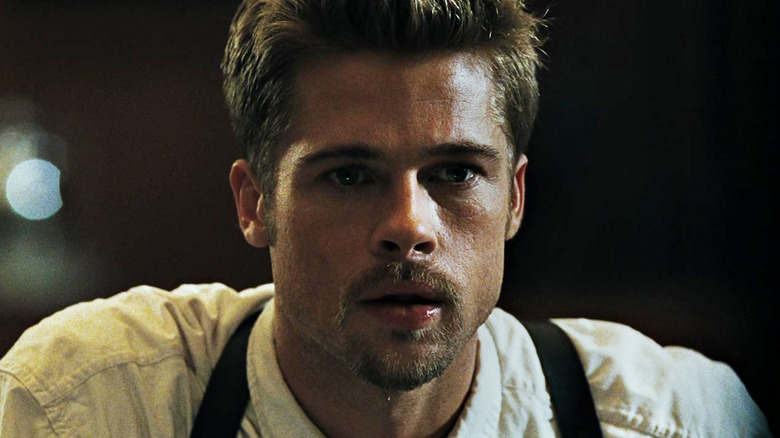
On September 22, 1995, David Fincher's "Seven" bowed in theaters. The film made $329.8 million at the box office on a $33 million budget, debuted to positive reviews, and came to represent a blueprint followed by almost every crime thriller in its wake. Beyond that, "Seven" arguably influenced cinema as a whole, which today still bears the mark of Fincher and director of photography Darius Khondji's alluringly grim cinematography. Not bad for a movie that, on paper, should have been dead on arrival.
In 1995, Brad Pitt was not the icon we know him as today. The appeal he had accumulated was based on what he described to the Los Angeles Times at the time as "the cheese." Meanwhile, Fincher was coming off the troubled production of "Alien 3," which culminated in the then most critically-maligned entry in the "Alien" saga. Add to that the fact that "Seven" is about as bleak a crime thriller as possible, not to mention its abject downer of an ending, and you've got a film that should have withered at the box office like John Doe's sloth victim. Instead, it overcame the odds.
In retrospect, it's not hard to see why. "Seven" is like a song you swear you've heard before — a by-product of the fact that, since its release, the movie has become a reference point for so many other projects that it's hard to imagine a time before it. Everything from crime dramas to horror and even superhero movies and TV shows owe "Seven" a debt of gratitude. 31 years later, then, it's even more important and relevant than it was in 1995.
Seven is the modern crime thriller gold standard and much more hopeful than you think
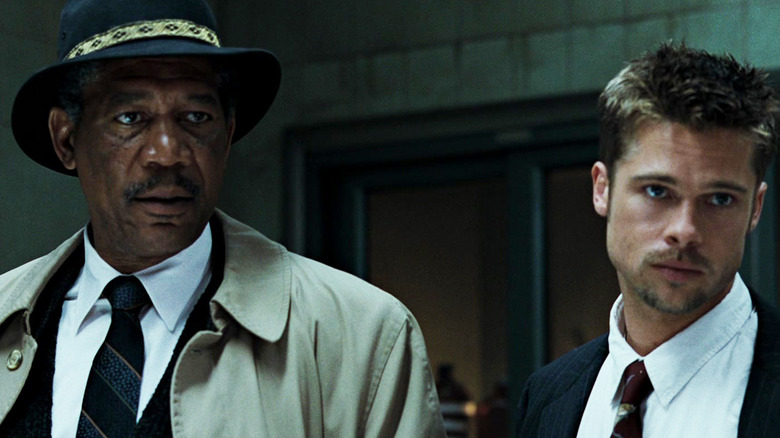
The influence of "Seven" can be seen everywhere today. There are obvious comparisons such as the "Saw" franchise and 2022's "The Batman" which was basically just "Seven" in Gotham City. Then there's the similarly stellar "True Detective" Season 1, which felt like an evolution of what David Fincher started back in 1995. Even HBO Max's "Lanterns," which pairs a hopeful rookie with a jaded veteran, feels indebted to "Seven." None of these examples, however, have done what Fincher and writer Andrew Kevin Walker did in the mid-1990s.
Walker wrote the film after moving to New York City and being shocked by the social decay of his new environment, where deadly sins were overlooked daily by desensitized denizens of an urban nightmare-scape. At least, that's how he dramatized the experience in "Seven," which takes place in an unnamed city where a serial killer is murdering their victims for having committed one of the seven deadly sins.
Brad Pitt plays rookie detective David Mills, who's paired with Morgan Freeman's world-weary veteran William Somerset to try to solve the case. They're mismatched, but only on the surface. Mills is really a reflection of Somerset's buried idealism, which lingers beneath his feigned apathy. Indeed, "Seven" is a movie all about the limits of apathy, demonstrating how Somerset's jadedness only leads to more pain and misery. In that way, the film urges its audience to remain hopeful, and stay engaged. You'd be forgiven for missing that, though, considering the rest of the movie is a claustrophobic nightmare that takes place in a city reminiscent of how production designer Anton Furst described his vision of Gotham in 1989's "Batman." ("As if Hell erupted through the pavement and kept on going.")
Overcome your own apathy, and watch Seven on its 31st anniversary
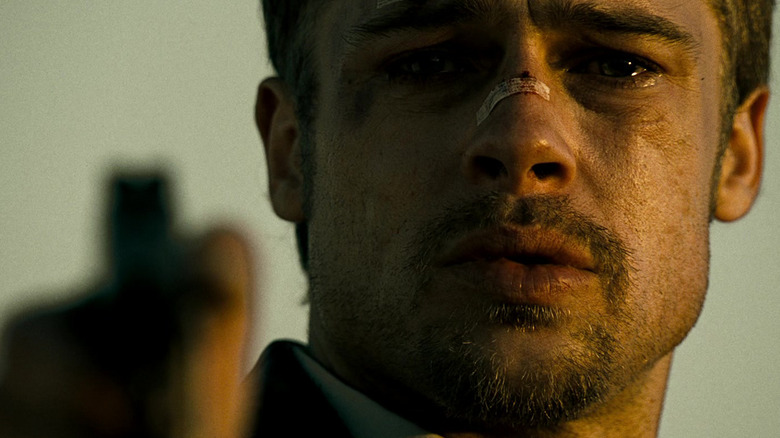
"Seven" didn't invent the buddy cop drama, but it did update it for a new generation in a way that immediately established it as a seminal point in the lineage of the crime thriller. Though its environments were grim crime scenes, dingy apartment hideouts, and urban decay-scapes menaced by unending rainstorms, every one of them was so meticulously realized, lit, and shot that "Seven" is an inescapably aesthetic film. Tactile, rich, and immersive in a way that many have tried to emulate, the world of "Seven" set a precedent for every investigative thriller and police drama that came in its wake.
Yet, unlike so many imitators, there was a point to this captivatingly somber production design and cinematography. You were supposed to feel drawn into the hellish reality of "Seven" because apathy and the promise of abandoning the pain that comes with caring is enticing. As wretched as these hives of decay were, they, too, drew you in.
"Seven" has influenced so much more than the crime genre, too. David Fincher's decision to keep almost all the gore and violence off-screen and allow viewers to construct the horrors of the story within their own mind takes "Seven" from a seminal crime thriller to an incredible accomplishment in horror filmmaking. Darius Khondji's embrace of dimly lit rooms and chiaroscuro also means "Seven" is — for better or worse — one of the hinge moments in the evolution of today's dark movies and TV shows. It's hard to overstate its influence, and even harder to imagine there's still people who might never have seen it. If that's you, take this opportunity 31 years after its original release to overcome your own apathy, and watch "Seven."