

5 Best Sci-Fi Movies From 1991, Ranked

35 years ago, the top-grossing films at the 1991 global box office didn't look as different from those for 2026 as you might expect. There were sequels that vastly outperformed the movies that had come before them ("Terminator 2: Judgement Day"), swashbuckling adventure films based on much-adapted literary epics ("Robin Hood: Prince of Thieves"), contentious true story-based dramas ("JFK"), and horror flicks that brought something new and exciting to the genre ("The Silence of the Lambs"). And even back then, Steven Spielberg was making strange movies that had folks up in arms either fiercely defending them or ripping them a new one ("Hook").
You could say the same thing for science fiction films in 1991. Franchise installments and sci-fi adjacent superhero romps did big commercial business, but wholly original creations (which does not include adaptations) were scarce to be found. Things hadn't changed much by the time 1996 rolled around five years later, with the uber-popularity of that year's "Independence Day" being the exception proving that sci-fi wasn't a surefire means to making a quick buck in theaters. The best sci-fi movies of 1996 are a motley crew because of that, with dazzling visual effects blockbusters, bizarro director-driven efforts, silly-clever comedies, pulpy actioners, and "Star Trek" features among their ranks.
You can probably see where we're going with this, as that more or less sums up our picks for the best sci-fi movies of 1991 as well. (There really is something to that Doctor Manhattan "It is 1985..." meme sometimes, isn't there?) So, let's dive right into this grab bag and discuss what makes the following titles either worth revisiting or finally checking out three and a half decades after the fact.
5. The Rocketeer
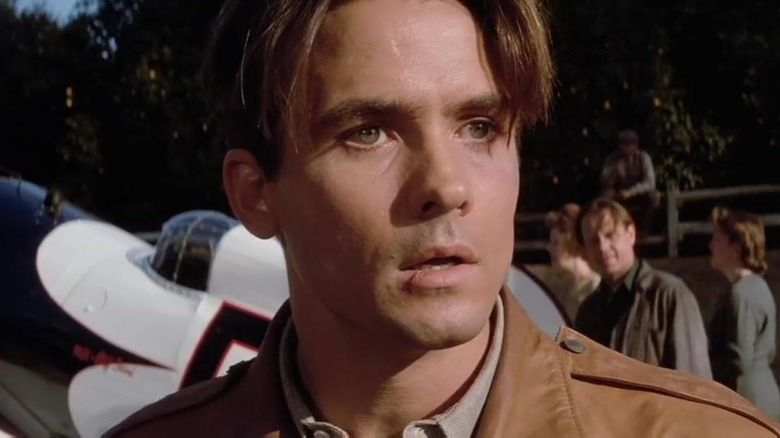
Don't misunderstand: "The Rocketeer" is a heckuva grand old time. The only reason director Joe Johnston's comic book flick is ranked last here is because its actual sci-fi aspects basically amount to, "What if you could build a rocket pack that miraculously didn't burn off your keister when you used it?" Johnston and his collaborators then take that simple idea and run with it, serving up a thrill ride teeming with whiz-bang action scenes, dastardly villains, and that one guy who yells, "It's the Rocketeer!"
Set in 1938 Los Angeles, "The Rocketeer" follows struggling stunt pilot Clifford "Cliff" Secord (Billy Campbell) as he stumbles upon a mysterious rocket pack. Cliff eventually uses the gizmo to turn himself into a masked superhero, unaware that Neville Sinclair (Timothy Dalton), an Errol Flynn-like celebrity famed for playing dashing swashbucklers on the big screen, has his eye on retrieving the gadget for his nefarious benefactors. Jennifer Connolly co-stars as Cliff's girlfriend Jenny Blake, an aspiring actor who ends up entangled in all this, while Paul Sorvino gets one of the all-time great movie moments as Eddie Valentine, the gangster boss who finds himself roped into doing Sinclair's dirty work.
"The Rocketeer" is everything you could ask for from a World War II era yarn of derring-do. Its plot is light on its feet, it boasts slick production design and snazzy visual effects that've aged pretty well, and its cast does standout work in their respective roles (which includes Alan Arkin as Cliff's gruff mechanic pal "Peevy" Peabody). Far from a thought-provoking piece of science fiction, it's a movie that will absolutely fulfill any fantasies you have of strapping a rocket pack onto your back and saving the day of your own accord.
4. Naked Lunch

"Naked Lunch" might be David Cronenberg's most baffling picture, but it's not the cult favorite filmmaker's most science fiction-y. It's really more of a surrealist exercise that adapts Williams S. Burroughs' off-the-wall 1959 novel of the same name into a movie that's only marginally more narratively conventional in comparison. A lack of hard sci-fi bonafides aside, though, this one is just too memorably perplexing, yet clear-minded about what it's even going for, to leave off this list.
Peter Weller (the man behind the helmet visor in the original 1987 "RoboCop") stars here as the thinly-veiled Burroughs avatar William Lee. As with director Luca Guadagnino's film version of the author's novella "Queer," Cronenberg's "Naked Lunch" blends events from Burroughs' real life (namely, when he killed his second wife, Joan Vollmer, by shooting her during a game of William Tell) with elements of pure fiction. Yet, as much as "Queer" can play like a stylishly bad fever dream, it's go nothing on the odyssey of doppelgängers, paranoia, and confounding (not to mention, sometimes unsettlingly sexualized) insectal imagery that "Naked Lunch" takes you on.
Drug addiction serves as the core theme of Cronenberg's movie, much more so than it does in "Queer." However, where the latter deals with the issue in a realistic setting with more focus on the physical harm it causes, "Naked Lunch" is an elaborate and twisted metaphor for the destructive effect of drug abuse on the mind. It's a film that uses wholly outlandish and fantastical sci-fi concepts (like a fleshy, living typewriter) to explore much more grounded notions related to the human experience as only the genre can. Also, bug stuff. Like, a lot of bug stuff.
3. Bill & Ted's Bogus Journey
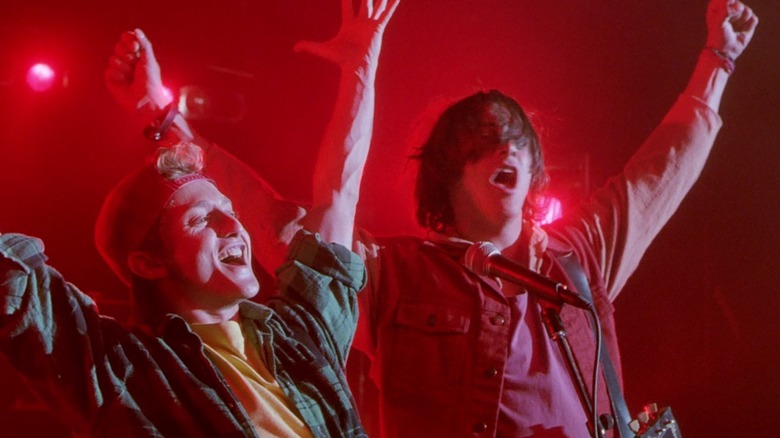
If you've ever watched "The Seventh Seal" and come away thinking Ingmar Bergman's 1957 black-and-white rumination on the challenges of having religious faith would've been better if Max von Sydow's spiritually conflicted knight Antonius Block had given Death (Bengt Ekerot) a "melvin" (look it up, kids), then have I got the movie for you.
Director Peter Hewitt's "Bill & Ted's Bogus Adventure," a sequel to the hit 1989 comedy "Bill & Ted's Excellent Adventure," does, in fact, pay homage to Bergman's classic by pitting the titular duo (Alex Winter and Keanu Reeves) against Death himself (William Sadler) after they're killed by their evil future robot counterparts (also Winter and Reeves). Naturally, this is all part of a wicked scheme to prevent the utopia that Bill and Ted are destined to usher in once they've completed their journey from inept slackers to radical musicians. Much absurdity ensues, and it's all pretty charming ... assuming you can appreciate the wildly dated early 1990s cultural stuff (and make your peace with anything that's aged badly over the decades).
What's kind of incredible is that the "Bill & Ted" movies actually do a better job of depicting time travel than other, much more serious sci-fi films do. That's even the case with "Bogus Journey," as the movie's internal logic is shockingly airtight when it comes to the theoretical mechanics of time travel and how it might work. And far from being extraneous, the film's sci-fi elements are quite essential to the story about its himbo heroes learning to grow up without losing their joyful spark. Cue the electric air guitar!
2. Star Trek VI: The Undiscovered Country
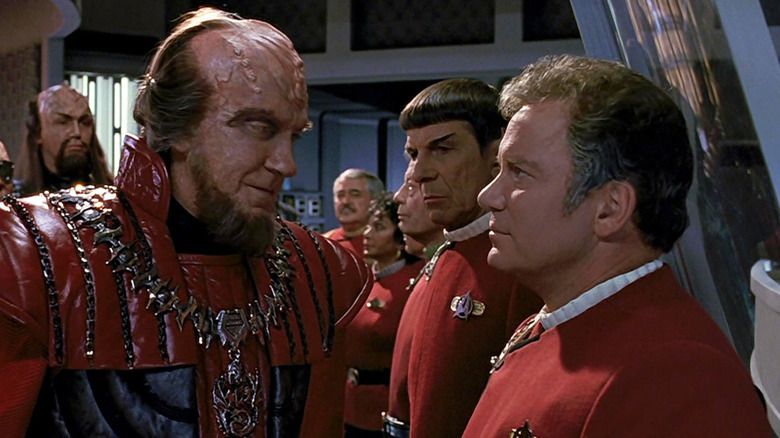
"There is an old Vulcan proverb: Only Nixon could go to China." So Spock (Leonard Nimoy) tells an infuriated James T. Kirk (William Shatner) when the latter demands to know why his longtime friend and fellow Starfleet officer has "vouched" for Kirk to play a key role in ongoing peace talks between the Federation and Klingon Empire in "Star Trek VI: The Undiscovered Country." More than just an all-time great "Star Trek" quote, Spock's reply gets to the thematic heart of what just might be the best "Star Trek" movie ever made (or certainly one of them).
Released in theaters some three weeks before the Soviet Union formally dissolved in December 1991, "The Undiscovered Country" isn't remotely subtle about drawing parallels between its plot and the real-life end of the Cold War between the United States and Soviets ... nor should it be. Yet, as much as it speaks directly to this specific moment in history, "Star Trek VI" works just as generally as a tale about how idealists grow conservative. In this case, it's Kirk who finds himself struggling in a world where it's no longer acceptable for him to perceive Klingons as a monolithic "enemy" and having to make peace with his personal demons to find a better way forward. Even in the utopian "Star Trek" universe, there's always room for improvement.
With Nicholas Meyer at the helm, "The Undiscovered Country" features visually engaging, tightly-constructed action on the same level as Meyer's riveting work on "Star Trek II: The Wrath of Khan." Here, though, the spectacle is married to a compelling sci-fi political thriller story (one co-written by Nimoy). That makes this something of the Platonic Ideal of a "Star Trek" film and a strong contender for this list's number one spot.
1. Terminator 2: Judgement Day
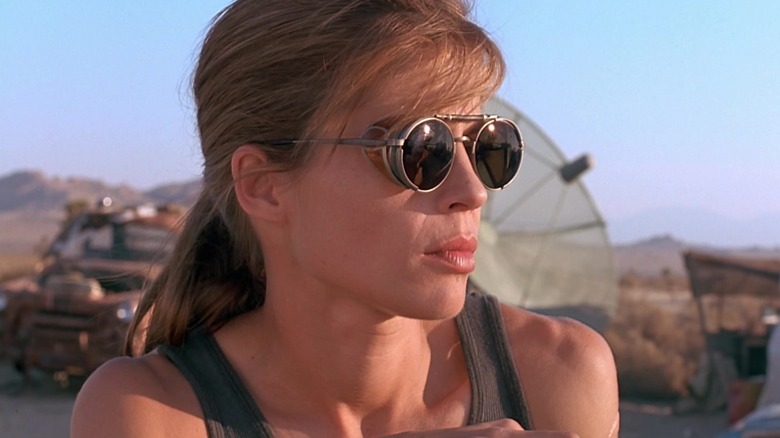
What else could go here? James Cameron's sequel to his scrappy 1984 sci-fi flick (and not-so-secret slasher) "The Terminator," this is genuinely one of the most iconic action movies ever made. From the ground-breaking digital effects used to transform Robert Patrick into the killer "liquid metal" robot the T-1000 to the film's impeccable vehicular chases across the flood control channels and roads of southern California, "Terminator 2: Judgement Day" remains a high mark when it comes to Grade-A, big-budget filmmaking. That it's also filled with haunting imagery, namely in the sequence where Linda Hamilton's Sarah Connor (herself an emblematic heroine) dreams of the titular impending nuclear apocalyptic event, that's just Cameron showing off.
35 years later, though, it's the questions that the movie's time-travel sci-fi plot raises about fate and humanity's proclivity for self-destruction that really bake your noodle. "Terminator 2" isn't nihilistic about what might await humankind in the future so much as pragmatic when it comes to our strengths and weaknesses. As Sarah matter-of-factly states in what's perhaps the greatest anti-AI scene in film history, it's when we (or, more accurately, hubristic tech types and billionaires) ignore or dismiss the inherent value of every life that we risk causing irreparable harm. And we don't need to create AI machines that go rogue and bring about atomic doomsdays to do that.
This is what makes the closing visual of an endless highway at night the perfect note for "Terminator 2" to conclude on. None of us can know for certain what tomorrow may bring, which is all the more reason to keep on fighting for what's right.