

10 Best Spaghetti Westerns Not Directed By Sergio Leone
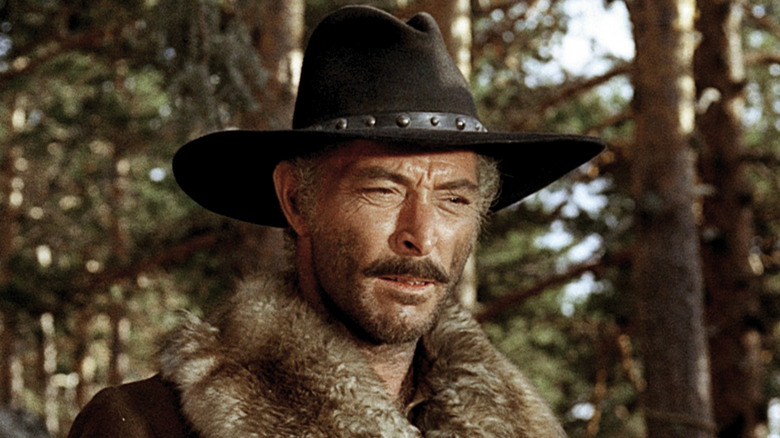
One of the most iconic filmmakers in the Western genre, regardless of country of origin or sub-genre, is Sergio Leone. Starting with 1964's "A Fistful of Dollars," Leone presented audiences with more morally ambiguous protagonists and more stylishly brutal violence than typical Hollywood fare at the time. Sergio Leone's Westerns rewrote the rules of filmmaking, emphasizing meticulous style while subverting more conventional tropes expected from the genre. Leone's work epitomizes spaghetti Westerns, genre movies produced largely in Europe, often with Italian casts and crews, earning them this gastronomic sobriquet.
But Sergio Leone wasn't the only filmmaker directing spaghetti Westerns, let alone the only one working in the '60s and '70s too. There was no shortage of Italian directors putting their own spin on the Western genre at the time, each redefining what spaghetti Westerns could be. With that in mind, we're looking at the directors that left their own mark on European-produced Westerns with movies that still hold up beautifully today.
These are the 10 best spaghetti Westerns not directed by Sergio Leone, showcasing how diverse the sub-genre truly is.
The Return of Ringo
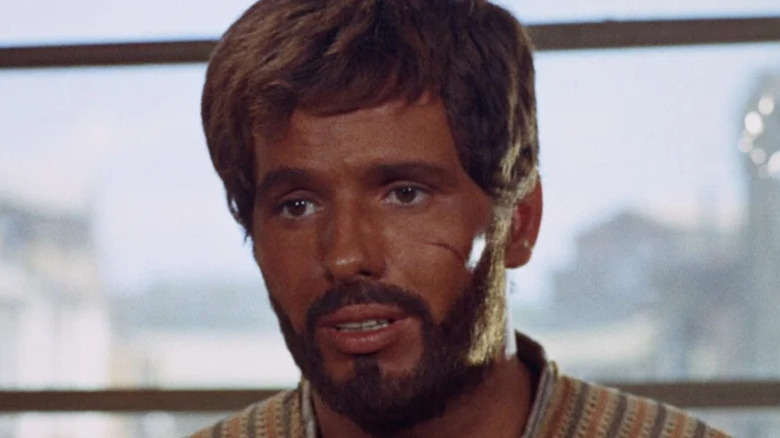
Just as Clint Eastwood had the man with no name, Italian actor Giuliano had Ringo, a spaghetti Western character in a set of standalone movies. Gemma's second turn as Ringo was in the 1965 movie "The Return of Ringo," albeit with its plot unrelated to his prior work in "A Pistol for Ringo." The movie has Ringo return to his hometown after serving in the American Civil War, discovering it has since been taken over by killers ruling it with an iron fist. Vowing revenge, Ringo takes on an unassumed identity to liberate his town and avenge his murdered family.
With its broader narrative similarities, "The Return of Ringo" is the best adaptation of "The Odyssey" that you've likely never seen. Seeing Ringo disguise himself as an unassuming florist and plot how to deal with the bandits who have invaded his home through quickdraw vengeance is a treat. Prolific composer Ennio Morricone also helps set the scene with another memorable score to elevate the proceedings. "The Return of Ringo" is a great overlooked spaghetti Western with a strong lead, with Gemma appearing elsewhere on this list leaving his own mark on the genre.
Django (1966)
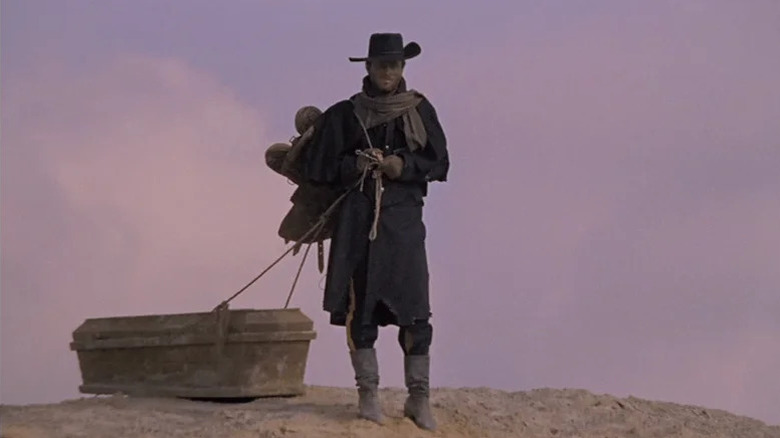
If there was ever another Italian filmmaker other than Sergio Leone to leave an indelible mark on spaghetti Westerns, it's Sergio Corbucci. The movie that Corbucci will be known for the most and rightfully so, is "Django," which was released in 1966. Franco Nero plays the titular gunslinger, memorably first seen dragging a coffin behind him as he walks alone through the desert. Coming into a remote border town, Django finds himself at odds with a local outlaw gang while working with a group of Mexican revolutionaries.
Corbucci's influence spreads surprisingly far, with the controversial Western inspiring not only Quentin Tarantino's "Django Unchained" but also "Desperado." Just as Robert Rodriguez's movie has a gunfighter come to a dusty town with guns hidden in a guitar case, the coffin in "Django" conceals a whole arsenal of weapons. Corbucci's movie also remains shocking in its level of brutality, especially for a movie released in 1966, underscoring its effective staying power. A vicious showcase for Corbucci's unrelentingly violent approach to the genre, "Django" proves more than one Sergio can make spaghetti Westerns.
A Bullet for the General
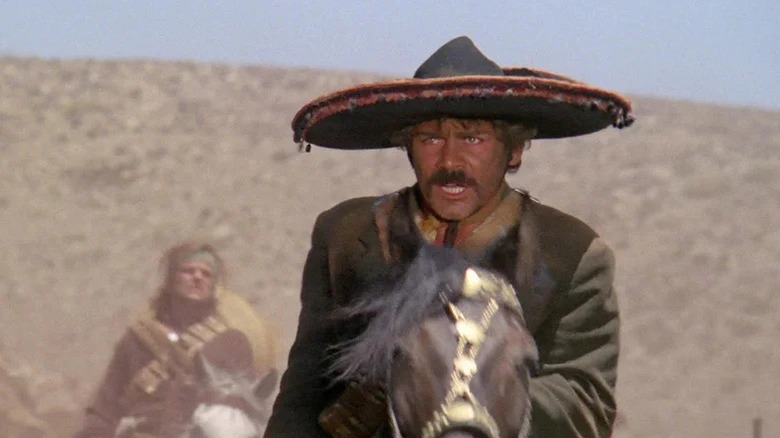
Among the more prolific Italian spaghetti Western actors is Gian Maria Volonté, who often played either antiheroes or outright villains. Among the more heroic Western characters that Volonté played is El Chuncho Muños, a Mexican revolutionary in the 1966 movie "A Bullet for the General." El Chuncho befriends and recruits an American named Bill Tate (Lou Castel) as the conflict rages on. However, Bill's true nature comes to light, threatening the rest of El Chuncho's band and his own wellbeing in the face of betrayal.
The big twist in "A Bullet for the General" is one that's telegraphed relatively early on, but it's still an enjoyable hook to see play out. Volonté takes full advantage of the more nuanced role than he's usually given, wonderfully capturing El Chuncho's fall from grace. Despite running for nearly two hours, the movie brings plenty of action to keep audiences at rapt attention with its explosive gunslinging. A fantastic showcase for Volonté's talents beyond his usual work with Sergio Leone, "A Bullet for the General" is a gripping story of betrayal amidst social upheaval.
The Big Gundown
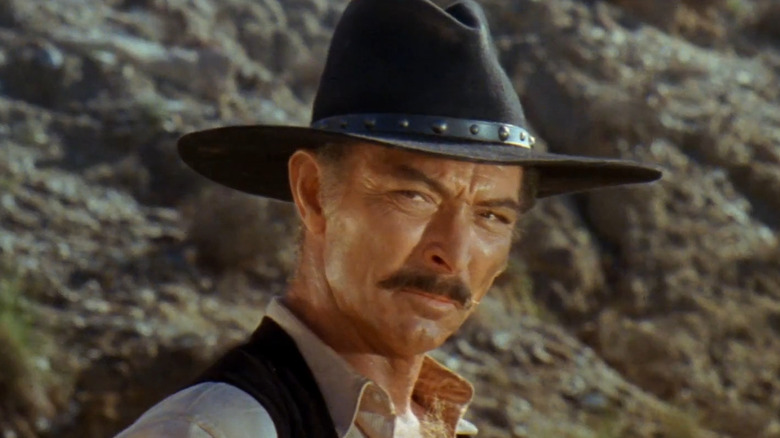
Yes, there was a third Sergio directing spaghetti Westerns in the '60s, with Sergio Sollima working with co-writer Sergio Donati on a number of projects during the decade. The first Sollima and Donati collaboration that we're including on this list is "The Big Gundown," which was released in 1967. The movie stars Sergio Leone alum Lee Van Cleef as Jonathan Corbett, a bounty hunter who agrees to go on one last job before retiring. However, as Corbett closes in on his target, an outlaw named Cuchillo (Tomas Milian), he realizes his quarry isn't as guilty as he appears.
"The Big Gundown" works because of the polemical rapport shared by Lee Van Cleef and Tomas Milian on-screen carrying the movie. Van Cleef plays the role of world-weary veteran gunslinger well, while Milian excels at portraying a buffoon who knows more than he initially appears to. Milian went on to reprise his role as Cuchillo in the subsequent Sollima movie "Run, Man, Run," albeit without Van Cleef. That absence holds back that particular film from being included here, because it's what elevates "The Big Gundown" from its multitude of contemporaries.
Death Rides a Horse
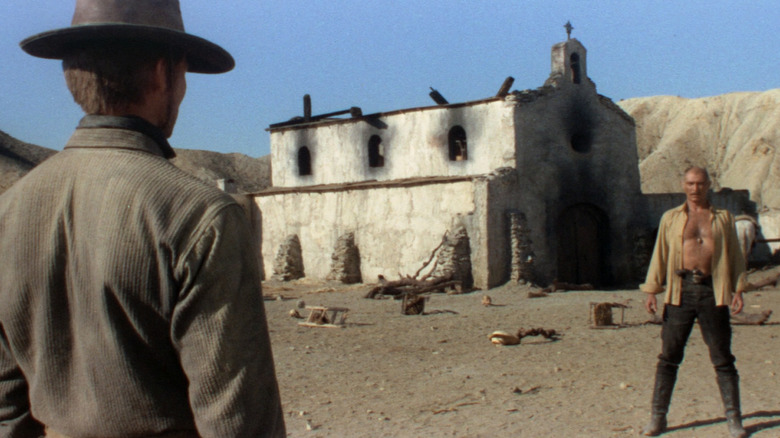
Like Clint Eastwood before him, John Philllip Law is an American actor who tried his luck in Europe after being disappointed by his experiences in Hollywood. Also like Eastwood, Law found himself paired with Lee Van Cleef for a spaghetti Western, in his case, 1967's "Death Rides a Horse." Directed by Giulio Petroni, Law plays Bill while Van Cleef plays Ryan, two men wronged separately by the same group of outlaws years ago. Realizing that they share a common enemy, the two gunfighters team up to track down and kill the bandits who ruined their lives.
Whenever Lee Van Cleef shows up in a spaghetti Western, you know that it's going to be a clear cut above its contemporaries. That's very much the case in "Death Rides a Horse," with Van Cleef and Law making a fine on-screen pair dispensing frontier justice. The movie also benefits tremendously from having Ennio Morricone as its composer, with its music and narrative clearly inspiring "Kill Bill." One of the more underrated Westerns in Van Cleef's career, "Death Rides a Horse" is a cracking revenge yarn with plenty of gunslinging thrills.
Face to Face (1967)
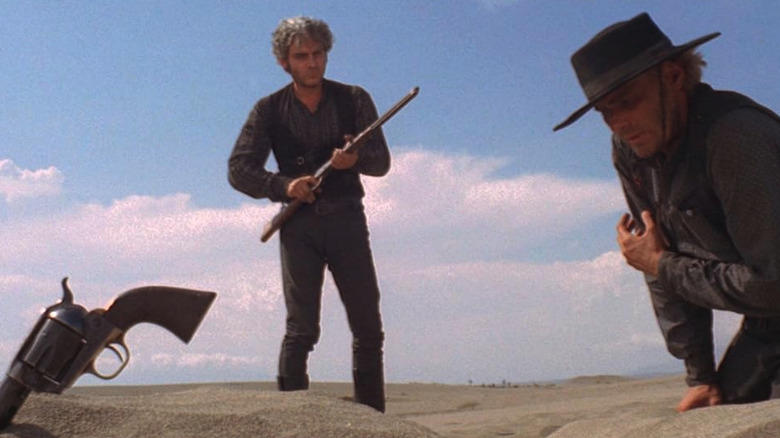
The second and last Sollima and Donati joint that we're including on this list is their 1967 collaboration "Face to Face." The movie reunites the creative team with Tomas Milian, though he's playing a very different outlaw from "The Big Gundown." This time, Milian is paired with another Leone mainstay Gian Maria Volonté, with the latter playing the sickly and meek teacher Brad Fletcher. As Fletcher joins Beau Bennet (Milian) in a life of crime on the frontier, he finds new purpose as he becomes increasingly involved in violent activity.
Compared to the sadistic villains he portrayed in Leone's movies, Volonté gives a much more nuanced performance in "Face to Face." Seeing Fletcher quickly transform from a repressed figure to someone who takes charge of a group of marauders provides a genuine thrill. This arc is juxtaposed by Bennet becoming disillusioned with the outlaw life and path that Fletcher is progressing towards. Sollima's best work in the Western genre, "Face to Face" offers a meditation on violence and the scrying qualities of the Wild West.
Day of Anger
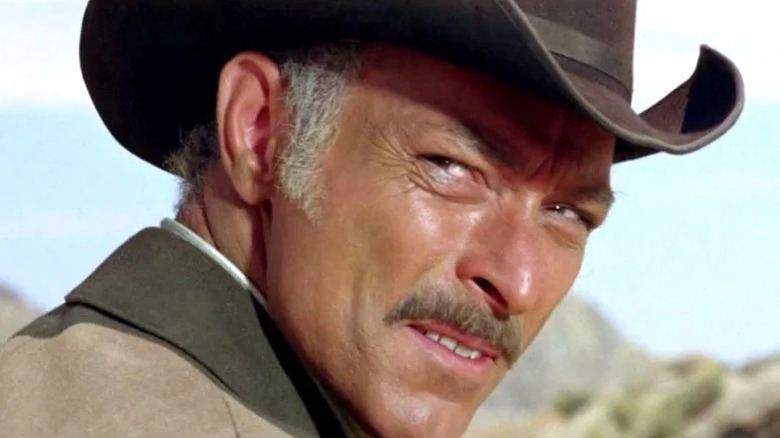
Lee Van Cleef teamed up with Giuliano Gemma for the 1967 movie "Day of Anger," this time with both popular Western actors working with director and co-writer Tonino Valerii. Gemma plays a young man named Scott Mary who becomes inspired by gunfighter Frank Talby (Van Cleef) after seeing him in action. Frank agrees to take on Scott as an apprentice gunslinger, with the two eventually taking care of a gang of outlaws running the town. However, Scott and Frank find themselves at odds, escalated when Frank comes into conflict with Scott's father figure Murph (Walter Rilla).
Quentin Tarantino has openly wished he could've made a movie with Lee Van Cleef, and it's easy to see why. The veteran actor brings a grizzled and understated confidence to his role, the presumed mentor figure who's quietly much more sinister than how he appears. This makes his character's showdown with Frank something of an inevitability but it's absolutely captivating to see how that confrontation ultimately takes place. A darker take on the surrogate father themes compared to "Death Rides a Horse," "Day of Anger" features both of its stars in fine form.
The Great Silence
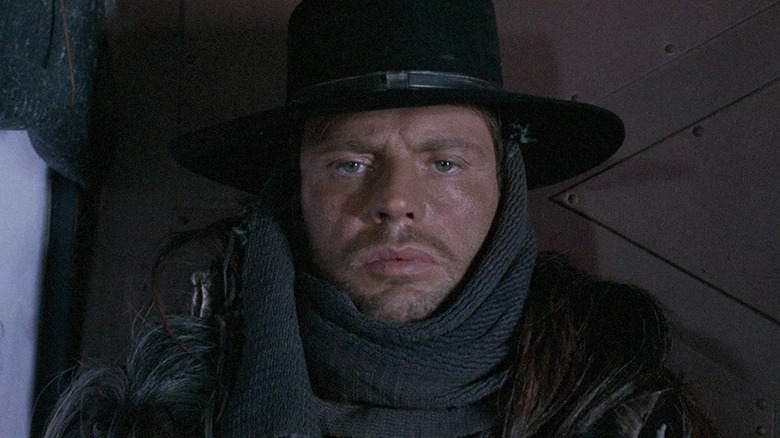
One more Sergio Corbucci movie to include here is arguably his best film overall, 1968's "The Great Silence." The movie follows a mute gunslinger known simply as Silence (Jean-Louis Trintignant), who comes to a remote snowbound village on the frontier. Silence finds the town terrorized by Henry Pollicut (Luigi Pistilli), the man who murdered his parents, along with a gang of bloodthirsty killers led by the sadistic Loco (Klaus Kinski). To avoid overtly breaking the law, Silence baits the gunmen into drawing on him first, though his plan to save the town runs into brutal complications.
Though "The Great Silence" flopped at the box office, not even securing a wide American theatrical release, the movie has since become something of a cult classic. Corbucci uses his wintry setting well, using it as a moody backdrop for the bleak story and bouts of bloody carnage. Like "Django," Corbucci isn't pulling his punches with his on-screen violence and goes even more shocking with where he takes this story. An underrated Western that you need to watch, if you can stomach its grim ending, "The Great Silence" really demonstrates Corbucci's mastery of the genre.
Sabata
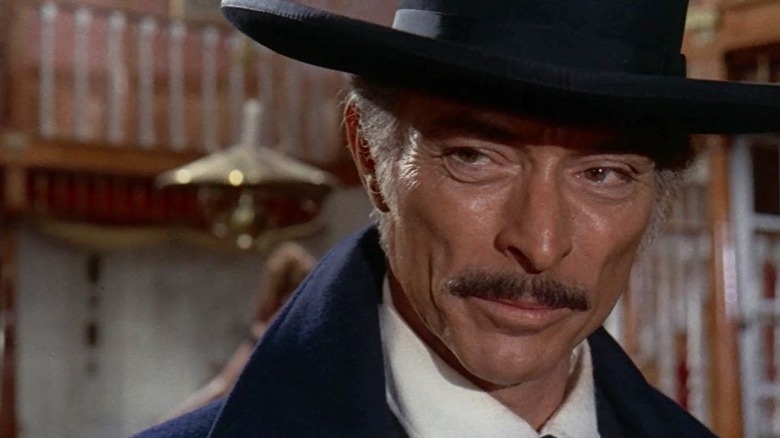
The American actor who defined spaghetti Westerns second only to Clint Eastwood really is Lee Van Cleef, and we've got one more movie of his to include. 1969's "Sabata" kickstarted an entire trilogy directed and co-written by Gianfranco Parolini, with Van Cleef playing the titular gunfighter in the first and third entries. The first movie is the best of the bunch, with Sabata busting a gang of thieves, uncovering a conspiracy involving a powerful local rancher in the process. This fuels a rapidly escalating conflict full of betrayal and explosive stakes as Sabata tries to profit from the chaos.
"Sabata" is a forgotten '60s Western movie that holds up today, buoyed considerably by Van Cleef's performance. As the eponymous protagonist, Van Cleef is clearly having a blast, bringing the understated cool that defined many of his spaghetti Western roles. The double-cross nature of the narrative also evokes similarities to previous movies like "The Good, the Bad and the Ugly," but with a much more streamlined presentation. A lot of freewheeling fun and anchored by its effortlessly cool lead actor, "Sabata" is a must-watch for Lee Van Cleef fans.
They Call Me Trinity
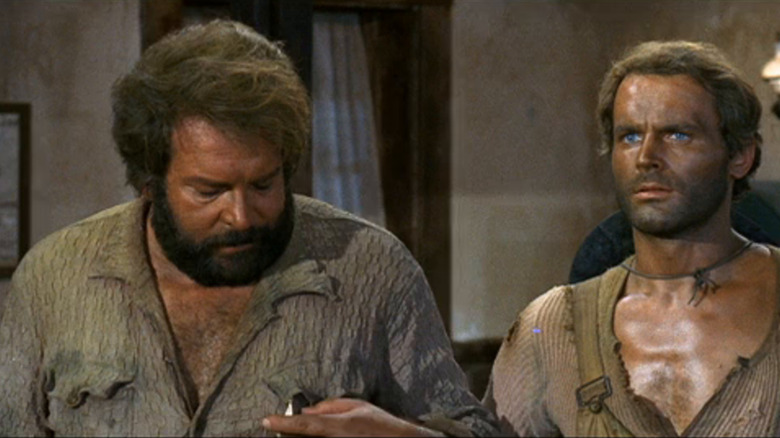
While many spaghetti Westerns have a certain humor to them, "They Call Me Trinity" leans harder into the genre's comedic potential. The 1970 movie stars Terence Hill and Bud Spencer as gunslinger brothers Trinity and Bambino, respectively. The duo come into conflict with Major Harriman (Farley Granger), who is trying to forcibly run off settlers to expand his ranch's territory. Despite Trinity's pathological laziness, he finds himself as the settlers' only hope against the Major's planned land grab.
"They Call Me Trinity" isn't quite a spoof of the Western genre, though it does openly mix gags with its gunplay and fisticuffs. This distinction is maintained by Hill and Spencer playing off of each other well as bickering siblings, while Granger gives the standout performance of the movie as its sneering villain. These three roles carry much of the movie, which spawned a direct sequel the following year, "Trinity Is Still My Name." An irreverent movie to cleanse the bitter aftertaste left by some of the more grimly self-serious entries on this list, "They Call Me Trinity" makes for a breezily enjoyable watch.