

Director Adam Wingard Explains Why He Left The Godzilla Franchise To Make Onslaught [Exclusive Interview]
Adam Wingard is back.
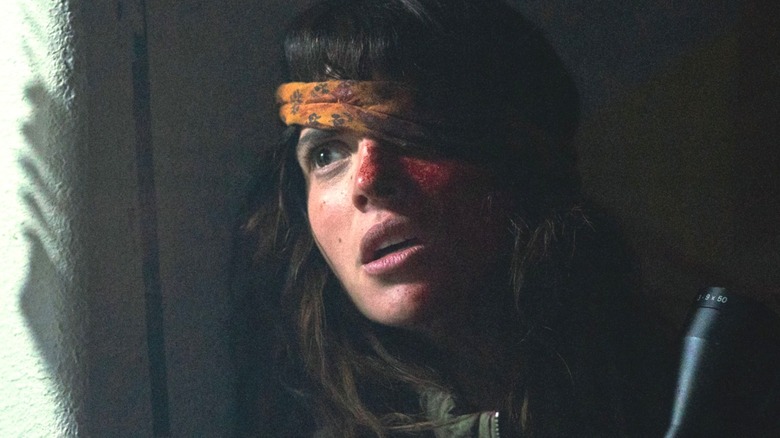
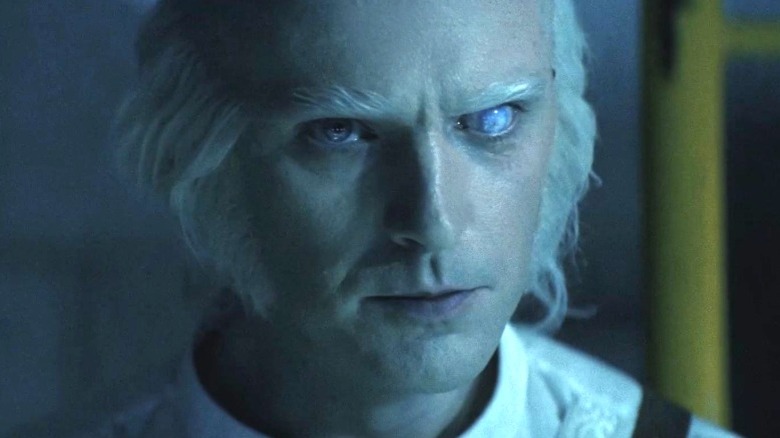
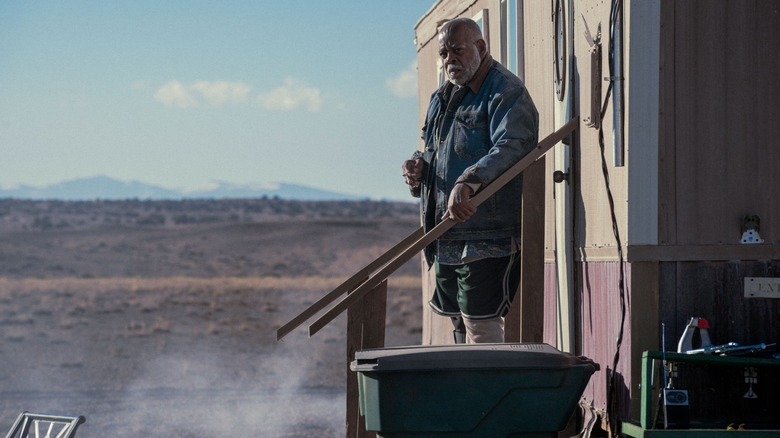
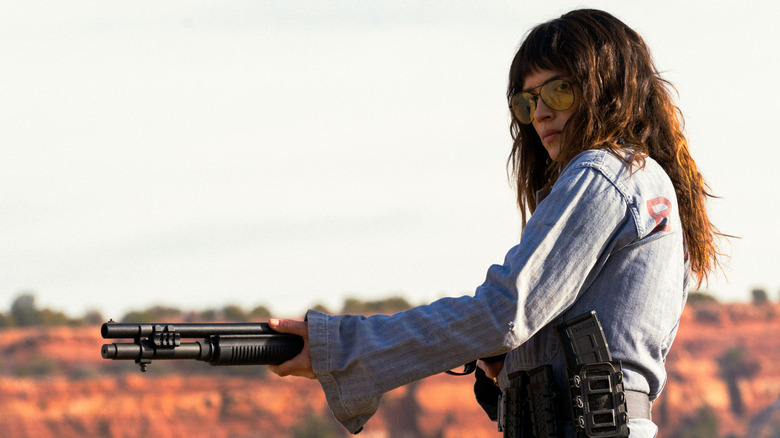
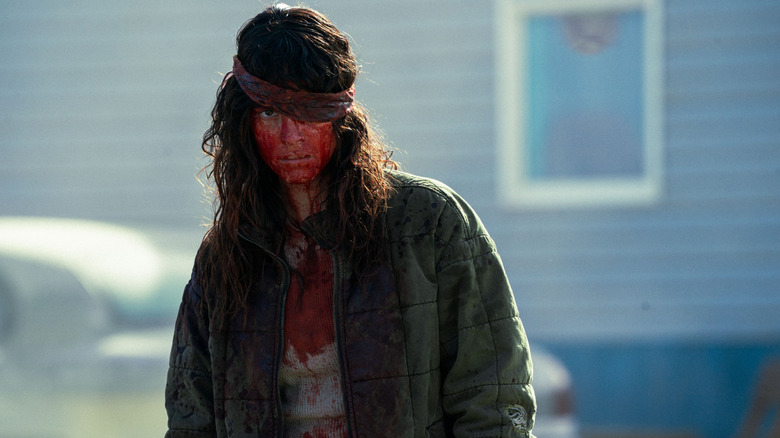
After spending the past several years making "Godzilla vs. Kong" and "Godzilla x Kong: The New Empire," and with misfires like "Death Note" and "Blair Witch" before that, the director has returned to the down-and-dirty filmmaking that put him on the map for cinephiles. "Onslaught" is Wingard's riff on John Carpenter's "Assault on Precinct 13," with genetically modified super soldiers laying siege to a trailer park community and a badass single mother (Adria Arjona) holding the line against them. It's a small-scale thriller that's much closer to "You're Next" and "The Guest" than a gigantic monster movie, and in a recent interview with /Film, the filmmaker explained why he left that blockbuster world and came back to this level of storytelling:
"It was almost like I felt like it's been so long since I've done one of my movies that I don't feel like ... either people ever knew who I was, or they've kind of forgotten or whatever. I felt like I needed to do a story that solidified what my style was as a filmmaker, and this is it."
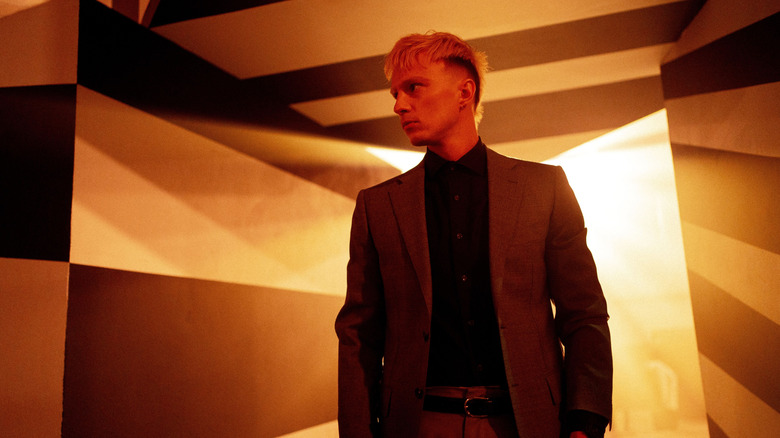
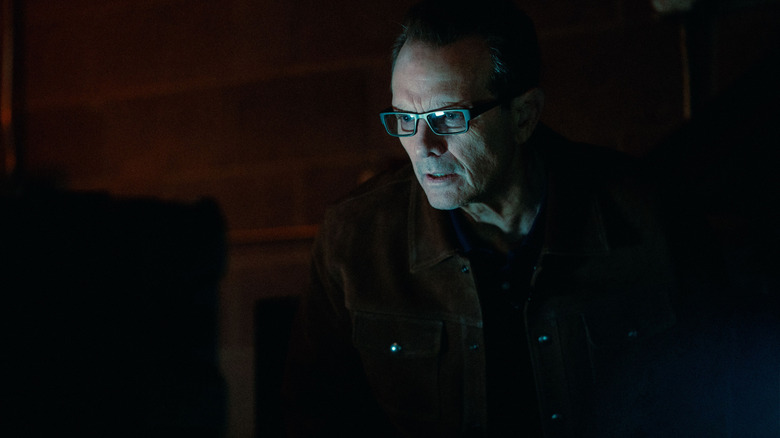
Dan Stevens playing a total weirdo? Check. A synth-heavy score? Check. The military industrial complex being skewered or satirized in some way? Check. Yep, this is an Adam Wingard film through and through. Below, read my full conversation with him about doing research into government conspiracies, his attempts to avoid falling into forgettable slasher territory, and his hope to tell more stories set in this universe.
Note: This interview contains spoilers for "Onslaught," and has been lightly edited for clarity and brevity.
Adam Wingard 'hit a peak' in the franchise world
I've heard you say that you look at "Onslaught" as part of a spiritual trilogy with "You're Next" and "The Guest." All three of these movies involve secrets spilling out into the world with terrible consequences. What it is about that idea that made you come back to it again all these years later?
Adam Wingard: Yeah. I think of myself as very much like an American filmmaker. I like to do stories for the most part — I think when I'm doing my best work is when I'm doing movies that really embrace this side of the world. I've always loved how John Carpenter always said that his movies are all secretly Westerns. I can't say mine are as concise as that, but I think that at least when I'm doing my best work, there's always an element of distrust of the military and the secret programs and military industrial complex and all that kind of stuff.
The thing that made me want to make this movie specifically, though, is that, for one thing, I did want to really express that worldview, but I wanted to also make a film about a parent, because I'm a parent now and that was a new thing for me. I finally felt like I had a story to tell. When I was in the franchise IP world, all the decision makings were more or less based on nostalgia and just excitement for being able to put my stamp on something. And you can put yourself in that, but it's not necessarily a personal story.
I felt like when I look back at my early films, starting with "Pop Skull," "A Horrible Way to Die," "You're Next," "The Guest," they're all very, very personal stories, especially "Pop Skull." I would say really all those are, in their own different ways.
So to me it was like, "Okay, if I'm going to step back out of this franchise world, which, I've hit a peak here — it's like not only have I done one $150 million plus Godzilla movie, I've done two. I've made other stuff. I've explored things, gone around the world doing all this stuff. It can't get much bigger than this. And now that I've hit that kind of goal for myself, what's next?" And really, the next thing was is I wanted to do a film that I think solidified who I was as a filmmaker. Taking away all the preexisting IP stuff, it's like, "Who am I?" And it was almost like I felt like it's been so long since I've done one of my movies that I don't feel like ... either people ever knew who I was, or they've kind of forgotten or whatever. I felt like I needed to do a story that solidified what my style was as a filmmaker, and this is it.
Adam Wingard is open to all of your wild conspiracy theories
I was curious how deep you and Simon Barrett went on the research for this. Did you guys look into government programs that are actually happening?
Funny enough, the research didn't start while making this film. The research started my entire life, basically. [laughs] And Simon and I have a lot of the same interests, but for me, I've always been fascinated with conspiracies.
When I was a little kid, my dad had this little library in our house, and I remember he had all these books about the JFK assassination. And maybe it's one of those things where you have to have a parent who at least is willing to be open-minded about certain concepts of conspiracies. My dad definitely believed there was a conspiracy with JFK, and I always thought that was interesting. And I think that maybe that opened the gateway for me.
It was really after 9/11 happened — and I'm not going to endorse any 9/11 theories, but I'm the type of guy, I like reading about any kind of theory. I don't believe the world's flat, but you're damn right, I'm going to go watch every flat Earth video I can find on YouTube and really enjoy the hell out of it. You know what I mean? It's a thought exercise at the end of the day. And 9/11 was like that, too. I remember when 9/11 happened, it was just like the floodgates opened on the internet with that thing.
I remember right away, even within a couple days, it was interesting because people were talking about "a plane didn't hit the Pentagon, it was a missile." And I don't even know how that started. That was right out the gate, people were already saying that. So it was interesting how quick some of these things can come about. Then I remember during the 9/11 thing, you start reading this stuff, the theories get out there where it's like "no planes hit the buildings. It was a hologram."
It sounds like Onslaught almost featured invisibility technology
But the thing that's interesting about all these conspiracies is a lot of times, there are things about them that are strange, that are kind of unexplainable. Even 9/11 has a lot of those. And the whole world of the Operation Paperclip kind of thing, with our government bringing over the Nazi scientists, has always been one of my biggest interests. So when we were conceiving of this movie, I knew that this film, I wanted it to really be tied into that sort of secret government world.
Another big inspiration was a book called "Chameleo," which, here's the thing about "Chameleo." "Chameleo" is this book. Nobody really knows about it. It's all about how this guy had this experience — or a friend of his, actually — he had this experience where basically he started seeing ... he thought his house was haunted. He thought there was ghosts in his house. And it turns out that there was potentially some sort of thing where military people were wearing invisibility cloaks or something, and they were spying on him in his house and all these weird things happened. Almost even making that book made this guy's career go down the drain, and he was getting kind of stalked himself and getting paranoid when he wrote it and everything. And it's almost like kind of a cursed property.
So I'm kind of almost curious, I'm like, "Okay, if I mention 'Chameleo' on here today and it gets in print or whatever, am I going to have invisible people show up at my house? Maybe." I guess what I'm getting around to is the fact that that was a big inspiration that started there and then it kind of expanded into the conspiracy world of secret programs and super soldiers and stuff. And we ultimately didn't do the invisibility thing, but "Chameleo" was a big inspiration as well. I should give that a shout.
Okay. Well, fingers crossed that no weird, invisible people come mess with you.
I hope they do, man. As long as they don't hurt anybody, I want the weird s*** to happen.
Adam Wingard knew Onslaught wasn't going to be for everybody
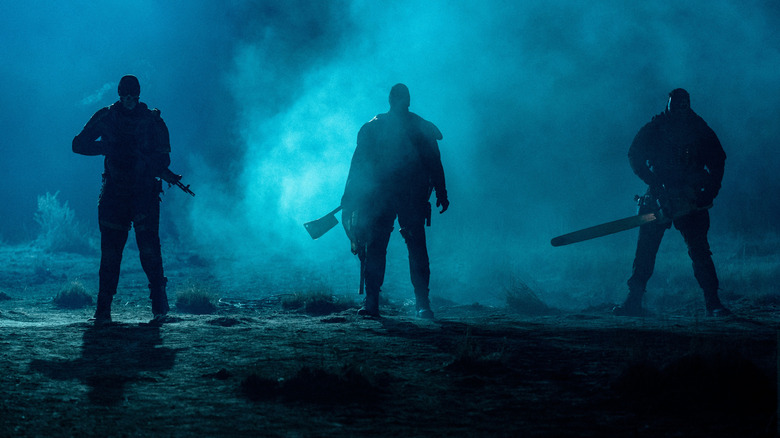
This movie is a really cool stylized throwback for most of its runtime, and then there's the scene at the gas station where these random civilians are being slaughtered by these super soldiers. And it's really tough to watch, obviously, because it's so similar to these mass shootings that have been happening for a long, long time in this country. It felt to me like you were going out of your way to make that part of the film feel a little different than the rest of it, so I'd just love to hear you talk about that.
Yeah, thanks for bringing that up because not a lot of people have mentioned it. And it's kind of interesting because that's a sequence that I think 10 years ago, I don't think that we could have put in a film. And the reasons that we can do it now are maybe even more disturbing, which is I think there's a bit of a desensitization to it. People are so used to these things happening, it's just part of our reality.
To me, having made a bunch of Godzilla films, you want to take an interesting idea as far as you can, but every choice has to be under the consideration of what will a studio actually let me do? I want to do an idea that's all the way over here [holds hand to the far left], but even when I'm planning it, I have to know that at best, I'm going to get here [moves hand to the middle]. You know what I mean? So your consideration creatively is very stifled in a way where, yeah, you can do a lot of cool stuff. And I'm really, really proud of those movies, so I don't mean to trash talk it in any kind of way. But the truth is that every choice you make, you're kind of having to be like, 'If I want to get it here [far left], I have to know that I can get it here [middle].' And then sometimes I can get it here [middle] or maybe even less, or maybe not at all.
When it came to doing this movie, I wanted to do a film that wasn't going to be for everybody. I wanted it to be accessible. I wanted it to be a film that could be fun for people and I think could reach a large audience. But at the end of the day, at the risk of losing some people, I think it's important to go there. And with horror movies, I feel like they have to be a timestamp on the reality that they exist in. And to me, the scariest thing that is of now is sort of the idea of mass shootings.
Onslaught's gun violence is purposefully brutal
So that's why, to me, that scene ... we treat violence very different in the rest of the movie than that one, like you said, because slasher films, it's like you can have the goriest kills, like "Terrifier" and all that s***. You can make it as splattery and as graphic as possible. As long as it's in that kind of slashery kind of style, it's only disturbing in the sense that it's hard to watch or something, but it doesn't stick with you.
When it comes to guns and gun violence, it's instantly much more disturbing because it's much more relatable. For whatever reason, it just is. So when it came to doing that scene, I didn't want it to be gratuitous. You actually see a lot less than you think you do in that sequence, of course. But at the end of the day, I wanted the movie to just be stark and real in that moment because I did want it to disturb.
I don't think that the movie would stand up over time if it was just a fun slasher film, because we've seen fun slasher films. They come and go, and sometimes they just mean nothing. Or very little. And so with that scene, at the risk of losing some audience members, we just went for it. That's why there's really no music. It's just the sounds of the guns.
We really went out of our way to make sure that not just the sounds of the gun felt real, we wanted to strip away the sexiness of how movie guns sound. When you're shooting a real gun in real life, there's almost more of a power tool feeling to it as opposed to the way it feels like in a movie. But also the space that they're in, it's like you want it to sound like it's really in that space. So the [reverb] of the gunshots need to sound exactly like it's inside of that building in such a stark way that it's reality.
But like I said, I mean, the weird thing is the whole time we were shooting it, I was like, "This is going to be one of those scenes where maybe we get into post and we do a test screening and people rebel against it, and we're going to have to cut it down, or at least fight to keep it in there."
And honestly, we didn't really have to change that much. I think I tweaked one thing voluntarily, just maybe one less person getting shot or something like that. But ultimately there just wasn't enough pushback to do it. So that in itself to me was kind of disturbing. The fact that this wasn't so upsetting anymore that people will reject the movie. That it was just sort of like they're disturbed, but not so much that they can't handle it.
Adam Wingard teases another trilogy set in this same universe
I want to ask you about a fun little thing in the end credits where we see these newspaper clippings and photos on the sides of the screen and it's all connected by red yarn. In your mind, is there a specific person who's stringing all of these things together?
It's me. [laughs]
Literally, it's you?
It's funny that you say that because when I was talking to AV Squad who did that stuff for us, they also did the title sequence with my editor, Cam [McGough], who did an awesome job on that. It's one of my favorite parts of the film, really. But that ending sequence, yeah, the way I described it was that it's somebody, a conspiracy theorist sort of tracking this through line. But I think it's one of those things that'll be more interesting if we reveal maybe that down the line, because I think whether it's teeing up a potential direct sequel to this or another one of these sort of offshoot movies, I think it's stuff that we'll revisit at some point.
So that's something you've thought about? You have more story in mind in this world?
Oh, absolutely. Even though I think this is a capper on a trilogy, that doesn't mean that now we don't open up into the next trilogy. You know what I mean? And so yeah, that's all I'll say about that. Yeah.
Fair enough!
Adam Wingard explains why he loves electronic, synth-driven scores
I love the scores in your movies. The synth-heavy stuff is just catnip for me. So I was just wondering what it is about that style that you like as a filmmaker?
That's a really good question. I mean, it's really funny because I remember when I was in film school, which was 2002, that was in that period where there was a good 10 years or so where, past the '80s, that it was kind of a faux pas to do electronic music because it was sort of seen as being low-budget and dated.
And I'll never forget, one of my instructors in film school — I mean, film instructors tell you all kinds of stuff that's just like you look back on it, you're like, "Are you f***ing serious?" He used "Blade Runner" as an example of a dated film score. His whole point was "orchestral film scores are timeless, and here's a movie like 'Blade Runner,' look how dated this sounds."
And it's just like, orchestral film scores are just as dated. I mean, orchestral sounds go through so many different fads over the years. You listen to a modern orchestral score versus one in the '70s, and they're completely different. They just are using the same instruments. And it's the same with electronics. I mean, I think electronics are just as timeless, especially now that enough time has gone on and we can look back and see that. And I think they are timeless now because it's come back in a way where it's just as utilized now, almost, as it used to be. And some of it is self-referential, but it's sort of taken on a life of its own again as well.
I think whenever I was developing an interest in wanting to make movies, it was alongside of the first film that I ever cited as being my favorite movie was "Big Trouble in Little China" when I was just a kid, when it just came out on video, I remember, or on HBO, I think, or whichever. But however I saw it as a kid, I remember that imprinted on me. And it was one of those things, again, even in the '90s, I think I didn't really like electronic scores. It was only towards the ... well, "Mortal Kombat" was my favorite score in the '90s, so I guess I didn't totally move away from it, but that felt different. That was techno. It was a different kind of thing.
Adam Wingard says the hardest thing about making his Godzilla movies was not using an electronic score
So I've always had an affinity, I guess, for electronic scores. But it just is one of those things that when I look back on it, I think because the movies that I imprinted on the most were the John Carpenter films and stuff as a kid, that's just what a movie's supposed to sound like now.
That was the hardest part about doing Godzilla movies for me is that ... I mean, we had electronic components in the score, but not much more than a Hollywood movie might utilize it, at the end of the day. And it just felt like we didn't have the backing, the confidence in that type of thing for a Godzilla movie because there's sort of an expectation of big orchestral stuff. So I felt like I was a little out of my element on that one because I wasn't able to do that, because ultimately I just like the way this stuff sounds.
Another cool thing about it is that you can do it ahead of time. Orchestral scores are so specific to the beat for beat moments for the most part. And with these electronic sounds, they're much more, as John Carpenter described them, like wallpaper. So you can have these hard cuts in and out of it and it's not a problem. We were able to create all of our score ahead of time and all that stuff. And I would say only maybe 20% or something was actually created after, in post. So I find inspiration in being able to actually cut to the music as well.
"Onslaught" is in theaters now.