

5 Classic Sci-Fi Books That Somehow Haven't Gotten A Movie Adaptation
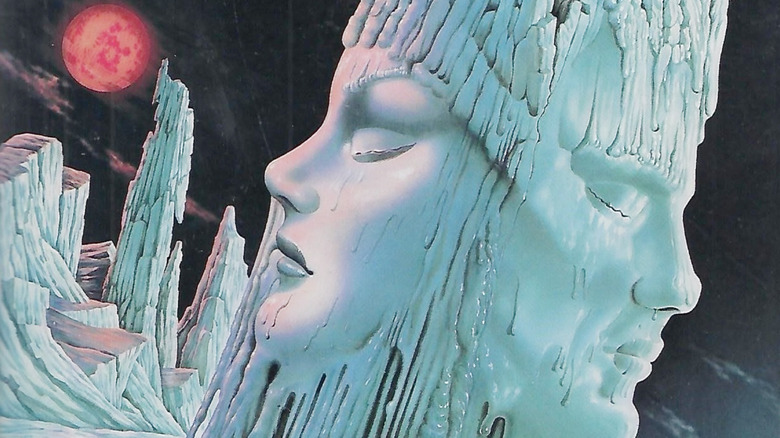
It's possible that no literary genre contains more unfilmable books than science fiction. Even those with relatively straightforward narratives like, say, Robert A. Heinlein's "Starship Troopers" or Orson Scott Card's "Ender's Game," come with challenges of interpretation. (Paul Verhoeven's own "Starship Troopers" film adaptation is widely considered a classic sci-fi satire, but it didn't go down well with hardcore Heinlein-ites who wanted a faithful, rah-rah, alien bug-killing romp.) As for the truly heady masterworks of the genre, they're often bursting with mind-blowing concepts that are thrilling to read about but just about impossible to dramatize.
And yet, we've had two films based on Stanislaw Lem's philosophically challenging "Solaris."
Your best shot at a greenlight is to make sure your sci-fi movie is served with a heavy dollop of fantasy, to the point where it's basically a fantasy with sci-fi elements (à la "Star Wars"). Otherwise, you might wind up with a brilliant bomb like "Blade Runner," "Dark City," or "Annihilation." There have been brainy sci-fi hits over the last decade (Denis Villeneuve has made three of them with "Arrival" and the "Dune" movies), but nowhere near enough to assuage studios' fears that mainstream moviegoers won't show up for a film that's short on laser battles.
The game has changed a bit in the streaming age, admittedly. Isaac Asimov's "Foundation" was turned into a series, while Hugh Howey's "Silo" has likewise given rise to a successful Apple TV show. Still, I'd prefer to see ambitious literary sci-fi works transferred to the big screen, and these five are particularly deserving of becoming a motion picture.
Cat's Cradle by Kurt Vonnegut
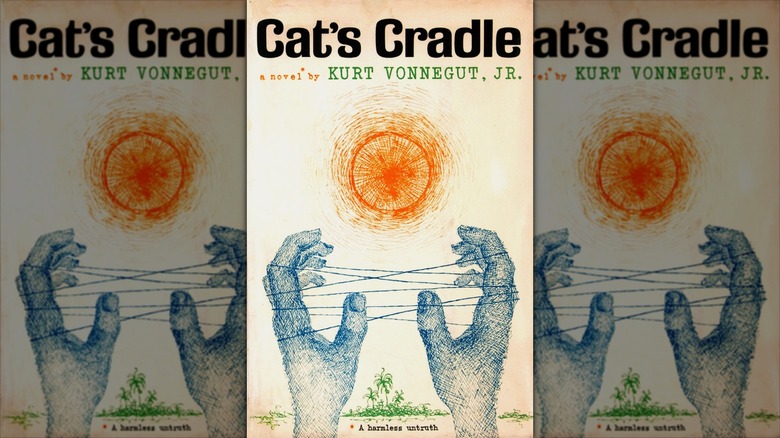
As Patton Oswalt says on his comedy LP "Werewolves and Lollipops," "Science! We're all about coulda, not about shoulda!" That's basically the predicament facing humanity in Kurt Vonnegut's sci-fi satire "Cat's Cradle," which is an end-of-the-world comedy that's every bit as funny as Stanley Kubrick's "Dr. Strangelove or: How I Learned to Stop Worrying and Love the Bomb." Vonnegut's apocalypse kicks off with our narrator John — who prefers to be called Jonah, as his parents almost named him — preparing to write a book about Dr. Frank Hoenikker, who co-created the atomic bomb. In doing so, he discovers that the scientist and his children are developing a material called ice-nine, which freezes water at room temperature. If left in the wrong hands, it could freeze Earth's oceans top-to-bottom, which would be the ballgame for humankind.
Numerous writers have been attached to a "Cat's Cradle" film or TV adaptation over the years, but it's never proceeded past the development stage. I was particularly excited 23 years ago when Richard Kelly was on board to write a movie version for director Darren Aronofsky and star Leonardo DiCaprio. James V. Hart ("Contact") and his son Jake Hart were the next writers on, but the project ultimately fell apart. From there, Noah Hawley began developing an FX series adaptatoin in 2015, yet that endeavor ultimately fell apart. Kelly would've been ideal, given his facility for writing about religious cults. He could've nailed the Bokononism aspect of the novel. Maybe he'll return to it some day.
The Left Hand of Darkness by Ursula K. Le Guin
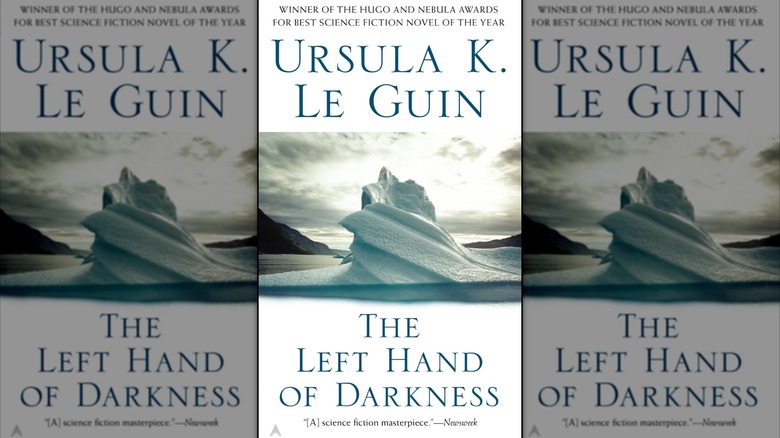
Ursula K. Le Guin established herself as a titan of feminist sci-fi in 1969 with the publication of "The Left Hand of Darkness," but while her exploration of gender identity was forward-thinking 57 years ago, many felt she was overly cautious. The novel's complex narrative centers on male Terran native Genley Ai's mission to invite the people of the planet Gethen to join a group of humanoid worlds known as the Ekuman. Ai is immediately confronted with a cultural challenge, as the Gethanites are ambisexual, and he eventually develops a relationship with a Gethanite named Estraven. However, as Estravan assists Ai, he cannot keep him from running afoul of the Orgota people and their secret police.
Le Guin's book is largely a tale of discovery, one that deals with loyalty as much as it does gender. The major issue with the novel is that the androgynous Gethanites are still gendered by he/she pronouns. Le Guin ultimately came to regret this. She died in 2018, but perhaps her estate would be open to a filmmaker taking a more modern approach to gender. This wouldn't hurt the structural integrity of "The Left Hand of Darkness" at all (though I can think of one transphobic fantasy author who might rage out). In fact, it would expand the work in a way that, I think, Le Guin would've appreciated. This would be a tough sell as a movie, but the right director could do something revelatory with the support of risk-taking executives. It would be so worth it.
Snow Crash by Neal Stephenson
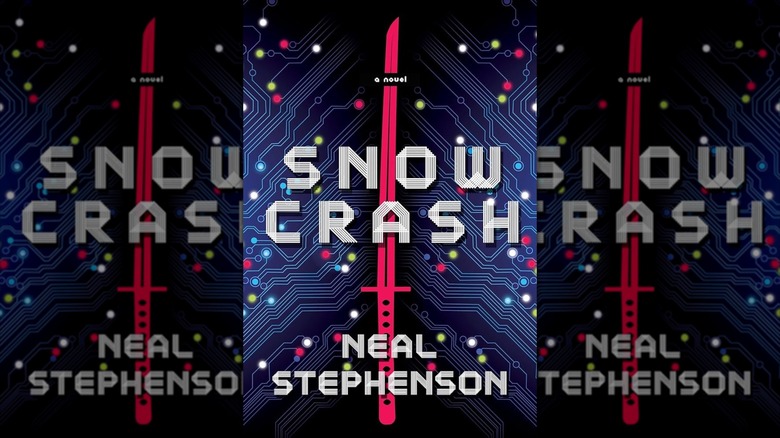
Since its publication in 1992, sci-fi readers have been clamoring for a "Snow Crash" movie, even though, deep down, they're fairly certain the dense, 480-page novel might be too tall of an ask for even the most brilliant filmmakers working today. Neal Stephenson's book has a happy premise: Young Hiro Protagonist makes a living delivering pizza for the corporate mafia while hacking as a side gig. He hooks up with skateboarding courier Y.T., and the two sell data to the CIC, an organization created by the federal government's consolidation of the CIA and the Library of Congress.
Stephenson's 21st century U.S. is an absurd near future that has proven prescient in a lot of ways — and that's the problem with a potential film adaptation. We're headed in a much more ridiculous direction than Stephenson could've ever imagined. His dystopia makes a lot more sense than our current, unimaginatively corrupt hellscape. Still, the themes of his novel are quite relevant, and its sense of humor is refreshing for an entry into the often overly-dour cyberpunk sub-genre. Writer/director Joe Cornish ("Attack the Block") was an inspired choice to adapt Stephensons's novel, and the author was pleased with the film screenplay he wrote. Alas, neither Cornish's movie nor HBO and Paramount TV's subsequent attempt to make a "Snow Crash" miniseries materialized. As it stands, the rights seemingly now rest with Paramount Skydance, where executive interference would likely bleed the work of its most subversive elements.
The Moon Is a Harsh Mistress by Robert A. Heinlein
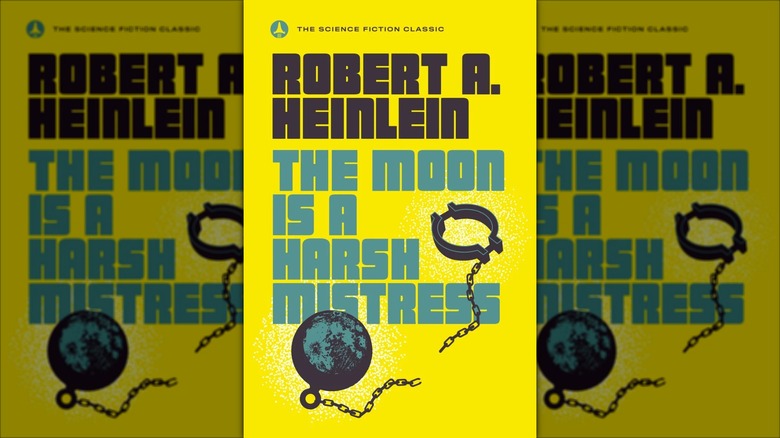
Robert A. Heinlein's pivot from war-mongering sci-fi author to libertarian philosopher in the 1960s was fascinating. His politics were firmly stated and rarely synced up with my own, but he wrote persuasively, skillfully, and with a surfeit of imagination. Intellectually, he dusted the ideologically similar Ayn Rand, who insisted on her risible notions of unfettered capitalism (which are proving disastrous in our present day).
Heinlein's masterpiece "The Moon Is a Harsh Mistress," on the other hand, is a heightened piece of sci-fi about a revolt on the Moon, where all manner of Earth-born criminals and agitators, called Loonies, have been confined to underground cities. Their drive for independence is spurred on by a self-aware supercomputer, which determines the Moon's resources — which are being mined for Earth's benefit — are being depleted at a dangerously unsustainable rate. The computer, named Mike, predicts food riots and, eventually, cannibalism within the next decade. So, the Loonies have no choice but to become a sovereign nation, which inevitably gives rise to a war between the Earth and Moon. The notion of the Loonies mounting a war with the assistance of a friendly AI would undoubtedly be jarring in the modern age, but a resourceful screenwriter could easily find a way to make this concept more nuanced.
Hyperion by Dan Simmons
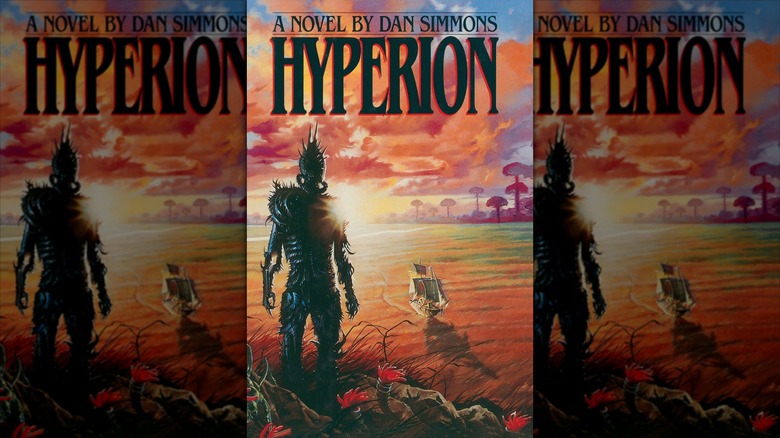
One of the most acclaimed science fiction novel series of the last half of the 20th century, Dan Simmons' "Hyperion Cantos" is an intricate saga rich with fascinating characters, known as pilgrims, sent on a journey to the planet Hyperion to commune with a humanoid creature known as the Shrike at the Time Tombs. They mostly hope to be granted a wish, though at least one of them has plans to kill the Shrike. This is all set against hostilities between the Hegemony of Man stationed on planets linked by farcaster portals, and the spacebound Ousters, which could unleash armageddon.
The "Hyperion Cantos" saga would be a heavy lift for whichever studio rolls the dice on it. Like most of the above books, it's so dense with incident and lore that writing a simple logline is impossible. This, to me, is exciting. Bradley Cooper evidently agrees, as he became creatively involved with a "Hyperion" movie adaptation in 2021. Translating this material to the big screen may require quite a bit of snipping, but that's not a bad thing! You can drop certain elements and still retain the hyper-imaginative essence of Simmons' saga (which encompasses four books and three short stories). You could also wind up with an incomprehensible disaster, so going into the first movie with a rock-solid screenplay is a must.