

Coyote Vs Acme Proves One Thing About Modern Looney Tunes Movies
The following post contains light spoilers for "Coyote vs Acme."
It's finally here, the motion picture event of 2026. After what felt like a personal crusade from Warner Bros. Discovery and David Zaslav to deprive children around the world from having any fun whatsoever, not only canning the fully-finished "Coyote vs Acme" but also deciding that no other studio would be able to pay money to release the film, unlikely saviors Ketchup Entertainment are finally unleashing the live-action/animation hybrid to the masses.
The movie is a triumph and the perfect film for 2026, a staunchly anti-corporation and anti-monopoly movie that's essentially "Who Framed Roger Rabbit" meets "Erin Brockovich." Though the animation could be a bit sharper, this is by no means a "Space Jam" scenario (sorry, fellow millennials), because the writing is on point. These are the Looney Tunes you know and love, with Samy Burch's screenplay (based on a story by Burch, James Gunn and Jeremy Slater) capturing the looniness, the over-the-top personalities, and the heart of the classic cartoon characters. Meanwhile, Eric Bauza continues to show he is the heir apparent to Mel Blanc, voicing virtually all the male Looney Tunes seamlessly.
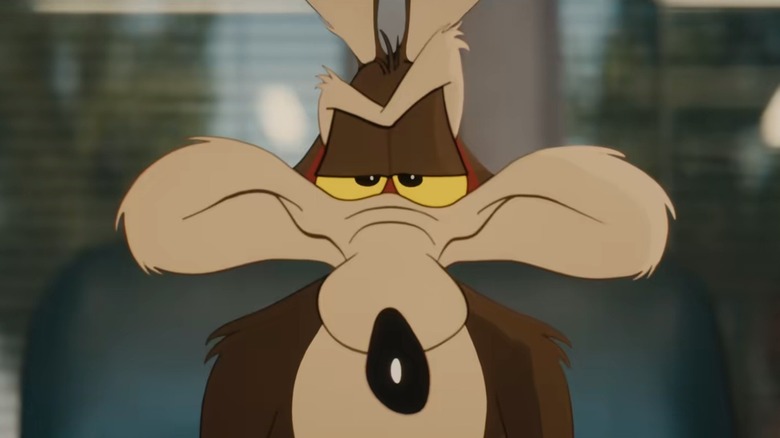
But arguably the biggest surprise with "Coyote vs Acme" is how much the film makes Wile E. Coyote feel like a complex and essential character. He is not just a perpetual hunter that never catches his prey, he is a lovable underdog, a loner with a heart of gold. Sure, the film includes all the major Looney Tunes characters, including Bugs (in a hilarious but small part), but much like "The Day the Earth Blew Up," this movie proves that Looney Tunes is best on the big screen when it focuses on characters other than Bugs Bunny.
Who needs Bugs Bunny, anyway?
Bugs Bunny is by far the single most recognizable cartoon character of the golden age. You could argue in favor of Mickey Mouse, but there is an argument to be made that he's most known as a corporate mascot rather than a cartoon star, while Bugs is indubitably a star.
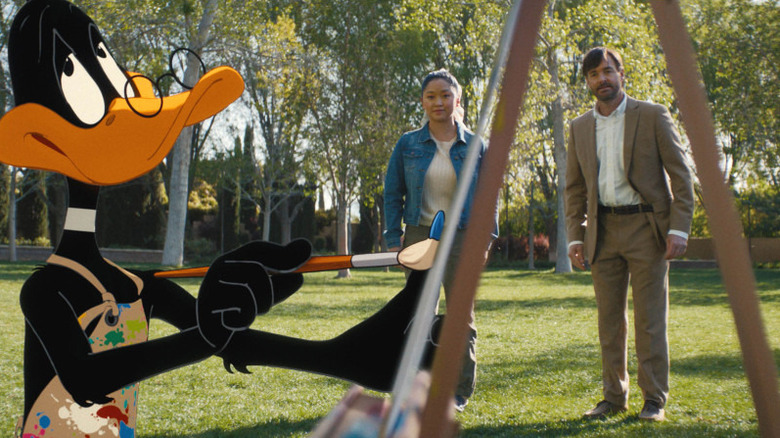
But the Looney Tunes ensemble has dozens of characters that were just as beloved for decades before Bugs became their representative. Daffy Duck is older, for example, while Porky Pig has a higher appearance count in short and was originally portrayed as the studio's star character. It's why it was a perfect choice to have the duo as the stars of "The Day the Earth Blew Up," and why that movie did not need Bugs at all. Porky and Daffy have history, they have chemistry, and don't need the rabbit to help them. Daffy had a whole cartoon series dedicated to him, in 2003's "Duck Dodgers." Meanwhile, there was a time when we almost had a "Marvin the Martian" movie.
This is not to say Warner Bros. should get rid of Bugs Bunny, but it is definitely a good thing that we're getting more stories featuring other cartoon characters. Not all of them could sustain an entire movie, mind you, but "Coyote vs Acme" turned a silent coyote that speaks through written signs into a proper movie star you root for and feel for. Right now, there's a Speedy Gonzales movie in development from Jorge R. Gutiérrez, a movie that could turn the tide on the character's very problematic history and show why the tiny mouse is so beloved across Latin America.
A living cartoon world
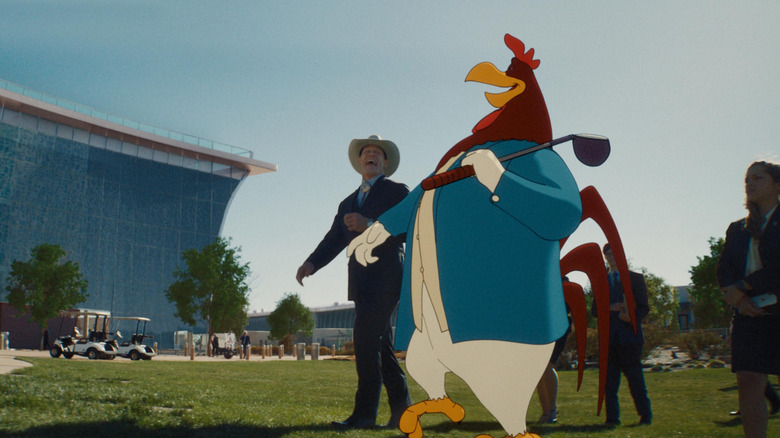
Much like "Who Framed Roger Rabbit," a big aspect of what makes "Coyote vs Acme" work is how well it integrates cartoons into its world. This is a lived-in universe that just so happens to have rubber-hose cartoon characters living and working alongside regular humans and animals. There are tools that are made specifically with a cartoon audience in mind, but they live among us, not separated in some other town, like in "Roger Rabbit" or "Space Jam." Hell, the movie actually reveals that Elmer Fudd is a U.S. Senator now, so a cartoon hunter can become an elected official.
This seamless integration of the live-action and animated elements helps "Coyote vs Acme" get away with only showing Daffy or Bugs for a single scene, as they are just living their lives outside of this particular story. Still, their appearances are more than just cameos, but integral parts of the story that makes the characters important for the film beyond just being super recognizable characters. In a way, "Coyote vs Acme" learned to treat the Looney Tunes like a Muppets movie, one where the Muppets are not playing themselves, but are actors in a story that just so happens to star Muppets. When Bugs appears, they don't treat him as Bugs Bunny the star, but rather a cartoon rabbit with information. If we ever get another Looney Tunes movie, this should be the blueprint for it.
It remains to be seen if "Coyote vs Acme" can be a box office hit, but if nothing else, it proves that the Looney Tunes franchise can be more than just "Bugs Bunny and friends." There is a wide list of cartoons just waiting for their chance to become stars, if only a non-evil studio would let them.