

5 Best Non-Sci-Fi Books To Read If You Like Andy Weir's Project Hail Mary
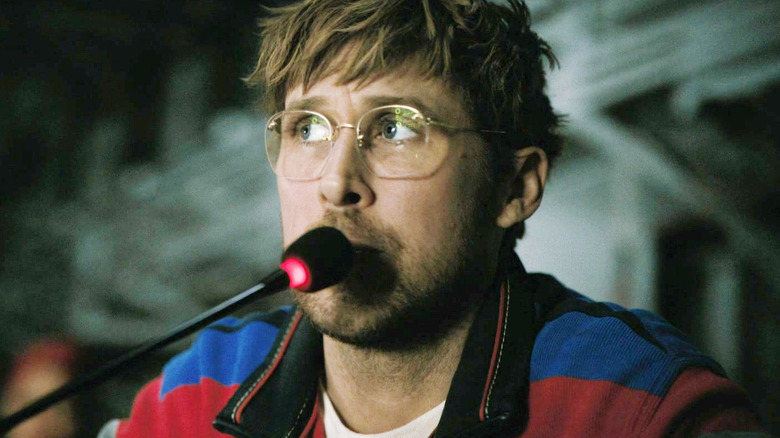
Just as Andy Weir's "Project Hail Mary" novel took the world by storm upon its publication in 2021 (becoming a Hugo Award finalist and appearing on the New York Times' best-sellers list for more than a year), the film adaptation of his book remains one of the biggest cinematic success stories of 2026. Audiences the world over have fallen head over heels for Ryan Gosling's unlikely human space traveler Ryland Grace and the living, adorable, alien rock-spider that is his Eridian buddy Rocky, and there are lots of great sci-fi books worth reading if you enjoyed "Project Hail Mary" (both directors Phil Lord and Chris Miller's movie version and Weir's novel alike). But what about those of the non-sci-fi variety?
It depends on what you want. If you're looking for tales about survival and/or characters who are either from different cultures or belong to different species befriending one another, we've got you covered. But what about stories revolving around individuals who experience the world very differently from your average person (much like Rocky)? Or those where the central characters must make sense of their pasts, and form a better understanding of their identity, so that they might do some good in the present (à la Grace)? Some of our picks here may seem outside the box at passing glance, but take a closer look with us, and you'll see these are perfect reads to follow up "Project Hail Mary" with.
Robinson Crusoe
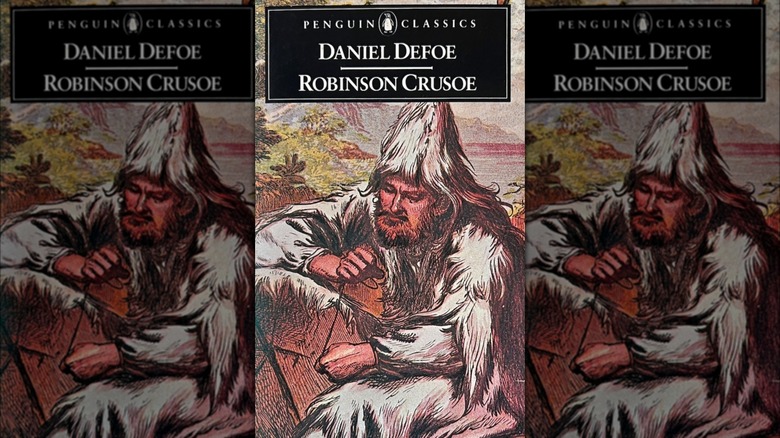
Published 307 years ago, Daniel Defoe's "Robinson Crusoe" was probably one of the many books on your junior high school summer reading list. It's also probably one you skimmed since its archaic language was difficult to muscle through. It's high time, however, that you take a proper swing at the novel, itself a rich and open-minded narrative about distant locations, survival, and, most importantly, cultural exchange. Sure, it's also an old-world colonialist fantasy, but it might be seen as being progressive for its time. It was published in 1719, after all.
You likely know the story from general cultural osmosis. Robinson Crusoe goes on a series of ill-fated sea voyages that, after a few years, see him landing in Brazil as a stern, uncaring individual who enslaves people. Then, while sailing to Africa to kidnap more enslaved people, Robinson is thrown off course by a storm and crash-lands on a remote uncharted Venezuelan isle. He remains there for many years, having to rely on whatever tools wash ashore from the shipwreck to survive. The book details what Robinson builds and his growing comfort with living off the land.
The wrinkle comes with the introduction of Friday, a prisoner Robinson frees from a tribe of itinerant marauders. He teaches Friday English, and the two gradually join forces to fight marauders, construct boats, and free other prisoners.
Is it old-fashioned? Very much. Is it still a roaring good adventure book about survival and cultural exchange (à la "Project Hail Mary," minus the sci-fi elements)? Also yes. It's high time you finally got around to reading "Robinson Crusoe." (Witney Seibold)
Small Things Like These
When we meet Ryland Grace in "Project Hail Mary," he doesn't know who he is in more ways than one. On an immediate level, he has to overcome the temporary amnesia he's been afflicted with to remember why he's even on a spaceship far, far away from Earth in the first place and what he needs to do to save his home planet. But in unearthing his memories, Grace is also forced to confront some hard truths about his life and who he is, all of which begs the question: When the chips are down, will he rise to the occasion and do what's right, even at his own expense?
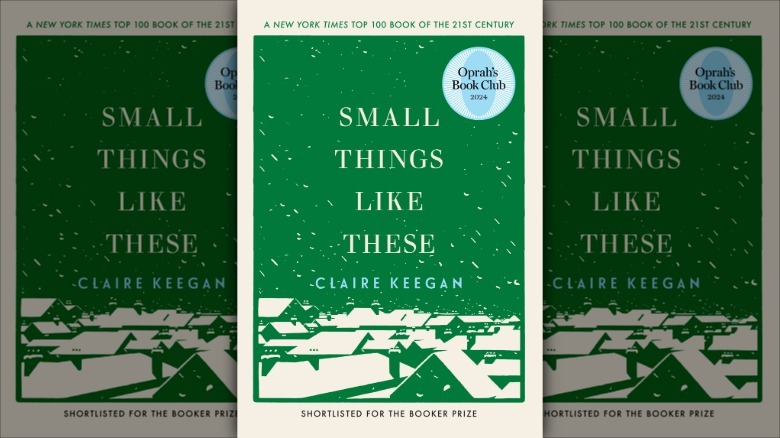
Take away all the space stuff, and that's essentially the same dilemma that Bill Furlong is faced with in Claire Keegan's wonderful novella "Small Things Like These." Billy is about as different from Grace as one can be, being a taciturn, middle-aged Irish coal and fuel merchant caring for his family under the malevolent reign of UK Prime Minister Margaret Thatcher in the 1980s. Yet, he, too, is hit with a crisis of conscience when he meets a girl at a supposed Catholic training school that's really a Magdalene laundry (where young women deemed "difficult" are abused and enslaved for labor).
Keegan's sparse diction brings not just her story's small-town religious Irish backdrop but also Bill's memories of his childhood to vivid life. By revisiting his past, Bill, like Grace, comes to see himself in a whole new light as well, and this newfound understanding spurs him to action in a way that reflects the hopeful spirit of Andy Weir's sci-fi tale. Even better, there's a solid film adaptation starring the great Cillian Murphy that you can check out after reading Keegan's book. (Sandy Schaefer)
The Travelling Cat Chronicles
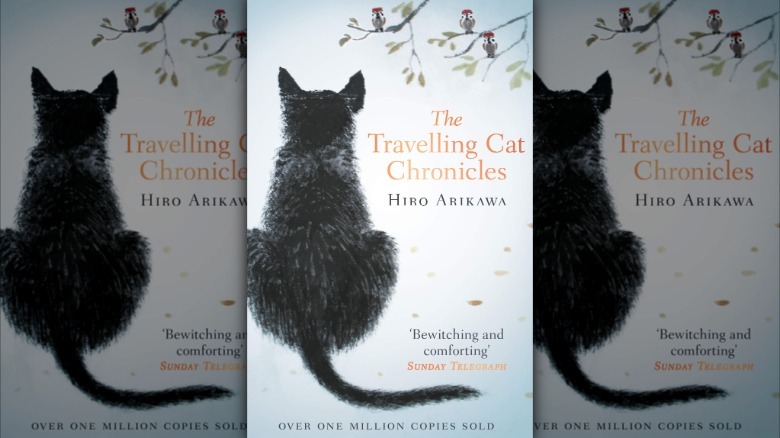
What would your life look like through the eyes of your animal companion(s)? It's a conceit many stories have employed before, though few to such humbly profound and moving effect as Japanese author Hiro Arikawa's novel "The Travelling Cat Chronicles." The book follows the cat Nana and "his beloved Satoru" (as its official synopsis describes him) as the pair visit various friends from Satoru's youth across a year in Japan. And while I won't divulge the purpose of their trips (something Satoru himself is vague about, for reasons that are equally personal and cultural), the "mystery" is merely the engine that propels the narrative, not the focus.
Like "Project Hail Mary," Arikawa's tale is a funny yet emotional ode to the importance of the connections we make with others as we undergo the journey we call life, including those with members of different species. It's also about the ways the past shapes us. As with Andy Weir's best-seller, "The Travelling Cat Chronicles" intersperses flashbacks that reveal its characters' backstories with the events unfolding in the present, showing how the two are always linked. Most of all, it's a novel that understands our existences are full of shocking detours and turns that threaten to break our spirits and shatter our hearts. It's the unspoken wisdom and company of our (in our eyes, often endearingly oddball) animal companions that allows us to better navigate these tumultuous waters and reflect upon our own imperfections without judgement.
Okay, I will include one spoiler for all my fellow cat-lovers: Nana does not die and is still going at a ripe old age by the end of the book. Would that we were all so fortunate. (Sandy Schaefer)
Whalefall
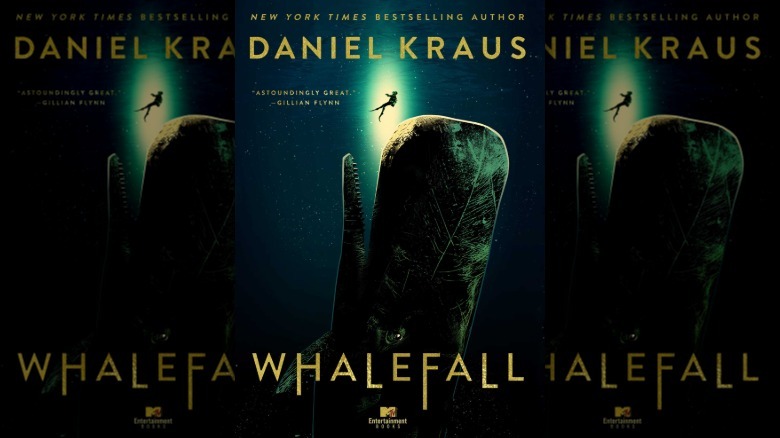
Everyone has already told you to read Andy Weir's "The Martian" after you finish "Project Hail Mary." But perhaps not everyone has told you to also ready Daniel Kraus' "Whalefall," which is like "The Martian" if you replaced the red planet with a sperm whale. (Suffice it to say, we're excited to see how the "Whalefall" movie brings this "unadaptable" story to the screen.)
The book's seemingly ridiculous high concept is treated with realism, raw terror, and utter sincerity: a young diver, looking for the sunken remains of his father, is accidentally ingested by a whale. Trapped inside the giant animal, and with his oxygen rapidly running out, he must use every shred of knowledge, every bit of strength, and every morsel of willpower to stay alive and find a way out. The result feels like a cousin to Weir's sci-fi fi survival stories, albeit set entirely on Earth and essentially in real-time. The pages turn so fast that you'll find yourself compelled to finish "Whalefall" as quickly as possible as the tension, horror, and triumph ramp up to unbearable levels.
Kraus, who recently won the Pulitzer Prize for his equally daring dark fantasy novel "Angel Down," is an incredible writer whose prose transports the reader into this awful situation with an immediacy that feels startling. And like "Project Hail Mary," this book is a masterclass in how to use flashbacks to enhance the drama and emotional impact of any moment. "Whalefall" is "Project Hail Mary" with a poet's heart and an adrenaline junkie's pace. (Jacob Hall)
The World I Live In
One of the most interesting elements of "Project Hail Mary" is its imagining of how humans might learn to communicate with an alien species. A major challenge that Grace and Rocky have to overcome is the fact that they experience the world very differently. Rocky, who has no eyes and relies on sound waves to observe his surroundings, can see objects through walls but can't see printed words or appreciate the majestic beauty of the planet Adrian (which he dismisses as "boring").
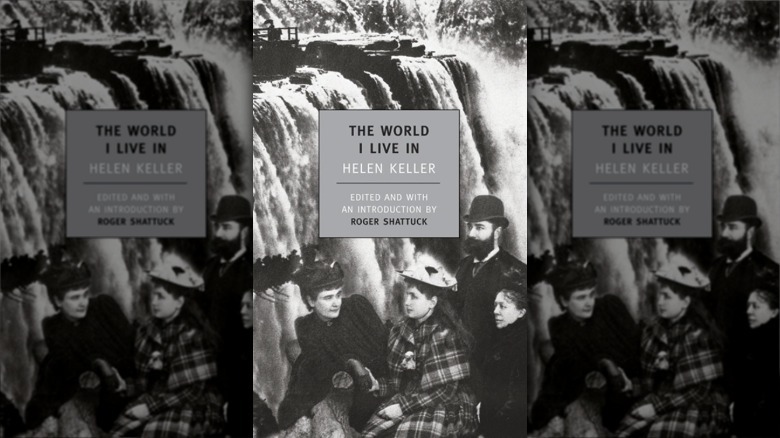
When you've spent your whole life using your eyes to see the world, it's hard to conceive of experiencing it any other way. But writer and activist Helen Keller, who lost her hearing and eyesight when she was still a baby, attempted to provide some understanding with her book "The World I Live In." This collection of essays uses poetic, evocative prose to explain how her remaining senses — touch, taste, and smell — give her a keen awareness of the world around her.
Though she can't see using sound, in the way that Rocky does, Keller's observation of her surroundings through vibrations in the air certainly bears some resemblance to the Eridian experience. "Sometimes, it seems as if the very substance of my flesh were so many eyes looking out at will upon a world new created every day," Keller writes:
"There are tactual vibrations which do not belong to skin-touch. They penetrate the skin, the nerves, the bones, like pain, heat, and cold. The beat of a drum smites me through from the chest to the shoulder-blades [...] Every atom of my body is a vibroscope."
"The World I Live In" is a fascinating read for anyone curious about seeing things from an "alien" point of view. (Hannah Shaw-Williams)