

Jeff Bridges And A Legendary Director Were In One Of The Best '70s Political Thrillers
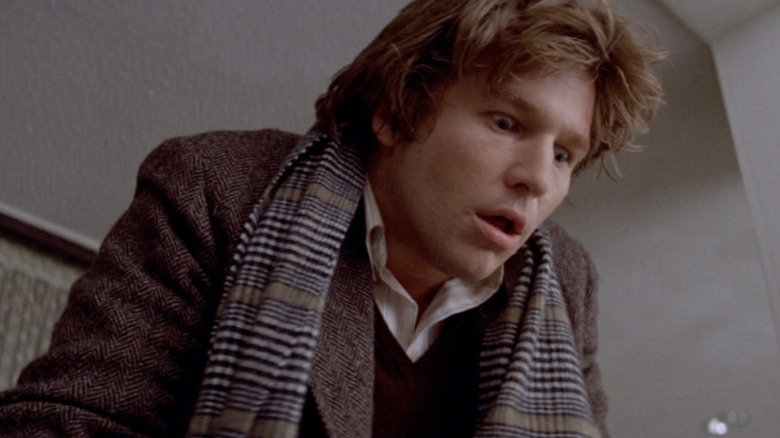
The 1970s were a golden era for the political conspiracy thriller, as various real-life issues and artistic trends came to a head during that decade. In terms of real-world political affairs, the turbulent 1960s leading up to the Watergate scandal and the 1974 resignation of Richard Nixon contributed greatly to films about conspiracies in the upper echelons of government. Meanwhile, the advent of the Hollywood New Wave along with the freshly revamped MPAA saw American filmmakers become even bolder in their work. The political conspiracy thriller borrowed from genres as diverse as film noir, spy movies, and even horror films, as they typically followed Everymen who find themselves in over their heads.
Picking the best '70s conspiracy thriller is a tough call, but 1979's "Winter Kills" is a top contender for the most '70s conspiracy thriller. The film was based on author Richard Condon's 1974 novel, and not only had Condon penned an earlier novel which was turned into a conspiracy thriller classic ("The Manchurian Candidate"), the book also tells a story that's a thinly-veiled allegory for arguably the most famous conspiracy theory topic of all time, the John F. Kennedy assassination. As if that wasn't enough, the movie, which began shooting in 1977 with a stacked cast (including Jeff Bridges in the lead and legendary director John Huston as his father), was actually shut down for over a year.
The delay forced writer/director William Richert to make a whole other film in between to raise funds, while producers Leonard Goldberg and Robert Sterling were murdered and imprisoned, respectively, by the time the movie finally opened in 1979. As all that implies, "Winter Kills" is one heckuva film.
Winter Kills belongs to John Huston's unhinged acting resume of the 1970s
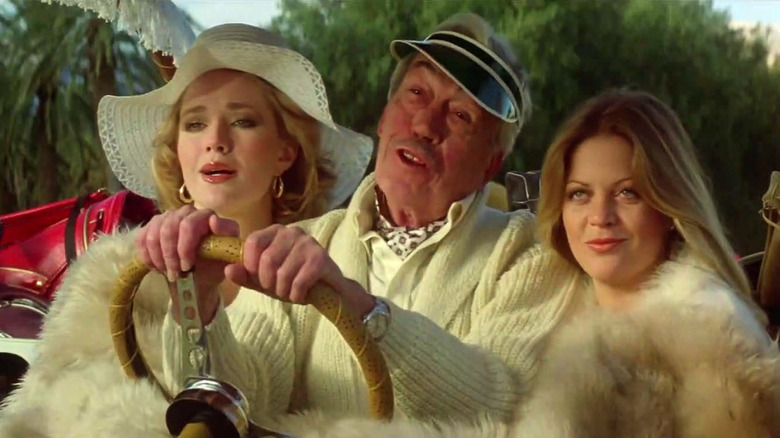
John Huston was a director as successful as he was prolific. His very first movie in the director's chair was the 1941 film noir classic "The Maltese Falcon," for cryin' out loud. From there, Huston made further landmark films like "The Treasure of the Sierra Madre," "The African Queen," "Fat City," "The Man Who Would Be King," and the film version of "Annie" in 1982. Yet Huston wasn't just a gift behind the camera; he was also electric in front of it. His strong basso profundo speaking voice and regal demeanor made him ideal casting for authority figures, or shady criminals, or even God himself, as in 1966's "The Bible: In the Beginning."
Huston clearly had a sense of humor about himself, too, certainly when it came to being an actor. In addition to appearing in more prestigious movies like "The Wind and The Lion," and "Chinatown," Huston enjoyed turning up in offbeat films like "Myra Breckinridge" and "Battle for the Planet of the Apes" (in which he played one of the intelligent Apes, naturally). He also clearly loved to cash a check from the Italian exploitation filmmakers, too, as he made memorable appearances in wackadoo '70s Italian genre films like "Tentacles" and "The Visitor." His appearance in "Winter Kills" feels like a crossroads between his film noir heritage and these exploitation dalliances. His role as Pa Kegan allows him to be both a foreboding, powerful man and a hedonistic kook. Huston clearly admired the material, for he later adapted another Richard Condon book to the screen, "Prizzi's Honor," in 1985.
Winter Kills is worth seeing for more than just Bridges and Huston
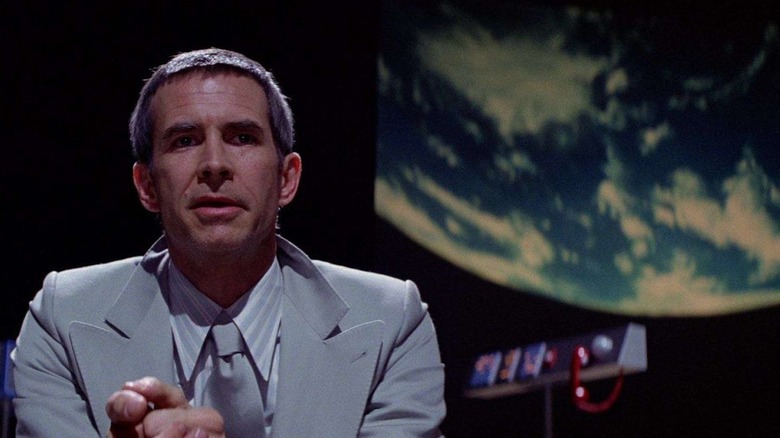
"Winter Kills" contains a great supporting role for John Huston, no doubt. Yet it's also an underappreciated leading role for Jeff Bridges, too, who was still enjoying the "all-American boy" screen persona he'd established with "The Last Picture Show" in 1971. Bridges' performance as Nick Kegan, an heir apparent to a family dynasty that he discovers may have numerous skeletons in its closet, presages the second act of his career, leading to his roles in movies like "Cutter's Way," "Against All Odds," and "Jagged Edge." This is only the tip of the iceberg when it comes to the deep bench of actors in "Winter Kills." The film also features Belinda Bauer, Ralph Meeker, Toshiro Mifune, Eli Wallach, Sterling Hayden, Tomas Milian, Elizabeth Taylor, Anthony Perkins, and the unofficial king of New York City himself, Joe Spinell. One can see, even with this incomplete cast list, why William Richert was so interested in trying to finish the film after it faced a behind-the-scenes fiasco.
Although "Winter Kills" is a consummate '70s political conspiracy thriller, it's not as oppressive as its contemporaries like "Three Days of the Condor" or "The Parallax View." Instead, its tone hews closer to Stanley Kubrick's "Dr. Strangelove" in its black comedy, which parallels Richard Condon's source novel. The film has a unique surreal quality, as Nick Kegan keeps encountering people and situations that become increasingly unbelievable and bizarre. It's far from the final word on the Kennedy assassination or political conspiracies in general, but the way it manages to capture the simultaneous absurdity and indignation of the topic is second to none. If nothing else, "Winter Kills" is one of the most singular conspiracy thrillers you'll ever see.