

Not Everyone Likes The Federation: Star Trek's Maquis Explained
Welcome to Trekspertise, a series where we break down the technology, history, details, and decisions that make the Star Trek universe so complex — and so fun.
Trekkies will often tout the utopian aspects of "Star Trek" with great enthusiasm. In the vision of show creator Gene Roddenberry, the future will be a more peaceful place where prejudice has been overcome (at least on Earth), nations are united, and war is a thing of the past. By the days of "Star Trek: The Next Generation," the utopia only became more bracingly clear. This is a post-capitalist civilization, wherein miracle technologies like food replicators and faster-than-light travel facilitate efficient resource allocation, ensuring that no one will be sick or hungry anywhere in the Federation. Ships are devoted to scientific study and exploration, and the officers on those ships are all ostensibly experts in diplomacy and negotiation.
But, as seen in the two-part "Star Trek: Deep Space Nine" episode "The Maquis," there are those in the Federation who resent the organization, as it often fails at its job. Because the Federation isn't devoted to combat, they aren't necessarily well-equipped to rattle their sabers when dealing with a violent, devious, warlike species who would be all too happy to start fighting. Say, the Cardassians. And if the Federation's skilled negotiators have to "peacefully" cede some of their own worlds to the Cardassians as part of a potential peace deal, well, the citizens of those worlds just might be a little miffed to be suddenly living under Cardassian rule.
Those citizens might even form their own anti-Cardassian terrorist fighting force, even if the Federation doesn't approve. The force, called the Maquis, would be hated by both the Federation and the Cardassians.
The Maquis serve as a major part of "Deep Space Nine" and, later, "Star Trek: Voyager."
The Maquis are a freedom fighting force that formed after the Federation abandoned them
In a storyline on "Star Trek: Deep Space Nine," the Federation and the Cardassians redraw the borders of the demilitarized zone between their territories to form a more friendly relationship. In so doing, the Federation does indeed cede several worlds to the Cardassians. The Federation, not being complete a-holes, do offer to relocate every single colonist to whatever safe planet they might choose, but the colonists are peeved by the choice, not wanting to leave planets some of them have lived on for years.
Rather than move or subject themselves to Cardassian rule, the colonists form the Maquis, an armed terrorist group that fight the Cardassians at every available opportunity. The Maquis put the Federation in an awkward spot, as the organization had ceded the Maquis planets and isn't allowed to help them. In fact, it's illegal for Starfleet officers to help the group's violent cause, and Starfleet vessels often try to stop the Maquis, getting into armed scrapes.
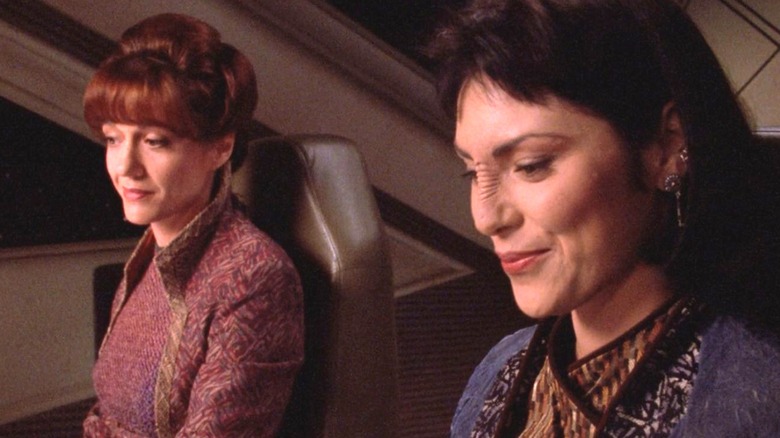
This causes a lot of resentment and even defection among Starfleet, as more and more officers become sympathetic to the Maquis's plight. Many Starfleet officers even go out of their way to secretly sell weapons to the Maquis. When a Starfleet officer defects to the Maquis — which happens more often than you might think — it's viewed as the ultimate betrayal. This is the main plot of the "Star Trek: The Next Generation" episode "Preemptive Strike," which sees Ensign Ro (Michelle Forbes) defecting to the Maquis, and the subsequent disappointment from Captain Picard (Patrick Stewart).
The Maquis are also a major part of "Star Trek: Voyager," as several Maquis members become the crew of that show's titular ship.
The Maquis were a major part of Star Trek: Voyager
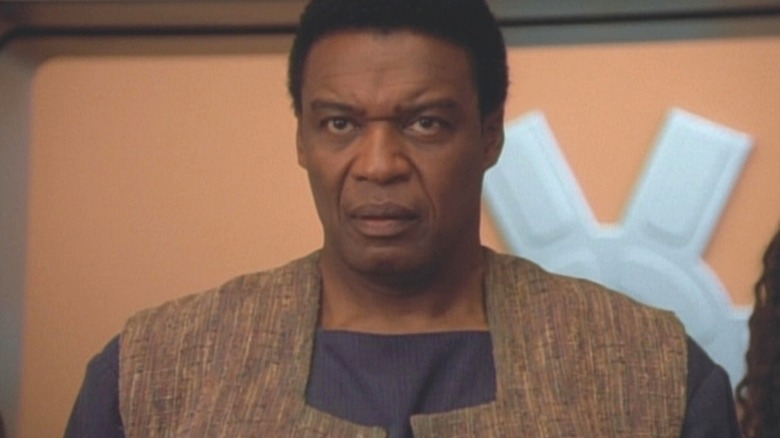
On "Deep Space Nine," the Maquis test the morals of Commander Sisko (Avery Brooks). Sisko wants to make sure that there is peace between the Cardassians and the Federation, but also is startled to find an old friend named Cal Hudson (Bernie Casey) has defected to the Maquis. Sisko finds himself having to fight an old friend, aiding the evil Cardassians. It's morally tricky.
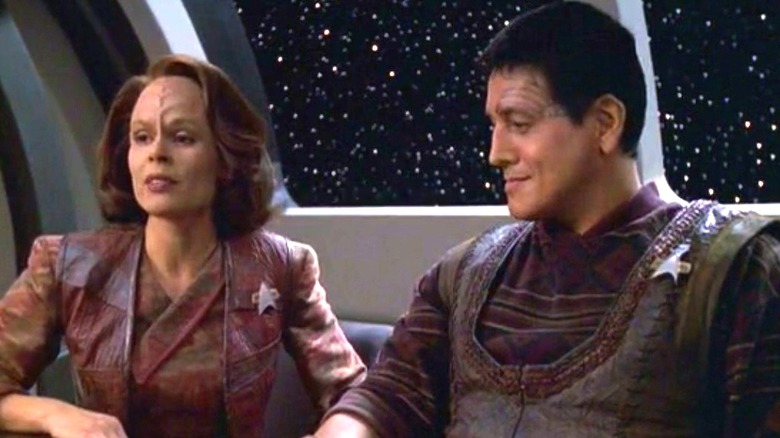
In the pilot episode of "Star Trek: Voyager," the USS Voyager finds itself locked in battle with a Maquis vessel, aiming to arrest the terrorists. Both vessels, however, are suddenly and without warning whisked clear across the galaxy in a matter of seconds, brought there by a godlike alien called the Caretaker. When the Caretaker subsequently dies (!), the Voyager and the Maquis crew are suddenly stranded together over 70 years from Earth. Captain Janeway (Kate Mulgrew) welcomes the Maquis to become a part of the Voyager crew so they can make the trip home together. As a show of good faith, Janeway allows the Maquis captain, Chakotay (Robert Beltran), to be her first officer, and their engineer, B'Elanna (Roxann Dawson), to become her chief engineer.
One might assume this would create a great deal of dramatic tension on "Voyager," as the Maquis are suddenly cowed by Starfleet. Sadly, a lot of the show's tension is melted right away when the Maquis fighters all agree to this relationship/gig without much static. "Voyager" writer Ron D. Moore has gone on record saying that the Maquis's instant capitulation was a mistake.
Sadly, as explored by /Film in the past, the Maquis's mission to repel the Cardassians was not successful. When the Cardassians ally with the ultra-vicious Dominion, the Maquis fighters are all handily wiped out. R.I.P., guys.