

5 Forgotten Spy Thriller Movies That Still Hold Up Today

There are certain professions we know about only through the movies. Assassins, for one. If the movies are to be believed, the world is lousy with professional assassins, and they all live rich, exciting lifestyles because of the immense cash they haul in from professionally murdering people. Movies also often assure me that there are secret police detectives everywhere, constantly bagging bad guys and generally keeping me safe from an ill-defined scourge of criminal villainy.
And, of course, I know exactly what spies do, thanks to the movies. James Bond in particular has taught me that government spies spend a lot of time using fun, high-tech gadgets in beautiful international locations, stopping rogue billionaires and evil foreign governments from enacting mad doomsday plans. James Bond has a license to kill, so I know that spies are legally permitted to commit murder. Also, they get to have lots and lots of sex. That part is definitely a key factor of the average male's spy-game fantasy.
The spy fantasy is so pervasive in popular culture that spy movies are being made pretty constantly. Some lean heavily into secrets and intrigue, while others skip trippingly over to the bright and comedic, but all of them offer a fascinating glimpse into a secret world that civilians don't ordinarily get to see. Spies have secret information that allows them to tinker with the vast machinery that runs everything, and we love seeing them do it. We have a long list of the best spy movies ever.
Below is a list of five largely forgotten spy movies of varying tones that are still great in the '20s. They come from across several decades, but each one is enjoyable to a modern audience. Read and memorize these titles, agent. This message will self-destruct.
Army of Shadows (1969)
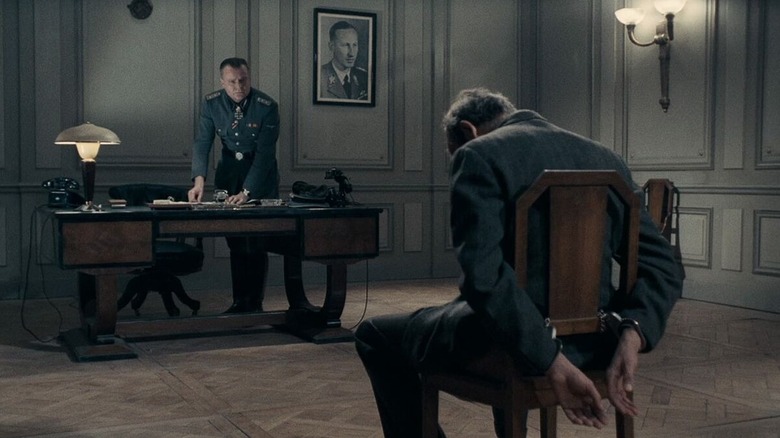
Back in 2006, Jean-Pierre Melville's excellent French Resistance movie "Army of Shadows" was remastered and released in the United States for the first time. There was some brief debate if a film made in 1969, but never given a proper theatrical run, should count as a new release and be eligible for that year's Academy Awards. At the very least, "Army of Shadows" made multiple critics' top-10 lists in 2006, and it was granted a Tiffany Blu-ray release by the Criterion Collection.
"Army of Shadows" is a terse, down-to-earth thriller that highlights the nihilism that constantly threatens to invade the minds of the French Resistance during World War II. The movie points out that Resistance fighters all live off-the-record, using fake addresses and fake names, and that they can each be caught by the Nazis at any minute. Living as a spy isn't sexy, this film notes; instead, it can be the most depressing thing imaginable. But the Nazis need to be defeated, so the fight goes on, even in the face of random, anonymous death. Paul Meurisse plays a philosophy teacher named Luc Jardie, and the most prominent character is played by Lino Ventura, a commander of some sort who leads a small cadre of Resistance fighters.
In one of the film's bleakest and funniest scenes, the Resistance fighters find a traitor in their midst and know he must be killed for the safety of the movement. The problem is, they need to do it in an apartment with some new neighbors. They debate if stabbing or strangulation is preferable. These are the types of debates one must have when underground. And, of course, the violence will have to be done. It's a bleak, grounded, complex film, and one of Melville's best. It's very different from his lightweight heist movies.
Hopscotch (1980)
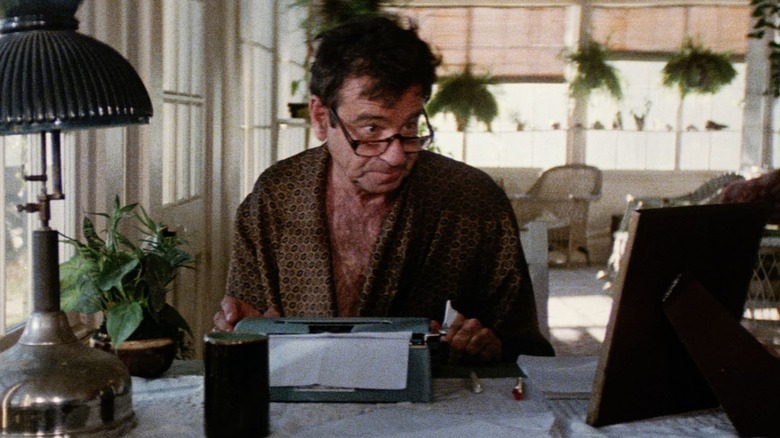
Ronald Neame's "Hopscotch" may be the pleasantest, shaggiest spy movie you'll ever see, mostly because it stars cinema's greatest hangdog, Walter Matthau (in full-bore "The Taking of Pelham One Two Three" mode), as an-CIA operative with a blunt demeanor and a legitimate bone to pick. The story of "Hopscotch" is quite fun. Matthau plays Miles Kendig, a CIA field agent who accidentally lets a KGB agent get away during a high-profile bust. His new boss (Ned Beatty) takes him out of the field as a result and tries to put him behind a desk. Rather than merely lay low, though, Kendig burns his own files, flees the country, and sends clues to the CIA that he's trying to be a defector (even though he isn't). His goal is to outwit and embarrass the CIA out of spite. And it's hilarious. It's not long before Kendig is mailing chapters of his spy memoir to various agencies around the world. Argh!
Much of the pleasure of "Hopscotch" is watching Matthau sneak around the world. In my favorite sequence, Miles buys the summer cottage that the Ned Beatty character owns and moves in just to be a jerk. There is a lot of comedic panic, but never from Matthau. He is always grumpy, collected, and at complete ease hoodwinking his former bosses. Yeah, this movie is a hoot.
And it, too, was given the star treatment by the Criterion Collection. One can generally trust the taste of the Collection's curators.
Sneakers (1992)
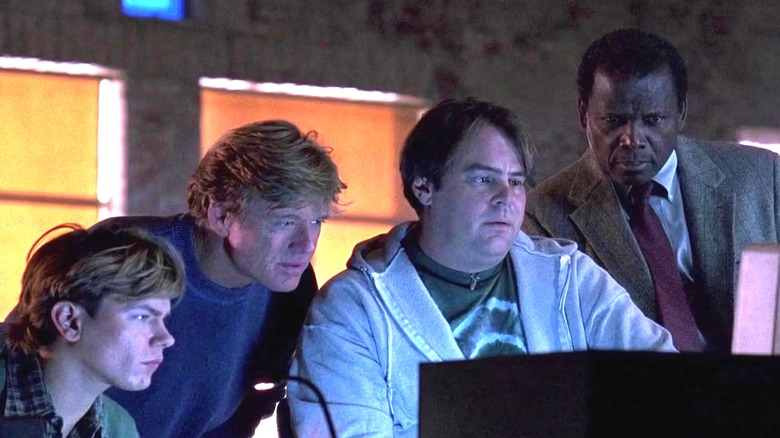
Released just after the coup in Russia, Phil Alden Robinson's "Sneakers" swirled up out of post-Soviet malaise, international uncertainty, and the growing technology that seemed to be forming a new skeleton inside of it. World powers have moved onto computers, and modern spying now involves a lot of hacking and code-breaking. Mainframes are now battlefields.
"Sneakers," however, is presented like a light, character-driven heist picture about a ragtag group of misfits who are unwittingly roped into international intrigue. Robert Redford leads a team of self-described sneakers who professionally break into banks and other high-security places as a means of testing their security. The cast is amazing: Sidney Poitier plays an ex-CIA man, Dan Aykroyd plays the conspiracy-theory-loving engineer, River Phoenix plays the skilled hacker kid, and David Strathairn plays the blind sound man. Mary McDonnell plays Redford's ex, who gets pulled back into his world when he and his team are duped by ... someone ... into stealing a powerful code-breaking computer chip. Ben Kingsley plays a mysterious figure from Redford's past.
"Sneakers" is a delight from beginning to end. The central team must perform several sneaks and heists, sometimes in a bumbling fashion, but with undeniable skill. And their banter is hilarious; the scene wherein Strathairn feeds bad "dialogue" to Redford via an earpiece is one of the funniest scenes in a wildly entertaining movie. And even though the tech may be dated to a modern eye, the drama's intensity remains as powerful as ever. Also, the post-Soviet malaise about an untrustworthy American government manipulated by bitter millionaires ... well, that certainly still plays.
This is also one of the late James Horner's greatest scores. "Sneakers" is so damn good.
Spartan (2004)
Too many Hollywood screenplays are simultaneously too clear and not clear enough. Dialogue can often feel functionary, there only to explain the plot or speak emotions out loud. Think of a James Bond movie. In dialogue scenes, James Bond is given an assignment, so we know why he leaves England, but then there are so many twists that the plot kind of vanishes. Why is he on board that submarine again?
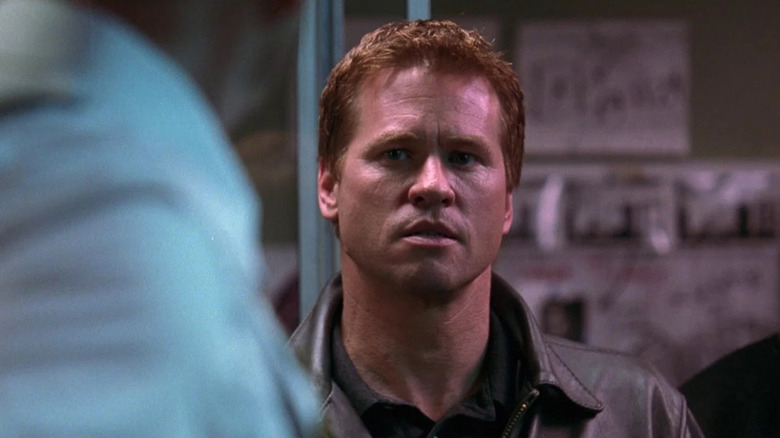
The screenplay for David Mamet's "Spartan" is the exact opposite. The plot and the driving motivations are clear, but the dialogue is refreshingly opaque. Mamet is clearly very fond of "shop talk" in his movies, allowing characters to converse with a particular professional patois that casual audiences may not understand, but that the characters do. If we're sharp (and we are), we soon begin to know what some of the slang means as well. In "Spartan," the late great Val Kilmer plays a former Marine named Robert John Scott who is now part of the Delta Force. He is tasked with finding the president's daughter, who has gone missing.
The ensuing investigation is part spy thriller, part Raymond Chandler, as Scott meets a smattering of mysterious thugs who seek to impede his progress. He will eventually delve into an international sex trafficking ring, and a series of deeper and deeper secrets and double-crosses. Scott eventually finds that he might have more principles than anyone he has met so far, and has to undo new waves of wickedness he didn't expect.
"Terse" is the perfect word for David Mamet movies, as he loves banter, cold-hearted people, and the weird language of ultra-professionals. "Spartan" also seeks to unpack a lot of traditionally masculine roles in movies by examining where such images came from.
OSS 177: Cairo, Nest of Spies (2006)
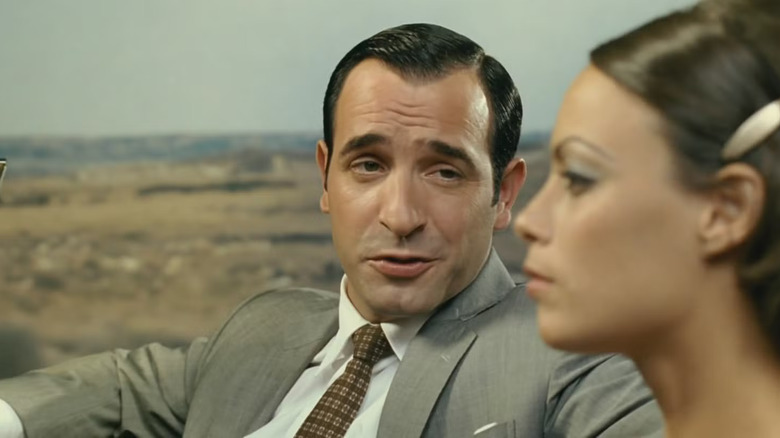
Jean Bruce's first novel to feature Hubert Bonisseur de La Bath, a.k.a. OSS 117, was published back in 1959, and Bruce wrote some 88 novels to feature the character. In the books, OSS 117 was an American from Lousiana who also once worked for the CIA and the NSC, and the novels were very popular in France, helping to further codify the genre, which was also explored by Ian Fleming.
In 2006, French filmmaker Michel Hazanavicius and actor Jean Dujardin (the team behind the 2011 Oscar winner "The Artist") decided to use the OSS 117 character as fodder for a "Pink Panther"-like spoof. In "OSS 117: Cairo, Nest of Spies," reality is a little bent, and the titular spy seems impervious to harm. He never stops smiling, and Jean Dujardin definitely gives off Peter Sellers energy. He is rude and utterly clueless, and the character's flippant ignorance of Muslim culture is played as a running gag. Meanwhile, OSS 177's "sidekick," Larmina (Bérénice Bejo), is smarter than him in every way, only kept out of the limelight by the sexism of the film's midcentury setting.
"OSS 117" was seemingly shot on vintage cameras and used vintage film stock to look like a Technicolor thriller from the 1960s, and its glittering photography only adds to the bonkers, offensive energy of the movie. If you had been missing the spoofs of the '60s, this one will take you right back; it's nearly perfect in its look and its attitudes. And the spy story, taken from Jean Bruce's novels, isn't bad either. It was followed by a not-quite-as-good sequel, "OSS 177: Lost in Rio" in 2009, and by "OSS 177: From Africa With Love" in 2021. We once called Dujardin's performance in "Cairo" as one of the best of its year.