

Jackie Gleason's Short-Lived '50s Sitcom Is An Influential Masterpiece Worth Revisiting
We may receive a commission on purchases made from links.
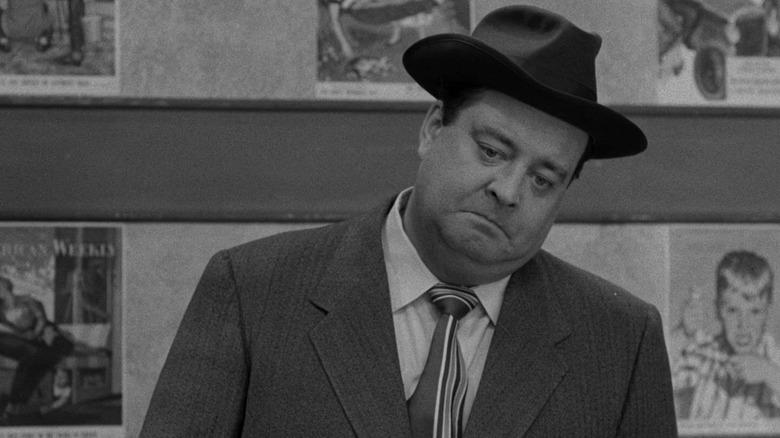
If you've ever seen any sitcom, then you've probably seen "The Honeymooners." If you were to remove Jackie Gleason's celebrated 1955 comedy series from history, you would rewrite the entire map of popular culture. Between "The Honeymooners" and 1951's "I Love Lucy," the template for the sitcom medium was firmly established, and every single show that has followed copied stories, situations, character types, or timing from one of them. Those two shows are the grandparents of everything you watch.
You might have absorbed elements of "The Honeymooners" without even realizing it. Ralph Kramden (Gleason) serves as the template for every sitcom about a short-tempered, money-hungry male protagonist. Ralph is a non-intellectual blue-collar boob who loves billiards and bowling. One can see echoes of Ralph Kramden in Archie Bunker, Al Bundy, Homer Simpson, Peter Griffin, Doug Heffernan, and hundreds of others. Ralph's wife, Alice (Audrey Meadows), is also a universal character type seen in every sitcom protagonist's long-suffering spouse. Ralph's clueless best friend Ed Norton (Art Carney) is echoed in every dippy neighbor/best friend throughout sitcom history. Kramer from "Seinfeld" is a child of Norton.
And, of course, many of you might have seen "The Flintstones," which is a clean ripoff of "The Honeymooners." Ralph Kramden and Fred Flintstone are practically the same character, while Barney Rubble is wholly Norton in voice and demeanor.
Despite the show's reputation and influence, it's rare to find someone in the '20s who has seen "The Honeymooners" first-hand. Some Gen-Xers might have seen reruns as kids, but the series — perhaps because of its dated humor — hasn't persisted into the present. The closest we came was a "Honeymooners" feature film in 2005 starring Cedric the Entertainer. It bombed.
Maybe we should re-watch "The Honeymooners" and learn a little history.
Your grandparents loved The Honeymooners
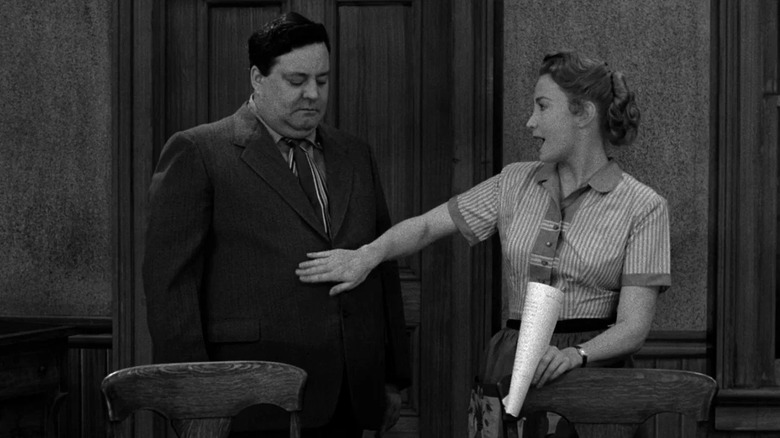
"The Honeymooners" was a perfect post-WWII series about the rise of blue-collar America and the sudden shift toward wealth. Ralph Kramden works as a New York City bus driver whose job isn't providing him with the money or the edification he desires. Because of his temper, Ralph often screams and insults the people around him, but no one around him takes him very seriously. Indeed, Alice often cuts back with annoyance or a comedic counter-insult. In the show's most dated running gag, Ralph would often raise a fist to Alice and scream "To the moon!" as a means of threatening physical abuse.
The "to the moon" gag was spoofed on "Futurama" ("He was just using space travel as a metaphor for beating his wife") and on the George W. Bush parody series "That's My Bush!" ("One of these days, Laura, I'm going to punch you in the face!").
Ralph was the main character of "The Honeymooners," but Alice was in charge of the Kramden household. She was in charge of Ralph's finances, which was novel in the mid-1950s. Norton was often seen as Ralph's unwitting accomplice, but was really just good-natured and tolerant. Both Alice and Norton were perfectly balanced with the shallow blowhard Ralph. Alice would take him down a notch, and Norton would merely absorb his ire.
It's curious to consider that "The Honeymooners" wasn't terribly long-lived. It only ran for one 39-episode season, going off the air in September of 1956. Gleason was quoted in Donna McCrohan's "The Honeymooners Companion" that he decided to end the show while the quality was still high. The series went into syndication after that, and reruns stayed in rotation for decades.
Straight to the moon
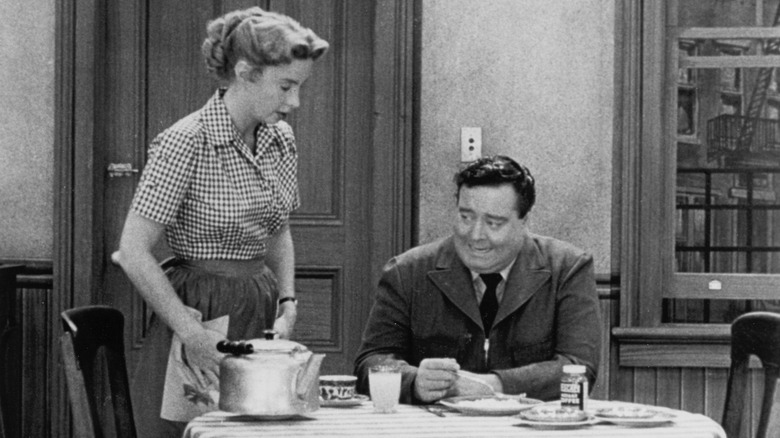
"The Honeymooners" lived on in fits and starts after 1956, however. New Ralph Kramden segments were filmed for "The Jackie Gleason Show," and featured musical numbers. Those episodes popped up kind of randomly throughout the 1960s. Art Carney won five Emmys for playing Ed Norton over the years, and Audrey Meadows won for playing Alice.
The series was so influential, it was remade overseas for years. The 1960s Quebecois version of "The Honeymooners" was called "Cré Basile." In the '90s the show was remade incessantly throughout Europe. It was "Toen Was Geluk Heel Gewoon" in the Netherlands, "Rena Rama Rolf" in Sweden, and "Miodowe Lata" in Poland. There was even an Indonesian version called "Detak Detik." Something about an amusing, grumpy working-class dude was universal throughout the globe and throughout the decades.
The influence of "The Honeymooners" is felt more sharply in the present day than anything from the show itself. "The Honeymooners" may strike a modern audience as old-fashioned and cliched. It should be remembered, though, that all cliches and stories started somewhere, and "The Honeymooners" originated a lot of them. It was one of the evolutionary flashpoints for the sitcom medium. A lot of the series lives on online, however, and bundles of the original series, some shorts that predated the series, and a lot of the post-cancelation follow-up episodes can be purchased through Prime Video. Other services like Tubi have "lost episode" collections of just the shorts. I assure you that when you begin watching "The Honeymooners," your entire pop culture map will be rewritten. You may even begin to resent "The Flintstones" for being more successful.