

Tony Director Matt Johnson Reveals 'The Best Scene In The Movie' And Why It Works So Well [Exclusive Interview]
Matt Johnson is having a great year. He directed and starred in the brilliant and criminally underseen "Nirvanna the Band the Show the Movie," a hilarious continuation of his webseries from several years ago, and now he's back behind the camera with his second film of 2026.
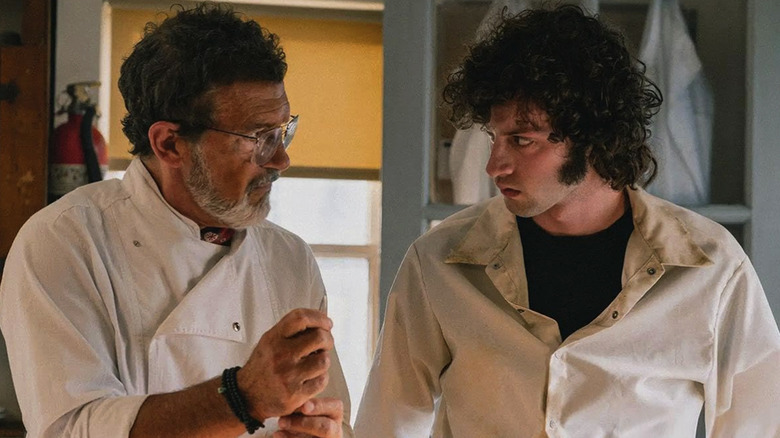
"Tony" tells the story of a crucial period in the life of the late, great chef, author, and travel show host Anthony Bourdain, who died in 2018 and meant (and still means) a lot to a lot of people — myself included. The movie is not 100% accurate, but that doesn't matter — I had my doubts, but the trailer didn't lie: the film taps into the spirit of Bourdain as a young man, played here by "The Holdovers" breakout Dominic Sessa, and presents a compelling coming-of-age dramedy where he happens to get a job in a New England kitchen and learns about the art of food from the chef (Antonio Banderas). "Tony" is a little like Bourdain himself: brash, loud, and occasionally a little obnoxious, but ultimately full of heart.
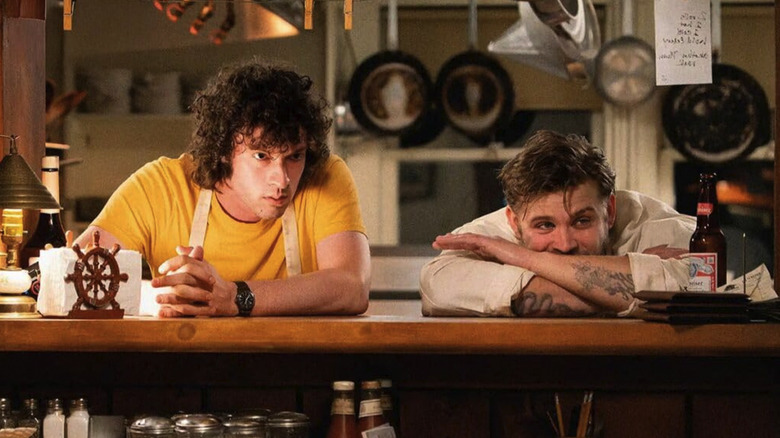
I spoke with Johnson and stars Dominic Sessa and Stavros Halkias about the meta aspect of Sessa's starring role, capturing the camaraderie and chaos of the kitchen environment, and why the best scene in the film works so well.
Note: This interview has been lightly edited for clarity and brevity.
Tony director Matt Johnson believes the world is good
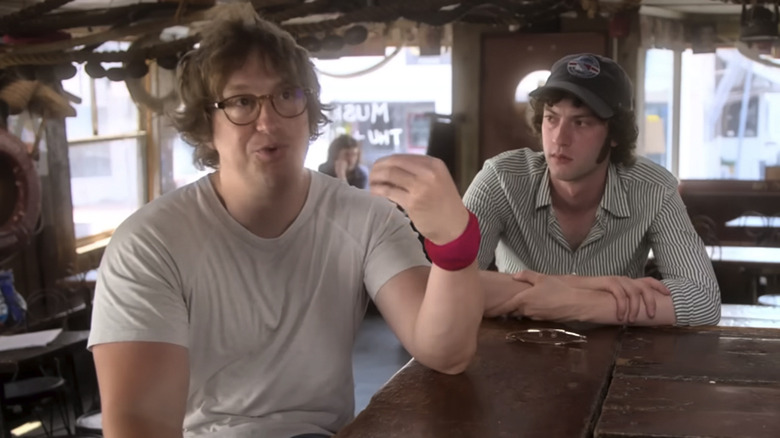
This is a really wonderful coming of age story that I think works even if you don't know anything about Anthony Bourdain's real life, and one of the things that I loved about it is that it has heart, which reminds me a lot of Bourdain. Matt, in the movies that I've seen of yours, they all have heart to them. Is that something that you consciously think about as a writer?
Matt Johnson: I don't know if I'm thinking about heart as much as I'm ... Oh man, I don't know. I think that I'm a cynical person, but I believe deep down that the world is good, and I'm not sure if everybody believes that or feels that way, but I think that in the final analysis, this is a good place and we're lucky to be here, and I have to remind myself to be grateful that I'm alive. And so I think in my films, even though they're sometimes troubled, I make movies about people in some bad situations sometimes, but I try to view it the way that a kid would view it, which is that it's full of potential. Even though I'm failing now, one day, maybe I'll be great. Maybe that's the heart you're talking about. Because yeah, it's what I believe is that no matter ... my mom has a great saying: The best thing about getting hit in the head over and over again with a hammer is that it feels so good when it stops. [laughs]
Tony wouldn't have been made without Dominic Sessa
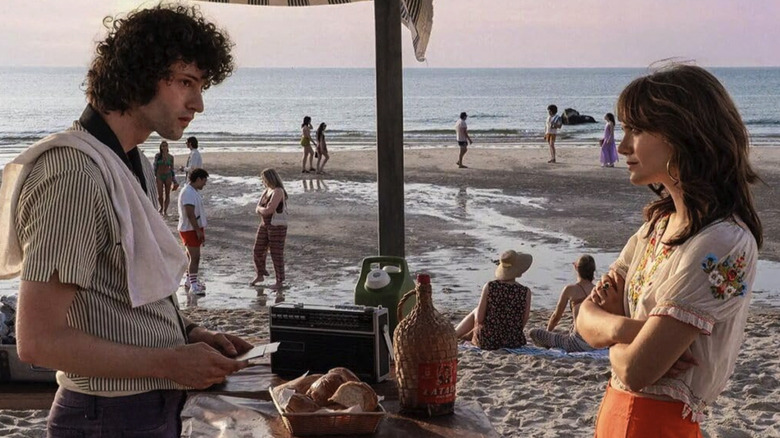
Dominic, I was so impressed with your performance because it's the thing that we always say that we want in biopics. It's capturing the essence of the subject, but never doing an outright imitation. And I was wondering if there was a moment early on on the set or wherever in the process where everything clicked into place for you in terms of setting the tone for what you're going to do for the rest of the shoot.
Dominic Sessa: I don't know. I think the first day of shooting, I had the most lines I probably had in the entire movie, and I have this monologue that I'm saying –
Stavros Halkias: That was the first day?
Dominic Sessa: Yeah, that was the first thing we shot. But I think after that, I felt confident, and just hearing myself say those words, and I don't know, after the first day, I felt really good about it. I don't know. (To Matt) How did you feel?
Matt Johnson: Well, I'm going to tell you something. What I said to my producer right after I met Dom, because I wasn't originally going to make this movie. I met him in New York and we talked for two hours at a restaurant, then we left, and I turned to my producer, Matt Miller, and I said, "Okay, I think we should shoot this movie with this kid tomorrow. He's ready. Let's just put him on camera." Because Dom, you know what? It's in some ways annoying because, and I'm not trying to call you out, but so many people ask him, "What did you do to prepare? What are you thinking? How are you trying to be Anthony Bourdain?" And he's doing a really gracious job of answering these questions legitimately. The truth is, he just has it. I made the movie because he's got it. He is it. I literally told him, "Don't prepare." I said, "Please don't learn anything. I want to put you in these situations and see what happens to you."
Are you serious? Did you really say that to him?
Matt Johnson: Yes, and that's why the movie works! Because you are watching a young man deal with these things in the moment because it's just who he is. And it is maybe an awkward answer and maybe it is in some ways less sexy, but that's the truth of what's in this film, is that you're watching a young guy maybe not wrestle with these exact same things, but wrestle with discovering who he is. And he's on camera, he's just been told within the last five years, "Hey, guess what? You're a movie star now," and he's trying to be like, "Okay, so what does that mean?" That's why I was interested in this film. Because Anthony Bourdain too was told, "Your life is changing and it's out of your control, and you better do your best to, I won't say fake it until you arrive, but don't let anybody know that you're s***-scared and you have no idea what's happening to you." So he just has it, is the answer.
I love that meta component.
Stavros Halkias felt free of narrative demands in Tony
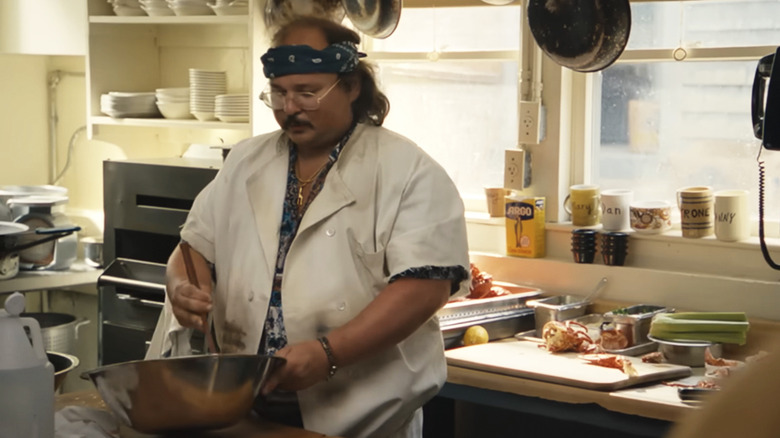
Stavvy, I thought this movie did a really good job of capturing that blend of toxic and intoxicating that can sometimes happen in these environments. There's something really wonderful about the community that you can feel in a kitchen, but you also just know that at least one of the guys that you're in there with is probably doing some sketchy stuff during his off time. So can you talk a little bit about how you and your castmates tapped into that combination in this?
Stavros Halkias: Yeah, I think that's the beauty of these types of guys is that they are so mean to you, but really care about you, and that's some of the most important people. Some of my important mentors, some of the most impactful people are just like that, and that's all I wanted to do with this character, was show those blue collar guys that ultimately will just make you feel so bad. I've been ridiculed. Starting stand up [comedy], I've had mentors who I wanted to punch in the face at certain points in my life, and now I would kill somebody for them. And my character wasn't exactly ... the true mentorship in this movie, obviously, is the two paths that Tony's going to go down. It's Leo and it's Antonio. But my guy was kind of fun because I had none of those narrative demands on my character.
It was all about "make this feel real," and that's all I wanted to do was just sort of like, I know those guys. My mom was a waitress, my dad was a carpenter. All his friends were really rude loudmouths, and that's what I am. That's where I come from, and so it was so much fun to do it. We were just really coworkers who were having a great time and we did have that relationship, so in the way that he didn't have to prepare for Bourdain, I didn't have to prepare for the role of fat bully. [laughs] I had that one locked and loaded.
Matt Johnson explains the best scene in his Anthony Bourdain biopic
Note: Spoilers ahead for "Tony."
Well, speaking of punching people in the face, that scene where Leo's character punches Antonio in the kitchen –
Matt Johnson: It's the best scene in the movie.
It's so good. I was wondering if you guys could just tell me a little bit about what that was like — Matt, from your end, to conceive that and execute it, and for you guys, just to be there for that.
Matt Johnson: It was scary.
Stavros Halkias: It was incredible.
Matt Johnson: It was full-on scary, because — this is a real testament to Leo. A lot of people think of Antonio in that scene, but really, Antonio is just kind of shocked and stunned looking at him, and Leo goes off. And we're all in that room together. That kitchen's small, and I never left. I'm always in there with these four guys. It was us watching this happen, and I think everybody was just like, "Jesus, how far is Leo going to go?" When he whipped the dish at the wall and it exploded everywhere, the camera goes over to Dom, and Dom is literally hiding, almost out of focus. I don't know. It's my favorite scene.
Stavros Halkias: Yeah, I agree. We got to be bystanders, and still, it was like –
Dominic Sessa: It felt like, "I don't want to be in this room. I feel so uncomfortable."
Stavros Halkias: Totally. And going into that scene, I was like, "Well, this guy, my guy, he would get involved." I'm thinking that. I remember thinking, "Would he really just let this little piece of –"
Matt Johnson: You even say that in the scene afterwards!
Stavros Halkias: Yeah, yeah, totally. Afterwards. But that's why it made so much sense, because that's what I thought. And then it's a pure testament to Leo, he completely took over that room, and it –
Matt Johnson: You couldn't say a word to him.
Stavros Halkias: It felt honest and real that my loudmouth character shuts up just completely, and then afterwards –
Matt Johnson: [He says] "I would've killed him. I would've killed the guy."
Stavros Halkias: Yeah. It ended up being beautifully done. But yeah, there's been a couple of things where I'm like, 'Holy s***, what I felt was special,' and even you saying it, bro, I'm having goosebumps thinking about that performance, and that was a standout moment. That day on set, I was watching Antonio and Leo in that scene, and it really, they felt so real. I will remember that forever, truly — how I felt.
Matt Johnson: And I'll tell you what I love about the scene is that it's such an antidote to the scene where Stavros runs at Dom and almost in a play-fight way. Do you remember, almost 20 minutes earlier where you actually get to see the fraternal, "We're f***ing around and we can fight, we can play fight." Stavros throws a whole thing of celery at him and they knife fight. They fight, but that's fighting like boys.
And for the first time, now all of a sudden, there were no words exchanged. They just fought and now they're watching two men fight, and it's no longer funny. And so everybody is just quiet like, "Wait a minute, wait a minute. We've trespassed into a place that this group never goes, and we don't have the operating instructions for what to do next." Yeah, I loved it, and Dom plays it so well, just looking at his two parents fighting like, "What the f*** do I do?"
"Tony" is in limited theaters now, and expands wide on August 21, 2026.