

Quote Of The Day By Ang Lee: "...I Feel That Everyone Has A Hulk Inside..."
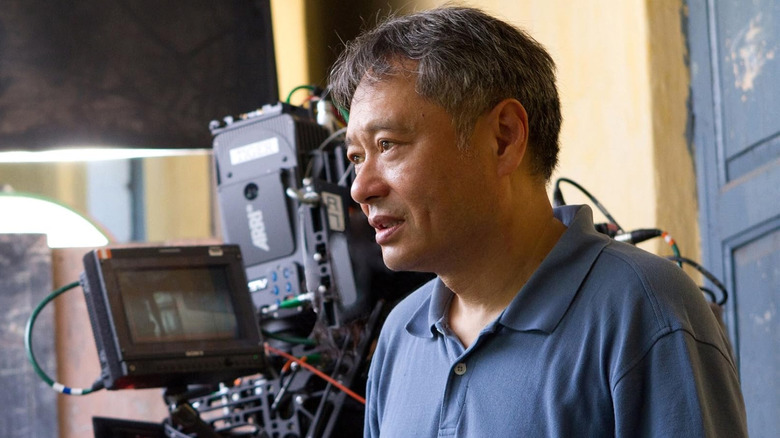
Ang Lee is one of our great chameleon storytellers. He's a director who seems just as comfortable making a modern familial drama like "The Ice Storm" as he does adapting Jane Austen's romantic period drama novel "Sense and Sensibility" or helming the wuxia epic "Crouching Tiger, Hidden Dragon." No two Ang Lee films look or feel alike, either. His "Hulk" (a pre-Marvel Cinematic Universe superhero movie that's deservedly gained more respect with time) creates the illusion that it's comprised of physical, moving comic book panels, whereas "Life of Pi" sees Lee utilizing 3D filmmaking to astonishingly immersive effect as he brings Yann Martel's should-be-unadaptable book about an Indian boy stuck on a boat with a Bengal Tiger to the screen.
So, what actually makes an Ang Lee movie an Ang Lee movie then? To answer that, you have to look to his past. Lee was born in Taiwan in 1954 and became interested in drama, film, and theater at a young age. This disappointed his father, a school principal who had hoped his son would pursue a more practical career (in his eyes, anyway). Right away, you can see what draws Lee to stories involving people at odds with their parents and/or the society they were born into. As someone who moved to the U.S. to study acting and film in 1979, Lee also gravitates towards narratives about individuals stuck between different worlds in some sense. This idea manifested in his art as early as 1984's "Fine Line," his 43-minute thesis work film about a young man fleeing the Mafia and a Taiwanese student who works illegally as a waitress in Manhattan's Chinatown.
Indeed, practically every one of Lee's films features characters struggling to hide a part of themselves — their Hulk, Lee would say.
Quote of the Day by Ang Lee
Speaking at a roundtable interview in Los Angeles right before "Hulk" reached theaters in June 2003 (via IGN), Ang Lee noted that he doesn't see the Hulk as a "superhero." As he went on to explain:
"He's the first Marvel character who is a tragic monster. Really an anti-hero. I feel that everyone has a Hulk inside, and each of our Hulks is both scary and, potentially, pleasurable. That's the scariest thing about them."
Lee's comic book picture nicely illustrates his point. In the film, the scientist Bruce Banner (Eric Bana) is only able to transform into the not-so-jolly green giant known as the Hulk after being exposed to a should-be lethal dose of gamma radiation. However, the Hulk was already inside Bruce in both a literal sense (in the form of his mutated DNA) and a more spiritual one (see: his repressed memory of a life-altering traumatic incident from his childhood). "Hulk" is the only movie to nail that core aspect of the Marvel character to date, as well as the way that Bruce is simultaneously excited yet terrified whenever he loses control and turns into the Hulk.
More than that, Lee has devoted his career to exploring the many different forms that a person's "Hulk" can take on screen.
Deeper Meaning of Ang Lee's Quote — People need to be their authentic selves
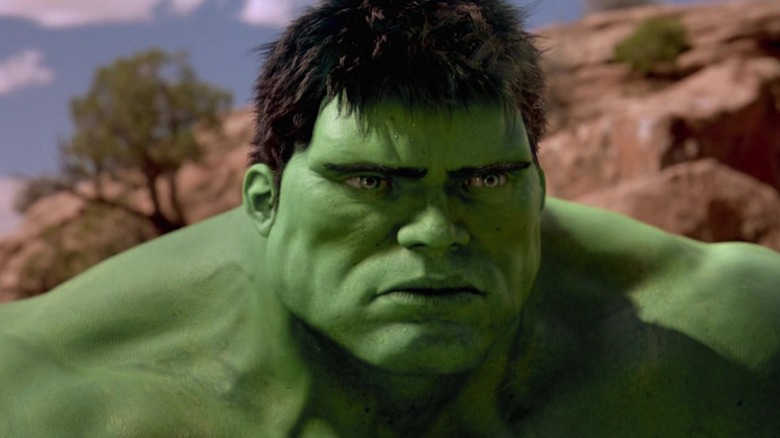
The Hulk might be responsible for a whole lot of property damage in Ang Lee's "Hulk," but that wouldn't have been the case if Bruce had been told the truth about his past much earlier and been given a chance to better understand and embrace that part of himself. Really, the harm that's caused when people aren't allowed to be their authentic selves is the defining theme of Lee's films. His "Father Knows Best" trilogy ("Pushing Hands," "The Wedding Banquet," "Eat Drink Man Woman") uses humor and pathos to tell a series of stories about individuals whose modern views on romance, desire, and what they even want out of life lead them to clash with their elders' traditionalist outlooks. Likewise, if you swap out the comedic scenarios and grounded settings of those films for some kick-ass martial arts fantasy action, then you've basically got "Crouching Tiger, Hidden Dragon."
Forbidden love, in particular, wreaks more havoc than any other taboo passion in Lee's movies. Imagine how much happier everyone would be if they were unburdened by social expectations and could simply pursue the one they loved freely in "Sense and Sensibility." Or if the queer cowboys in "Brokeback Mountain" (as was directed by Lee and adapted from Annie Proulx's original short story by "Lonesome Dove" author Larry McMurtry) had been afforded the chance to build a life together without the threat of violence hanging over their heads. Even in Lee's "Lust, Caution," a honey trap is complicated when two folks on opposing sides of World War II develop real feelings for each other. In all these cases, the oppression inflicted upon the films' characters is just as (figuratively) destructive as a rampaging Hulk.
More Quotes from Ang Lee
- "You are not allowed to take risks and find something new, but if you don't change, you're dead. I don't get it. I'm going to keep fighting. And if it takes longer, then it takes longer."
- "Sometimes films ignore other points of view because it's simpler to tell the story that way, but the more genuine and sympathetic you are to different points of view and situations, the more real the story is."
- "I did a women's movie, and I'm not a woman. I did a gay movie, and I'm not gay. I learned as I went along."
- "It could be the hidden side of you; I think making movies is a great way to release that. I think it is important to be honest with that, and have fun with it."
- "Things that don't have a big impact seem to be crucial."
- "We need storytelling. Otherwise, life just goes on and on like the number Pi."