

Lonesome Dove's Author Co-Wrote One Of Hollywood's Most Important Westerns
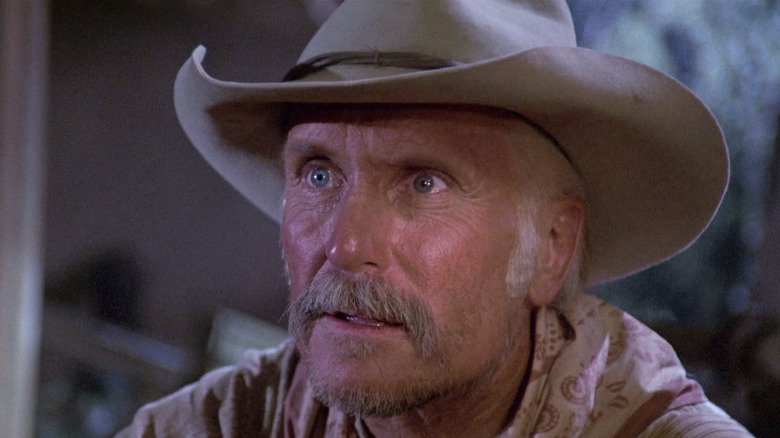
Few authors knew The West like Larry McMurtry. Born in Archer City, Texas, McMurtry exhibited a talent for tale-spinning as a young adult, scoring a massive critical success in 1961 with his first novel, "Horseman, Pass By." A year later, director Martin Ritt turned McMurtry's triumph into the classic modern Western "Hud," which starred Paul Newman as a skilled ranch hand who callously takes advantage of everyone in his small orbit. The film was nominated for seven Academy Awards and won three (Patricia Neal for Best Actress, Melvyn Douglas for Best Supporting Actor, and James Wong Howe for Best Black-and-White Cinematography). Having gotten a taste of McMurtry's contemporary take on the Lone Star State, Hollywood was determined to come back for more — and more classics were in the offing.
Peter Bogdanovich delivered a New Hollywood masterpiece with his adaptation of McMurtry's "The Last Picture Show" in 1971, while James L. Brooks hooked into the Houston-bound eccentricity of the author's "Terms of Endearment" (which netted Brooks Oscars for Best Picture and Best Director). These movies, like the books they're based on, take a wrecking ball to your heart.
McMurtry's most celebrated novel is "Lonesome Dove," which drew him out of contemporary Texas for an 1870s-set yarn about two Texas Rangers who've settled down and started a cattle and livery business in the titular border town. It's true cowboy stuff, and regardless of how you digest it (book or TV miniseries), it's clearly a story he'd been dying to tell. With so many characters passing in and out (and on) throughout his sprawling saga, it's an exemplary piece of empathy. McMurtry was a fount of perpetual fascination. Every character had a story, and that tale was artfully imparted. As such, he was ideally suited to co-write 2005's "Brokeback Mountain."
Hollywood's Senior Citizens killed Brokeback Mountain's Oscar dreams
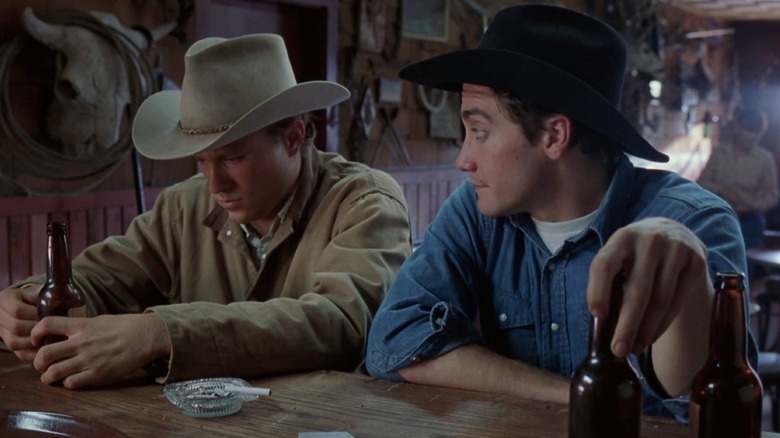
When "Brokeback Mountain" was greenlit, wiseacres fluent in "South Park" ridiculed the movie for bringing to life Eric Cartman's platonic ideal of a Sundance Film Festival competition title. As related in the 1998 episode "Chef's Chocolate Salty Balls," Cartman believed independent American cinema was basically movies about "gay cowboys eating pudding." So, everyone had a laugh at "Brokeback Mountain" and wrote it off despite Ang Lee being attached to direct a script by Larry McMurtry and his writing partner Diana Ossana (adapting Annie Proulx's short story).
Given McMurtry's Oscar history, you'd think people would've taken his involvement in this film more seriously. Even after it earned raves on the festival circuit, there was still a sense that "Brokeback Mountain" was a transparent problem picture. How could Heath Ledger and Jake Gyllenhaal's deeply-in-love cowboys Ennis Del Mar and Jack Twist, such stereotypically manly men, live the rest of their lives without each other in this story?
Lee's heartbreak of a movie was considered the prohibitive favorite for the 2006 Best Picture prize, but once ballots were out, word started to spread that older Academy voters refused to even watch "Brokeback Mountain." Ernest Borgnine was particularly vocal in his disgust with the film and proudly admitted to not watching it despite all the glowing buzz. "If John Wayne were alive, he'd be rolling over in his grave," he infamously told Entertainment Weekly.
Back then, the vast majority of Oscar voters were old, white, male, and straight (or deeply closeted), so they sent the world a message by giving Paul Haggis' anti-racism hokum "Crash" Best Picture. "We believe all hatred is bad" seemed to be the intended takeaway. "We just can't have men marrying men or women marrying women because John Wayne."
The U.S. in 2026 is no country for Brokeback Mountain's Ennis and Jack
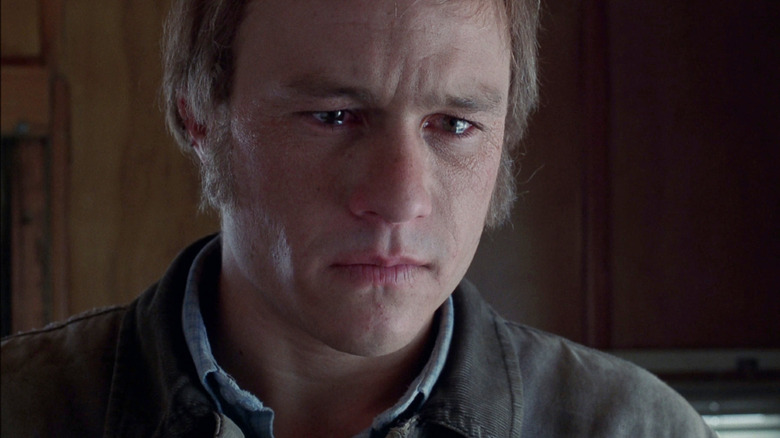
More than 20 years later, things are more complicated in a shockingly ridiculous way.
A little over a decade ago, I would've said we were heading down the right path on the issue of LGBTQ+ rights. In 2026, however, I would say we live in a media-enforced hellscape where stoking fear of the other is politically and financially expedient. When I think about how we got here, and worry about my friends whose very existence is growing more endangered by the day, I feel only despair.
When I look for the good in this world, I very frequently turn to the movies that cracked my heart open. One such film is "Brokeback Mountain," which concludes with that shot of Jack's shirt held in a loving embrace inside Ennis's shirt. In the years that followed the release of Ang Lee's movie, I felt that people had developed a greater degree of empathy for people who ride a different trail. It's not the fault of "Brokeback Mountain" that this all turned out to be total bull****. We live in mean times. Heath Ledger saw better for us.