

Goldie Hawn Has A Theory Why Her Only Steven Spielberg Movie Wasn't A Hit
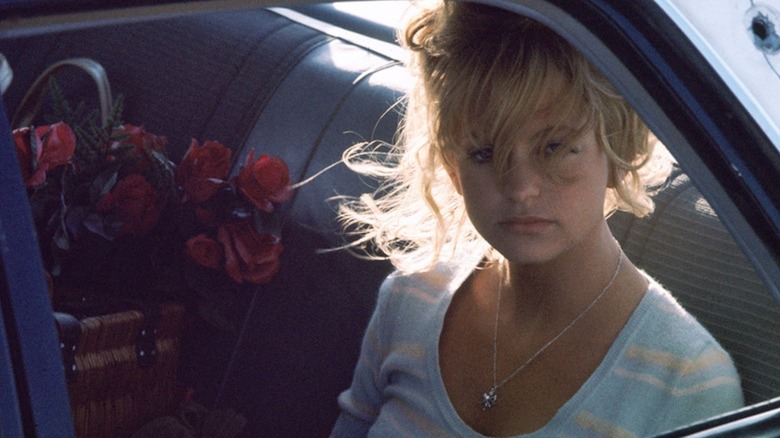
When "The Sugarland Express" rolled into theaters on March 31, 1974, it was first and foremost a Goldie Hawn vehicle. Spielberg had made noise with his TV movie triumph "Duel" (so exhilaratingly cinematic that Universal gave it a theatrical release), but he was a year away from basically inventing the summer movie with "Jaws." "The Sugarland Express" was a chase film boasting some impressive, inventively shot stunt driving, but, to Universal, its success was going to hinge on Hawn.
In the studio's defense, Hawn was a major star. She broke out in the 1960s on "Rowan & Martin's Laugh-In" as a sexy-stupid blonde who, bedecked with body paint, danced alluringly in a bikini. But you have to be smart to play dumb. Hawn wasn't just in on the joke; she was ahead of it. She knew her function in the show, and knew men were lusting after her, but her trademark corpsing was an act of woozy rebellion. She was laughing at the archetype, and the pathetically unrealistic sofa hopes of ogling, Schlitz-swilling sad sacks.
Critics and moviegoers finally recognized Hawn's unique skill when she won the Best Supporting Actress Oscar for playing Walter Matthau's suicidal girlfriend in the funny, if kinda creaky screwball comedy "Cactus Flower." At this point, she was America's misfit sweetheart. So Universal looked at her performance as Lou Jean Poplin in Spielberg's quirky crime drama, and sold her as an overgrown child. Moviegoers went in expecting a comedy, and got something completely different. And Hawn believes this doomed the film's commercial prospects.
Universal sold The Sugarland Express on a Goldie Hawn stereotype
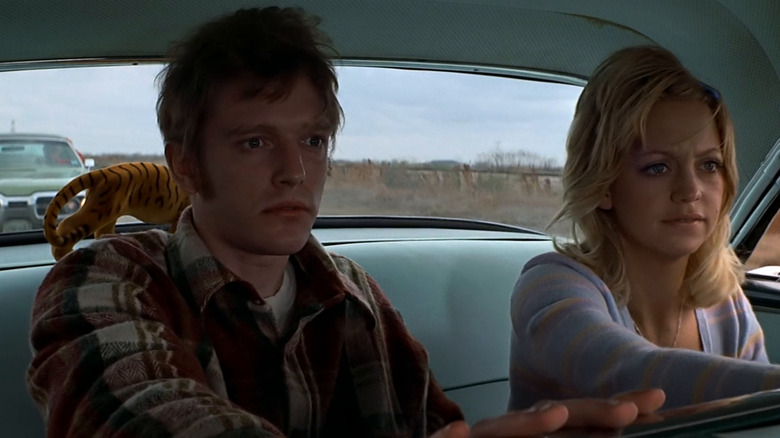
Written by Hal Barwood and Matthew Robbins (who gave us the supremely underrated "Dragonslayer"), "The Sugarland Express" is based on the real-life story of two young Texans who went on the lam to keep their child from being placed in foster care. The writers sharpen the edges by having Lou Jean help her husband, Clovis (William Atherton), escape from prison, which initiates a pursuit that is destined to end poorly for the couple.
Spielberg is on fire, shooting long-take car chases where the camera glides so effortlessly you aren't aware of the balletic execution. He also gets unaffected performances from Hawn, Atherton (who was viewed as a star-in-the-making at the time), and the great Ben Johnson. It's a beautifully crafted movie, but Universal reduced it to a Goldie Hawn showcase.
"The Sugarland Express" stumbled out of the gate. As Robbins told New York Magazine in a recent oral history about Spielberg's career, "When the movie came out, Dick Zanuck called us, and he said, 'Ah, it's not doing any business. The picture's on its ass.' Universal Pictures pulled the movie from theaters after two weeks due to poor box-office returns."
Per Hawn, "They sold it wrong. They had me on the poster with a smile on my face, a gun, and a teddy bear. They tried to sell it on my image, and people did not get what they expected."
"The Sugarland Express" was no flop. It grossed $12 million against a $3 million budget, and won the Best Screenplay award at the 1974 Cannes Film Festival. But Universal wasn't entirely sold on Spielberg's prodigious gifts, which led them to nearly fire him during the tumultuous production of "Jaws." That could've been a studio-destroying mistake.