

Quote Of The Day By Christopher Nolan: 'But Really, What The Director Is, Is The Audience'
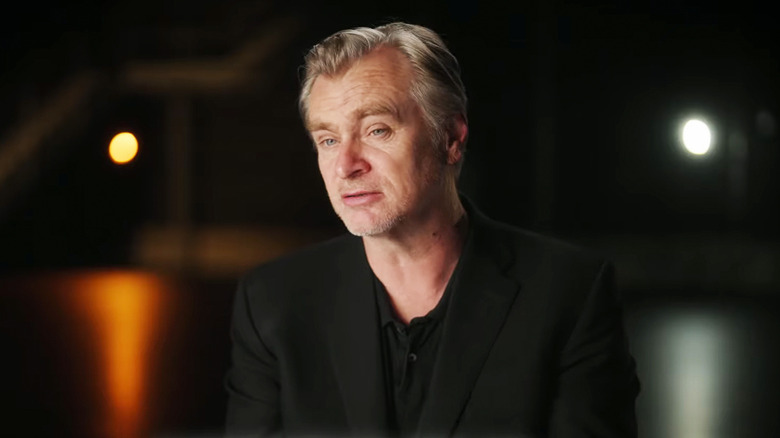
Who'd have thought, in an age where IP and nostalgia reign supreme, that the way to become the most popular director on the planet would be to make cerebral, thought-provoking films that actually challenge audiences. That's exactly the magic trick Christopher Nolan has pulled off, which is partly why when the man has something to say, there'll never be a shortage of fans eager to listen.
Of course, the Westminster-born director had to work his way up to the kind of magnificent, complex blockbuster epics for which we know him today. In the late-90s he was just an ambitious filmmaker with a vision, one that he began to realize with his 1998 neo-noir crime movie "Following." Filmed guerilla style on the streets of London, the project was made for just $6,000 and caused enough of a buzz for Nolan to court the interest of a relatively small studio. Newmarket Films handed the director $4.5 million and "Memento" was the result. Heralding the arrival of one of the most exciting new filmmakers of the era, the mind-bending 2000 thriller remains one of Nolan's most celebrated movies more than 25 years after its release.
Since then, he's continued to deliver challenging, thought-provoking films that interrogate complex philosophical concepts, examine the legacies of towering historical figures, and with "The Odyssey," reimagine ancient Greek epics for the modern age. The man even managed to make a film about complex quantum physics and produce his emotional masterpiece "Interstellar" as a result. Somehow, this decade-spanning cinematic enterprise has also turned Nolan into one of the highest-grossing directors of all time. How has he done it? Well, he has a unique perspective on directing, which he articulated during a 2026 interview in a statement that has now become our quote of the day.
Quote of the Day by Christopher Nolan
"You can say it's the conductor of an orchestra. But really, what the director is, is the audience. I'm there on set going, 'Does this move me? What is this shot? OK, now what's the next thing I need to see?'"
Christopher Nolan said this during a 2026 interview with Richard Roeper (via WBEZ Chicago), in which he discussed his approach to making his exhausting yet exhilarating epic "The Odyssey." It seems to go without saying that a filmmaker should use their discretion to decide what works in a movie and what doesn't. But Nolan's specific way of putting it — of drawing a parallel between filmmaker and audience member — demystifies the role of a director, which can often seem nebulous and ill-defined to those on the outside.
Indeed, as he goes on to say, "It's very difficult to pin down the job of the director, because I don't photograph the film. I don't act in the film. I don't record the sound. I mean, I have done different bits of those jobs on smaller films, but what does a director do?" By giving the almost anti-climactic answer that directors are merely audience members, Nolan encapsulates the spirit of his films which similarly take complex ideas and make them more digestible for mass audiences. Put this way, suddenly, the role of director seems immediately intelligible. Whether he's speaking directly or via his films, the man has a gift for clarification!
Deeper Meaning of Christopher Nolan's quote: Trust Your Instincts
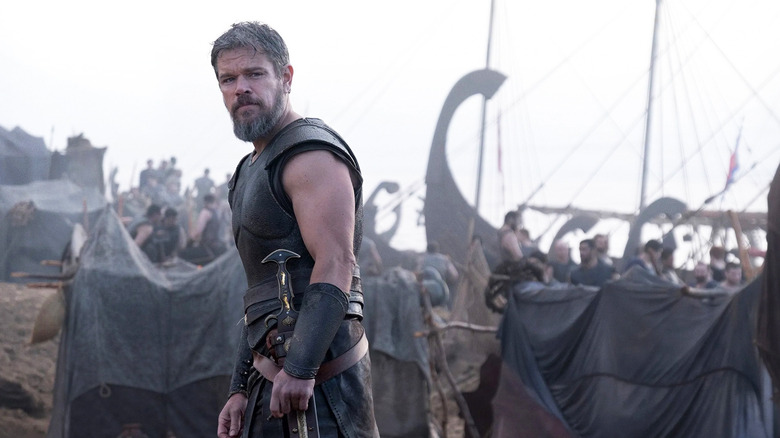
In his interview with Richard Roeper, Christopher Nolan explains how he prepared for "The Odyssey" by writing "a list of all the things that [he] wanted to see" in a film version of Homer's poem. That ultimately guided him through the creation of the movie. He took a similar approach to the Dark Knight trilogy. As he told Film Comment, "I got excited about the idea of filling in this interesting gap—no one had ever told the origin story of Batman." It wasn't necessarily that he thought such a thing would appeal to others, it was that he wanted to see how Batman became Batman. Likewise, a lifelong fascination with dreams led Nolan to "Inception." As the director went on to tell Roeper, "You really are making the film for yourself, and then in a paradoxical way you kind of never get to watch it that way because you're very familiar with it."
That said, asking yourself what you want to see and then actually coming up with an answer is, for many, easier said than done. You may have doubts about your own sensibility. You may question your instincts or struggle to decide between alternatives. It's not enough to be an audience member, you have to trust your own opinion. Nolan possesses that clarity of vision, which isn't necessarily captured in the director=audience formulation.
Nevertheless, Nolan effectively demystifies the role of director, and also delivers a powerful affirmation of the idea that artistic merit comes from following your own vision. That's an important sentiment for the biggest director in the world to express, especially at a time when our nostalgia-mad monoculture has yielded something as craven as a "Harry Potter" reboot.
More quotes from Christopher Nolan
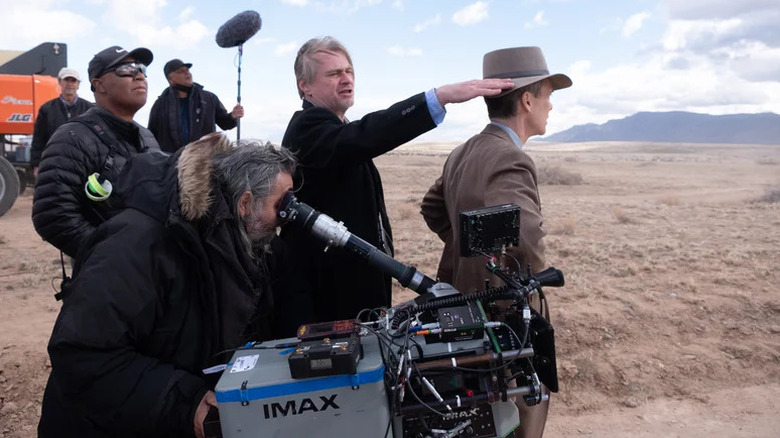
-
"Every film should have its own world, a logic and feel to it that expands beyond the exact image that the audience is seeing."
-
"Breaking rules isn't interesting. It's making up new ones that keeps things exciting."
-
"You're never going to learn something as profoundly as when it's purely out of curiosity."
-
"The screen is the same size for every story. A shot of a teacup is the same size as an army coming over the hill. It's all storytelling."
-
"As a filmmaker, you know, no matter how positive things seem, you always notice the bad reviews, you always notice that the things people love are the same things other people hate, so you can't react to that. To me, it's all about doing what you believe in."