

The Star Trek Movie That Left A Major Mark On Sci-Fi Author Andy Weir

It shouldn't surprise you that Andy Weir, author of "The Martian" and "Project: Hail Mary," is a "Star Trek" fan. His books skew a bit more toward hard science fiction than "Trek" does (e.g., no warp drive), but they share a common ethos with "Star Trek" — humanity will overcome obstacles and make its way to the stars.
Weir is the kind of "Trek" nerd who'll spend time arguing the Borg might actually have a point with the perfection via hive mind. You can even see that love in his storytelling. A big chunk of the "Project: Hail Mary" book and movie is about the first contact between Ryland Grace (Ryan Gosling) and the alien Rocky (James Ortiz) and the establishment of communication. That's a "Star Trek" staple; see classic episodes like "Darmok" from "The Next Generation."
Speaking to GQ in 2026 to give his personal sci-fi recs, Weir was sure to mention "Star Trek II: The Wrath of Khan." "I think most people would agree that it's the best 'Star Trek' movie. I'm sure it had an effect on my concept of narrative style," Weir said. No arguments here; we at /Film named "Wrath of Khan" the best of the "Star Trek" movies. The GQ interviewer suggested the climax of "Project: Hail Mary" owes a debt to "Wrath of Khan," presumably referring to how Rocky almost sacrifices himself to save Grace in a manner similar to how Spock (Leonard Nimoy) famously did.
While Weir says in the same interview that he wasn't "consciously" aping "Wrath of Khan" in "Project: Hail Mary," he concedes the point given how big an impact the movie had on him.
Andy Weir agrees that Wrath of Khan is the best Star Trek movie
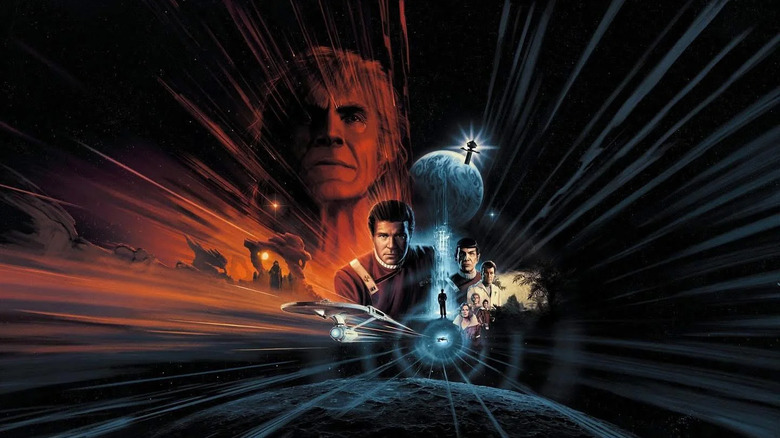
Weir has said he "dislikes social commentary" in storytelling, including in "Star Trek." "As a lifelong 'Star Trek' fan, it's always bothered me that there is a presumed 'responsibility' within 'Star Trek' shows to talk about social issues," Weir has said. A crude sentiment, perhaps, but it does track a bit with why he reveres "Wrath of Khan."
Compared to some other "Star Trek" stories, "Wrath of Khan" is more focused on character drama than on any utopian messaging. It needed to be; the philosophical, "2001: A Space Odyssey"-inspired "Star Trek: The Motion Picture" was criticized as dull upon its 1979 release. (Though some will argue you're just not watching "Star Trek: The Motion Picture" correctly if you think it's boring.) For "Trek" to survive, the sequel had to excite audiences the way that "The Motion Picture" hadn't.
If there's a message to "Wrath of Khan," it comes out in personal themes, like how to accept yourself aging and the losses that bring, or the futility of vengeance. Khan (Ricardo Montalban) literally quotes "Moby Dick" throughout the movie, the greatest anti-revenge cautionary tale in English-language literature.
Part of Khan's motive is that he had been left on a lifeless world for 20 years, barely keeping himself and his people alive with his ingenuity. That, I'd contend, may have also had an unconscious influence on another Andy Weir story: "The Martian," about astronaut Mark Watney (Matt Damon in the film) stranded on Mars needing to survive. It's an interstellar riff on the story of someone stranded on a desert island ("Robinson Crusoe," "Lord of the Flies," "Gilligan's Island," "Lost," and many, many more) but also evokes Khan's predicament. Unlike Khan, rescue came for Mark Watney.