

5 Sci-Fi Books That Deserve Way Better Movie Adaptations
The phrase has probably existed as long as humans have been making art. One can picture some early humans, still living their hunter/gatherer existence, congregated around a fire, distracting themselves with bardic tales and performative games. A performer might be repeating one of the local legends, weaving a tale of heroism and antediluvian magic. As soon as the poet and raconteurs have completed their story, there was no doubt some snob — a proto-critic — who stood up, went back to their dwelling, and muttered, "The original was better."
So it goes to the modern age. Authors invent glorious, creative, and expansive novels, and Hollywood elects to drain said novels of their adventure, their tone, their humor, their ideas, their theme, or merely their uniqueness. One needn't look very far in the film industry to find a bad adaptation of a classic novel. Books and films are different media, with one relying solely on the reader's engagement and the other requiring technology, a finite amount of time, and visual representation. It's a miracle that so many novels have been adapted well to movies at all.
The following list comprises films that vary in quality, from merely okay to downright mediocre. They all have this in common, though: they did a disservice to the great science fiction novels on which they were based. Several classic sci-fi novels have, when making the move to Hollywood, been given big stars, big budgets, and the full-bore studio treatment. And yet, somehow, they managed to drain their respective source materials of personality. Some of the films below may be fine enough, but the books on which they are based deserved better than what Hollywood gave them.
Here, then, are five examples of great sci-fi novels that deserved better adaptations.
The Hitchhiker's Guide to the Galaxy
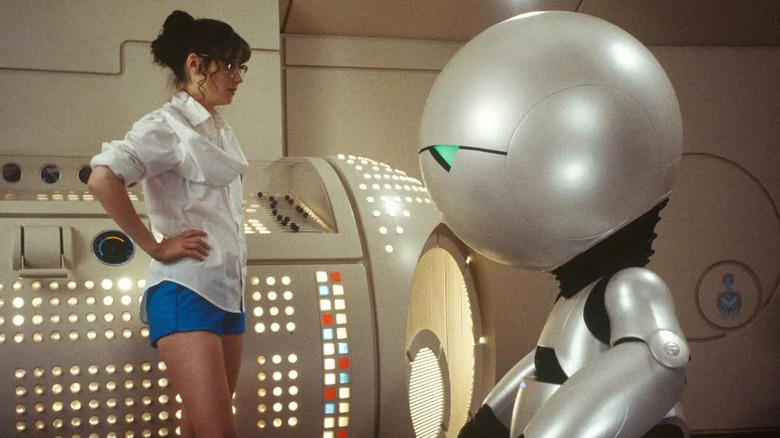
Douglas Adams' sci-fi comedy epic "The Hitchhiker's Guide to the Galaxy" began its life as a six-episode radio drama in 1978. The first four episodes were eventually adapted by Adams into his celebrated 1979 novel of the same name, and a literary phenomenon was born. "Hitchhiker's Guide" is a wildly funny book that spins out clever sci-fi conceits to their logical extreme, all undergirded by a uniquely British sense of put-upon, quiet exasperation. The story begins with the destruction of Earth, all to make way for a hyperspace bypass. It's eventually revealed that the Earth was actually a complex computer that had been running a single calculation — the question to the ultimate answer for life, the universe, and everything — for millions and millions of years.
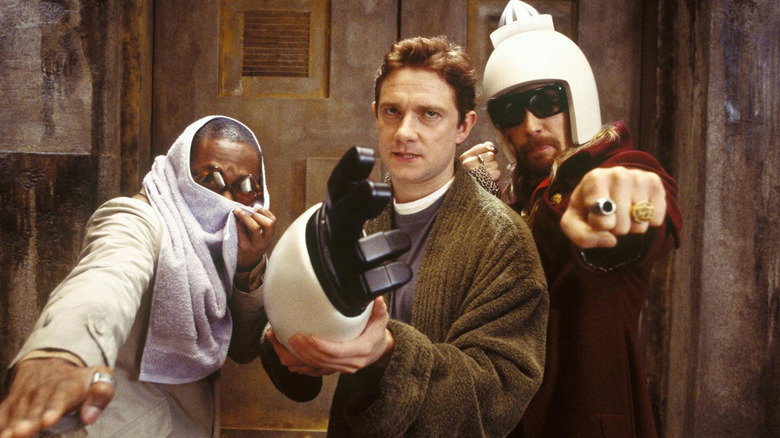
In 2005, director Garth Jennings helmed a film adaptation starring Martin Freeman, Mos Def, Sam Rockwell, and Zooey Deschanel, and it was ... not good. For one, the story's dour Britishness was downplayed, shifting toward a notably American sense of optimism. A lot of the story was altered from the novel, and the characterizations were iffy. Also, the already-busy story was rushed, making the film into something only fitfully funny and a little baffling. The makers of the movie were hell-bent on including certain lines and scenes from the book, but at the expense of crafting a cohesive cinematic narrative. Narrator Stephen Fry thinks the film could have been good, but it should have waited a few years.
Newbies to the book would be confused, and old-time fans would be disappointed. No one walked away loving Jennings' version. "The Hitchhiker's Guide to the Galaxy" deserved so much better than this.
The Time Machine
H.G. Wells' 1895 novel "The Time Machine" is one of the great classics of sci-fi literature. It follows an inventor in the titular time machine as he is thrown into the year AD 802,701, where class divisions have become so sharp that Homo sapiens have evolved into two separate species. Above ground live the Eloi, who are gentle and childish and kind of dumb. Under the ground live the Morlocks, a species of ape-like beings who sneak out of apertures and snatch Eloi to eat. The Morlocks run ancient machines whose function has long since been lost to time.
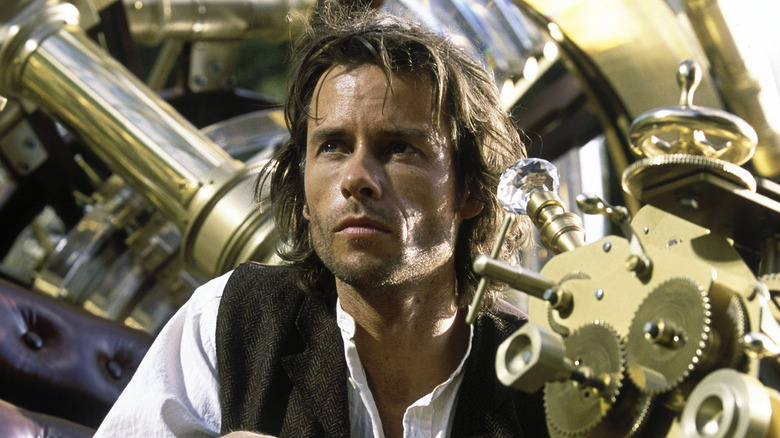
"The Time Machine" has, of course, been adapted into other media many times over the years. There was an audio adaptation as early as 1948, and many may know of George Pal's 1960 feature film starring Rod Taylor. Most recently, however, audiences were treated to a miserable adaptation of "The Time Machine" directed by Simon Wells (H.G.'s great-grandson) and starring Guy Pearce.
Neither the 1960 version nor the 2002 version is wholly accurate to Wells' novel, but the 2002 version was awful besides (it's not one of the forgotten sci-fi greats of its decade). It added new plot threads, new time travel gimmicks, and a bizarre additional character played by Jeremy Irons, who appeared to be a Cenobite from "Hellraiser" living underground with the Morlocks. The 2002 version was so bad, it seems to have put the kibosh on any additional film adaptations of "The Time Machine," which is a pity, as we haven't yet had a truly great, wholly accurate film of the book. Even the 1960 version, while entertaining, was too ... human. Too traditionally dramatic. The book was apocalyptic and downbeat. A great "Time Machine" movie lies ahead of us.
Ready Player One
Ernest Cline's 2011 novel "Ready Player One" is one of the most self-indulgent pieces of pop literature this side of self-insert fanfic. It takes place in the 2040s when most of Earth's population regularly hooks themselves up to the OASIS, an enormous virtual reality simulation. The OASIS was originally a mere game but has come to supplant most human interactions (you can bet that Mark Zuckerberg read this book when thinking of the Metaverse). The creator of the OASIS, James Halliday, was a Gen-X nerd, and programmed innumerable '80s and '90s pop references into the OASIS, and his references have come to undergird all of human culture. Studying Gen-X's nerd crap, "Ready Player One" asserts, is the path to true understanding and enlightenment. Groan.
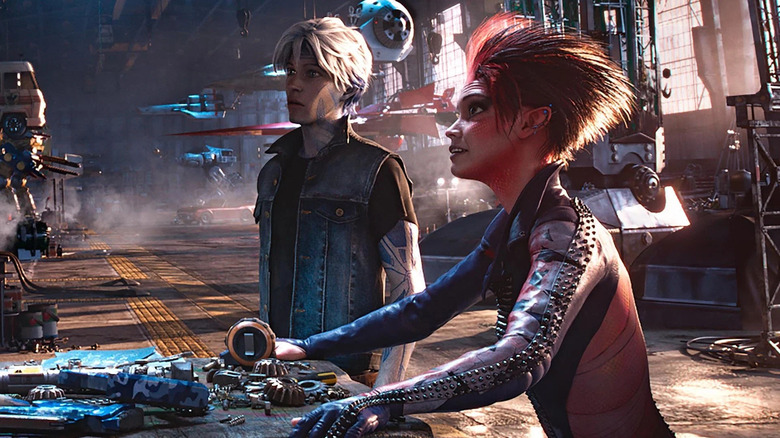
Steven Spielberg adapted "Ready Player One" into a movie in 2018, and it's one of the worst movies of its decade. Ugly to behold and poorly written, Steven Spielberg was content to throw in dozens of pop culture references, gleefully discarding their context or meaning, and not contemplating for an instant the consequences of corporate-controlled pop media guiding human life. Spielberg created the world that Ernest Cline was riffing on, and he wasn't wise enough to put a distance between himself and the pop-media barrage in his movie. Rather than commenting on the thing, he just did it. Now, which pop entertainment company are you going to follow? Your strength of character will depend on which company you pay.
A younger filmmaker needed to make "Ready Player One." Not a Silent/Boomer cusper like Spielberg, nor a Gen-Xer like Cline. A Zoomer, or maybe a Millennial perhaps, with distance between Cline's Gen-X self-indulgence and the media of the modern day. Someone get Jane Schoenbrun on the line.
John Carter
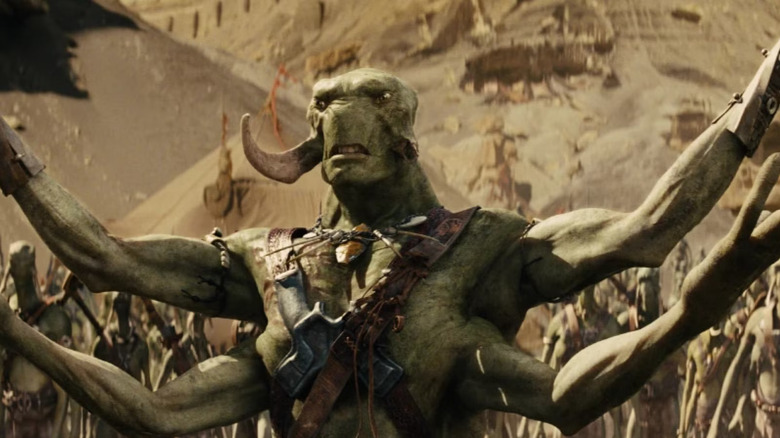
Andrew Stanton's 2012 film "John Carter" remains one of the most notorious bombs of all time. Made on a budget of over $300 million, the film grossed only about $281 million worldwide, which, thanks to Hollywood accounting, means hundreds of millions were lost. One can see why Disney wanted to make it, of course. After the success of "Pirates of the Caribbean: The Curse of the Black Pearl," Disney figured they could replicate its box office by producing overblown, big-budget pulp genre action/adventures for little boys. Each of their follow-ups failed, however. "The Lone Ranger" tanked, "John Carter" lost money, and "Jungle Cruise" was eaten by COVID.
"John Carter" was the most unfortunate failure, though, as it was based on a series of novels by Edgar Rice Burroughs. The first of the novels, "A Princess of Mars," was first published in its complete form in 1917, and starred John Carter, a former Confederate soldier, who was transported to Mars (called Barsoom), where he fell under the spell of the gorgeous and half-naked Martian princess Dejah Thoris. He also became involved with the local Martian aliens and other sects and kingdoms on the planet. In the movie, Taylor Kitsch played John Carter and the amazing Lynn Collins played Dejah Thoris.
The movie capably included all the CGI effects required by Burroughs' novel, but it was too overblown to be enjoyable. It also turned out that too many works of sci-fi had been inspired by Burroughs to make a rehash of the 1917 original seem fresh or interesting; it was outstripped by its imitators.
A smaller-scale "Princess of Mars" may still be in order. Well, once the bomb-stink of the 2012 film has finally been washed out in another two decades.
Blade Runner
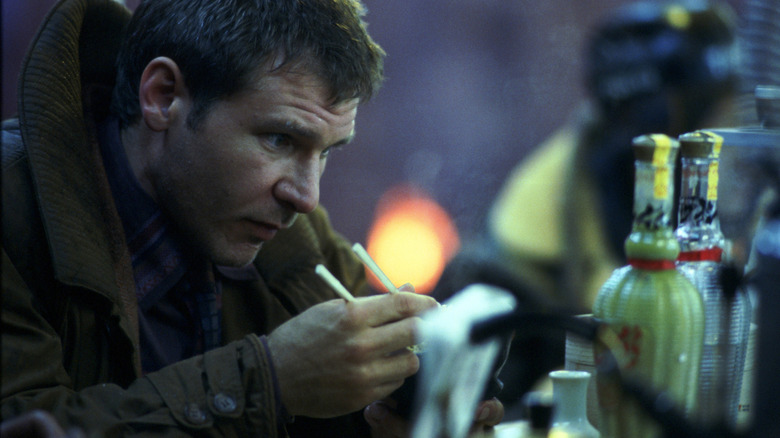
Ridley Scott's 1982 sci-fi film is a triumph of production design, creating a dystopian version of 2019 Los Angeles with the utmost detail and visual flair. It's developed a cult following over the years and boasts a legion of fans. It's a pity, then, that the movie itself — in this writer's opinion — is so deathly dull. Harrison Ford gives a laconic performance as Rick Deckard, a so-called "blade runner," who is hired to hunt down rogue "replicants," that is, artificial humans with limited lifespans, built for labor. The film is slow-moving and boring, and Ridley Scott, while creating masterful visuals, didn't seem to realize that its script had nothing insightful to say about the human condition, technology, or mortality. Even Ridley Scott didn't like his own movie and has spent decades recutting it, hoping to turn it into something good.
Philip K. Dick wrote "Do Androids Dream of Electric Sheep?," the novel "Blade Runner" was based on, and he was a much more detailed, ambitious, and energetic writer than Scott is a director. There is a sense of whimsy to Dick's stories that Scott doesn't possess. For one, a recurring motif in the novel is Deckard's longing to hold real animals again, but radiation has killed most animals on Earth, leaving only robot animals. There is also a tantalizing element of the question of free will; how autonomous are the androids in Dick's story? How much of their behavior is programmed? All of these things are sharply stated in Dick's story. They kind of drift in a vague, thematic haze in Scott's movie. Dick, sadly, didn't get to see Scott's movie.
Imagine, then, a more exciting, violent, wide-eyed version of "Blade Runner." One that's not so shadowy and mealy-mouthed, one that is clearer in its thinking. That would make for an excellent movie.