

Why Now Is The Perfect Time For A Gilligan's Island Reboot Movie
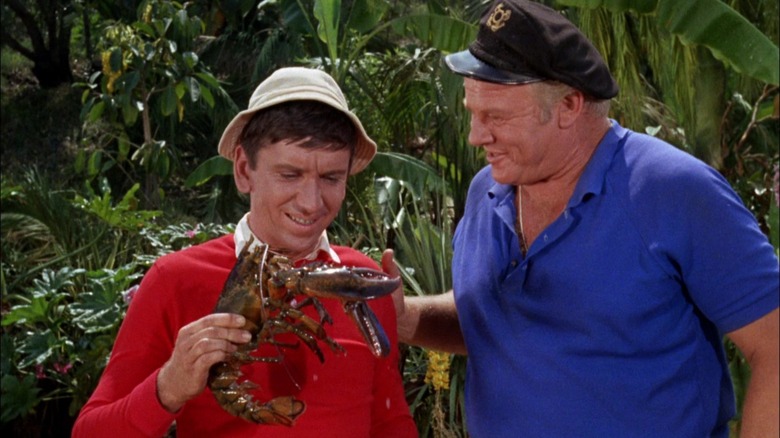
Now is the perfect time for a "Gilligan's Island" reboot movie. Yes, we're serious.
"Gilligan's Island?" The sitcom that went off the air in 1967? Yes, that one. It may have left the airwaves in 1967, but it remained in reruns for literal decades; I remember seeing "Gilligan's Island" on the TV lineup as late as the 1990s, meaning that multiple generations were raised on the whimsical, low-brow antics of Gilligan (Bob Denver), the Skipper (Alan Hale), and the rest of the stranded castaways.
Of course, even 1980s nostalgia is painfully dated; just look at the box office failure of "Masters of the Universe" as evidence. So even the aging Gen-Xers who grew up watching "Gilligan's Island" would be too old to drive any kind of serious interest, right? Well, if we're looking at "Gilligan's Island" as a nostalgia object, perhaps. But if we're looking at "Gilligan's Island" as a seminal American text, perhaps not. "Gilligan's Island" has permeated so deeply into the fabric of American popular culture, it might prove to be tenaciously universal.
Besides, every time we here at /Film run an article on "Gilligan's Island," we tend to attract scads of eager readers. Hello there. Are our readers all Boomers who watched "Gilligan's Island" in its initial run? Gen-Xers? A new breed of youngsters? Who is to say? But if there's enough interest in the world to draw eyeballs to /Film articles about Sherwood Schwartz's 1964 series, then there might just be enough juice to draw all y'all to theaters for a brand new rebooted feature film. Even if it was just morbid curiosity, people would come.
And the timing couldn't be more perfect. In a weird way, "Gilligan's Island" speaks to the turbulence and rising fascism of 2026 more than one might initially expect.
Gilligan's Island is a utopian text about disparate American classes coming together
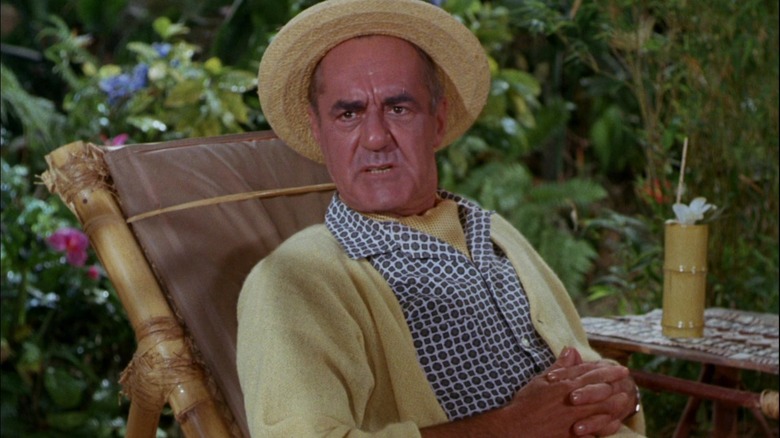
We here at /Film have written before about how the seven stranded castaways are the 20th century's rendition of Commedia dell'Arte archetypes, with Gilligan serving as the new Arlecchino. The archetypal nature of "Gilligan's Island" gives the show's dumb slapstick a timeless quality. The characters aren't products of the 1960s, but eternal figures who could come from any era in history.
We can all relate to the bumbling childlike clumsiness of Gilligan, the wrath of the Skipper, or the eagerness of Mary Ann (Dawn Wells). We recognize the disconnected bourgeois arrogance of the Howells (Jim Backus and Natalie Schafer), or the calm intellect of the Professor (Russell Johnson). As media-saturated people, we definitely recognize the performative impulses of Ginger (Tina Louise).
The secret to making a "Gilligan's Island" reboot work would be to let the characters be themselves and let them live in an unrealistic, comfortable world. Don't update them. The 1964 sitcom wasn't realistic in the least; there were no food crises or desperation, and everyone was generally upbeat.
Series creator Sherwood Schwartz even went on record declaring "Gilligan's Island" to be a piece of utopian literature, depicting various classes of Americans thrust together — the rich, the workers, the artists, the scientists — and surviving just fine. This philosophy would, even more so than the show's archetypal setup, drive a reboot of the series. In the 2020s, we live in a divided nation, separated by class. The scientists are being badgered by the rich, the workers are shafted, the artists ignored. "Gilligan's Island" would show that when survival is at stake, class will be ignored and community will rise in its place. At its heart, the show is quite optimistic. We need that right now.
Gilligan's Island speaks to modern isolationism
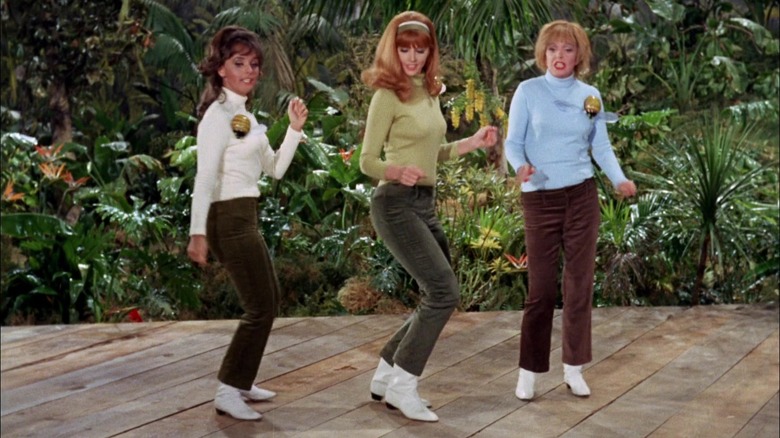
Our more cynical impulses would see the Howells being literally eaten by the other classes, but if you want a bleak, violent, and strange version of "Gilligan's Island," you can always watch the final act of "Triangle of Sadness." Adding cynicism to "Gilligan's Island" might make for a fun dark comedy, but a straight version would be more memorable and important.
"Gilligan's Island" is about seven people, unable to communicate with the outside world, trapped out in the middle of the sea. This premise makes modern 2020s isolation quite literal. Studies are being released all the time stating that the world feels increasingly alone and disconnected. We are all living inside bubbles, lost on digital desert islands of our own making, as if we hit tough weather (in a sociological sense) and have felt stranded and powerless (even if informed). "Gilligan's Island" already featured that dynamic back in the 1960s. The Castaways had a radio that allowed them to occasionally listen to what was happening back in the United States, but no way to react or communicate. They were truly alone, shut off, cast away.
That kind of solitude will resonate with several alienated generations of the 2020s. We can each find the seven archetypes we most closely relate to, and then witness the response to modern isolationism, realized in literal terms.
Then, once one pairs that isolationism with Sherwood Schwartz's optimism about class togetherness, you have a brisk, silly utopian text for the modern age. A "Gilligan's Island" movie, if written sharply enough, and cast well, might serve as an optimistic reminder that we'll be okay. Heck, even on "Gilligan's Island," the castaways united to rid themselves of a brash dictator. If that's not an uplifting message, I don't know what is.