

The Death Of Robin Hood Review: Hugh Jackman Leads An Ultra-Violent, Melancholy Myth Deconstruction
The legend of Robin Hood has endured for over 600 years, and movies have frequently turned to the story of the famous outlaw, mostly because he's in the public domain so no one has to pay for the rights. One of the most famous takes is Errol Flynn in the swashbuckling "The Adventures of Robin Hood." But that's just one version of the character.
Over the decades we've had examples like Disney's 1973's "Robin Hood," which turned Robin into a cartoon fox who awakened something primal in budding furries everywhere. Then there's Kevin Costner's very silly, very entertaining "gritty" '90s take in "Robin Hood: Prince of Thieves," Mel Brooks' parody of that movie, "Robin Hood: Men in Tights," and Ridley Scott and Russell Crowe's weirdly dull 2010 action flop "Robin Hood." Oh yeah, there was also a 2018 "Robin Hood" starring Taron Egerton and Jamie Foxx that I'm pretty sure no one remembers.
These movies all vary in quality and memorability (I'm guessing if you asked most people to pick a favorite, they'd pick that sexy cartoon fox), and an argument can be made that there's really nothing left to do with the character and his story at this point. We've had both traditional takes and deconstructions — what more is there to say? Writer-director Michael Sarnoski attempts to answer that question with "The Death of Robin Hood," a surprisingly violent, mournful look at the character's final days.
The Death of Robin Hood gives us a very different version of Robin Hood
To be fair, this approach has been done before, in the form of Richard Lester's wonderful 1976 film "Robin and Marian," starring Sean Connery and Audrey Hepburn. But while Lester's movie was a romantic adventure about growing old, Sarnoski's is a stripped-down, regret-filled, blood-drenched affair that left me feeling immensely sad, not exactly an emotion I was expecting from a "Robin Hood" movie. Sarnoski had proven adept at making sorrowful films that defy expectations. He helmed the excellent Nicolas Cage movie "Pig," which sounded like a "John Wick" knock-off but was anything but. He also directed the prequel "A Quiet Place: Day One," which inexplicably ended up being the best entry in that franchise.
"The Death of Robin Hood" immediately wants us to know this will not be a swashbuckling adventure about a lovable rogue. As played by Hugh Jackman, this Robin Hood is a self-proclaimed monster living in seclusion in 1247 A.D. In the first few minutes of the film, we see Robin Hood brutally murder a young woman who has come to kill him — which in turns leads to him burying her body in a field littered with other buried corpses. The implication is clear: people keep coming to kill Robin Hood, and he keeps killing them first.
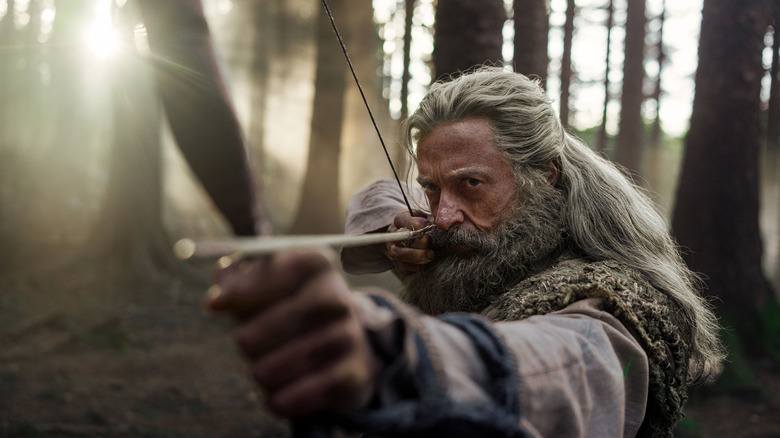
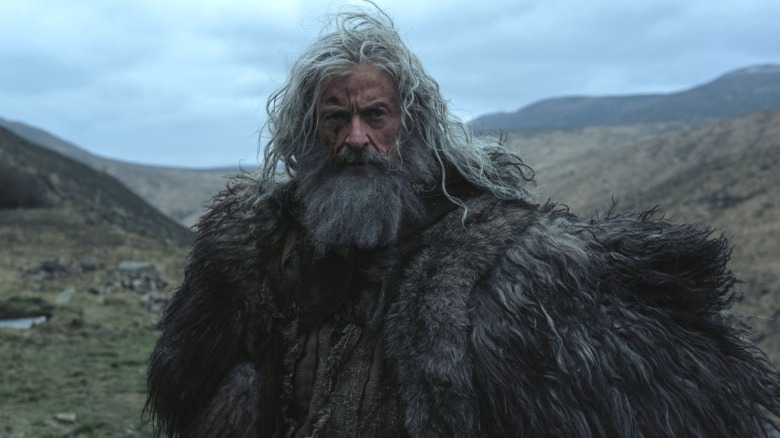
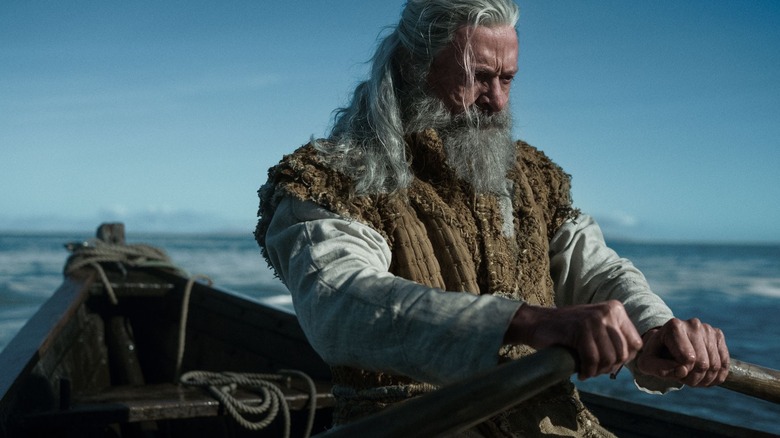
While heroic legends of Robin Hood have spread over the years, we learn they're all fictional stories and that the real Robin Hood is a murderer and thief who won't hesitate to slaughter anyone who gets in his way. Sporting long white hair and a beard to match, Jackman's Robin looks suitably haunted and feral — and tired. He's been worn down from years of killing and just wants to be left alone.
The Death of Robin Hood is about the cycle of violence
Easier said than done. Robin's old buddy Little John (Bill Skarsgård, delivering all his lines like he's got a mouthful of moldy bread and broken teeth) tracks him down, asking for help. That "help" involves Robin and John murdering a whole bunch of people in shockingly violent fashion (John pounds one poor guy's face in and then rips his jaw off with plenty of squishy, crunchy noises).
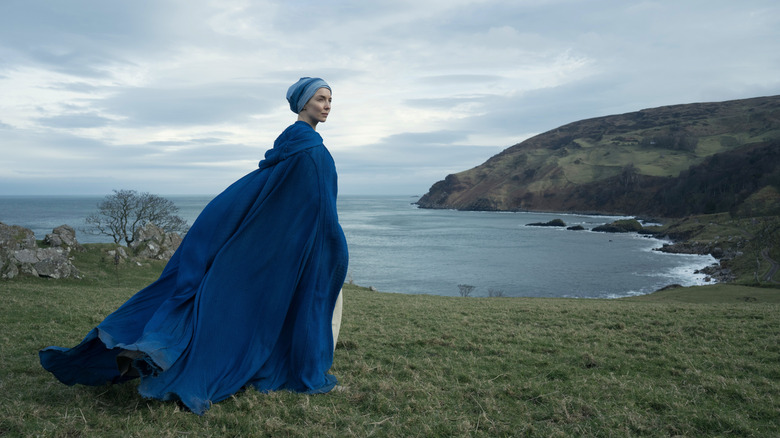
Robin is badly wounded, at which point John drops him off on a mysterious island where a castle priory serves as a respite for the sick and dying. It's overseen by the kindly Sister Brigid (Jodie Comer), who nurses Robin back to health — and also tells him that in his delirious, injured state, he begged her to let him die.
The film's action-packed, gore-heavy opening sequence is a bit of deception on Sarnoski's part, because once Robin ends up on that island, "The Death of Robin Hood" settles into a more meditative, slow-burning story about a man grappling with his blood-drenched legacy. This Robin Hood is a bit like an old gunslinger in a Western; a weary man who frequently has to kill others who have come to kill him. A cycle of perpetual violence surrounds the outlaw. In his glory days, he killed without mercy for profit. Now, in his old age, he kills the descendants of his victims. Is he regretful? Remorseful? Jackman plays the character as intentionally hard to read, but we also get the sense that he kills because it's all he knows how to do. His entire life has been devoted to death.
The Death of Robin Hood begins to resemble a different Hugh Jackman movie at one point
At one point, "The Death of Robin Hood" begins to resemble another Jackman movie: the "X-Men" deconstruction "Logan." As he did in that film, Jackman here is playing an aging legend haunted by his past. And once again, his cold heart begins to thaw when he befriends a little girl — the traumatized Margaret (Faith Delaney), who clings to Robin and eventually asks him to make her an archer's bow of her own.
Another island resident who bonds with Robin is a mysterious leper (played by a completely unrecognizable Murray Bartlett), who knows more than he's letting on. Noah Jupe plays an injured young man with his own vengeful motives that Robin notices almost immediately. And then there's Comer's Sister Brigid, who is sweet and gentle. Robin seems fascinated with her, but I wouldn't go so far as to call it a romantic attraction. It's more like this man who has known death and misery all his life is suddenly caught off guard by someone showing him kindness.
Get ready to get sad with The Death of Robin Hood
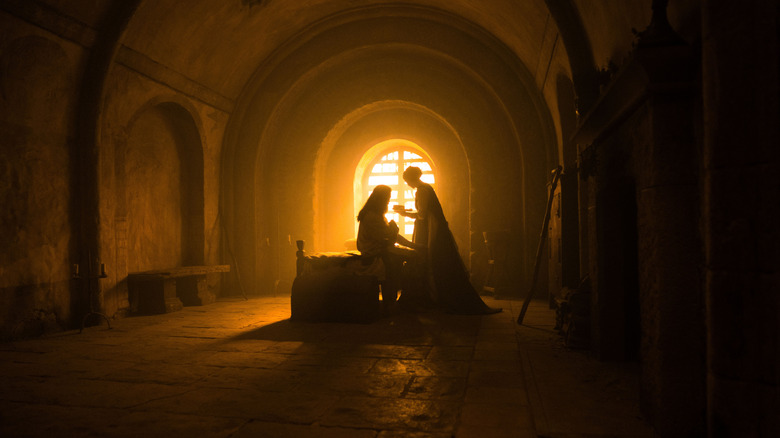
All of this unfolds at a deliberately slow pace that might test some viewers' patience, but I found it compelling. It fit with the reflective nature of the film, and blended well with the overall atmosphere and tone, which is melancholy but oddly beautiful. Sarnoski shot the film in Northern Ireland, and the imagery of rippling seas, wide-open fields, and looming mountains give everything a tactile feel, as does the mud and blood Jackman frequently finds himself caked in. Sarnoski and cinematographer Pat Scola also play around with the aspect ratio, opening the film with a wider, sprawling classical look and then shifting to a more closed-off format when Robin arrives on the island.
As "The Death of Robin Hood" crawled towards its inevitable conclusion, I found myself growing wistful, though I can't quite say why. It wasn't that I felt a particular emotional connection to any of the characters. It was more that the narrative was so abundant with feelings of regret and loss that it drilled down into my chest and brought out a vague sense of pensive sadness. This mood was only enhanced by Jim Ghedi's score, which blends folk songs full of longing with low, sorrowful strings. I doubt "The Death of Robin Hood" will be held up as one of the best versions of such a classic character, but this remorseful deconstruction elicited feelings in me no other "Robin Hood" movie has before, and that counts for something.
/Film Rating: 7 out of 10
"The Death of Robin Hood" opens in theaters on June 19, 2026.