

How Cape Fear's Craziest Episode Lets One Underrated Horror Director Truly Unleash [Exclusive]
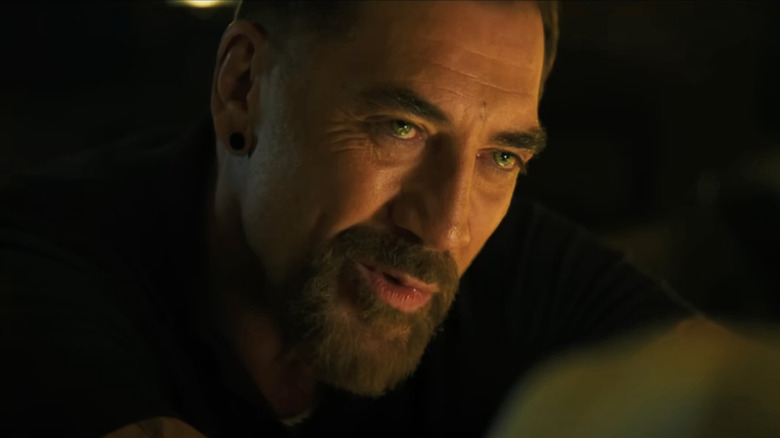
This article contains light spoilers for "Cape Fear" Episode 6, "Possum."
It feels strange to call "Cape Fear" a franchise, as it doesn't initially appear to fit the definition. Yet while J. Lee Thompson's 1962 original and Martin Scorsese's 1991 remake are distinct adaptations of the same source material (John D. MacDonald's novel "The Executioners"); the latter feels like an evolution of the former, much like other sequels and remakes. Apple TV's "Cape Fear" limited series continues this tradition, as showrunner Nick Antosca and his team of writers have found new angles on the story and its characters. Far from feeling played out, this new "Cape Fear" is remarkably fresh. The format change from a theatrical film to a 10-hour limited series is far from wasted, as the show makes the most of its expanded palette.
Given the differences between a motion picture and an episodic series, one would assume that "Cape Fear" would have fewer auteur-like flourishes from its roster of episode directors. While the show does indeed have its own style, which every episode generally follows, Antosca was actually very open to letting the various directors make bold choices on their own. One director he gave this opportunity to was Trey Edward Shults, who helmed the series' 6th episode, "Possum," which hits Apple TV on July 3rd. Shults is an auteur whose films have been divisive enough to keep him from breaking out in a big way like fellow A24 alum Ari Aster. Yet while his filmography may be uneven, he has an undeniable knack for psychological terror. As such, he's a perfect fit for "Cape Fear," and as Antosca told me during a recent interview, Shults' episode lets him truly unleash, creating a uniquely memorable and terrifying experience.
Nick Antosca made sure the directors of Cape Fear had some creative control
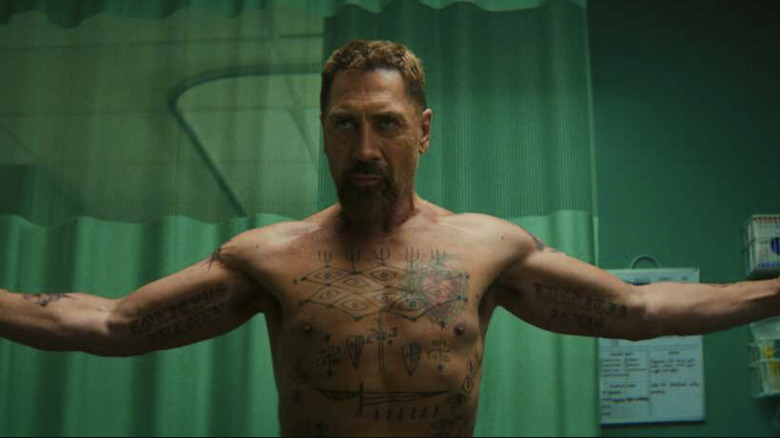
Trey Edward Shults has had his ups and downs throughout his career. For instance, 2017's "It Comes at Night" is one of the most underrated genre films in recent memory, while last year's "Hurry Up Tomorrow" was an unfortunate misfire, brought down by musician The Weeknd's misguided vision. Fortunately, "Cape Fear" showrunner Nick Antosca had a rock-solid conception for the series, which led him to allow Shults to take the reins on his episode and go to town. During my chat with Antosca, the showrunner explained how building this freedom into the fabric of "Cape Fear" led to Shults getting to go to some terrifying new places:
"We had so many conversations at the beginning of the show about tone and style and escalation. And because this is a nightmare that gets more and more heightened as we go along, it means that each director who comes in, they have a style guide, but they also have an opportunity to bring in new things and new visual tricks, new cinematic language. So for example, once we get to episode six and there's an acid trip — that's Trey Edward Shults' episode — there are things that he could do with subjectivity and this kind of feverish nightmare dream that hadn't been done before."
In addition to praising Shults' episode, Antosca was quick to add that the director was not the only person on the series given such treatment:
"...every director had opportunities to turn the screws in a new way."
Thanks to this philosophy, "Cape Fear" is a series that has the best of both worlds: the structural integrity of a serialized show with the flourishes of an artist-driven film.
"Cape Fear" is now streaming on Apple TV.